




How Lithium Ionic Is Positioning Bandeira For Construction Before Final Investment Decision


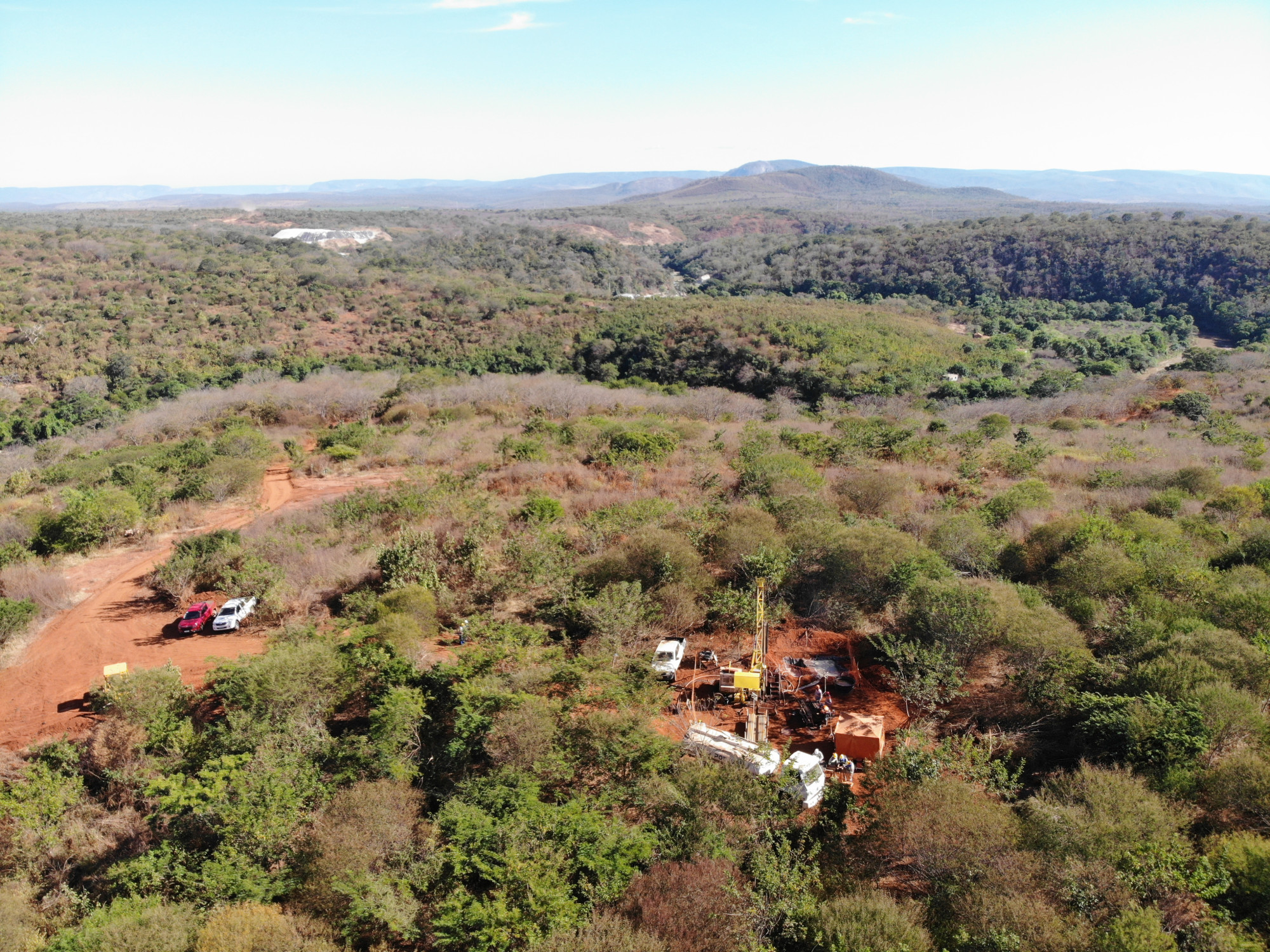
Lithium Ionic advances Bandeira toward construction with portal RFQs, engineering progress, and offtakes that strengthen its path to FID and financing.
- Lithium Ionic has issued requests for quotation (RFQs) to 7 contractors for Bandeira's underground mine portals, a concrete execution step that reduces construction risk ahead of a final investment decision (FID).
- Engineering is well advanced, and procurement packages have already been tendered, giving investors early validation of the project's capital cost estimates before construction begins.
- Binding 5-year offtake agreements with Yahua Group and Grand Chen, at a US$1,000 per tonne floor price with no ceiling, secure revenue visibility for a portion of Bandeira's planned output and support project financing discussions.
- The September 2025 feasibility study shows a post-tax net present value at an 8% discount rate (NPV8%) of US$1.45 billion and a 61% internal rate of return (IRR) at base case pricing, with payback improving from 26 months to 1.1 years at January 2026 spot pricing.
- Management is targeting a positive FID within 2026 and first production in the second half of 2027, contingent on permitting, financing close and continued execution against the construction-readiness program.
In April 2026, Spodumene prices have rebounded to roughly $2,400 per tonne, up nearly 50% year to date and more than 4 times the lows recorded 6 to 9 months earlier. That volatility has coincided with lithium equities lagging the commodity price move, even as physical markets tighten on continued export controls out of Zimbabwe and strong demand from electric vehicle (EV) and energy storage system (ESS) buyers.
Against that backdrop, Lithium Ionic Corp. (TSXV: LTH | OTCQX: LTHCF | FSE: H3N) is shifting the conversation from price forecasting to execution. The company has issued requests for quotation (RFQs) for construction of the 2 underground mine portals at its 100%-owned Bandeira Lithium Project in Minas Gerais, Brazil. On its own, it is a narrow, technical announcement. In context, it is another step in a sequence the company is stacking up ahead of a construction decision, each one converting engineering work into tendered, priced commitments before capital is committed.
The RFQs, issued to 7 contractors, form part of a broader engineering, procurement and construction-readiness program the company has been building ahead of a final investment decision (FID).
Portal Tender Details
The portals will provide surface access to Bandeira's underground mine for personnel, equipment and development activities, according to the company's July 8, 2026 news release. The tender runs alongside the procurement program outlined in the company's June 11, 2026 engineering and procurement update.
More telling are the figures around it. As of the company's May 2026 corporate presentation, engineering was well advanced, with major design packages finalised and procurement packages already tendered. The company said this validates its capital cost estimates, a direct read on whether the US$191 million initial capital figure holds through to construction.
Chief Executive Officer of Lithium Ionic, Blake Hylands, P.Geo., said the portal tender reflects that shift from design work to execution planning:
“The issuance of the portal RFQ is another practical step in advancing Bandeira from engineering toward execution planning. The underground portals represent an important early works component of the Project, and this tender process supports our continued focus on construction readiness, disciplined procurement and maintaining momentum across key development workstreams.”
Project & Regional Context
Bandeira sits in Minas Gerais, within the district known as Brazil's “Lithium Valley.” It shares that district with 2 operating mines: CBL's Cachoeira lithium mine, producing since 1991, and Sigma Lithium Corp.'s Grota do Cirilo project, in production since April 2023, both serving as a regional proof of concept for the dense media separation process proposed for Bandeira.
Lithium Ionic's application for Bandeira's permit was submitted in November 2023, and the company holds 11,684 hectares in the region.
Financing & Development Timeline
Lithium Ionic has signed binding 5-year offtake agreements covering approximately 170,000 tonnes per year of spodumene concentrate (SC6) with Yahua Group and Grand Chen, both described by the company as fully integrated counterparties supplying tier-one battery and EV manufacturers.
The commercial terms carry the weight here: a US$1,000 per tonne (SC6) floor price with no ceiling and no discount to market pricing, plus a US$20 million prepayment facility. The structure lets Lithium Ionic keep full exposure to further price gains while removing downside from its revenue base, one of the more direct ways a pre-production developer can narrow the variables lenders price into project debt.
Chief Operating Officer of Lithium Ionic, Mike Westendorf, outlined the construction sequence that would follow a positive FID, targeting production in the second half of 2027 if that decision comes within 2026:
“To fully mobilise the underground, we need an 18-month wrap-up sequence. From when we start work on the first mine portal, it's roughly the time to get full production to feed the plant, 1.3 million tonnes per year.”
Project Economics & Market Reaction
Bandeira's September 2025 feasibility study confirms the US$191 million capital estimate, including US$19.6 million in contingency, over an 18.5-year mine life. Average annual production is 177,000 tonnes of SC5.2%, with average plant throughput of 1.3 million tonnes per year.
At the study's base case price of US$2,212 per tonne SC6, the project shows a post-tax net present value at an 8% discount rate (NPV8%) of US$1.45 billion, a post-tax internal rate of return (IRR) of 61%, and payback in 26 months. At the January 23, 2026 spot price of US$2,515 per tonne SC6, those figures rise to a post-tax NPV8% of US$1.8 billion, a post-tax IRR of 102%, and payback in 1.1 years, a gap that argues for moving quickly through FID while pricing stays elevated.
The stock reflects part of that case. As of May 13, 2026, shares traded at C$1.15 on the TSX Venture Exchange, within a 52-week range of C$0.50 to C$1.47, for a market capitalisation of approximately C$200 million; cash stood at approximately C$20.2 million as of September 30, 2025. Following Lithium Ionic's offtake announcements, Canaccord reiterated its speculative buy rating on LTH with a $3 price target, framing the agreements as a step toward securing project financing and enabling a construction decision once permitting clears.
Resource & Exploration Context
Lithium Ionic's global mineral resources total 68.6 million tonnes, containing 2.1 million tonnes of lithium carbonate equivalent (LCE), across 3 National Instrument 43-101 (NI 43-101) deposits: Bandeira, Baixa Grande (Salinas project) and Outro Lado.

Salinas neighbours the Colina deposit, part of the Latin Resources assets Pilbara Minerals acquired for US$370 million in February 2025, a 32% premium to Latin's 30-day volume-weighted average price. Lithium Ionic cites the deal as validation of the district's quality from an established producer entering the region.
The portal tender, the offtake agreements and the engineering and procurement progress form the record investors can measure Bandeira's construction-readiness claim against. What is left to watch is narrower still: permit approval, financing close and further procurement awards, each one closing the gap between feasibility study and mine.
FAQs (AI-Generated)
Analyst's Notes





Subscribe to Our Channel


.png)

Stay Informed


