




Gunnison Copper Hits Commercial Production, Targets Partner


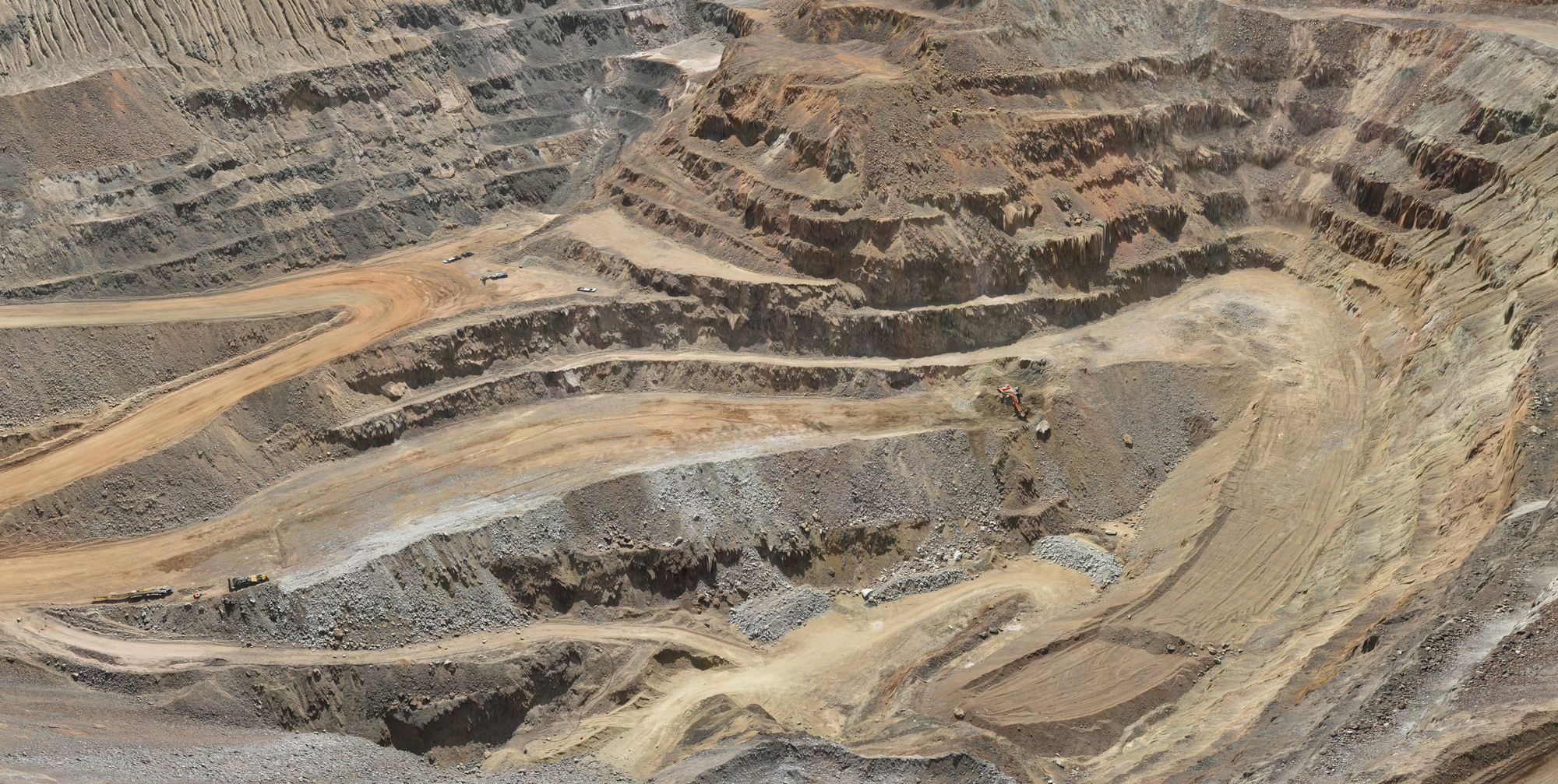
Gunnison Copper hits commercial production at Johnson Camp as CEO Craig Hallworth targets a 5% strategic toehold to advance its $2bn Arizona copper project.
- Gunnison Copper has declared commercial production at Johnson Camp after record August output, and the mine is now running at roughly 60% of its 25 million lb nameplate capacity.
- Johnson Camp's profits repay Nuton's investment of more than $200 million until mid-2030, when any unrecovered balance falls away and the mine becomes free and clear.
- CEO Craig Hallworth estimates Johnson Camp is about 5% of company value, with the rest in the Gunnison Project and its $1.96 billion after-tax NPV.
- Up to 405 column leach tests and a Mined Land Reclamation Plan approval expected by end-2026 are the key near-term de-risking steps.
- Management prefers a 5% toehold from a $10-20 billion mine builder over equity dilution at an estimated 0.25 times NAV, but no deal has been signed.
With copper near record highs, Arizona-focused Gunnison Copper Corp. (TSX:GCU, OTCQB:GCUMF) is one of the few juniors producing its own finished cathode in the US. Speaking at the Beaver Creek conference, President and CEO Craig Hallworth explained how the company intends to turn that operating credibility into value for shareholders. The case rests on two assets. The Johnson Camp Mine has just declared commercial production. The much larger Gunnison Project is the focus of a work programme designed to attract a well-capitalised partner without selling a large stake at what management considers a depressed valuation.
Johnson Camp Reaches Commercial Production
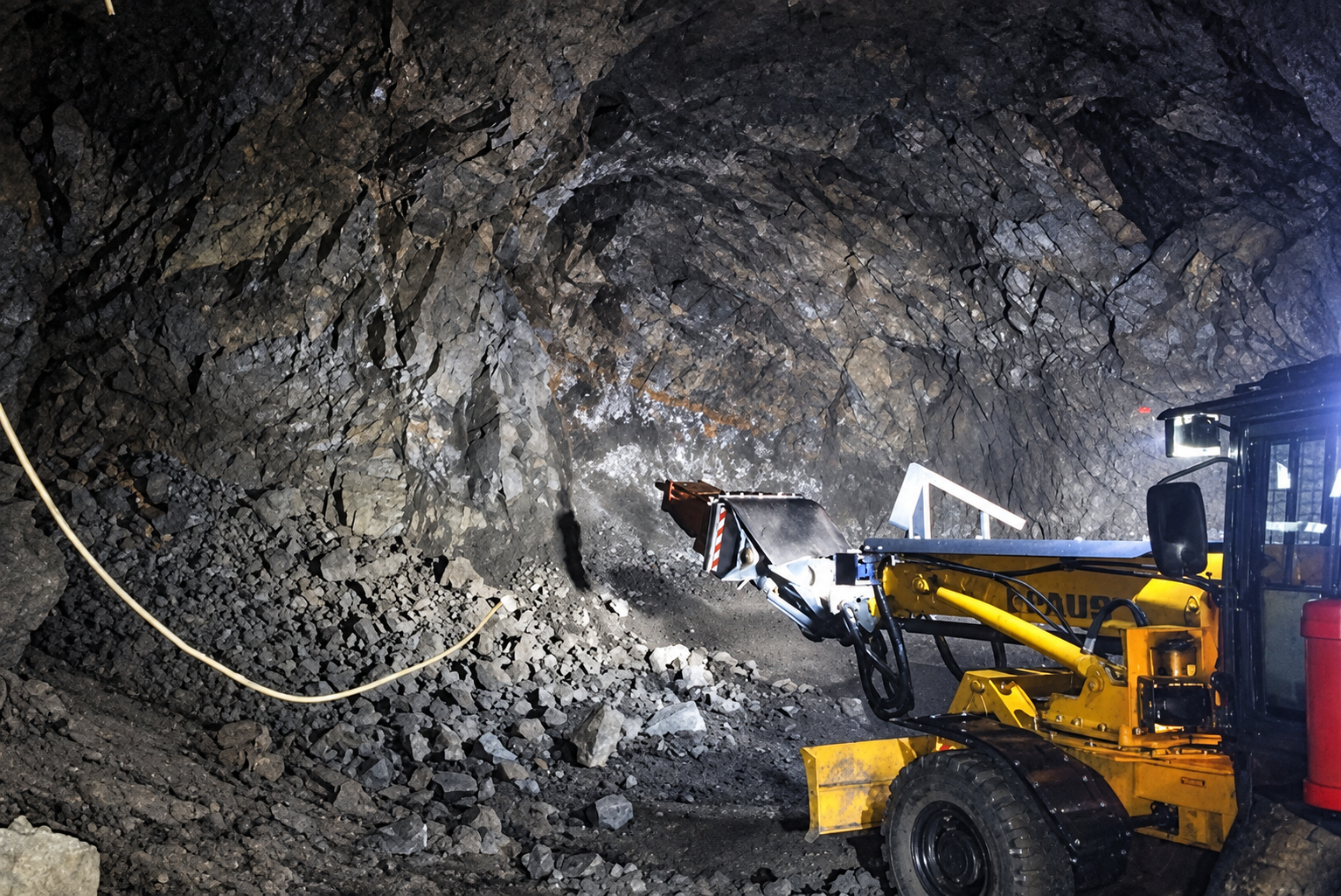
Johnson Camp is the first full-scale commercial deployment of Nuton, a sulfide leaching technology developed by Rio Tinto. The process leaches sulfide copper on a heap and converts it into cathode on site, so the copper is not shipped abroad as concentrate. Hallworth described the practical advantage for a US producer:
"And it's amazing because we can leach the sulfide copper just like it was oxide copper. And what that means is we don't have to make a concentrate, send it to Asia for smelting with all of the costs, all of the emissions, losing control."
The mine produced its first Nuton copper in December 2025. On 22 September 2026, the company announced that Johnson Camp had achieved commercial production, following record output of 1,304,448 lbs of cathode in August. Hallworth said this equates to roughly 60% of nameplate capacity, or about 1.3 million lbs a month, against a full rate of 25 million lbs a year. No further permits or construction are required. The remaining ramp-up depends on leach recovery curves, because each month's stacked ore releases copper over a trailing period of up to 18 months.
Unlocking Cash Flow Before 2030
The main question for investors is when Johnson Camp's cash flow reaches Gunnison shareholders. Nuton has invested more than $200 million in the mine. Under the agreement, operating profits go towards repaying that investment until it is fully recovered or until mid-2030, whichever comes first. With roughly 3.75 years remaining, Hallworth advised investors to assume conservatively that repayment will not be completed before the deadline. He confirmed that any unrecovered balance falls away at that point, leaving the mine free and clear to Gunnison.
In the meantime, the company is drawing value from the asset. Last week, it announced an agreement to add further ore tonnage to the Nuton plan in exchange for $8 million. Hallworth characterised this as effectively operating cash flow that can be spent on the Gunnison Project without issuing shares. Around $3 million a year of corporate overhead is also allocated to the Johnson Camp budget. Separately, the company expects a refundable Arizona tax credit of up to about $2 million, tied to 81 jobs created last year and a further 19 expected this year. Most of that cash is anticipated in its Q4 2026 tax return.
One change from earlier coverage deserves attention. Gunnison has chosen to forgo its $13.9 million Section 48C allocation from the US Department of Energy, despite submitting certification that the mine was built and delivered as committed. Hallworth explained that claiming the credit would exclude the company from other incentives that could carry a higher value.
Hallworth was candid that Johnson Camp, a smaller operation, will sit in a higher quartile of the cost curve. By his estimate, it may represent around 5% of the company's total value.
Gunnison: Where the Value Sits
The investment case therefore rests on the Gunnison Project. The March 2026 preliminary economic assessment (PEA) outlined an after-tax net present value of $1.96 billion at an 8% discount rate and a $4.60/lb copper price. It also showed a 22.5% internal rate of return and a 3.9-year payback. Average production is about 174 million lbs of cathode a year, which Hallworth put at roughly 80,000 tonnes, with potential to approach 100,000 tonnes a year through optimisation.
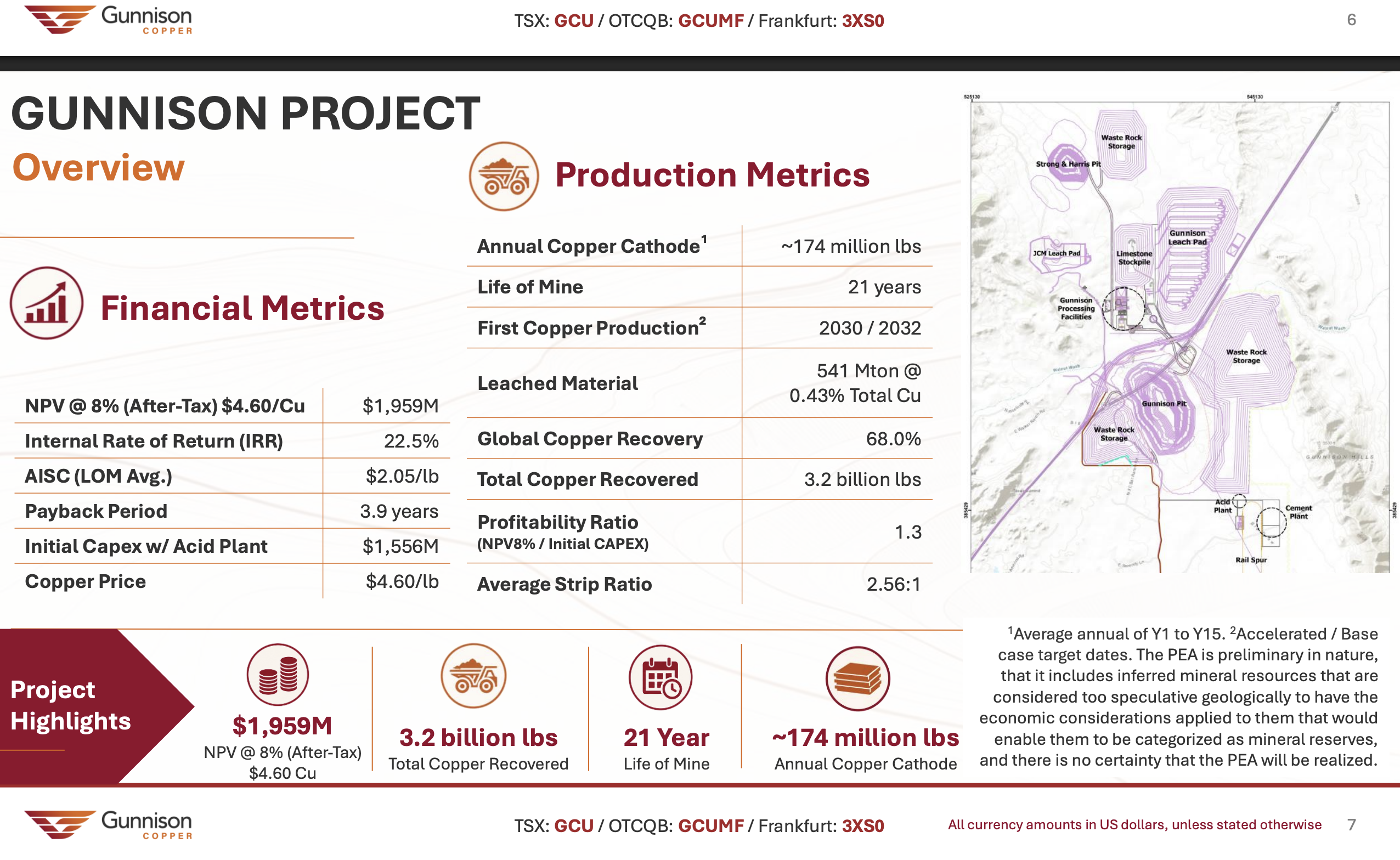
The mine plan leaches material grading 0.43% total copper. Hallworth argued this compares well with large Arizona open pits, citing public comments from Freeport-McMoRan that its Arizona operations mine below 0.3%. The Strong & Harris satellite deposit carries a higher grade, which he put at 0.85% in the study. He expects the feasibility study to include more of its tonnage than the PEA did.
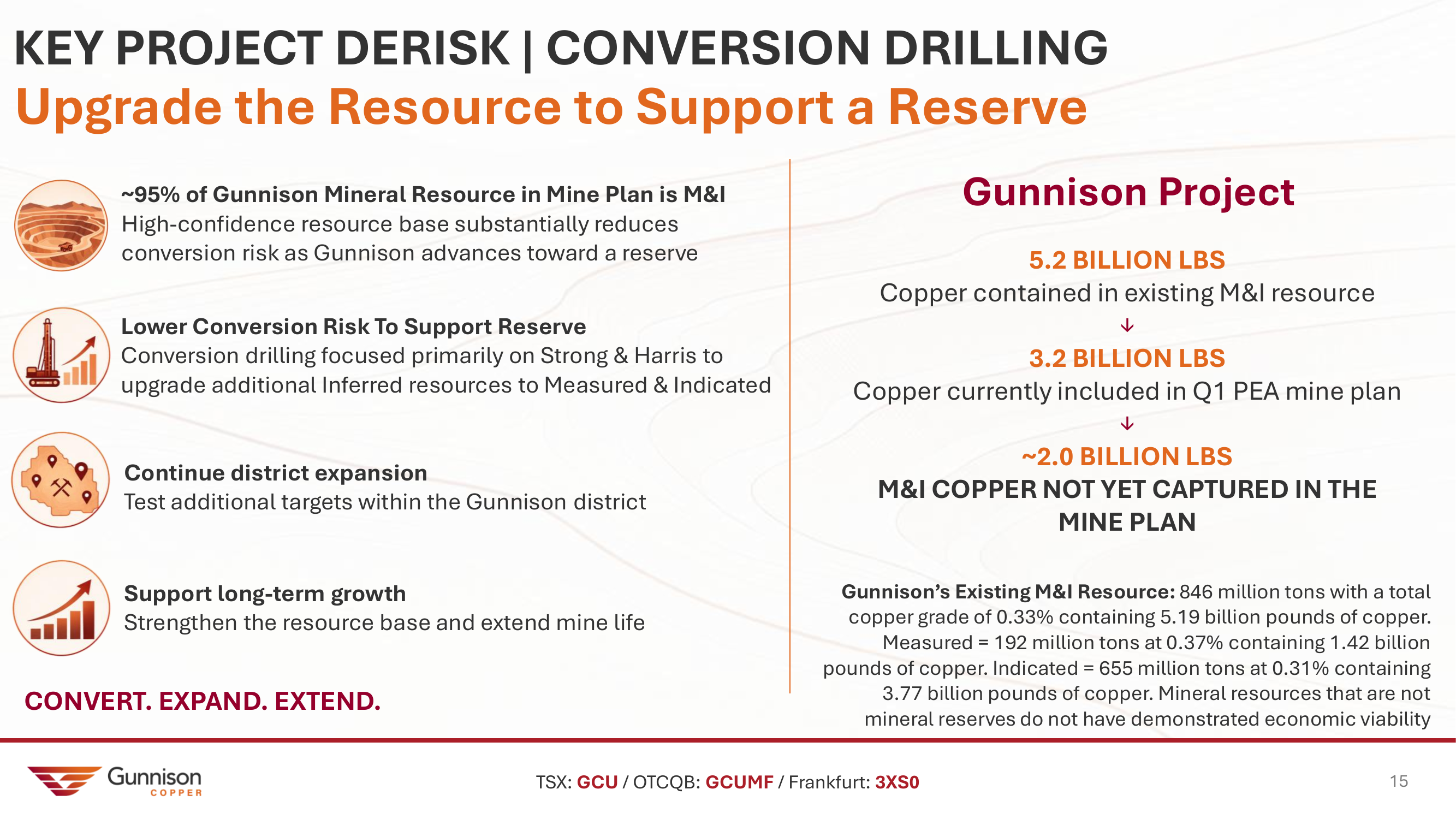
Scale is the other draw. The Measured and Indicated resource stands at 846 million tons grading 0.33% copper, containing 5.19 billion lbs. Only around 3.2 billion lbs sit in the current mine plan. Hallworth noted that the remaining 2 billion lbs could be brought in through higher long-term price assumptions, which he said have risen to around $5/lb from the $4.60/lb used in the PEA. Pit design changes that make marginal blocks profitable could also add material.
Metallurgy and Permits Drive the De-Risking Plan
Hallworth said potential partners are not questioning the deposit. Their concerns are copper recovery and acid consumption. The PEA relied on roughly 25 column leach tests. The feasibility programme plans up to 405, a sixteen-fold increase designed to give the market statistical confidence in those assumptions. Main-pit core is already in the laboratory. Because column tests take months, the company expects to report preliminary results covering 5-10% of the programme in Q4 2026, with the bulk arriving around mid-2027.
Permitting is the second front. An earlier operator ran limited in-situ leaching at Gunnison, so the major state permits already exist and require amendment rather than fresh applications. The company submitted its amended Mined Land Reclamation Plan in September and expects approval before the end of 2026. Amendments to the Aquifer Protection Permit and Air Quality Permit are due to be filed in 2027, with approvals targeted for early and mid-2028 respectively. A separate process covers the relocation of part of Interstate 10. The company is aiming to be fully permitted within two years, supporting a potential final investment decision by mid-2028. Hallworth pointed to Johnson Camp, where permit amendments were secured in under 12 months with no lawsuits.
Interview with Craig Hallworth, President & CEO of Gunnison Copper
Strategic Partner Over Dilution
Initial capital is estimated at about $1.6 billion, including a $300 million acid plant. Gunnison cannot fund that from a market capitalisation of roughly C$250 million. The base-case strategy is to bring in a mine builder valued at $10-20 billion, starting with a small equity stake. Hallworth cited analyst estimates placing Gunnison at about 0.25 times net asset value, against roughly 0.8-0.9 times for peers such as Faraday Copper and Ivanhoe Electric. That gap shapes how much of the company he is willing to sell:
"I don't want to sell a big percentage of this company at the current valuation but I would take something like 5% because I think what that would do is send a strong signal to all the investors that a big, legitimate company has done their due diligence."
Hallworth rejected the view that suitable partners are scarce. Beyond about half a dozen obvious public names, he said he had met three new, well-funded groups at the conference alone. Companies from Australia and Canada would also be considered. No agreement has been signed.
A US government partnership is the alternative case. Hallworth described recent federal deals funding 50-70% of project capital with low-cost debt, potentially priced around 100 basis points over Treasuries with 15-year maturities. He argued that Gunnison's delivery at Johnson Camp would count in its favour.
Balance Sheet and Funding Runway
Gunnison expects to be free of debt by the end of September, once its last small convertible note is settled. Hallworth estimated that about $25 million is available for the Gunnison Project, including the $8 million from Nuton and a spring equity raise. Spending of roughly $2 million a month implies about 12 months of runway. That runway will shorten as the programme expands to six drill rigs. Completing the feasibility study, the permit amendments and a state land purchase will need further funding. Hallworth's preferred route is the strategic toehold investment, followed by government support. An equity raise remains possible, but only at what he called a materially higher share price.
The Investment Thesis for Gunnison Copper
- Johnson Camp's commercial production declaration gives Gunnison a rare producing US copper asset, although its cash flow is largely committed to repaying Nuton until mid-2030.
- The Gunnison Project's March 2026 PEA shows a $1.96 billion after-tax NPV at $4.60/lb copper, and management estimates the company trades at about a quarter of its net asset value.
- Around 2 billion lbs of Measured and Indicated copper sits outside the current mine plan, which offers potential upside if higher price assumptions or design changes bring it in.
- Investors should monitor preliminary column leach results due in Q4 2026, since recovery and acid consumption data are the main technical hurdle for potential partners.
- Approval of the amended Mined Land Reclamation Plan, expected by the end of 2026, would be the first of three principal state permit amendments to be secured.
- A strategic toehold investment of around 5% from a major producer is the key re-rating catalyst, but no agreement has been signed and the timing is uncertain.
- With about 12 months of funding at current spend, the timing and terms of the next capital injection remain a central risk for shareholders.
Macro Thematic Analysis
Copper's appeal to investors rests on a widely held expectation that demand from electrification, data centres and defence will outpace new mine supply. Hallworth said interest at Beaver Creek reflected that view, with copper at record levels and projections pointing to sustained deficits. US producers have a second layer of support. COMEX copper has been trading at a premium to the London Metal Exchange price, partly because the market expects tariffs on imported copper. A domestic producer selling into the US market stands to capture that differential. Hallworth framed the point directly:
"We make the copper from American ore all the way to finished copper and we sell it in the US. So we're going to capture that value of any tariff."
Policy is also pushing capital towards domestic supply chains, with federal tax credits, grants and low-cost debt on offer for critical minerals projects. The drawback is complexity. Gunnison's decision on the 48C credit shows that overlapping incentive programmes cannot always be combined, and securing the best package requires careful sequencing.
Processing technology is another theme. Leaching sulfide ore on site, as Nuton does at Johnson Camp, removes dependence on Asian smelters. If the process proves reliable at commercial scale, more US deposits could be developed without exporting concentrate.
TL;DR
Gunnison Copper (TSX:GCU) has declared commercial production at its Johnson Camp Mine in Arizona, the first full-scale use of Rio Tinto's Nuton sulfide leaching technology, after record August output of 1.3 million lbs of cathode. Johnson Camp's profits largely repay Nuton's investment of more than $200 million until mid-2030, so the investment case rests on the Gunnison Project and its $1.96 billion after-tax NPV. CEO Craig Hallworth is prioritising up to 405 column leach tests, with preliminary results due in Q4 2026, and permit amendments starting with the Mined Land Reclamation Plan by year-end. He wants a major producer to take a stake of around 5%. No deal has been signed, and funding covers about 12 months.
FAQs (AI Generated)
Analyst's Notes





Subscribe to Our Channel
Stay Informed


