How High Conviction Investing in Turbulent Markets Builds Real Wealth



Olive Resource Capital adds to high-conviction resource holdings during March 2026 selloff, viewing Middle East tensions as transitory within an intact commodity bull market.
- Olive Resource Capital navigated a significant market downturn, with portfolios down 5-7% and gold dropping below $5,000, while maintaining a disciplined approach of selectively adding to high-conviction positions during the weakness.
- The firm emphasised their shift toward concentrated, high-quality holdings with strong management teams and no leverage exposure, operating with approximately 10% cash to deploy opportunistically during market corrections.
- Management viewed the Middle East tensions and Strait of Hormuz situation as transitory events that don't fundamentally alter their long-term commodity bull market thesis, while noting U.S. strategic positioning in global energy flow control.
- The SMI conference showed strong attendance and optimism despite market weakness, with well-funded companies positioned to execute substantial drill programs, indicating healthy underlying sector fundamentals.
As global markets experienced significant selling pressure and gold prices fell below $5,000 for the first time in six months, Olive Resource Capital's addressed investor concerns and outlined their strategic response. Samuel Pelaez, President & CEO, and Derek Macpherson, Executive Chair, provided detailed commentary on portfolio positioning, market conditions, and their forward-looking investment thesis during a period of heightened uncertainty.
The discussion comes at a critical juncture for resource investors, with portfolios across the sector experiencing average declines of 5-7% on the day of recording, and many resource stocks down 15-20% from recent highs. Against this backdrop of volatility driven by geopolitical tensions in the Middle East and broader market concerns, Olive's management team articulated their view that current conditions represent a buying opportunity rather than a structural breakdown in their long-term commodity thesis.
Assessing the Drawdown
The resource sector experienced substantial pressure in mid-March 2026, with gold retreating from elevated levels and equity markets showing signs of stress. Pelaez, speaking from the SMI conference, noted the stark contrast between the serene Alpine setting and the market screens showing widespread red. Despite the difficult trading environment, both executives emphasised that most positions had merely given back gains accumulated in the first ten weeks of 2026, effectively returning portfolios to year-end levels rather than inflicting deeper structural damage.
The broader market context provided some reassurance that systemic breakdown had not occurred. The VIX index, a widely watched measure of market volatility and investor fear, had not spiked to panic levels. The S&P 500 remained within 5-10% of its highs, and major global liquidity indicators continued functioning normally. U.S. two-year Treasury yields had risen but not broken through significant resistance levels that would signal a fundamental shift in monetary conditions. This technical backdrop informed Olive's assessment that the selloff represented a correction within an intact bull market rather than the beginning of a prolonged bear phase.
The High-Conviction Approach
A central theme of the discussion centered on Olive's evolution toward a more concentrated, high-conviction portfolio approach. Over the preceding two years, the firm had systematically reduced position count while increasing allocations to preferred holdings backed by strong investment theses and capable management teams. This "high grading" process, as Macpherson described it, involved trimming positions where conviction had diminished and reallocating that capital to core holdings where fundamental belief remained strong.
The philosophy extends beyond simple position sizing to encompass balance sheet strength and operational resilience. As Pelaez emphasised, the portfolio consists of companies with "the ability to survive" periods of market stress without facing imminent property payments or financial liabilities that could jeopardise the enterprise. This deliberate avoidance of leverage at the portfolio company level reflects an understanding that resource companies already face inherent leverage through their exposure to commodity prices they cannot control and dependence on capital markets for funding.
This structural approach provides psychological and practical advantages during market dislocations. When conviction in underlying holdings remains intact, price weakness becomes an opportunity to add exposure at more attractive valuations rather than a catalyst for defensive selling. Both executives noted that reviewing their portfolio during the downturn generally prompted a desire to buy rather than sell, a response they attributed directly to the quality and conviction filtering they had applied over recent years.
Active Position Building
Despite - or perhaps because of - the market weakness, Olive actively deployed capital into specific opportunities throughout February and into the March selloff. The firm had raised cash to approximately 10% of portfolio value in January and February, anticipating seasonal softness that typically emerges around the PDAC conference period. This year, that expected weakness coincided with escalating Middle East tensions, providing what management viewed as an attractive entry point for adding to favored positions.
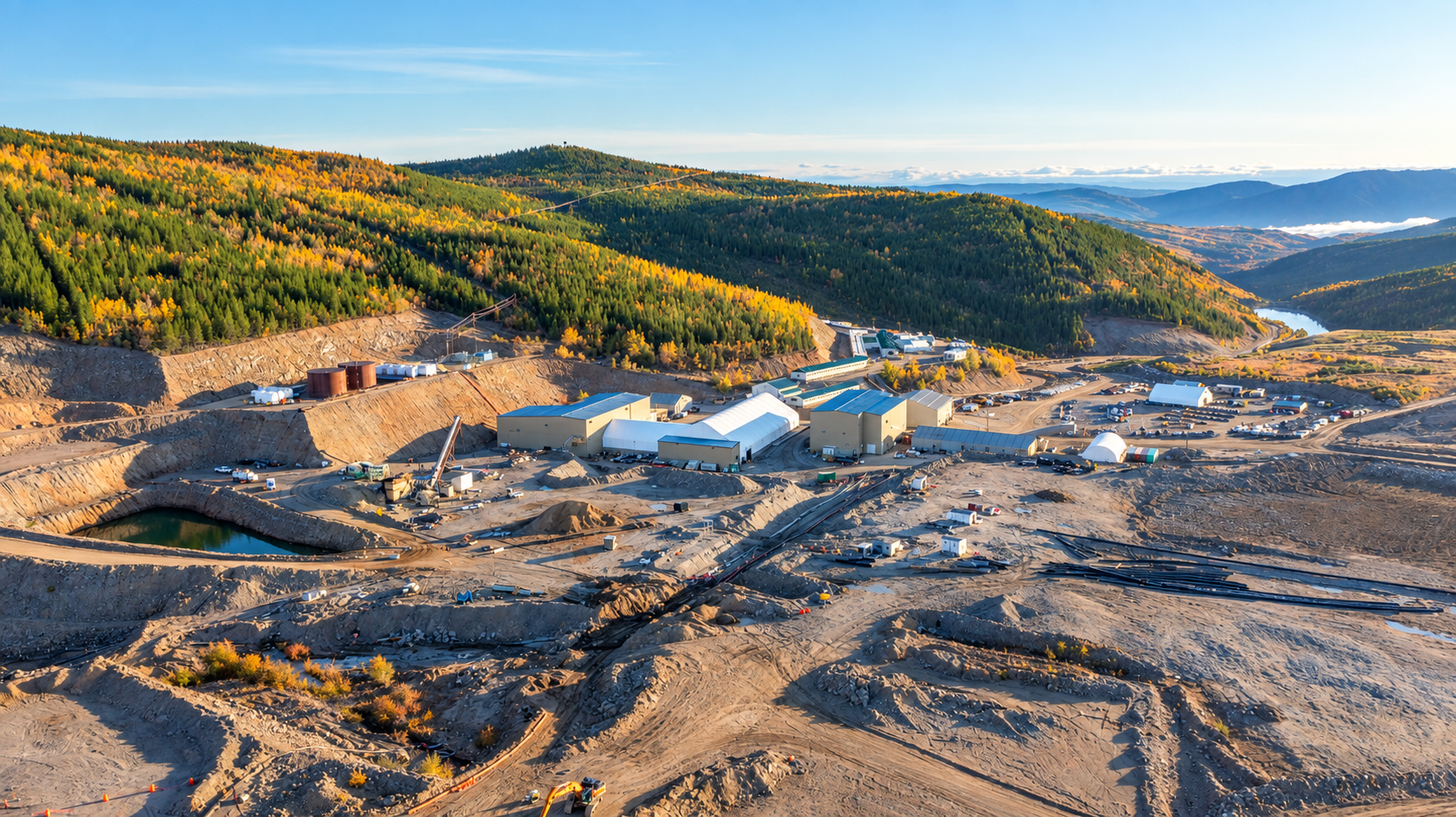
Specific areas of deployment included a Yukon exploration company that management declined to name given its limited trading liquidity. The firm also added to Arizona Sonoran Copper, a holding extensively discussed in a prior episode that is currently navigating an M&A transaction while facing unexpected market headwinds. Energy sector exposure, initiated in late 2025 and early 2026, received additional capital as Olive observed the sector initially running ahead of commodity price strength, then failing to participate when oil prices advanced, creating what they viewed as a valuation disconnect.
Goldsky also received increased allocation as the company works to consolidate 100% ownership of the Barsele project. Management expects resource updates following the consolidation to demonstrate upside, given limited recent drilling and what they characterised as substantial "low hanging fruit" for a development-focused approach to an asset of Barsele's grade and scale.
Reading the Middle East Realignment
A substantial portion of the discussion addressed the Middle East situation and its implications for global commodity markets, particularly energy. The closure of the Strait of Hormuz and military actions against Iranian oil infrastructure dominated headlines during this period, contributing to the risk premium embedded in oil prices and broader market uncertainty.
Pelaez offered a nuanced reading of events that looked beyond the immediate conflict to potential strategic outcomes. He noted that U.S. and Israeli strikes on Iranian infrastructure appeared calibrated to demonstrate capability without deploying full military force, suggesting a negotiating posture rather than escalation to total destruction. This tactical restraint, in his interpretation, indicated both parties were leaving room for eventual negotiation while establishing bargaining positions.
From a commodities perspective, the situation creates asymmetric impacts across global participants. The United States and Canada, as energy exporters not dependent on Middle Eastern supply routes, face minimal direct disruption and potentially benefit from higher prices and alternative supply arrangements. Japan's new liquefied natural gas agreement with the U.S., announced during this period, exemplified this dynamic. In contrast, Asian trading partners and European nations that rely on Persian Gulf energy flows face more significant challenges.
Pelaez suggested the U.S. naval presence controlling access to the Strait of Hormuz positions America to influence which cargoes receive safe passage, effectively granting or withholding access to critical energy supplies. Combined with recent U.S. actions to control the Panama Canal by removing the previous operating company, this represents what management characterised as a broader strategy to establish control over global energy chokepoints and reallocate geopolitical power.
For Olive's investment framework, these dynamics reinforce the importance of resource nationalism and jurisdictional risk assessment. Projects located in politically stable, resource-secure jurisdictions carry premium value in a world where supply chain security and geopolitical alignment increasingly influence commodity access. This thematic consideration factors into the firm's capital allocation decisions alongside traditional metrics of geology, management quality, and project economics.
Strong Engagement at SMI
Despite the market turmoil coinciding with the SMI conference, Pelaez reported surprisingly robust attendance and engagement. The conference reached record size, with meeting slots fully booked in ways that prevented the typical practice of pulling forward scheduled meetings when companies had idle time. This scheduling density indicated genuine, sustained interest from the buy side rather than a sector experiencing wholesale abandonment.
The prevailing mood among attendees, while somewhat dampened by portfolio declines, remained fundamentally optimistic. Many companies had successfully completed financing rounds and were well-capitalised to execute substantial exploration and development programs. Rather than fixating on short-term share price movements, management teams and investors focused on their ability to advance projects and generate news flow from funded work programs - something many hadn't been able to do consistently over the preceding decade.
This forward-looking orientation, even amid market stress, suggested to Olive's team that underlying sector fundamentals remained healthy. Well-funded companies with quality assets and clear development pathways represent the raw material for eventual equity performance when market conditions stabilise and normalise.
Long-Term Thesis Remains Intact
Both executives emphasised their view that current geopolitical tensions and associated market volatility represent transitory rather than structural phenomena. Their fundamental thesis - that global commodity demand will remain strong, driven by industrial transition and economic growth - has not changed. The Middle East situation, while serious, does not alter long-term supply-demand dynamics for copper, gold, or other commodities central to Olive's portfolio focus.
This conviction informed their characterisation of the current environment as a buying opportunity. In their assessment, looking forward six months, these specific geopolitical tensions will have passed, while the underlying drivers of commodity demand persist. For investors sharing this view, periods of panic-driven selling offer the chance to acquire quality assets at discounts to their fundamental value.
Pelaez referenced Stanley Druckenmiller's recent interview expressing confidence in U.S. economic strength and particular enthusiasm about the collaboration between Treasury Secretary Scott Bessent and incoming Federal Reserve Chairman Kevin Walsh. This high-level validation from a respected macro investor reinforced Olive's thesis that the global economy remains in better shape than prevailing sentiment suggests, with strong ongoing demand for commodities, particularly in industrial and energy sectors.
Key Takeaways
Olive Resource Capital's response to the March 2026 market turbulence reflects a disciplined, conviction-based approach to volatile markets. Rather than reacting defensively to portfolio declines, the firm viewed the selloff as an opportunity to add to high-quality positions at more attractive prices. Their emphasis on leverage-free balance sheets, strong management teams, and concentrated exposure to best ideas positions the portfolio to weather near-term uncertainty while maintaining participation in their long-term commodity bull market thesis.
The geopolitical analysis, while acknowledging serious short-term risks, frames current tensions as transitory events unlikely to derail fundamental commodity demand drivers. The strategic repositioning of global energy control, particularly U.S. influence over critical supply routes, reinforces Olive's existing emphasis on resource nationalism and jurisdictional quality in project evaluation. Conference feedback suggesting strong sector engagement and well-funded companies ready to execute work programs provides additional confidence that underlying fundamentals remain supportive despite near-term price action. For investors able to maintain conviction through volatility, management clearly believes current conditions offer attractive entry points into quality resource assets.
TL;DR
Olive Resource Capital utilised the March 2026 market selloff - driven by Middle East tensions and gold falling below $5,000 - to add positions in high-conviction holdings including unnamed Yukon exploration, Arizona Sonoran Copper, energy exposure, Brazilian copper production, and Goldsky's Barcele project. Management views geopolitical disruptions as transitory events that don't alter their fundamental commodity bull market thesis, while emphasising their portfolio's resilience through leverage-free balance sheets and quality management teams. Strong SMI conference attendance and well-funded companies signal healthy underlying sector fundamentals despite near-term volatility, positioning current weakness as a buying opportunity for disciplined investors.
FAQ's (AI Generated)
Management maintains conviction in their high-quality, leverage-free holdings and views current geopolitical tensions as transitory. They believe fundamental commodity demand drivers remain intact, making weakness a buying opportunity.
The firm concentrates capital in fewer, higher-conviction names with strong management, avoids companies with leverage or near-term debt maturities, and maintains approximately 10% cash for opportunistic deployment during corrections.
Management sees targeted U.S.-Israel strikes as negotiating tactics rather than full escalation. They believe U.S. control of Strait of Hormuz access positions America strategically while making current energy disruptions temporary.
Geopolitical control of energy chokepoints and supply chains increases the premium value of projects in stable, resource-secure jurisdictions. This jurisdictional quality assessment now weighs more heavily in capital allocation decisions.
Record attendance with fully booked meeting slots indicated strong buy-side interest. Companies were well-funded with substantial drill programs, creating optimism about advancing projects despite short-term share price declines.
Analyst's Notes





Subscribe to Our Channel



.jpg)
.jpg)
.jpg)
.jpg)


Stay Informed