




Hycroft Mining: One Deposit, Two Development Paths & a Silver Market That Makes Both Work


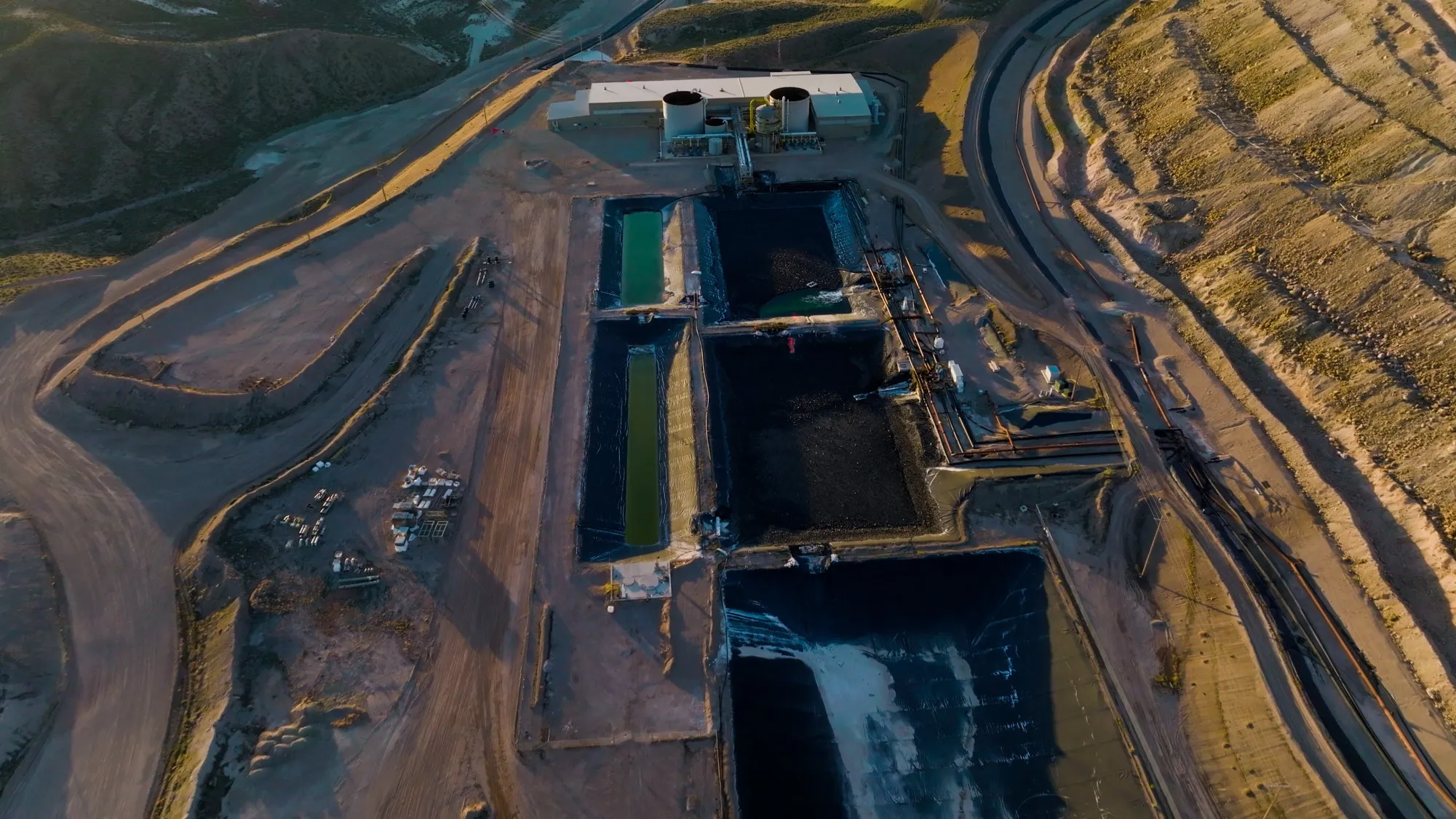
Hycroft holds 562M silver ounces M&I and two viable development paths. With Q1 2026 economics pending, the sequencing decision is now the key investor question.
- February 2026 resource update confirmed 16.4 million gold ounces and 562.6 million silver ounces M&I, a 55% increase, with the embedded Brimstone and Vortex discovery adding 90.2 million high-grade AgEq ounces in just 14 months of drilling, and both systems are still open.
- Two structurally distinct development pathways inside a single asset: a large-scale open pit and a high-grade underground starter with lower capital and a shorter path to cash flow, with open pit economics due at the end of Q1 2026 and an underground assessment running in parallel.
- POX recoveries confirmed at 83% gold and 78% silver, $199 million cash, zero debt, and less than 10% of the 64,000-acre land package explored.
- Eric Sprott at 43%, BlackRock, Schroders, Franklin Templeton, Tribeca, and Pala staying and adding into a silver market defined by structural deficit, accelerating industrial demand, and a near-total absence of large-scale US-jurisdiction development alternatives.
- Trading at $2 per AgEq ounce against a developer median of $3 and a producer median of $8, with no published NPV for either pathway yet, making the Q1 2026 economics release the first event capable of directly closing that gap.
The Silver Market That Makes This Decision Matter Now
Development sequencing decisions at pre-production mining companies rarely generate significant investor attention. At Hycroft, the question of which pathway to pursue, or how to sequence them, deserves serious analytical focus because the silver price environment has fundamentally changed the economics of both options simultaneously.
Silver touched $119 per ounce earlier in January, before pulling back to current levels in the $70s to $80s. Diane Garrett, President and Chief Executive Officer of Hycroft Mining, is direct in her response to that framing:
"We know that the fundamentals have not changed for silver or for gold. We're still in a structural deficit. There's still an enormous industrial demand for silver."
Structural deficits do not resolve themselves during price consolidations. Industrial demand from solar photovoltaic manufacturing, electric vehicles, and artificial intelligence (AI) data centre infrastructure continues to compound. Chinese export restrictions on silver reflect domestic industrial demand so strong that the government cannot afford to export the metal. The United States government's designation of silver as a critical mineral signals a long-horizon policy commitment to securing domestic supply chains. The practical consequence for Hycroft is that both development pathways are economically viable in a way that was simply not true at $20 silver.
The Bulk System: What Hycroft Was Before Brimstone and Vortex
When the current management team acquired control of Hycroft in 2020, they inherited a large low-grade precious metals system in northern Nevada with a complicated processing history, significant legacy debt, and a resource base that predecessors had never fully interrogated at the geological level.
A large-scale open-pit operation processing refractory sulfide ore through pressure oxidation (POX) is a capital-intensive undertaking, and the processing route has historically been a source of investor concern. That concern has now been resolved. Metallurgical test work has confirmed POX recoveries of 83% for gold and 78% for silver, a critical technical milestone that removes the processing uncertainty that had hung over the asset.
The 2026 resource update, prepared at $3,100 per ounce gold and $36 per ounce silver, confirms a Measured and Indicated (M&I) resource of 16.4 million gold ounces and 562.6 million silver ounces, a 55% increase from the prior estimate. The scale of the bulk system places Hycroft among the largest undeveloped precious metals assets in North America. Without any high-grade discovery, that is already a substantial investment case.
Brimstone & Vortex: The Discovery That Created the Choice
The intellectual foundation of the high-grade discovery was Garrett's conviction, held from the moment the team arrived at Hycroft, that a resource of this scale had to be fed by something. A plumbing system. A higher-grade source. The predecessor companies had not systematically asked that question. The current team spent years reinterpreting the geology and re-examining structural controls on mineralisation before drilling confirmed the thesis in late 2023.
Garrett explains the intellectual foundation:
"We saw more potential, and we felt that our predecessor companies had just really not stepped back and said, what is feeding a resource of this size and scale? It's got to be fed. There's got to be a higher grade source, a plumbing source, if you will."
The Brimstone and Vortex systems are not minor occurrences within the broader resource footprint. Vortex extends approximately one kilometre along strike and 500 metres down dip. Brimstone extends 380 metres down dip. Both systems remain open to the west, to the north, and at depth. The initial high-grade M&I resource of 90.2 million silver ounces was established after just 14 months of drilling, a pace that reflects both grade continuity and geological coherence.
Individual drill intercepts have returned grades in the thousands of grams per tonne silver, with silver-to-gold ratios of approximately 600 to 1 at Vortex and approximately 3,000 to 1 at Brimstone. These are not peripheral anomalies. The 2025 to 2026 drill programme is delivering grades in the Vortex system higher than at any prior point, and the system has extended in multiple directions. This is not a depleting discovery. It is an expanding one.
Two Pathways, One Asset: The Decision Framework
This is where the Hycroft investment case diverges from every other large-scale silver developer currently in the market.
The conventional development path for an asset of this scale is to complete engineering studies, raise capital for the large open pit, permit the processing infrastructure, and build toward a multi-decade operation. The economics study on the large-scale open pit is expected by the end of the first quarter (Q1) of 2026 and will, for the first time, give investors a quantified framework for this pathway, including capital requirements, production profiles, and net present value (NPV) at current commodity prices.
The high-grade discovery has introduced a second pathway that changes the sequencing logic entirely. Rather than committing all capital to the full-scale open-pit build from the outset, Hycroft can target Brimstone and Vortex first through underground mining, generate early cash flows, and build into the larger operation over time. The unit economics of underground high-grade mining are materially superior to bulk open-pit processing on a per-tonne basis. The initial capital requirement is substantially lower. The timeline to first cash flow is considerably shorter.
Garrett frames the underground pathway not as a pivot, but as leverage:
"What this high grade does is it gives us optionality. We could go underground first, and by doing that, you're getting better cash flows up front, and then you can build in the scalability to mine the rest of the ore body."
The most likely outcome is not a binary either-or decision but a sequenced approach: underground first, open pit second, with the cash flow from the high-grade operation reducing the external capital requirement for the larger development. That sequencing, if confirmed by the engineering studies, would represent a material improvement in capital efficiency.
The Valuation Disconnect
Scale without market recognition is not an investment case on its own. But when the resource base is the largest in its peer group, and the market is pricing it at a fraction of what comparable assets trade for, the disconnect becomes the investment case.
BMO Capital Markets' benchmarking, as of February 2026, places Hycroft's resource at 2,140 million silver equivalent ounces (AgEq), the largest among all benchmarked silver developers and ahead of the next largest at 674 million ounces. Against that resource base, Hycroft trades at $2 per AgEq ounce on an enterprise value (EV) basis, against a silver developer median of $3 per ounce and a silver producer median of $8 per ounce.
The EV-to-in-situ-value ratio frames the same discount differently. Hycroft's market capitalisation represents 2.2% of the in-situ metal value of its resource at spot prices. Silver developer peers trade at a median of 3.4%. Silver producers trade at a median of 10.0%. A rerating to developer median represents a meaningful uplift from current levels. A rerating toward producer multiples requires the development decision to be made and execution to begin, which is precisely what the Q1 2026 economics study sets in motion.
The Balance Sheet That Makes Both Pathways Possible
Development optionality only exists as a genuine strategic choice if the company can pursue either pathway without dilution pressure forcing a suboptimal decision. Hycroft has that strength.
The company holds approximately $199 million in cash with zero debt. The debt retirement in October 2024 was the inflection point that converted Hycroft from a constrained explorer into a funded developer with genuine strategic flexibility. The five-rig drill programme, accelerated through the second quarter of 2026, is only possible because of that financial position.
The institutional shareholder register reinforces that reading. Eric Sprott holds 43% of the company. BlackRock, Schroders, Franklin Templeton, Tribeca, and Pala round out a register that represents the most sophisticated resource capital globally. These are not momentum holders. They are investors who have done the technical work, understand both development pathways, and are staying.
Garrett emphasizes that capital flexibility is what enables both pathways:
"We've got about $200 million US in the bank. So it makes it really one of the most attractive balance sheets in the industry, and that's allowing us to really expedite, accelerate the drill programme and the advancement of the project."
The 2026 Catalyst Pipeline
The calendar for Hycroft through 2026 is dense with defined, dateable inflection points.
Open pit project economics are expected by the end of Q1 2026, the first quantified framework for the large-scale development pathway. The underground mining assessment of Brimstone and Vortex is underway in parallel. Drilling results will flow throughout the year from a five-rig programme, with two additional rigs coming online in the second quarter of 2026. The geological learnings from Brimstone and Vortex are now being applied to new target areas across the broader land package, with early indications of similar system characteristics elsewhere on the property.
The resource footprint sits on less than 10% of Hycroft's 64,000-acre land package. On that basis, the 2026 M&I resource of 16.4 million gold ounces and 562.6 million silver ounces almost certainly understates the full geological potential of the property.
Risks That Deserve Honest Treatment
Neither development pathway has yet quantified capital requirements confirmed at the project level. The open-pit economics are pending. The underground assessment is early stage. Both studies carry inherent variability associated with pre-feasibility work, and the conclusions may differ materially from current expectations.
Large-scale open-pit development will require significant capital, introducing execution risk for financing. The silver price pullback from $119 to the $70s-$80s demonstrates that the commodity is volatile, and both pathways are sensitive to sustained price weakness. The resource base is a resource, not reserves. No modifying factors have been applied, and the conversion to reserves through a formal feasibility process will involve its own timeline and execution variables.
These are the terms on which the thesis should be sized. They are not reasons to dismiss it.
What to Look Out For
Watch for the Q1 2026 open pit economics release as the primary near-term catalyst. This is the first event to put hard numbers around the large-scale development pathway and provide investors with a basis for NPV-to-market-cap analysis comparable to that available for advanced developer peers.
Monitor the underground mining assessment conclusions as the trigger for the sequencing decision. A confirmed underground starter pathway materially improves capital efficiency and shortens the timeline to cash flow generation.
Track drilling results from the five-rig programme throughout 2026. Results from Vortex in particular, where grades are already running higher than at any prior point, represent the most direct read-through to the expanding resource base thesis.
Size positions against the pending capital requirement uncertainty that both pathways carry until the engineering studies are complete. The optionality is real. The capital quantum is not yet defined.
The Investment Thesis for Hycroft Mining
- Resource base of 16.4 million ounces of gold and 562.6 million ounces of silver measured and indicated, one of the largest undeveloped silver-gold deposits in North America.
- High-grade Brimstone and Vortex underground discovery: 90.2 million AgEq ounces established after just 14 months of drilling, still expanding in multiple directions.
- Two viable development pathways (underground starter or large-scale open pit) with Q1 2026 quantified economics pending for both.
- Trading at $2 per AgEq ounce against a developer median of $3 and a producer median of $8.
- Approximately $199 million cash, zero debt, and Eric Sprott holding 43%, ensuring neither study is capital-constrained.
Hycroft occupies a position in the silver developer universe that has no direct peer. A resource base of 16.4 million gold ounces and 562.6 million silver ounces M&I. A high-grade underground discovery embedded within it, established after just 14 months of drilling and still expanding in multiple directions. Two development pathways with fundamentally different capital profiles, timelines, and cash flow characteristics, both viable in the current silver price environment, and both about to receive their first quantified economic treatment. And a market pricing the company at $2 per AgEq ounce against a developer median of $3 and a producer median of $8.
The development decision is not a problem to be solved. It is an asset to be managed. A company that can credibly pursue either a high-grade underground starter or a large-scale open pit operation, or sequence them to fund one with the other, holds a strategic flexibility that most developers never achieve.
The Q1 2026 economics study and the concurrent underground assessment are the events that will force the market to engage with that flexibility seriously. The balance sheet ensures neither study is constrained by capital. The institutional register confirms that the most sophisticated capital in the space has already done its own version of that analysis and is staying. Garrett is clear about the inflection point:
"It's going to be an exciting year for us."
TL;DR
Hycroft Mining (NASDAQ: HYMC) holds two development pathways inside a single Nevada asset: a large-scale open pit supported by 16.4 million gold ounces and 562.6 million silver ounces M&I, and a high-grade underground option from the Brimstone and Vortex systems carrying 90.2 million silver ounces established in just 14 months of drilling, both backed by $199 million cash, zero debt, and a Q1 2026 economics release that will for the first time quantify which pathway represents the superior capital allocation. The company trades at $2/oz AgEq against a developer median of $3 and a producer median of $8, in one of the most structurally supported silver markets in a generation.
FAQ's (AI-Generated)
No published NPV exists yet for either development pathway. Investors are pricing the optionality rather than the outcome. The Q1 2026 open pit study is the first event that gives the market a direct basis for comparison with peer multiples.
The open pit targets the full bulk resource through a capital-intensive, multi-decade surface operation. The underground starter targets Brimstone and Vortex specifically: lower initial capital, better unit economics, shorter path to cash flow. The most likely outcome is sequencing, underground first, open pit second, with early high-grade cash flow reducing the external capital requirement for the larger build.
Hycroft's ore is refractory, meaning the metals are locked in sulfide minerals and require pressure oxidation to liberate them. Uncertainty around achievable recoveries at scale was one of the most persistent investor concerns. Confirmation removes that question entirely and puts both development pathways on validated metallurgy rather than assumptions.
A controlling-level commitment from the most recognised name in precious metals investing. It means the technical work has been done, and the conclusion was that concentration rather than diversification was the better approach. The more practical signal for other investors is register stability: a 43% anchor with a long-horizon thesis does not create selling pressure around negative news flow.
The underground mining assessment which determines whether the sequencing thesis is formally recommended. Drilling results from the five-rig programme, particularly at Vortex, where grades are running higher than at any prior point. And early announcements applying Brimstone and Vortex learnings to new targets across the 64,000-acre land package, of which less than 10% has been explored.
Analyst's Notes





Subscribe to Our Channel




Stay Informed






















