




i-80 Gold Reports 40.4 g/t Gold Over 13.2 Meters at Granite Creek: What High-Grade Drill Results Mean for Resource Classification


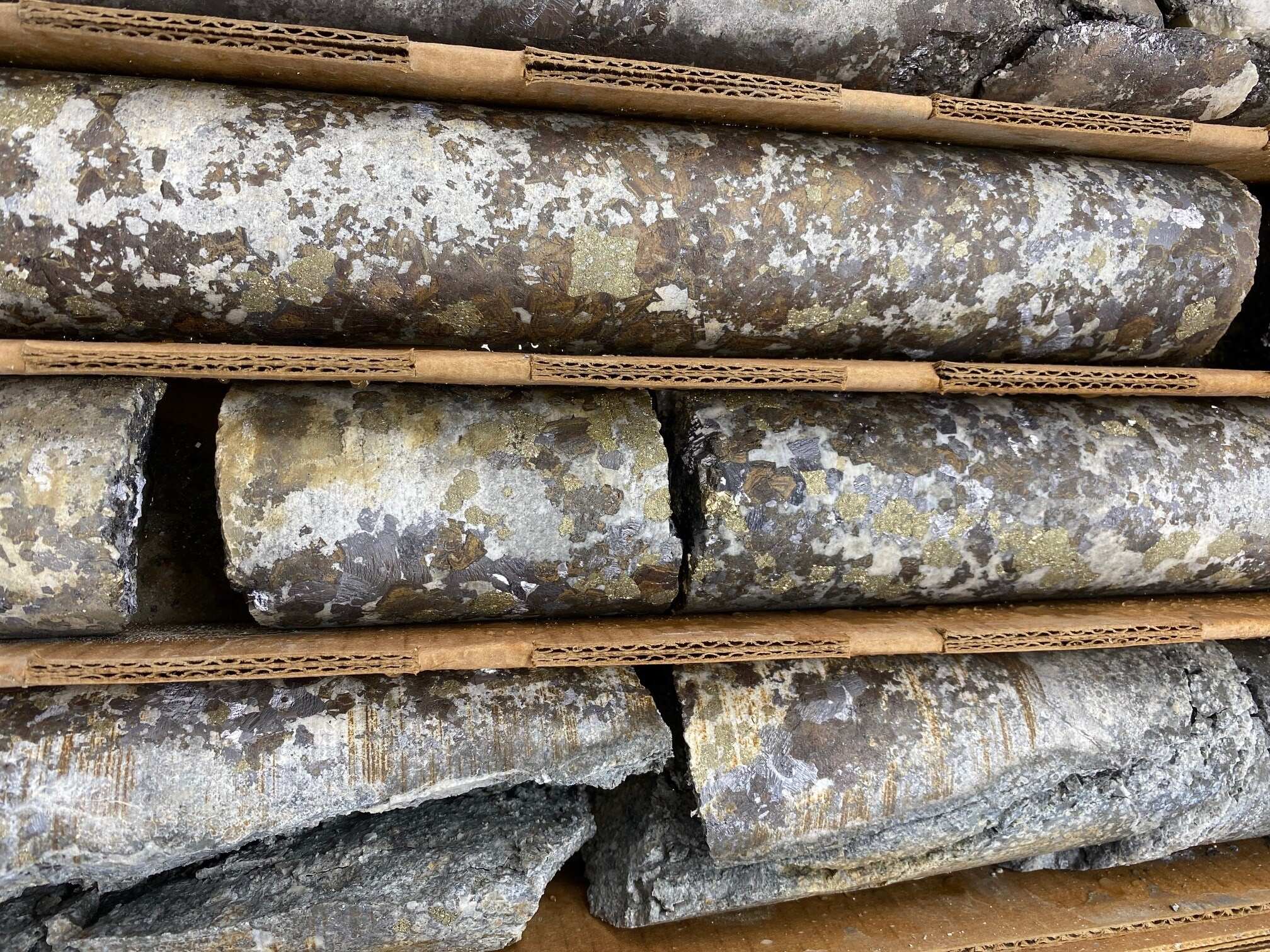
i-80 Gold's 40.4 g/t drill results at Granite Creek support resource upgrade ahead of Q1 2026 feasibility study. High-grade Nevada project with autoclave advantage.
- i-80 Gold's January 2026 drill results from Granite Creek Underground confirm grade consistency and structural continuity in the South Pacific Zone, providing data that supports converting Inferred ounces to Indicated classification ahead of a feasibility study expected late Q1 2026.
- The 16,000-meter, 46-hole infill program completed in December 2025 focused on increasing drill density within known mineralized zones, a technical requirement for feasibility-level engineering studies and a key step in reducing geological risk for investors.
- Granite Creek's grade profile, averaging 10.5 g/t gold in Indicated resources and 13.0 g/t in Inferred material, positions it favorably among underground gold projects as rising operating costs across the mining sector increase the value of high-grade deposits.
- i-80's ownership of the Lone Tree autoclave, currently advancing through refurbishment and targeting completion in late 2027, provides processing infrastructure for refractory ore that many Nevada gold developers lack, enabling a hub-and-spoke development strategy.
- With Granite Creek already in production, Archimedes underground advancing through construction, and multiple feasibility studies approaching completion, i-80 enters 2026 with near-term technical milestones that will provide tangible data points for investment evaluation.
Grade as a Margin & Risk-Management Tool
High-grade gold deposits provide structural advantages during periods of rising operating costs and constrained capital availability. When labor rates, energy costs, and consumable prices increase, projects with higher grade concentrations maintain stronger margins because they generate more revenue per ton processed. This relationship directly affects All-In Sustaining Cost (AISC) resilience and capital payback timelines.
A mine processing ore at 10 grams per ton (g/t) gold extracts substantially more metal per ton than one processing 2 g/t material, reducing the volume of rock that must be moved and treated to generate equivalent ounces. Lower processing volumes reduce requirements for equipment, reagents, and energy—all inputs subject to inflationary pressures.
Geological Confidence vs. Speculative Growth
Not all high-grade drill intercepts carry equal weight. The distinction between isolated grade concentrations and systematic continuity determines whether a deposit supports viable mining operations. True geological confidence emerges when multiple drilling phases consistently demonstrate that grade and thickness extend across predictable structural controls.
Granite Creek's 2025 program systematically tested the geological model by infilling between existing drill holes and extending known mineralized zones. Results confirming both grade consistency and structural continuity reduce uncertainty in mine design, resource estimation, and metallurgical planning.
Richard Young, President and Chief Executive Officer of i-80 Gold, described the infill strategy:
"What we are seeing on the infill drill programs as we outlined when we put those PEAs out is a real opportunity to expand the mineralized envelope of each of these projects."
Granite Creek Underground: What the Drill Data Shows
i-80 Gold completed a 16,000-meter, 46-hole infill campaign at Granite Creek Underground in December 2025, designed to advance resource classification ahead of feasibility-level engineering. Infill drilling increases drill density within known mineralized zones to improve geological confidence and reduce spacing between sample points, directly affecting how resources are classified under recognized reporting standards.
Feasibility studies require detailed mine plans that can only be supported by resources classified as Measured or Indicated. Inferred resources cannot be included in proven ore reserves or used to justify project financing without additional drilling to upgrade their classification.
Results from the South Pacific Zone
The January 20, 2026 press release reported multiple high-grade intercepts:
- 40.4 g/t gold over 13.2 meters
- 31.3 g/t gold over 7.8 meters
- 15.0 g/t gold over 17.5 meters
- 12.8 g/t gold over 19.8 meters
More significant than individual numbers is the consistency with which results confirmed structural model predictions. When drilling confirms that high-grade zones extend predictably in vertical and horizontal directions, mine planners can optimize extraction sequences, reduce dilution from waste rock, and improve metal recovery per ton mined.
Resource Growth Without Grade Dilution
Granite Creek's 2025 results support both resource size growth and grade maintenance, indicating that drilling identified extensions of high-grade mineralization rather than lower-grade peripheral material. The current resource estimate, published as of December 31, 2024, has not yet been updated to include 2025 drilling data. An updated resource estimate incorporating 2023-2025 drilling is currently being prepared to support the feasibility study.
Richard Young emphasized the program's success:
"As we move into 2026 we're going to have three significant drill programs underway. The first is at Granite Creek Underground—we've completed the 2025 program and that was quite successful, because of that success we're going to have a similar if not larger program in 2026."
From Inferred to Indicated: Why Classification Drives Valuation
Resource classification systems distinguish between confidence levels based on drill spacing and mineralization continuity. Inferred resources represent the lowest confidence category and are typically excluded from economic models used by institutional investors. This exclusion reflects that Inferred material may not ultimately convert to mineable reserves due to insufficient data density.
When valuing development-stage projects, analysts apply different discount rates or exclude Inferred ounces entirely from Net Asset Value calculations. This creates valuation gaps between companies with predominantly Inferred resources and those with Indicated or Measured classifications, directly affecting access to project financing.
Feasibility Studies as a Valuation Reset
Feasibility studies represent the industry's highest level of technical analysis, requiring data quality that can only be supported by Measured and Indicated resources. The Granite Creek feasibility study, expected to be completed late in Q1 2026 with results released in Q2 2026, will incorporate refined mine planning, updated cost estimates, and detailed metallurgical testwork.
Completion of feasibility studies often narrows valuation gaps by providing institutional-grade documentation of project economics. Markets typically reassess project valuations following feasibility releases, particularly when studies demonstrate improved metrics relative to preliminary assessments.
Granite Creek's Current Resource Base
As of December 31, 2024, Granite Creek's resource estimate includes 261,000 ounces of Indicated and Measured resources at 10.5 g/t gold, alongside 326,000 ounces of Inferred resources at 13.0 g/t gold. The significant Inferred tonnage at higher average grade represents both opportunity and uncertainty—opportunity because successful conversion would materially expand the economically viable resource base, and uncertainty because Inferred classification means this material cannot yet support detailed mine planning.
Stress-Testing the Granite Creek Economics
The March 31, 2025 Preliminary Economic Assessment established baseline economics for Granite Creek Underground: approximately 60,000 ounces per year over eight years, with a Net Present Value at 5% discount rate of $155 million at $2,175 per ounce gold.
PEAs represent early-stage evaluations with higher contingency factors than feasibility studies. For Granite Creek, the PEA identified key value drivers including grade quality, underground mining methods, and processing through i-80's Lone Tree autoclave facility.
Gold Price Leverage vs. Cost Discipline
While higher gold prices improve project economics, sustainable value creation depends fundamentally on grade quality, metallurgical recovery, and cost discipline. Projects with high-grade ore bodies generate superior returns across price scenarios because their economics remain viable during lower commodity prices or higher operating costs.
Granite Creek's grade concentrations reduce tonnage that must be mined and processed per ounce recovered, reducing requirements for equipment, labor, energy, and consumables. Rather than relying on sustained high gold prices, projects with strong grade profiles generate acceptable economics at conservative price assumptions while maintaining upside leverage when prices rise.
Underground Mining & Cost Curve Positioning
Underground high-grade gold deposits occupy favorable positions on the global cost curve. While underground mining typically involves higher unit costs per ton than surface mining, higher grades mean fewer tons must be processed to generate equivalent ounces, often resulting in competitive all-in costs per ounce produced.
Granite Creek's average grades exceed 10 g/t gold in Indicated resources and 13 g/t in Inferred material. During periods of cost inflation affecting fuel, reagents, steel, and labor rates, higher-grade deposits maintain margin resilience because revenues per ton processed increase proportionally more than costs per ton.
Nevada's Refractory Bottleneck & Processing Infrastructure
Refractory gold ores contain gold locked within sulfide minerals that cannot be efficiently recovered through conventional cyanide leaching. Extracting gold requires either roasting or pressure oxidation (autoclaving) to break down sulfide minerals. These processes require specialized facilities with significant capital costs, creating processing constraints for Nevada gold projects with refractory mineralization.
Autoclaving capacity in Nevada is limited to facilities operated by Nevada Gold Mines and i-80 Gold's Lone Tree complex. This scarcity means companies without processing infrastructure must negotiate toll-milling agreements or pursue alternative metallurgical pathways that may result in lower recoveries or higher costs.
Strategic Implications of Lone Tree Ownership
i-80 Gold owns the Lone Tree autoclave facility, currently advancing through refurbishment and targeting completion in late 2027. The Board approved a limited notice to proceed in late 2025 for detailed engineering and long-lead items, with a full construction decision expected in Q2 2026.
This infrastructure ownership alters development optionality compared to peers developing refractory projects. Rather than competing for limited third-party processing capacity, i-80 can optimize mill schedules, blend ore from multiple sources, and capture processing margins that would otherwise flow to toll milling providers.
Richard Young connected the processing infrastructure to production trajectory:
"In the fall of 2024 we announced a three-phase development program that would see production rise from less than 50,000 ounces per year this year to over 600,000 ounces within the next six years. All that production is coming from Nevada at a very attractive cost... We did announce a feasibility study for the refurbishment of our Lone Tree process facility, we're one of two companies, the other being Nevada Gold Mines, that has a permanent autoclave in Nevada."
Jurisdiction, Infrastructure & Execution Risk
Northern Nevada combines geological endowment with regulatory frameworks, established infrastructure, and experienced mining workforce—factors that reduce development risk relative to jurisdictions with less mining history. The region's infrastructure includes power transmission, transportation networks, equipment suppliers, and skilled labor pools developed over decades.
Ramp-Up & Delivery Risk
Underground mining development involves sequential risks including development rates, ground conditions, dilution control, and mining method selection. Granite Creek is currently in production, mining the top of the southern South Pacific Zone, with gold sales of 9,368 ounces for the three months ended September 30, 2025, as the operation ramps toward steady-state production targeted for the first half of 2026. Additionally, i-80 initiated underground construction at Archimedes in Q3 2025.
Capital Structure & Institutional Signaling
i-80 Gold reported cash and equivalents of $103 million as of September 30, 2025. The company's development pipeline includes multiple projects advancing toward production, each requiring capital for underground development, processing infrastructure, and working capital. Development-stage mining companies face tension between maintaining adequate liquidity and avoiding premature capital raises that dilute shareholders.
What Institutional Ownership Signals
As of November 14, 2025, i-80 Gold's shareholder base included Condire Management (9.7%), Sprott Asset Management (5.2%), and Orion Resource Partners (2.1%). The presence of specialized mining investors suggests sophisticated capital has completed due diligence. However, institutional ownership does not guarantee future performance or eliminate execution risk, commodity price volatility, or technical uncertainties inherent in development-stage mining.
The Investment Thesis for i-80 Gold
- High-grade underground ounces offer superior margin resilience during inflationary cycles because grade concentration reduces the volume of material requiring extraction and processing per ounce recovered.
- Resource conversion ahead of feasibility studies materially reduces valuation uncertainty by upgrading geological confidence from Inferred to Indicated classification, enabling inclusion in detailed mine plans and improving access to project financing.
- Ownership of centralized processing infrastructure creates strategic optionality beyond single-asset models by enabling development of deposits that would otherwise face refractory treatment bottlenecks.
- Nevada jurisdiction reduces geopolitical and permitting risk relative to many global peers due to established regulatory frameworks and developed mining infrastructure.
- Near-term technical milestones provide tangible data points for reassessment as feasibility studies, resource updates, and production ramp-ups generate new information.
The January 2026 drill results from Granite Creek Underground are significant as systematic evidence supporting resource classification conversion and geological model validation ahead of the feasibility study expected late in Q1 2026. In a market where capital efficiency and execution risk dominate investment decisions, projects demonstrating geological continuity, grade consistency, and progress toward bankable studies address investor priorities. For investors evaluating gold developers in 2026, these structural attributes warrant attention as the company advances through feasibility completion and operational ramp-up.
TL;DR
i-80 Gold's January 2026 drill results from Granite Creek Underground—including 40.4 g/t gold over 13.2 meters—confirm grade consistency and structural continuity that supports converting Inferred resources to Indicated classification ahead of a feasibility study expected late Q1 2026. The project's high grades (averaging 10.5 g/t Indicated, 13.0 g/t Inferred) provide margin resilience during inflationary periods by reducing tonnage requiring processing per ounce recovered. i-80's ownership of the Lone Tree autoclave solves Nevada's refractory processing bottleneck, enabling hub-and-spoke development across multiple deposits. With Granite Creek already producing, Archimedes under construction, and multiple feasibility studies approaching completion, the company enters 2026 with near-term technical milestones that provide concrete data points for investment evaluation.
FAQs (AI-Generated)
High-grade drill results reduce the volume of rock requiring extraction and processing per ounce of gold recovered, which directly improves margin resilience during periods of rising operating costs. More importantly, consistent high-grade results across multiple drill holes demonstrate geological continuity, enabling resource classification upgrades from Inferred to Indicated status. This upgrade is critical because feasibility studies—required for project financing—can only incorporate Indicated or Measured resources, not Inferred material. For Granite Creek, systematic confirmation of grades exceeding 10 g/t gold supports resource conversion ahead of the Q1 2026 feasibility study.
Inferred resources represent the lowest geological confidence category due to wide drill spacing and limited data density. Institutional analysts typically exclude Inferred ounces from valuation models or apply heavy discount rates because this material cannot be included in bankable feasibility studies or proven ore reserves. Indicated resources have sufficient drill density to support detailed mine planning and economic modeling required for project financing. Granite Creek's 326,000 ounces of Inferred resources at 13.0 g/t represent significant upside if successfully converted to Indicated classification through infill drilling, materially expanding the bankable resource base supporting the feasibility study.
Nevada contains significant refractory gold deposits where gold is locked in sulfide minerals requiring specialized processing through roasting or pressure oxidation (autoclaving). Autoclave capacity in Nevada is limited to facilities operated by Nevada Gold Mines and i-80 Gold's Lone Tree complex. Companies without processing infrastructure must negotiate toll-milling agreements with limited capacity providers or pursue alternative metallurgical pathways with potentially lower recoveries. i-80's Lone Tree ownership enables direct processing control, optimized mill scheduling across multiple ore sources, and capture of processing margins that would otherwise flow to third-party toll mills. The facility is advancing through refurbishment targeting late 2027 completion.
Granite Creek is already producing from the top of the South Pacific Zone, generating 9,368 ounces during Q3 2025 while ramping toward steady-state production targeted for H1 2026. Active production provides real operational data on mining conditions, dilution rates, metallurgical recovery, and cost performance—information that reduces uncertainty in feasibility study assumptions. Unlike greenfield projects relying entirely on engineering estimates, Granite Creek's operating performance validates technical assumptions and demonstrates that underground development, grade control, and processing are functioning as planned, reducing execution risk for investors evaluating the expanded feasibility study expected in Q2 2026.
Key 2026 milestones include: (1) Updated resource estimate for Granite Creek incorporating 2023-2025 drilling data, expected to support resource classification upgrades; (2) Granite Creek feasibility study completion late Q1 2026 with results released Q2 2026, providing bankable-level engineering and refined economics; (3) Full construction decision for Lone Tree autoclave refurbishment expected Q2 2026; (4) Continued underground construction progress at Archimedes project; (5) Granite Creek production ramp to steady-state in H1 2026. These milestones provide concrete technical data points enabling investors to reassess project economics, execution capability, and development timeline against updated geological and engineering information.
Analyst's Notes





Subscribe to Our Channel



.png)




Stay Informed






















