




Gold's First Stress Test of 2026



Gold's sharp pullback is the first stress test of 2026. We break down what it means for producers, developers, and investors positioning for what comes next.
Why This Week in Gold Matters for Investors
Gold's parabolic run through January was never going to end quietly. After pushing to new record highs, this week's sharp pullback is the first real stress test of the 2026 bull market, and for investors, it's the most useful price action we've had in months.
The question isn't whether gold pulled back. It's what the pullback exposed. When prices correct, three things get tested simultaneously: sentiment, balance sheets, and valuations. Sentiment is fleeting. Balance sheets are structural. And valuations only mean something if the underlying business can execute. This week separated the companies that are built for volatility from those that were merely riding momentum.
Corrections don't destroy value. They reveal where it was never there to begin with; and, critically, where it's been overlooked.
The Price Action: Volatility, Not Capitulation
What happened this week was a positioning reset, not a demand shock. Intraday swings widened, volumes surged, and silver's outsized volatility confirmed that speculative froth was cooling. None of that signals structural breakdown. It signals a market recalibrating after an aggressive move higher.
History is instructive here. Strong bull markets don't correct gently, they correct violently. The sharpness of this pullback is more consistent with a healthy trend than a broken one. Weak positioning gets flushed, leverage gets reduced, and the market resets at a level where real capital can re-engage.
For investors, the distinction matters. Volatility is a feature of strong markets. Capitulation is a symptom of broken ones.
The Macro Trigger: Rates, the Dollar, & Real Yield Sensitivity
The proximate cause of this week's selling was a repricing of interest-rate expectations and renewed US dollar strength. Gold remains acutely sensitive to real yields in the short term, and any shift in Fed expectations can trigger mechanical selling across futures and ETF positions.
But here's the nuance that matters: this sensitivity disproportionately affects short-term traders, not long-term allocators. The distinction between nominal rate moves and real yield shifts is critical. Gold doesn't respond to headline rates, it responds to the inflation-adjusted return on competing safe assets. When real yields rise, gold's opportunity cost increases. When they fall, gold becomes relatively more attractive. This week's move reflected a temporary recalibration of that equation, not a fundamental change in direction.
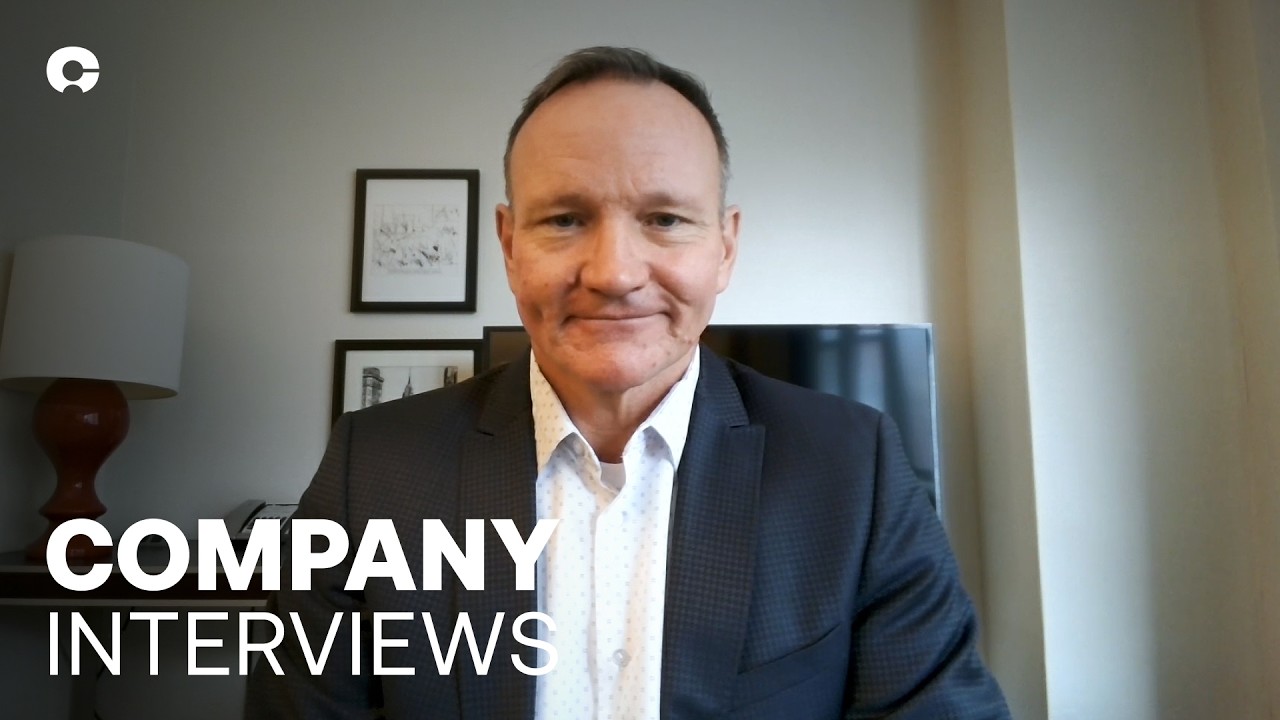
Producers with strong operating margins at conservative gold prices - companies generating meaningful free cash flow well below spot - are largely insulated from this kind of macro noise. As i-80 Gold's CEO Richard Young observed:
"What's different this time is we're not seeing that inflation in the system. Higher prices are flowing through to the bottom line."
For well-run operators, the question isn't where gold trades this week. It's whether their cost structure allows them to generate cash across a range of price scenarios.
ETF Flows vs. Price: What the Capital Is Actually Doing
One of the more telling signals this week was the disconnect between price action and institutional ETF flows. While spot gold sold off, strategic capital continued to accumulate. The pattern is consistent with what we've seen in prior corrections within structural bull markets: fast money exits, long-only capital waits for better entry points, and underlying demand remains intact.
This dynamic has direct implications for the development-stage companies in the gold sector. When capital becomes more selective, it doesn't disappear, it concentrates. Developers with clear permitting pathways, defined timelines, and institutional-quality project economics tend to attract disproportionate attention in these environments.
As George Salamis, CEO of Integra Resources, put it:
"Clear timelines equate to better capital planning and ultimately a lower cost of capital to finance and build the project."
Integra's Delamar project now sits on a defined 15-month federal permitting schedule with public accountability built in, a rarity in US mine development. Salamis has been blunt about the significance:
"Permitting is the single biggest risk for new mines anywhere in the world, let alone the US."
In a market where clarity is scarce, companies that can offer it stand out.
Corrections Expose Cost Curves - Not All Ounces Are Equal
Pullbacks function as a sorting mechanism. They expose which projects were built for $1,700–$1,900 gold and which ones only work above $2,500. Companies with higher all-in sustaining costs, unresolved construction risk, or leveraged balance sheets feel the pressure first.
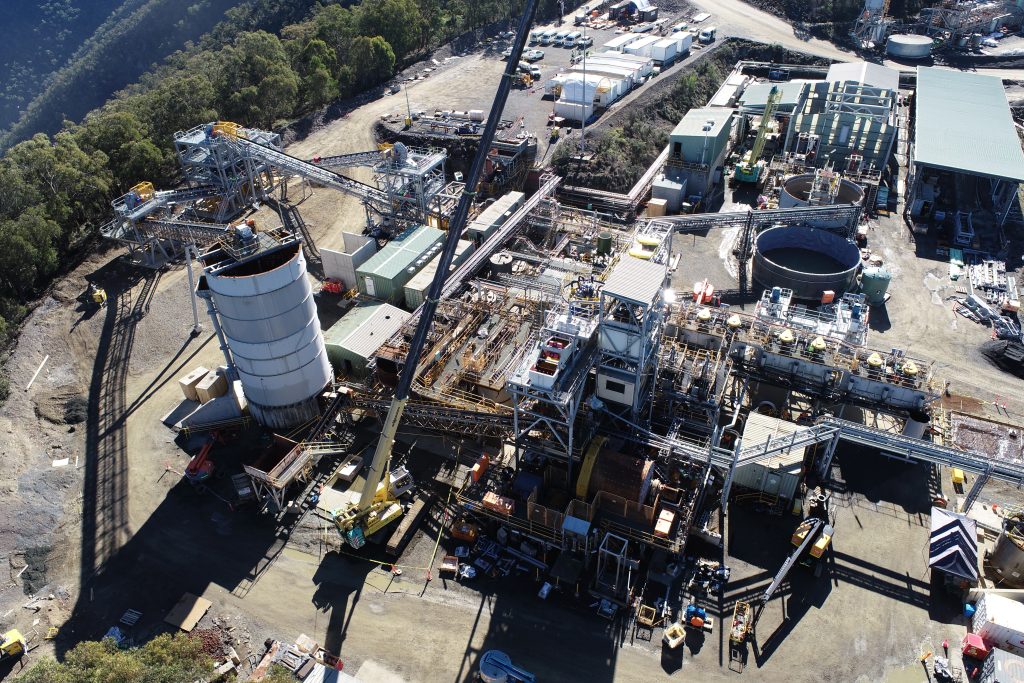
This is where execution and balance sheet discipline separate the investable from the aspirational. Richard Young, CEO of i-80 Gold, has been direct about the company's priorities:
"The board mandate was more certainty over cost. What matters is putting a facility in place that allows us to execute on the plan."
With $200 million in existing debt requiring restructuring and five term sheets received on a senior debt facility, i-80 represents the kind of story where balance sheet resolution is the catalyst, not the gold price.
On the other end of the spectrum, West Red Lake Gold Mines offers a case study in what happens when execution risk is systematically removed. CEO Shane Williams confirmed the company entered commercial production on January 1st:
"We poured 20,000 ounces last year and generated about $73 million. We're producing free cash flow."
The transition from developer to producer wasn't accidental, it was engineered:
"Eighty percent of the capital we raised went into underground drilling. That's what changed the outcome."
The company is now self-sufficient and does not expect to need additional capital. That's a fundamentally different risk profile than it had twelve months ago, and corrections are where that difference gets priced.
Optionality vs. Survivability: How Investors Reprice Growth
In a bull market, optionality gets rewarded. Investors pay for resource scale, exploration upside, and blue-sky potential. In corrections, the calculus shifts. Survivability and credibility take precedence. Growth still matters, but only if it's financeable and executable.
This repricing is particularly relevant for large-scale development projects. Tudor Gold CEO Joe Ovsenek has been explicit about the sequencing challenge:
"The real focus for us is how do we take this project from a world-class resource and move it to production. To start off, we want to focus on the higher-grade mineralization."
At a USD$125 per tonne NSR cut-off, the project holds 5.8 million indicated ounces. The resource isn't the question. The question is whether a credible mine plan and financing pathway can convert that resource into a production timeline investors can underwrite.
New Found Gold faces a similar inflection. CEO Keith Boyle has outlined a phased development approach for Queensway, starting with the high-grade core and targeting first production in late 2027. The discipline is in the sequencing:
"Small companies don't have the horsepower to execute projects like this on their own. It would be foolish not to bring in the right expertise."
Bringing in Cutfield Freeman for project financing and awarding WSP with the EPCM (Engineering, Procurement, Construction Management) contract signals a management team thinking about execution, not just discovery.
Development-Stage Reality Check: Who Can Fund the Next Step
Corrections don't shut capital markets, they change who gets funded. The shift is toward smaller, staged financings, strategic investors, and asset-level solutions. Companies that can demonstrate a clear path from feasibility to production - with manageable dilution and realistic timelines - continue to attract capital even when broader sentiment weakens.
P2 Gold CEO Joe Ovsenek has positioned the company's Gabbs project in Nevada squarely in this category:
"At current prices, initial capex is paid back in months, not years."
With management owning approximately 16.5% of the company and the Waterton overhang now fully cleared, the alignment between insiders and shareholders is unusually direct. The feasibility study expected this year becomes the next de-risking event, and in a corrections-driven market, feasibility-stage catalysts carry outsized weight.
What This Week Tells Us About the Gold Equity Setup for 2026
Gold price volatility is not sector weakness. This week's correction accelerates a process that was already underway: the normalisation of valuations across the sector and a renewed focus on earnings, margins, and execution over narrative and momentum.
The environment now favours cash-generating producers who can demonstrate margin resilience, developers with clear build paths and credible financing strategies, and management teams with capital discipline and operating track records. Companies that tick those boxes are not just surviving corrections, they're using them to widen the gap between themselves and their peers.
For Investors
This week's pullback did not invalidate gold's structural bull market. It refined it. The macro tailwinds that drove gold to record highs - central bank accumulation, fiscal uncertainty, geopolitical risk, and persistent real-asset demand - have not reversed. What changed is that the market briefly removed the comfort of momentum and asked a harder question: which companies can deliver regardless of where gold trades next week?
The answer, as always in corrections, comes down to fundamentals. Companies generating free cash flow are less dependent on market sentiment. Companies with defined permitting and development timelines can plan capital allocation with precision. Companies where management has significant personal capital at risk are aligned with shareholders in ways that matter when prices get volatile.
Weeks like this separate price exposure from investment quality. For investors with a medium- to long-term horizon, the dispersion created by this correction is not a risk, it's an opportunity to allocate toward the companies where quality is compounding quietly beneath the noise.
TL;DR
Gold's sharp early-February pullback is a positioning reset, not a structural breakdown. The bull market's macro drivers remain intact. This correction is accelerating quality dispersion across the sector, punishing leveraged balance sheets and unresolved execution risk while rewarding producers with margin resilience and developers with clear, funded pathways to production. For investors, the setup favours companies where cash flow, capital discipline, and management alignment provide downside protection regardless of short-term price action.
FAQ's (AI-Generated)
No. The correction is consistent with historical patterns in strong bull markets, which tend to correct sharply rather than gently. Underlying demand drivers — central bank buying, geopolitical risk, and real-asset allocation — remain intact. This looks like a positioning reset, not a trend reversal.
The immediate triggers were a repricing of U.S. interest-rate expectations and renewed dollar strength. Gold is sensitive to real yields in the short term, and shifts in Fed policy expectations can drive mechanical selling across futures and ETF positions. Institutional ETF inflows, however, remained positive — suggesting strategic capital stayed in.
Companies with higher all-in sustaining costs, significant construction or financing risk, and leveraged balance sheets feel pullbacks most acutely. Projects that only generate attractive economics above $2,500 gold face greater scrutiny than those built to deliver returns at $1,700–$1,900.
Focus on cash-generating producers with proven margin resilience, developers with defined timelines and credible financing, and management teams with meaningful insider ownership. Capital discipline and execution track records matter more in volatile markets than resource scale or exploration upside alone.
Corrections create dispersion, and dispersion creates opportunity — but selectivity matters. The strongest opportunities tend to be in companies where the market has indiscriminately sold quality alongside speculation. Investors should prioritise businesses where fundamental value is intact or improving, and where near-term catalysts can drive re-rating independently of the gold price.
Analyst's Notes





Subscribe to Our Channel











Stay Informed






















