
Lahontan Gold Targets 2027 Restart, Estimated 200,000 oz Heap Leach Outside Mine Plan


Lahontan Gold’s Santa Fe PEA shows US$820M NPV5% and 40.1% IRR, with historic heap leach pads and waste rock still outside the early mine schedule.
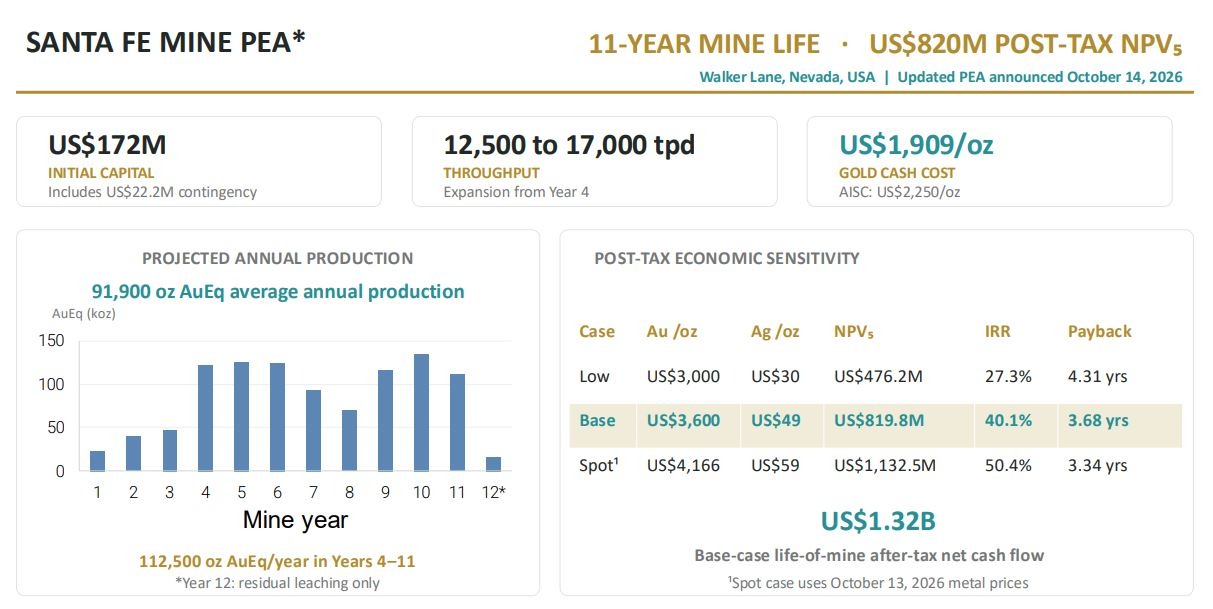
- Lahontan Gold’s October 2026 PEA for Santa Fe shows a US$820.0 million after-tax NPV5% and a 40.1% IRR at US$3,600 gold, on US$172.0 million of initial capital.
- CEO Kimberly Ann says about 200,000 ounces on historic heap leach pads are excluded from the lower-output years 1 to 3 while assays are pending.
- Lahontan plans up to 100 RC holes into about 9.0 million tonnes of Santa Fe East waste rock, mined under a 0.55 g/t cut-off and already scheduled for stripping.
- Management is targeting permits around the second quarter of 2027 and a first gold pour in the fourth quarter of 2027, with 80% debt and 20% equity financing.
- The pending Emergent Metals acquisition would give Lahontan 100% of West Santa Fe, where 2025 drilling returned 36.6 m at 3.11 g/t gold equivalent from surface.
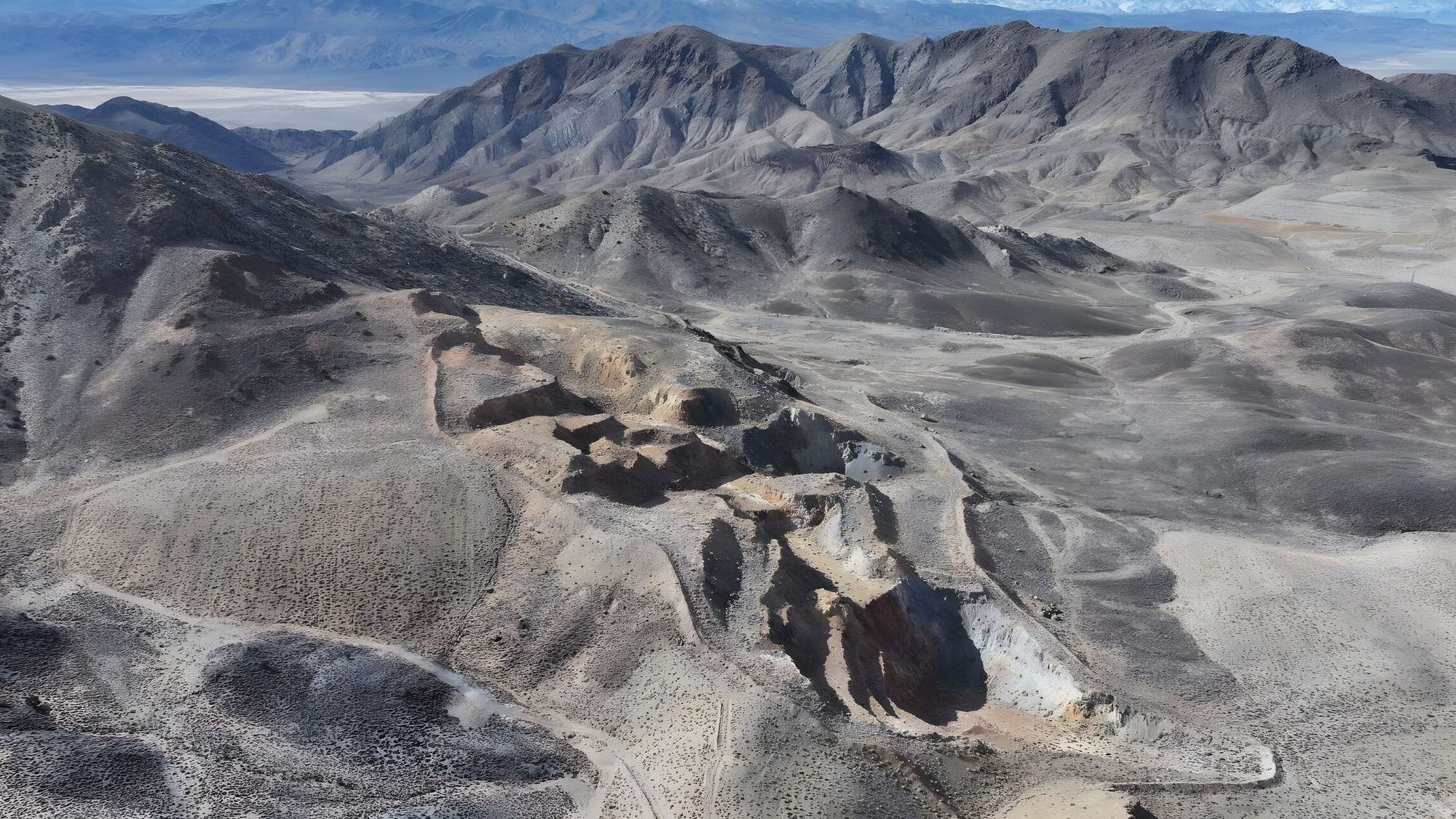
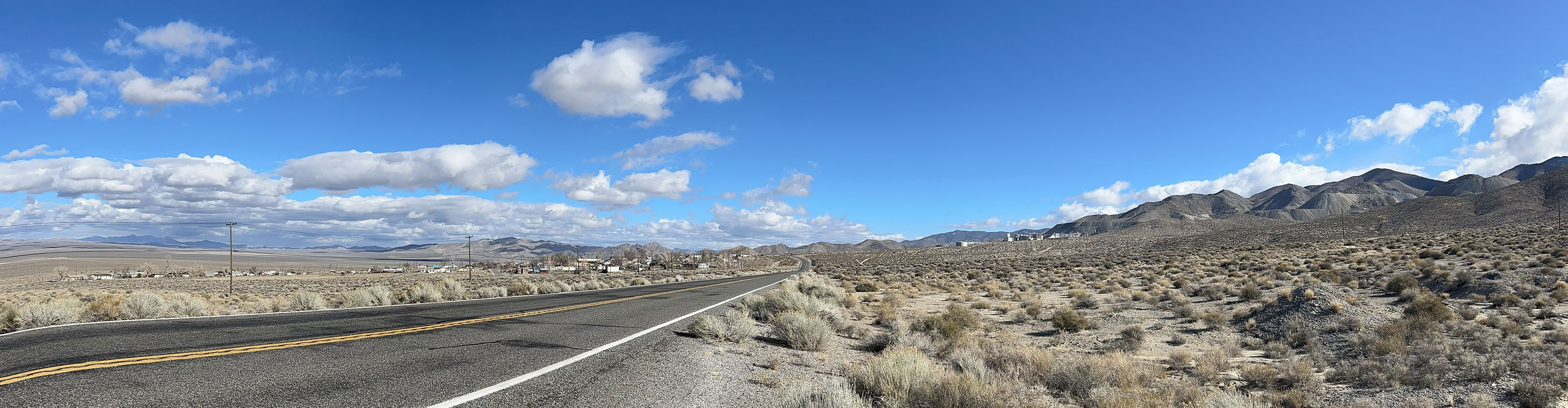
Nevada’s Walker Lane hosts several past-producing open-pit gold and silver mines. Lahontan Gold Corp. (TSXV:LG) is targeting a 2027 return to production at one of them. The Santa Fe Mine produced 359,202 ounces of gold and 702,067 ounces of silver between 1988 and 1995 using open-pit mining and heap leach processing.
An updated Preliminary Economic Assessment (PEA), released on October 14, 2026, outlines an 11-year mine life averaging 91,900 gold-equivalent ounces a year. Management describes that study as a conservative starting point. Material from the historic operation, including leached ore on old pads and rock once classed as waste, has not yet been built into the early years of the mine schedule.
The investment case for Lahontan rests on three moving parts. The first is whether that legacy material lifts early production and shortens payback. The second is whether permits arrive on the timetable management has set. The third is whether the satellite West Santa Fe project adds truckable ounces to the mill feed.
Santa Fe PEA: US$820 Million NPV5% at US$3,600 Gold
Lahontan’s PEA base case is set at US$3,600 per ounce of gold and US$49 per ounce of silver. On those prices, Santa Fe generates an after-tax net present value at a 5% discount rate (NPV5%) of US$820.0 million and an after-tax internal rate of return (IRR) of 40.1%. Initial capital is estimated at US$172.0 million, including a US$22.2 million contingency. Gold cash costs are estimated at US$1,909 per ounce and all-in sustaining costs at US$2,250 per ounce.
Santa Fe is designed as an open-pit mine with conventional cyanide heap leach processing at 12,500 tonnes per day (tpd), with an expansion to 17,000 tpd from year 4. Production averages approximately 112,500 gold-equivalent ounces a year from years 4 through 11. At October 13, 2026 spot prices of US$4,166 gold and US$59 silver, the NPV5% rises to US$1,132.5 million and the IRR to 50.4%.
The economics are based on a pit-constrained resource of 1,195,000 indicated gold-equivalent ounces grading 0.78 grams per tonne (g/t) gold equivalent and 1,190,000 inferred gold-equivalent ounces grading 0.61 g/t gold equivalent. Against the company’s 2024 PEA, base-case NPV5% has risen from US$57 million and mine life has extended from 7 years to 11.
Why Early Production Is Low: Heap Leach Ounces Held Out of the PEA
Under the PEA, output in years 1 through 3 is lower, and the throughput expansion lifts production from year 4. The base-case payback period is 3.68 years.
Founder and Chief Executive Officer of Lahontan Gold, Kimberly Ann, said the early-year schedule leaves out material the company is still testing:
“We have 200,000 ounces sitting on historic heap leach pads already crushed that we’re going to pick it up, recrush it, put on another pad. Very, very low cost. I need that data back so we can put it into those first three years because that just changes all the economics, right? But I have that saved in my document for a reason because I want reality, not a promotional document.”
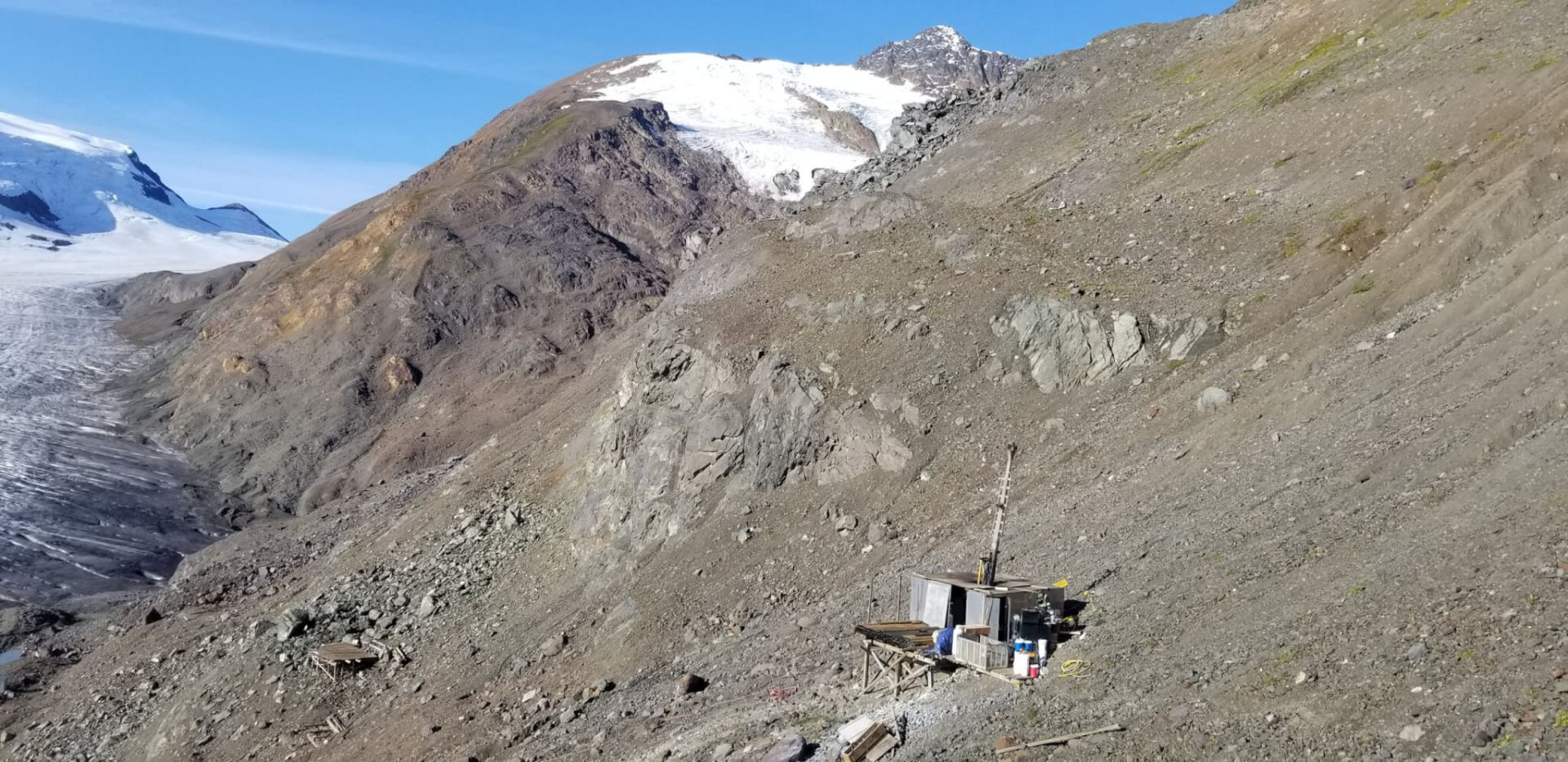
Lahontan’s sonic drill programme covers 96 holes and 1,740 meters (m) across the historic pads. The first 10 holes reported from Heap Leach Pad Two returned a weighted average of 0.50 g/t gold and 3.3 g/t silver. Cyanide-soluble gold response averaged 40%, with results ranging from 5% to 82%. Ann put the cost of moving pad material at about $5 a ton. She said the company plans to recrush it to improve permeability before releaching.
Ann argues the published 3.68-year payback understates the project. She said it includes a year of cushion and that, with pad material scheduled first, the company models payback at about 22 months. That schedule is not yet in a published study. Lahontan is building pre-feasibility-level work internally and sharing its mine schedule with prospective lenders.
Waste Rock & Low-Grade Stockpiles: Material Already in the Strip Plan
On November 9, 2026, Lahontan announced plans to drill test the Santa Fe East Waste Rock Storage Facility. The programme calls for up to 100 reverse-circulation holes averaging approximately 35 m in depth. The facility holds approximately 9.0 million tonnes of rock removed from the Santa Fe pit between 1988 and 1992, when the open-pit cut-off grade was approximately 0.55 g/t gold.
Material classified as waste under that cut-off may contain gold and silver recoverable through heap leaching today. Under the PEA production schedule, the facility is already moved as part of the stripping needed to reach the underlying Santa Fe resource. Testing it therefore addresses rock the mine plan handles in any case. Any recoverable gold and silver would offset part of a stripping cost already in the study.
Ann described the same pattern in historic low-grade stockpiles, which she said returned assays above 1 g/t. Pads, dumps and stockpiles together give Lahontan three sources of previously mined material to test before construction.
Interview with Kimberly Ann, CEO, Lahontan Gold
Permitting, Financing & the 2027 Production Target
The updated PEA was the final document needed to complete Santa Fe’s mine permit application. Ann said consultants are now converting it into the supporting reports, covering areas such as air quality and rock characterization, before submission and public comment. She said the company meets with state and federal regulators every week and is targeting permits around the second quarter of 2027. A contract miner has committed to a six-month build. That would allow a first gold pour in the fourth quarter of 2027 if permits arrive on schedule.
On financing, Lahontan has signed non-disclosure agreements with several debt providers, who are working with the company’s engineer on their own models. Ann is targeting a structure of 80% debt and 20% equity to limit dilution. She said the company is not pursuing a stream and is considering an offtake or straight debt. Once the Emergent transaction closes, Santa Fe has one royalty with a 1.25% interest on 24 patented claims. Ann understands it does not become payable until about 250,000 ounces have been produced.
Ann has spent about 20 years in mining. She said her previous company, in Peru, waited 22 months to drill its first hole because of permitting, which shaped her decision to build in Nevada. Co-founder Brian Maher, Senior Vice President of Mine Development and Exploration, is the company’s Qualified Person. Lahontan recently hired an engineer from the Florida Canyon operation.
West Santa Fe & the Emergent Metals Transaction
West Santa Fe lies 13 kilometers from Santa Fe on paved roads. Drilling in 2025 returned 36.6 m grading 3.11 g/t gold equivalent from surface, all oxide, including 10.7 m at 5.75 g/t gold equivalent. Cyanide-extractable recoveries across 158 samples averaged 81% for gold and 60% for silver. A maiden resource is targeted for early 2027. Ann said permitting started about a year ago and that she expects a full permit in 18 to 24 months, with even 100,000 ounces adding value as truckable feed.
On September 15, 2026, Lahontan signed a definitive arrangement agreement to acquire Emergent Metals Corp., the holder of the West Santa Fe option. The deal removes US$1.73 million in future option payments. It cancels 1% net smelter return royalties on West Santa Fe and 27 York claims at Santa Fe, and returns 2,000,000 Lahontan shares to treasury. It also adds the New York Canyon project, which adjoins Santa Fe’s southern boundary, and lifts Lahontan’s Walker Lane claim package to more than 93 square kilometers. Lahontan and Emergent shareholders are expected to own approximately 95.3% and 4.7% of the combined company. The transaction has not closed and requires Emergent shareholder approval, court orders and TSX Venture Exchange acceptance.
Beyond Santa Fe, Lahontan holds the Moho gold and silver project, where the company cites historic grades of 25 g/t gold and 300 g/t silver. It also holds the Redlich silver project next to the historic Candelaria open pit. Ann said Redlich could suit a joint venture partner and that she has four Nevada acquisition targets under review.
The Investment Thesis for Lahontan Gold
- The updated Preliminary Economic Assessment for Santa Fe shows an after-tax net present value of US$820 million at a 5% discount rate and a 40.1% internal rate of return at a US$3,600 gold price.
- Management estimates that historic heap leach pads hold about 200,000 ounces, and that material is not yet in the year 1 to year 3 mine schedule.
- Drill testing of the Santa Fe East waste rock facility targets about 9.0 million tonnes mined under a 0.55 grams per tonne cut-off, which the mine plan already moves as stripping.
- The pending Emergent Metals acquisition would give Lahontan full ownership of West Santa Fe and cancel royalties on West Santa Fe and 27 York claims.
- Management is targeting permits around the second quarter of 2027 and a first gold pour in the fourth quarter of 2027, funded by roughly 80% debt and 20% equity.
- Heap leach pad and waste rock assays, the West Santa Fe maiden resource targeted for early 2027, the Emergent shareholder vote and the Santa Fe permit decision are the next re-rating catalysts to monitor.
- Santa Fe’s base-case economics stand without the legacy material. The upside case depends on that material and on permit timing, both of which the company expects to clarify through 2027.
Macro Thematic Analysis
Walker Lane restarts share one structural feature. Mines that operated in the 1980s and 1990s left behind pads, dumps and stockpiles defined by the gold prices and cut-off grades of that period. Santa Fe’s waste rock was mined under a cut-off of approximately 0.55 g/t gold. Lahontan’s 2026 PEA base case is set at US$3,600 gold, against US$2,025 in its 2024 study. Material that failed the economic test in 1990 may pass it at current prices.
Ann said the higher price has changed how the company treats legacy material:
“Low grade stockpiles came back over a gram and I was like, who was calling it low grade stockpiles back in the day? So that’s why I call it the giggle factor, that there is no such thing as waste right now in Nevada, especially what the gold price is today and what we all think it could be in the future.”
For a developer, previously mined material has two cost advantages. It has already been broken, and in the case of heap leach pads, crushed. Lahontan’s plan to recrush and releach pad material at about $5 a ton of handling cost, according to Ann, reflects that profile.
Jurisdiction is the second variable. Ann’s previous company waited 22 months to drill its first hole in Peru. According to the company’s presentation, Santa Fe has year-round access, a substation on site and access to three water wells, and sits adjacent to an operating mine. The PEA’s low-price case of US$3,000 gold still returns an NPV5% of US$476.2 million. That gives the project room if prices retreat from the spot levels used in October.
TL;DR:
Lahontan Gold’s October 2026 PEA for the Santa Fe restart in Nevada’s Walker Lane shows a US$820 million after-tax NPV5% and a 40.1% IRR at US$3,600 gold, on US$172 million of initial capital. Chief Executive Officer Kimberly Ann says about 200,000 ounces on historic heap leach pads are not yet in the low-output years 1 to 3. Results from sonic drilling and a new 100-hole waste rock programme could change that. She models payback at about 22 months, against 3.68 years in the PEA. Lahontan is targeting permits around the second quarter of 2027 and first gold in the fourth quarter of 2027. The pending Emergent Metals deal would consolidate West Santa Fe.
FAQs (AI-Generated)
Analyst's Notes





Subscribe to Our Channel



Stay Informed