




Lifezone Metals: First-Quartile Nickel Project Advances Amid Market Oversupply



Lifezone's high-grade Kabanga project advances toward 2026 FID with first-quartile costs, strategic U.S. backing, and robust economics despite nickel surplus.
- Lifezone Metals is advancing its world-class Kabanga Nickel Project in Tanzania toward a mid-2026 Final Investment Decision, having completed a robust Feasibility Study showing after-tax NPV of $1.58 billion and 23.3% IRR.
- With all-in sustaining costs of $3.36/lb nickel (net of copper and cobalt credits), Kabanga ranks in the first quartile globally, providing structural cost advantages during the current nickel oversupply cycle.
- The company secured $75 million in H2 2025 through bridge financing and equity raises, fully funding pre-FID execution readiness activities including geotechnical drilling and engineering.
- U.S. government agencies including the Development Finance Corporation are actively engaged, positioning Kabanga as a strategic non-Indonesian nickel source for Western supply chains.
- With 52.2 million tonnes of proven and probable reserves grading 1.98% nickel, Kabanga represents one of the largest and highest-grade development-ready nickel sulfide deposits globally.
Introduction: Strategic Positioning in a Surplus Market
As global nickel markets face a projected structural oversupply through 2026, driven primarily by rapid Indonesian production expansion, Lifezone Metals Limited (NYSE: LZM) is advancing a counter-cyclical investment opportunity. The company's flagship Kabanga Nickel Project in Tanzania combines world-class geology, first-quartile cost positioning, and strategic Western alignment at a time when supply chain diversification has become a policy priority for the United States and allied nations.
Recent operations updates and capital raises demonstrate tangible progress toward a targeted mid-2026 Final Investment Decision, with execution readiness activities now underway following the completion of a definitive Feasibility Study in July 2025. For investors seeking exposure to critical minerals with structural cost advantages and geopolitical relevance, Kabanga presents a development-stage opportunity with de-risked technical foundations and advancing project finance discussions.
The timing of Kabanga's development phase, while occurring during a period of nickel market weakness, actually reinforces the project's fundamental value proposition. Unlike marginal producers facing margin compression, Kabanga's exceptional grade and polymetallic revenue streams position it to generate attractive returns across a wide range of price scenarios. This resilience becomes increasingly important as the industry navigates the supply-demand dynamics of the current cycle.
Company Overview: Cleaner Metals for Critical Industries
Lifezone Metals is a critical minerals development and technology company focused on delivering cleaner, more responsible metals production through its proprietary hydrometallurgical processing technology. The company's operations span two primary business segments: the development of the Kabanga Nickel Project in northwestern Tanzania, and a platinum-group metals recycling partnership with Glencore in the United States.
Founded on the principle that cleaner metals production can compete economically with conventional smelting, Lifezone has positioned itself at the intersection of ESG imperatives and supply chain security. The company's Hydromet Technology offers potentially lower energy consumption, reduced emissions, and competitive cost structures relative to traditional pyrometallurgical processes. These attributes align with both regulatory trends and corporate sustainability mandates that are reshaping the mining and metals sector.
Lifezone's management team brings deep experience in mining project development, metallurgical processing, and capital markets. Chris Showalter serves as Chief Executive Officer, bringing strategic vision to the organization's growth trajectory. Gerick Mouton serves as Chief Operating Officer, leading technical execution and project development. The board includes industry veterans with track records in project execution and strategic finance. The company maintains offices in New York and operational headquarters in Dar es Salaam, Tanzania, with technical teams supported by international engineering firm DRA Global.
The company's dual focus on project development and technology commercialization creates multiple pathways for value creation. While Kabanga represents the near-term catalyst and primary asset, the Hydromet Technology platform offers longer-term optionality through potential licensing, joint ventures, or application to other mineral processing opportunities globally.
Kabanga Nickel Project: World-Class Asset Fundamentals
The Kabanga Nickel Project hosts 52.2 million tonnes of Proven and Probable Mineral Reserves grading 1.98% nickel, 0.27% copper, and 0.15% cobalt on a 100% basis, with Lifezone holding 84% economic interest and the Government of Tanzania retaining 16%. These reserves, declared for the first time in the project's 50-year history following completion of the July 2025 Feasibility Study, position Kabanga among the largest and highest-grade undeveloped nickel sulfide deposits globally.
The significance of this grade cannot be overstated. At 1.98% nickel, Kabanga's reserves are nearly double the typical feed grade of Indonesian laterite operations, which average 1.0-1.3% nickel. This fundamental difference translates directly into lower mining costs per unit of contained metal, reduced processing volumes, and enhanced project economics. The deposit's massive sulfide and ultramafic nickel mineralization delivers both high metallurgical recoveries (87.3% for nickel, 95.6% for copper, 89.6% for cobalt) and strong by-product credits that substantially reduce net unit costs.
Additional Measured and Indicated Resources of 18.3 million tonnes (Lifezone attributable) grading 1.20% nickel provide near-term expansion optionality, while Inferred Resources of 13.5 million tonnes at 2.08% nickel offer long-term growth potential. Exploration targets including Safari Link and Safari Extension have estimated tonnage potential of 17.5 to 23.5 million tonnes at grades between 1.9 and 2.1% nickel equivalent, suggesting significant reserve life extension opportunities beyond the current 18-year mine plan.
Economic Fundamentals
The July 2025 Feasibility Study demonstrates robust project economics using conservative long-term pricing assumptions of $8.49/lb nickel, $4.30/lb copper, and $18.31/lb cobalt. Key metrics include after-tax net present value (8% discount rate) of $1.58 billion, internal rate of return of 23.3%, and capital payback period of 4.5 years from first production. Pre-production capital expenditure totals $942 million, implying a capital efficiency ratio (NPV divided by capex) of 1.4x.
Operating cost performance positions Kabanga in the first quartile of the global nickel cost curve, with all-in sustaining costs of $3.36/lb payable nickel after copper and cobalt by-product credits. Total site operating costs of $70.10 per tonne milled reflect the benefits of high-grade feed, conventional mining methods, and established infrastructure including grid power connectivity and proximity to the Tanzanian Standard Gauge Railway.
Life-of-mine metrics project total revenue of $14.1 billion and after-tax free cash flow of $4.6 billion over the 18-year base case mine plan operating at 3.4 million tonnes per annum steady-state throughput. The mine plan contemplates mechanized sublevel open stoping in underground operations, with concentrate production ramping to full capacity in Year 4 and sustained production of approximately 60,000 tonnes of nickel, 8,500 tonnes of copper, and 4,500 tonnes of cobalt annually at steady state.
The project's polymetallic nature provides natural revenue diversification, with copper and cobalt by-products contributing approximately 30% of gross revenue. This multi-commodity exposure reduces sensitivity to nickel-specific price volatility while providing participation in distinct demand drivers across electrification, stainless steel, and advanced manufacturing sectors.
Strategic Infrastructure Context
Kabanga benefits from Tanzania's ongoing infrastructure development program, including the Julius Nyerere Hydropower project (expected to add 2,115 MW of renewable baseload capacity), the Standard Gauge Railway linking the northwestern mining regions to the Port of Dar es Salaam, and power grid upgrades coordinated with Tanzania Electric Supply Company (TANESCO). The project currently receives reliable grid power with availability exceeding 90% in recent months, reducing reliance on diesel generation during development.
The Government of Tanzania has demonstrated strong support for the project through timely permitting, infrastructure coordination, and partnership in the 84/16 ownership structure. This alignment reflects Tanzania's broader economic development strategy to position natural resources as drivers of industrialization and technology transfer, with Kabanga representing the potential anchor for a domestic critical minerals processing hub. The project has received all major permits including the Special Mining Licence, with updated Environmental and Social Management Plans advancing through final approval stages.
Current Developments: Execution Readiness Phase
Lifezone raised $75 million in the second half of 2025 through two complementary transactions: a $60 million bridge loan facility from Taurus Mining Finance closed in September, and a $15 million registered direct equity offering completed in November. These funds provide full capital coverage for pre-FID execution readiness activities including geotechnical drilling, detailed engineering, procurement planning, and project finance structuring.
The company is advancing a multi-track financing strategy encompassing project-level debt, strategic equity partnerships, and potential offtake-linked funding. U.S. Development Finance Corporation (DFC) has provided an anchor expression of interest for project finance, while parallel discussions continue with Export Credit Agencies from Europe, Japan (JOGMEC), and South Africa, as well as commercial banks. The project finance process is led by Societe Generale, with Standard Chartered Bank appointed as financial advisor for strategic alternatives including potential asset-level partnership or divestiture.
Management has indicated that all strategic options remain under evaluation, with no binding agreements yet reached. The diversity of financing interest spanning development finance institutions, export credit agencies, commercial lenders, major mining companies, and offtake-focused investors reflects both the project's technical quality and its strategic positioning as a Western-aligned critical minerals source. Recent high-level diplomatic engagement, including discussions between Tanzanian President Samia Suluhu Hassan and U.S. Ambassador Andrew Lentz specifically focused on finalizing investment agreements for Kabanga, underscores the bilateral governmental support for project advancement.
Technical & Operational Progress
Gerick Mouton, Chief Operating Officer, Lifezone Metals stated that:
"Our technical teams are advancing early works, including geotechnical drilling and site preparation, while procurement and logistics planning are well underway. These steps are critical to de-risking the project and ensuring we are ready for execution following FID. Additionally, we are focused on building strong local partnerships that will enable timely delivery of the project while creating long-term benefits for Tanzanians."
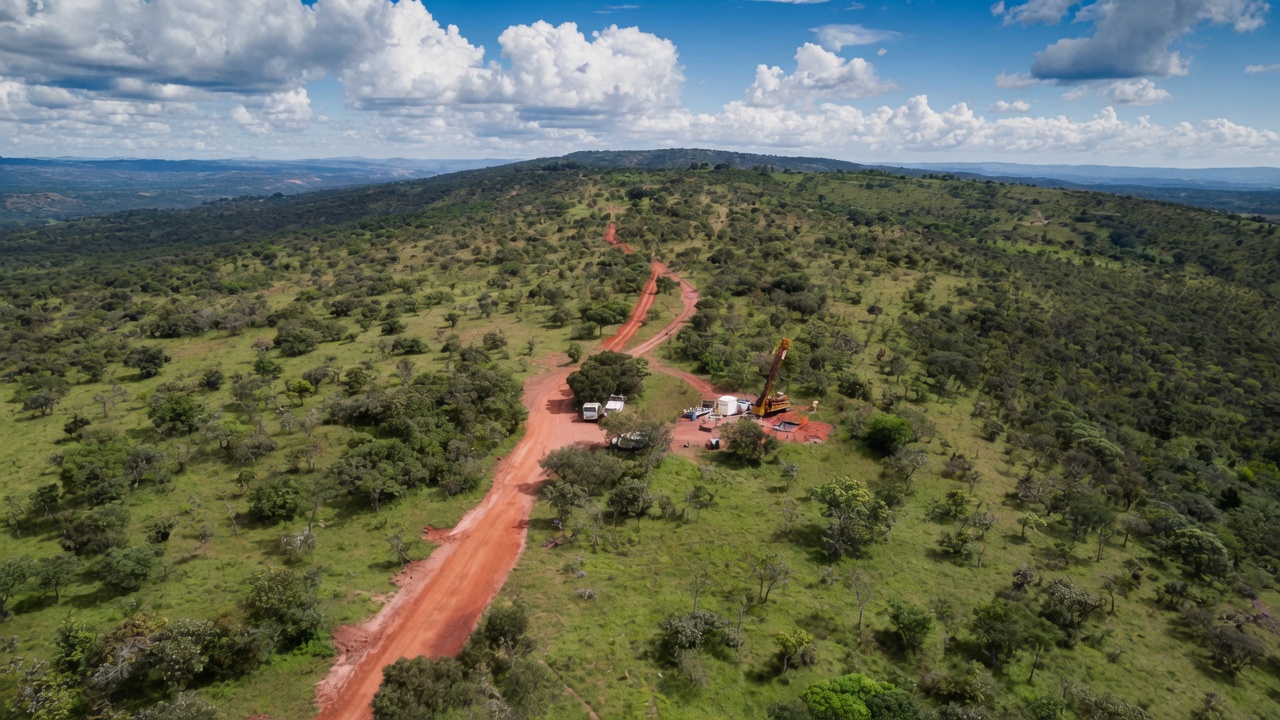
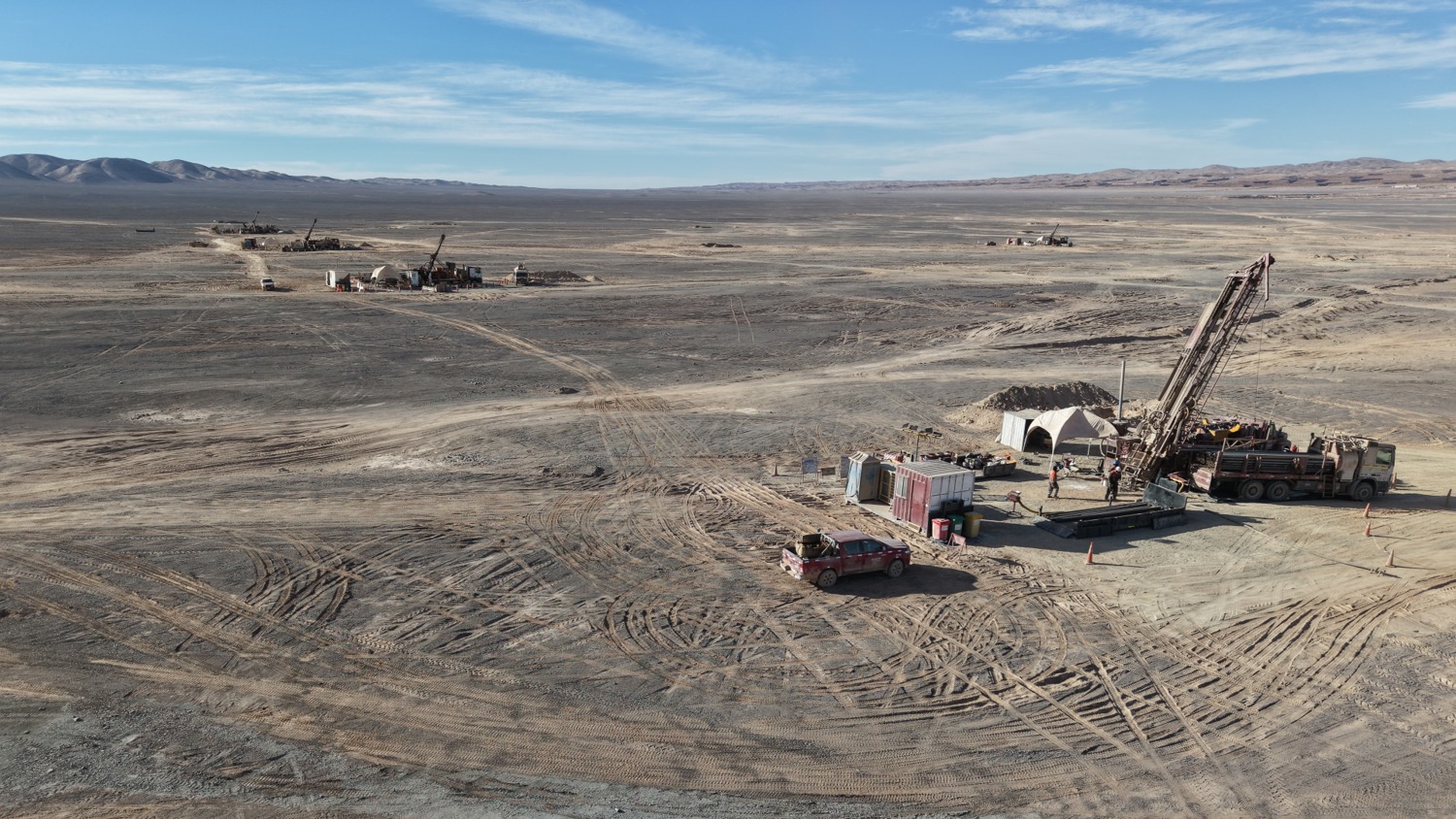
Early works activities commenced in late 2025 with underground and surface geotechnical drilling contracts awarded to support final mine design and infrastructure engineering. Site preparation activities include perimeter demarcation, camp expansion to accommodate approximately 300 personnel, and detailed topographic surveys to support bulk earthworks planning. The procurement strategy is being refined in coordination with DRA Global and Lifezone's technical team to optimize tied export credit support and identify domestic Tanzanian supply opportunities.
Environmental and social workstreams continue to advance with the updated Environmental and Social Management Plan (ESMP) awaiting final National Environment Management Council approval, while the international-standards Environmental and Social Impact Assessment completed in June 2025 supports development finance institution requirements. Cash compensation for 97% of Project Affected Households has been completed, with the Resettlement Action Plan aligned to IFC Performance Standard 5 and Tanzanian regulations. Co-design of livelihood restoration activities is scheduled to commence in early 2026.
Zero health, safety, environmental, or security incidents were reported during the second half of 2025, demonstrating effective risk management protocols during the ramp-up of pre-construction activities. Tembo Nickel, Lifezone's Tanzanian subsidiary, received a Compliance Excellence Award from the Mwanza Regional Commissioner in October 2025, recognizing environmental and regulatory performance standards. Currently, 97% of Tembo Nickel employees are Tanzanian nationals, with a comprehensive Project Labor Plan for the execution phase well progressed.
Market Timing & Strategic Considerations
Lifezone is advancing Kabanga during a period of nickel market oversupply driven by rapid Indonesian production growth, with surplus conditions forecast to persist through 2026 and potentially beyond. While this creates near-term price headwinds for the broader nickel sector, Kabanga's first-quartile cost positioning provides structural insulation: the project generates attractive returns at prices well below current spot levels and substantially below long-term price assumptions used in feasibility economics.
For perspective, CRU Group's 2025 nickel cost curve analysis places Kabanga's all-in sustaining costs among the lowest globally, with the vast majority of Indonesian hydrometallurgical and ferronickel operations positioned higher on the curve despite their volumetric dominance. This cost advantage reflects Kabanga's combination of high grade (nearly double typical Indonesian laterite feed), strong metallurgical recoveries, and valuable copper-cobalt by-product streams that offset base case operating expenses.
Moreover, the strategic context for Western-aligned nickel supply has intensified since 2023, driven by supply chain security concerns, critical minerals policy frameworks in the United States and European Union, and recognition that 64% concentration of global nickel production in Indonesia (much of it backed by Chinese investment) poses systemic risk for defense, energy transition, and advanced manufacturing applications. Kabanga's positioning as a Tier 1 asset in a stable jurisdiction with U.S. government engagement directly addresses these concerns.
Strategic Significance: Critical Minerals & Supply Chain Security
Nickel's classification on the U.S. Geological Survey's 2025 Critical Minerals List reflects its essential role in battery energy storage for artificial intelligence infrastructure, aerospace alloys for jet engines, defense applications including submarine construction and missile systems, and stainless steel for construction and industrial sectors. The U.S. currently produces minimal primary nickel domestically and relies heavily on imports, creating vulnerability in supply chains for technologies critical to national security and economic competitiveness.
Kabanga directly addresses this strategic gap as a large-scale, long-life nickel source in a jurisdiction with established mining governance, stable political institutions, and alignment with Western development finance institutions. The project has received bipartisan support through engagement with DFC, the Minerals Security Partnership, and the Partnership for Global Infrastructure and Investment, positioning it within the broader U.S. strategy to diversify critical mineral supply chains away from concentration risk in adversarial or strategically ambiguous regions.
The geopolitical dimension of nickel supply has evolved significantly in recent years. As electric vehicle adoption accelerates and data center energy storage requirements multiply, the concentration of nickel processing capacity in regions with uncertain long-term strategic alignment has emerged as a vulnerability for Western economies. Kabanga offers a solution: a large-scale, low-cost operation in a Commonwealth nation with established rule of law, transparent regulatory frameworks, and active participation in multilateral development institutions.
Technology Differentiation: Hydromet Processing
Beyond the asset itself, Lifezone's proprietary Hydromet Technology represents a potentially transformative approach to nickel refining that merges the traditionally separate smelting and refining steps into an integrated hydrometallurgical process. The technology targets lower energy consumption, reduced greenhouse gas emissions, and elimination of sulfur dioxide emissions relative to conventional pyrometallurgical smelting. These attributes align with increasingly stringent environmental regulations and corporate scope 3 emissions reduction commitments.
While Kabanga's base case economics assume conventional concentrate production and third-party smelting, the potential future integration of Hydromet processing could capture additional margin, reduce logistical complexity, and enable qualification for premium "green nickel" markets and carbon credit mechanisms. The company is advancing a parallel proof-of-concept through its U.S.-based platinum-group metals recycling partnership with Glencore, targeting commercial demonstration of Hydromet in PGM recovery from spent automotive catalytic converters by Q1 2026.
Investment Thesis: Five Reasons to Consider Lifezone Metals
- With AISC of $3.36/lb nickel net of credits, Kabanga generates positive margins even at nickel prices 40% below current consensus long-term forecasts, insulating investors from prolonged oversupply scenarios.
- Active DFC engagement, classification as a critical minerals project, and positioning as a Western alternative to Indonesian supply create potential for concessional financing terms, offtake support, and political risk mitigation not available to standard mining projects.
- Copper and cobalt by-products contribute approximately 30% of gross revenue, providing natural hedging against nickel-specific price volatility and exposure to separate demand drivers in electrification and battery markets.
- Mid-2026 FID target creates clear event-driven opportunity, with project finance closure, strategic partnership announcements, and construction commencement offering multiple value inflection points within a 12 to 18 month horizon.
- High-priority exploration targets with 17.5 to 23.5 Mt tonnage potential at similar grades to existing reserves provide pathway to mine life extension beyond base case 18 years, supporting sustained cash flow generation and potential brownfield expansion with minimal capital intensity.
- $75 million raised in H2 2025 eliminates near-term dilution risk, allowing management to focus on execution and project finance structuring rather than equity capital raising during a period of weak junior mining valuations.
Lifezone Metals presents a development-stage investment thesis characterized by world-class asset fundamentals, first-quartile cost positioning, strategic policy relevance, and advancing project finance discussions. For investors willing to accept construction and execution risk inherent in greenfield mining projects, Kabanga offers exposure to a scarce high-grade nickel sulfide deposit advancing toward production at a time when supply chain diversification imperatives create potential for premium valuations and concessional financing.
The current nickel market environment, characterized by structural oversupply and price pressure, paradoxically enhances Kabanga's relative competitive positioning by validating the critical importance of low-cost operations and potentially enabling more favorable construction economics through equipment and labor market dynamics. Projects that can deliver first-quartile returns even during surplus cycles historically emerge as long-term sector winners when markets inevitably rebalance.
Key risks include construction execution, financing completion, commodity price volatility, political and regulatory developments in Tanzania, and project-level operational challenges inherent in complex underground mining and processing operations. However, the combination of completed feasibility engineering, advancing permitting, demonstrated government support, and active engagement with multiple financing parties suggests de-risking progress consistent with the targeted mid-2026 FID timeline.
For institutional and retail investors seeking differentiated exposure to the energy transition and critical minerals themes beyond crowded lithium and rare earth sectors, Lifezone merits consideration as a high-quality development asset with strategic relevance, robust economics, and catalysts concentrated within a defined near-term window.
TL;DR
Lifezone Metals is advancing the world-class Kabanga Nickel Project in Tanzania toward mid-2026 FID with $1.58B after-tax NPV, first-quartile costs of $3.36/lb Ni, and active U.S. government backing. Despite global nickel oversupply, Kabanga's high grade and low costs provide structural advantages, while $75M in recent financing fully funds pre-FID execution. Strategic non-Indonesian supply positioning, 18-year mine life, and polymetallic revenue streams offer counter-cyclical opportunity for investors willing to accept development-stage risk.
FAQs (AI-Generated)
Kabanga's all-in sustaining costs of $3.36/lb nickel (net of by-product credits) position it in the first quartile globally, generating positive margins even at prices 40% below current long-term forecasts.
Lifezone is targeting mid-2026 for FID and financial close, following completion of execution readiness activities currently underway including geotechnical drilling, detailed engineering, and project finance structuring.
A multi-source package is being assembled including project-level debt (with U.S. DFC anchor interest), potential strategic equity from mining companies or offtakers, and Export Credit Agency support from Europe, Japan, and South Africa.
Kabanga addresses U.S. and allied supply chain security concerns by providing a large-scale, Western-aligned alternative to Indonesian-dominated nickel production, with formal engagement from U.S. Development Finance Corporation and bipartisan policy support.
Key risks include construction execution and cost overruns, completion of project financing on acceptable terms, nickel price volatility, political or regulatory changes in Tanzania, and operational challenges inherent in underground mining and processing.
Analyst's Notes





Subscribe to Our Channel


.jpg)

Stay Informed


