




Lifezone Metals’ Kabanga Nickel Project: Development-Stage Asset Targets 2026 FID


Lifezone's Kabanga project targets 2026 FID with first-quartile nickel costs and government financing interest addressing Western supply chain concentration concerns.
- Kabanga holds 52.2 million tonnes of proven and probable reserves grading 1.98% nickel, 0.27% copper, and 0.15% cobalt, with Lifezone controlling 84% and an 18-year mine life at 3.4 million tonnes annual throughput.
- July 2025 Feasibility Study reports $1.58 billion after-tax NPV at 23.3% IRR using $8.49/lb nickel pricing, with all-in sustaining costs of $3.36/lb nickel net of copper and cobalt credits.
- Special Mining Licence approved, environmental permits obtained, resettlement compensation 96% complete, and $60 million bridge financing secured from Taurus Mining Finance in September 2025.
- Project addresses supply chain concentration as Chinese-controlled Indonesian operations represent 64% of global nickel production, with US DFC and JOGMEC expressing financing interest.
- Glencore partnership in the US-based platinum-group metals recycling using Hydromet Technology targets feasibility study completion in Q1 2026.
Market Context: Critical Minerals & Supply Chain Concentration
Global nickel supply faces structural concentration in Indonesia, where Chinese state-backed investment has driven rapid laterite processing expansion since 2020. This dominance parallels earlier rare earth consolidation, creating dependencies Western governments now classify as strategic vulnerabilities. The US Geological Survey's 2025 Draft List identifies nickel as a critical mineral requiring supply chain mitigation planning.
Demand drivers extend beyond traditional stainless steel applications. The US Department of Energy identifies nickel in battery energy storage for AI data centers, while defense applications include aerospace superalloys and naval reactor components. These end-uses demonstrate limited substitution potential and sustained growth trajectories independent of consumer discretionary cycles.
Kabanga's positioning as a high-grade sulfide deposit differentiates it from Indonesian laterite operations that employ energy-intensive processing. Class 1 nickel from sulfide sources commands premiums in markets where carbon intensity and supply chain transparency carry increasing weight. Tanzania's location and partnership structure with Western financing institutions align with reshoring and friend-shoring policy trends.
Project Fundamentals: Technical & Economic Assessment
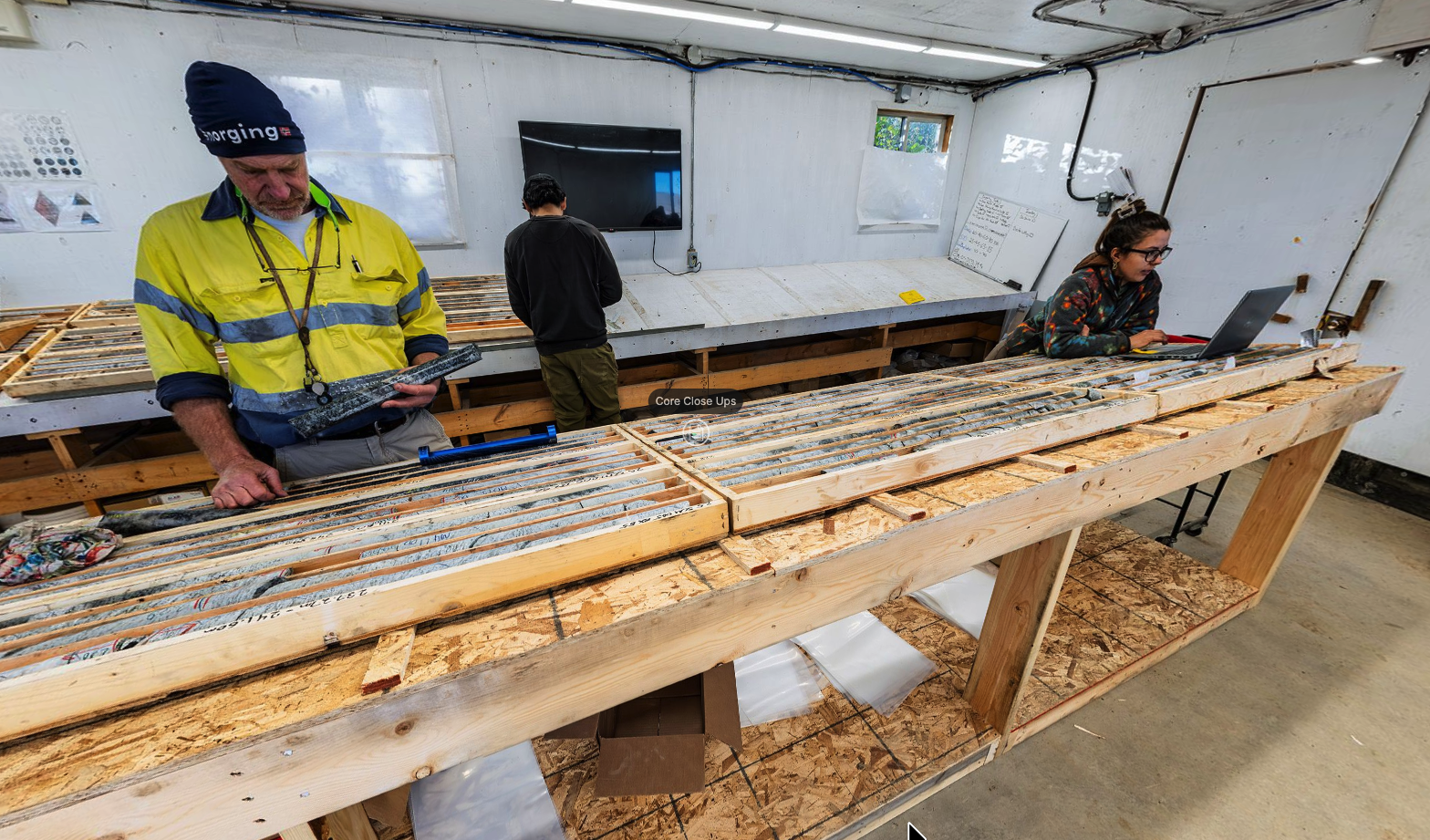
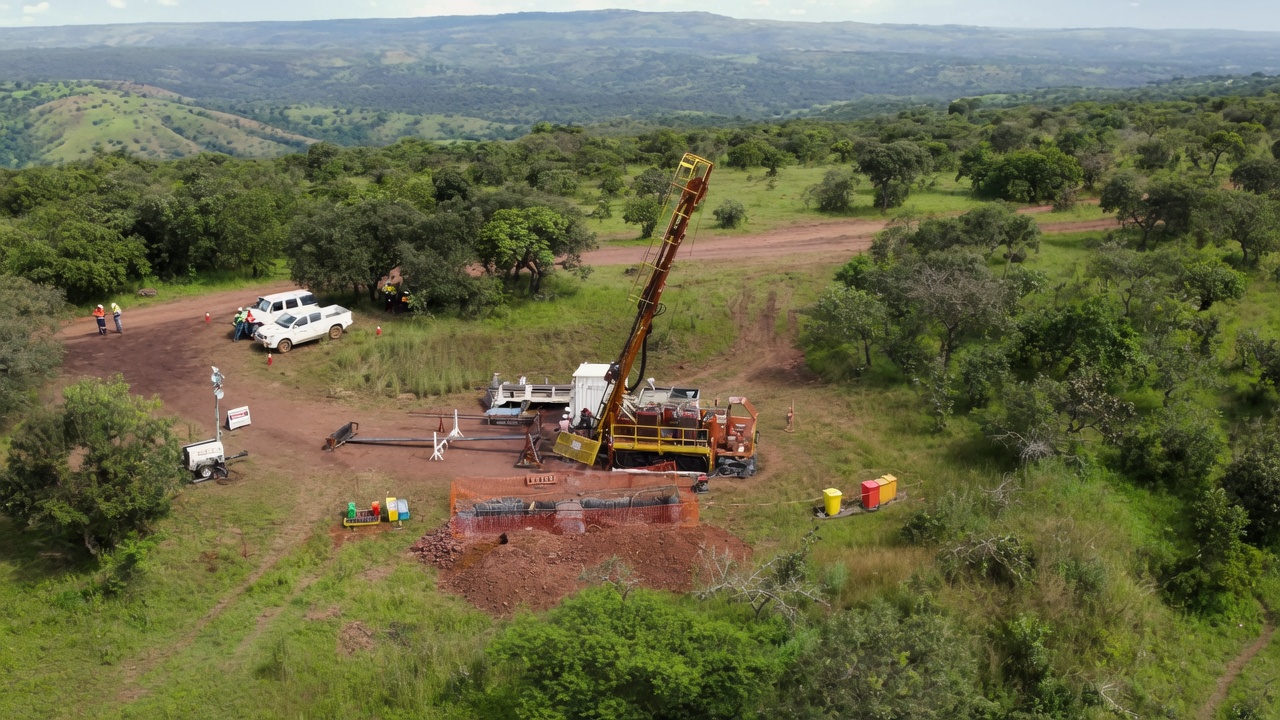
The July 2025 Feasibility Study marks a structural inflection point for the Kabanga nickel project, representing the first mineral reserve declaration in the asset’s five-decade exploration history. Cumulative historical investment exceeds $435 million across approximately 620 kilometers of drilling, providing a high level of geological and technical de-risking relative to earlier-stage peers. The reserve estimate is based on optimized economic cut-off grades for underground sublevel open stopping across multiple mineralized zones.
Management confirms that the project demonstrates Tier-1 economic characteristics. Lifezone CFO Ingo stated that the Kabanga project delivers an after-tax NPV of approximately $1.6 billion, a 23.3% IRR, and AISC of $3.36 per pound of nickel net of byproduct credits, noting that the July 2025 feasibility study marked “a new era” as the first fully bankable study released publicly after decades of exploration. These metrics position Kabanga in the lower quartile of the global nickel cost curve, supported by high-grade sulfide mineralization and meaningful copper and cobalt byproduct credits.
Metallurgical testing confirms that conventional flotation processing achieves 87.3% nickel recovery, 95.6% copper recovery, and 89.6% cobalt recovery, mitigating processing technology risk and supporting a standard concentrator flowsheet. Pre-production capital expenditure is estimated at $942 million, covering underground development, concentrator construction, tailings facilities, and infrastructure integration. The resulting ~1.4x NPV-to-capex ratio compares favorably with peer greenfield developments that require materially higher infrastructure buildout, underscoring capital efficiency and scalability.
Development Pathway: Execution Readiness & Financing
Board approval in July 2025 authorized entry into execution readiness phase, advancing remaining permitting requirements, finalizing technical engineering packages, and progressing commercial tenders for long-lead equipment. This phase bridges to the Final Investment Decision targeted for 2026, contingent on project financing close and completion of subsidiary technical work streams.
The Special Mining Licence provides 25-year tenure with renewal provisions under Tanzania's mining framework. Environmental and Social Impact Assessments received approval certificates from the National Environment Management Council following alignment with International Finance Corporation Performance Standards and Equator Principles. Resettlement Action Plan implementation reports 96% completion of cash compensation agreements as of July 2025.
The financing strategy pursues multiple parallel tracks. Standard Chartered Bank coordinates non-binding indications of interest, with term sheets from major miners, sovereign entities, and private equity firms. Societe Generale structures project finance discussions with development finance institutions and export credit agencies. The US DFC has provided anchor expressions of interest, while JOGMEC discussions continue regarding potential offtake-linked financing. Taurus Mining Finance provided a $60 million bridge facility in September 2025 to fund activities pending main financing close.
Strategic Positioning: Government Interest & Infrastructure
US government agency engagement reflects nickel's classification as a critical mineral and Kabanga's potential to diversify supply sources. The DFC's anchor financing interest and ongoing EXIM Bank discussions indicate alignment with US industrial policy objectives around supply chain security. Japan's JOGMEC partnership similarly reflects Tokyo's resource security strategy.
Tanzania's infrastructure investments reduce project-level capital requirements. The Standard Gauge Railway connects Dar es Salaam port through Dodoma to western regions, shortening concentrate transport routes. The Julius Nyerere Hydropower project at 2,115 megawatt capacity provides renewable power alternatives to diesel generation. These investments, supported by multilateral development banks, differentiate Kabanga from fully greenfield developments.
The Government of Tanzania holds 16% carried interest under the framework agreement, which grants Lifezone operational control and 100% offtake rights. This structure balances host country participation with investor operational authority. Local employment targets specify 91% of the operating workforce as Tanzanian nationals, with skills development programs planned during the construction and ramp-up phases.
Comparative Analysis: Cost Curve & Peer Positioning
Cost curve modeling places Kabanga in the first quartile at $3.36/lb nickel net of copper and cobalt credits. This positions the project competitively against established Sudbury Basin operations and favorably relative to Indonesian laterite processing facilities. First-quartile positioning provides margin protection during price downturns while maximizing leverage during tighter market conditions.
The reserve grade of 1.98% nickel represents a high-grade sulfide deposit among global development projects, with a tonnage scale comparable to major deposits while maintaining grade advantages that drive processing economics. In-situ value per tonne of $396.26 reflects the nickel-copper-cobalt polymetallic nature of the mineralization.
Resource expansion potential exists across four exploration targets with collective estimated tonnage of 17.5 to 23.5 million tonnes grading 1.9 to 2.1% nickel equivalent. These targets benefit from geophysical definition and geological continuity with known zones. Successful conversion would extend mine life beyond the current 18-year base case and potentially support throughput expansion.
Technology Diversification: Hydromet & PGM Recycling
Lifezone's Hydromet Technology represents a hydrometallurgical processing approach positioned as an alternative to conventional smelting for certain applications. The technology's commercial validation progresses through a partnership with Glencore on platinum, palladium, and rhodium recycling from catalytic converters in the United States. This venture targets pilot plant completion by the end of 2025 and a feasibility study in Q1 2026.
The PGM recycling project merges smelting and refining value chain steps, potentially capturing margin across multiple processing stages. Rhodium's classification as extremely critical to US supply chains and limited domestic recycling capacity provides strategic rationale. The project's expected low capital intensity and small footprint enable rapid implementation relative to mining developments.
Glencore invested $1.5 million for 6% project ownership with an option to fund 50% of capital expenditure. This structure validates technology readiness while enabling Lifezone to partner with a major commodity trader for feedstock sourcing and product marketing. Success would establish proof of concept for the Hydromet application to other metal systems.
Investment Considerations: Risks & Catalysts
Development-stage mining projects carry execution risks spanning permitting, financing, construction, and ramp-up phases. Kabanga's advanced status, with major approvals in place, reduces certain permitting risks, though subsidiary licenses remain pending. Financing negotiations, while progressing with multiple parties, have not yet closed. Terms and conditions may affect project returns and require additional equity participation.
The commodity price assumptions in the feasibility study use consensus long-term forecasts of $8.49/lb for nickel, $4.30/lb for copper, and $18.31/lb for cobalt. Actual prices will fluctuate based on supply-demand dynamics, with nickel markets particularly sensitive to Indonesian production decisions and evolving battery chemistry. Project economics demonstrates sensitivity to price assumptions across the commodity basket.
Near-term catalysts include Final Investment Decision timing, project financing close announcement, potential strategic partnership or ownership structure changes, and continued advancement of the PGM recycling project. Market capitalization of approximately $330 million at $3.97/share as of December 4, 2025, implies a valuation below the feasibility study NPV of $1.58 billion, though this gap reflects development risk discount, remaining financing needs, and time value considerations.
The Investment Thesis for Kabanga Development
- First-quartile cost structure at $3.36/lb nickel net of credits provides margin protection across commodity price cycles while maximizing upside during supply tightness.
- Government financing interest from US DFC and JOGMEC validates strategic importance and may provide favorable terms relative to commercial-only capital structures.
- 84% ownership with full offtake control enables direct end-user negotiations and potential supply chain premium capture versus minority-owned or royalty-burdened assets.
- Resource expansion targets totaling 17.5 to 23.5 million tonnes at 1.9 to 2.1% nickel equivalent offer mine life extension potential beyond 18-year base case.
- Tanzania infrastructure investments in rail, power, and port reduce project capital intensity and execution risk relative to fully greenfield remote developments.
- Hydromet Technology commercialization through Glencore PGM partnership provides optionality for standalone technology value realization independent of Kabanga mining operations.
Lifezone Metals advances Kabanga toward execution readiness for the 2026 Final Investment Decision as Western economies seek alternatives to concentrated nickel supply chains. The project's scale, grade, and first-quartile cost structure position it among significant undeveloped sulfide assets globally. Feasibility study economics demonstrate commercial viability under consensus commodity pricing, though actual returns will depend on construction execution and market conditions during operating life.
The involvement of US and Japanese government financing institutions reflects broader critical mineral supply chain priorities. Tanzania's infrastructure development and partnership framework reduce certain project risks while introducing jurisdictional considerations typical of international mining investments. Successful financing close and construction execution would transition the asset from development stage to producing status over approximately four years.
Investors considering exposure to critical minerals themes through development-stage assets should assess position sizing relative to execution risks, monitor financing progress and terms, and evaluate commodity price assumptions against their own market views. The company's technology diversification through PGM recycling provides additional optionality beyond the primary Kabanga mining asset.
TL;DR
Lifezone Metals is advancing its Kabanga Nickel Project in Tanzania toward a 2026 Final Investment Decision, with a July 2025 feasibility study confirming 52.2 million tonnes of reserves grading 1.98% nickel and first-quartile operating costs of $3.36 per pound. The project has secured key permits, completed 96% of resettlement compensation, and obtained $60 million in bridge financing. US and Japanese government agencies have expressed financing interest as Western nations seek alternatives to Chinese-controlled Indonesian nickel production. The company is simultaneously commercializing its Hydromet Technology through a Glencore partnership for platinum-group metals recycling in the United States.
FAQs (AI-Generated)
Lifezone targets 2026 for Final Investment Decision following execution readiness completion and project financing close.
he project sits in the first quartile with all-in sustaining costs of $3.36 per pound nickel net of copper and cobalt credits.
US Development Finance Corporation provided an anchor expression of interest, with ongoing discussions involving EXIM Bank and Japan's JOGMEC.
Tanzania's Standard Gauge Railway, Julius Nyerere Hydropower project, and Dar es Salaam port provide transport, power, and export infrastructure.
Glencore partnership on US PGM recycling targets pilot plant completion end of 2025 and feasibility study in Q1 2026.
Analyst's Notes





Subscribe to Our Channel












Stay Informed


