




New Found Gold's Transition to Producer Status Signals Re-rating Potential for De-risked Canadian Gold Developers


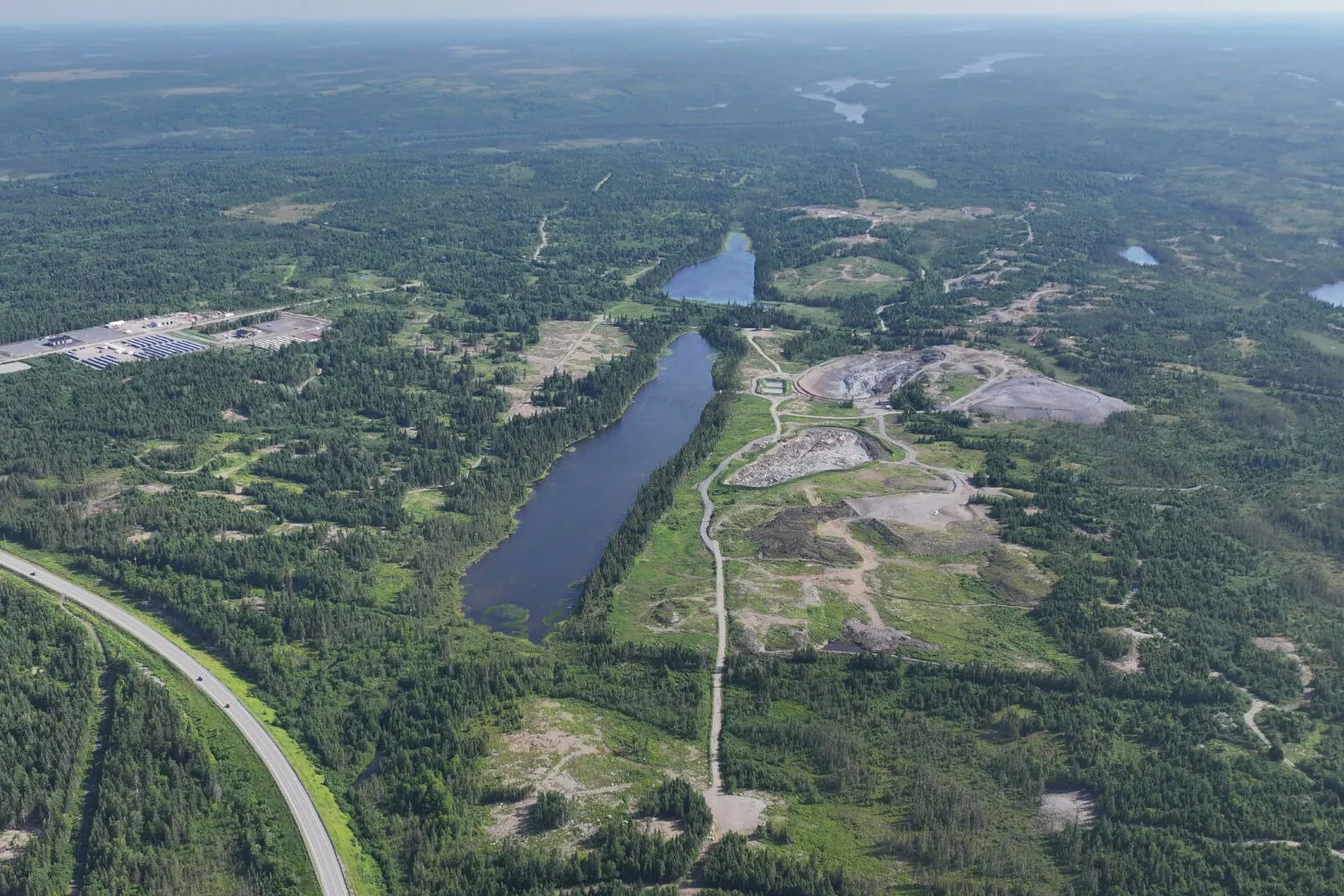
New Found Gold's transition to producer with Queensway and Hammerdown projects offers re-rating potential. NPV C$743M, 56% IRR, targeting H2 2027 production.
- New Found Gold's 2025 transformation marks a structural shift from exploration optionality to production-backed valuation, altering how investors should frame risk and upside.
- The acquisition of permitted infrastructure materially compresses timelines, reduces permitting risk, and improves capital efficiency relative to peer developers.
- Queensway's preliminary economic assessment indicates an after-tax NPV5% of C$743 million and IRR of 56.3% at US$2,500/oz gold, with AISC of US$1,256/oz.
- Management renewal and institutional backing, including Eric Sprott at 19% ownership, signal a deliberate pivot toward execution and capital discipline.
- Defined milestones through 2027, including Q1 2026 permit submission and H2 2027 first production target, create a catalyst pathway for potential re-rating.
Why Producer Transitions Matter in the Current Gold Investment Cycle
The gold sector is experiencing a notable divergence between capital allocation toward producing assets and the persistent discount applied to development-stage companies. This dynamic creates both risk and opportunity for investors seeking exposure to gold equities during a period of elevated commodity prices and constrained supply pipelines.
Gold Price Strength Meets Scarcity of Permitted Growth Projects
Gold's role as a monetary hedge has reasserted itself amid persistent macro uncertainty. Elevated fiscal deficits, geopolitical fragmentation, and interest rate volatility have reinforced demand for hard assets with limited counterparty risk. For equity investors, however, the relevant question has shifted from exploration upside toward deliverable ounces, cash flow visibility, and margin durability.
The scarcity of advanced, permitted projects in Tier-1 jurisdictions has become a defining feature of the current cycle. Multi-year permitting timelines in many regions have constrained the pipeline of new supply, creating premium valuations for assets that can demonstrate clear pathways to production.
The Valuation Gap Between Developers & First-Time Producers
The transition from explorer to developer to producer typically corresponds with distinct valuation inflection points. Exploration-stage companies trade primarily on geological optionality. Developers carry execution risk that the market discounts through lower enterprise value per resource ounce ratios. Producers receive valuations anchored in cash flow generation and operational track records.
This EV/oz re-rating dynamic creates asymmetric return potential for companies successfully navigating the transition. New Found Gold's current positioning offers a case study of this broader investment phenomenon.
New Found Gold's 2025 Inflection Point: From Discovery Narrative to Operating Reality
New Found Gold's strategic evolution represents a fundamental repositioning from pure exploration exposure toward tangible production assets. The company's acquisition strategy and corporate restructuring have created a differentiated profile among Canadian gold developers.
Strategic Acquisition as a Catalyst for De-risking
The acquisition of Maritime Resources altered New Found Gold's development trajectory by securing the Pine Cove Mill, a permitted mill and tailings facility, along with the Nugget Pond Hydrometallurgical Gold Plant. This infrastructure optionality provides capital efficiency advantages and schedule certainty that are difficult to replicate through greenfield development.
Keith Boyle, Chief Executive Officer of New Found Gold, outlined the company’s development rationale:
"We've got the Hammerdown Gold project which is a ramping up producing mine and we have the Pine Cove Mill, permitted mill and tailings… With the acquisition of Maritime, we managed to put our hands on that mill and we're advancing now on Queensway because we now have a mill to go to. "
Transitioning the Corporate Identity - Explorer to Emerging Producer
Markets historically struggle to appropriately price companies occupying the transition zone between exploration and production. New Found Gold's possession of operating and permitted infrastructure supports a different analytical framework than pure-play exploration exposure, incorporating cash flow potential and project finance optionality rather than relying solely on in-ground resource multiples.
Queensway: Asset Quality & Economics That Support Institutional Capital
The Queensway project represents the cornerstone of New Found Gold's development pipeline. Its resource quality, preliminary economics, and phased development strategy collectively position the asset to attract institutional capital seeking exposure to Canadian gold growth.
Resource Quality, Grade Profile & Metallurgy
Resource quality extends beyond headline ounces to encompass grade distribution and mine planning flexibility. At Queensway, the current mineral resource estimate covers less than 5% of the company's 110-kilometre strike extent, suggesting substantial expansion potential. Grade control drilling conducted is designed to update the resource estimate with higher confidence ahead of initial mining.
The Chief Executive Officer emphasized the grade profile's significance:
"We have a very positive and unique characteristic of high-grade core veins. That high-grade core is what we're after to get that cash flow quickly... We felt it important to get those assays out right away to show people what we're getting in the area that we'll be mining right up front."
PEA Economics & Cost Positioning
The preliminary economic assessment establishes Queensway's positioning within the global gold cost curve. At a base gold price of US$2,500/oz, the project indicates an after-tax net present value of C$743 million at a 5% discount rate, with an after-tax internal rate of return of 56.3%. All-in sustaining costs are estimated at US$1,256/oz for Queensway and US$912/oz for Hammerdown.
Initial capital expenditure for Phase 1 is outlined at C$155 million, representing moderate intensity relative to the production profile. This capital efficiency supports multiple financing pathways without excessive dilution.
Phased Development Strategy & Capital Staging
The phased development approach reduces both execution and funding risk. Rather than committing to a single large-scale construction program, staged expansion allows management to demonstrate operational competence and optimize subsequent phases based on actual performance.
Near-Term Production as a Strategic Bridge: Hammerdown's Role
The Hammerdown Gold project serves a specific strategic function within New Found Gold's corporate evolution, providing cash flow visibility and operational proof points ahead of Queensway development.
Cash Flow Visibility & Operational Proof Points
For first-time producers, early cash flow generation matters disproportionately. Beyond the direct financial contribution, initial production demonstrates management's ability to execute on operational plans and maintain cost discipline. The AISC profile at Hammerdown of US$912/oz suggests meaningful margin potential at current gold prices.
Keith Boyle described the operational approach:
"When we closed on November 13th we basically sent the SWAT team in and it was led by Rob Assabgui our Chief Operating Officer. We also appointed a new mine manager that has a very good geological background because Hammerdown and even Queensway, their mines, it's all about grade control. They're on the ground now planning out the ramp up with the right procedures to deliver the gold to the mill."
Reducing Equity Dilution Risk Ahead of Queensway
The strategic value of near-term cash flow extends to capital structure optimization. The company is working with project finance advisor Cutfield Freeman & Co. to structure the optimal financing package.
"The second part of the strategy was that cash flow [from Hammerdown] would become the equity portion of our project financing for Queensway. With initial capital cost of $155 million as outlined in our PEA, we're now in a position to look and advance that project financing."
Management, Governance & Execution Risk
Execution risk represents the dominant uncertainty for development-stage gold companies. Management capability and institutional backing collectively determine whether project economics translate into shareholder returns.
Leadership Refresh & Operator DNA
New Found Gold's leadership refresh has emphasized mine-building experience and operational discipline. The operational team, led by Chief Operating Officer Robert Assabgui, focuses on grade control and minimizing dilution in high-grade deposits where rigorous geological oversight is critical to delivering predicted gold content to the mill.
Institutional Backing & Capital Markets Signalling
The company maintains a treasury of approximately C$87 million as of 30 September 2025. Cornerstone investor Eric Sprott holds 19% ownership, with institutional investors collectively representing more than 20% of the share register. This backing provides enhanced liquidity and governance discipline supporting long-term value creation.
Jurisdictional & Infrastructure Advantage in Newfoundland & Labrador
Project location influences both development execution and investor risk assessment. Newfoundland and Labrador is consistently ranked among the top 10 mining jurisdictions globally, offering regulatory clarity and infrastructure access.
Political, Regulatory & ESG Alignment
The province maintains a mining-positive stance with a stated goal of developing five new mines by 2030. Infrastructure advantages include Trans-Canada Highway access and renewable power availability, reducing capital requirements and operational complexity.
Permitting Certainty as an Economic Asset
Established regulatory frameworks in Newfoundland and Labrador provide comparative advantage for developers seeking to minimize timeline uncertainty relative to jurisdictions where environmental licensing processes extend over multiple years.
Exploration Upside Without Dependency: Optionality, Not Necessity
New Found Gold's district-scale land position provides exploration leverage without requiring discovery success to justify current valuation.
District-Scale Land Position & Underexplored Strike Length
The current mineral resource estimate covers less than 5% of the 110-kilometre strike extent, with multiple prospective targets beyond defined resource areas. Recent drilling at Dropkick, located 11 kilometres north of the resource, confirms high-grade mineralization extends beyond current boundaries.
"Led by Melissa Render, our President, she will put a team in place to really take advantage of the great exploration potential there... We announced about a month ago the drill results of a target 11 kilometres north of the resource called Dropkick."
The Investment Thesis for New Found Gold
- Transition from explorer to producer compresses valuation discount rates as execution risk declines and cash flow visibility improves.
- Permitted infrastructure shortens time to cash flow and reduces execution risk relative to greenfield development.
- Low-cost profiles with AISC below US$1,300/oz offer downside protection and leverage to gold price upside.
- Phased development with C$155 million initial capex supports capital discipline.
- Near-term production from Hammerdown strengthens balance sheet optionality ahead of Queensway.
- Tier-1 jurisdiction positioning in Newfoundland and Labrador lowers geopolitical and regulatory risk.
- Institutional backing from Eric Sprott and over 20% institutional ownership enhances credibility.
- Exploration upside across 110 kilometres of strike provides optionality without dependency on discovery for base case economics.
How New Found Gold's Milestones Contribute to the Investment Equation
New Found Gold's corporate transformation establishes a clear relationship between strategic repositioning, risk reduction, and valuation relevance. The acquisition of permitted infrastructure, combined with defined development milestones, creates a catalyst pathway differentiated from peer developers.
Keith Boyle outlined the forward timeline:
"Advancing the Queensway gold project to production in the latter half of 2027… In 2026, we're going to continue on that execution of getting to cash flow at Queensway... We'll submit our permit in the first quarter for Queensway and in the latter half we expect to get permitted and start the development.
For investors seeking exposure to Canadian gold growth, companies that have moved beyond discovery into execution-backed development merit reassessment. New Found Gold's positioning exemplifies the re-rating potential available when permitted assets, operational capability, and institutional capital converge within a favorable jurisdictional framework.
TL;DR
New Found Gold is transforming from a pure explorer to an emerging producer, acquiring permitted infrastructure including the Pine Cove Mill through its Maritime Resources acquisition. The Queensway project shows strong economics with an after-tax NPV of C$743 million and 56.3% IRR at US$2,500/oz gold, with AISC of US$1,256/oz. Hammerdown provides near-term cash flow at US$912/oz AISC, serving as equity for Queensway financing. Key milestones include Q1 2026 permit submission and H2 2027 first production. With Eric Sprott holding 19% and C$87 million in treasury, the company is positioned for potential re-rating as it executes on its Newfoundland development pathway.
FAQs (AI-Generated)
The preliminary economic assessment indicates an after-tax NPV of C$743 million at a 5% discount rate and an after-tax IRR of 56.3% at US$2,500/oz gold. All-in sustaining costs are estimated at US$1,256/oz, with initial Phase 1 capital expenditure of C$155 million.
The company targets first production in the second half of 2027, with permit submission planned for Q1 2026 and permitting expected in the latter half of 2026.
The acquisition secured permitted infrastructure including the Pine Cove Mill and Nugget Pond Hydrometallurgical Gold Plant, compressing development timelines and reducing permitting risk compared to greenfield development.
Eric Sprott holds 19% ownership, with institutional investors collectively representing more than 20% of the share register. The company maintains approximately C$87 million in treasury as of September 30, 2025.
The province ranks among the top 10 mining jurisdictions globally, offering regulatory clarity, a mining-positive government targeting five new mines by 2030, Trans-Canada Highway access, and renewable power availability.
Analyst's Notes





Subscribe to Our Channel


.png)






Stay Informed






















