




NioCorp Developments: Advancing Niobium, Scandium, REE Project Toward 2026 Financing & Construction


.webp)
NioCorp targets Q2 2026 financing for Elk Creek critical minerals project with $300M+ cash, accelerated EXIM Bank talks, rare earth prices doubled, 75% niobium under offtake.
- NioCorp raised over $370 million in 2025, including a $10 million US Department of War grant, and has commenced detailed engineering for a $45 million underground mine portal project starting February 2026.
- The company is progressing with its US Export-Import Bank loan application for $780 million, with the bank operating at "Trump speed" after designating NioCorp as a top priority.
- Non-Chinese rare earth prices have surged dramatically - NdPr at $110-120/kg (vs. $55/kg in July 2025) and heavy rare earths like dysprosium at $1,250/kg outside China (vs. $250/kg inside).
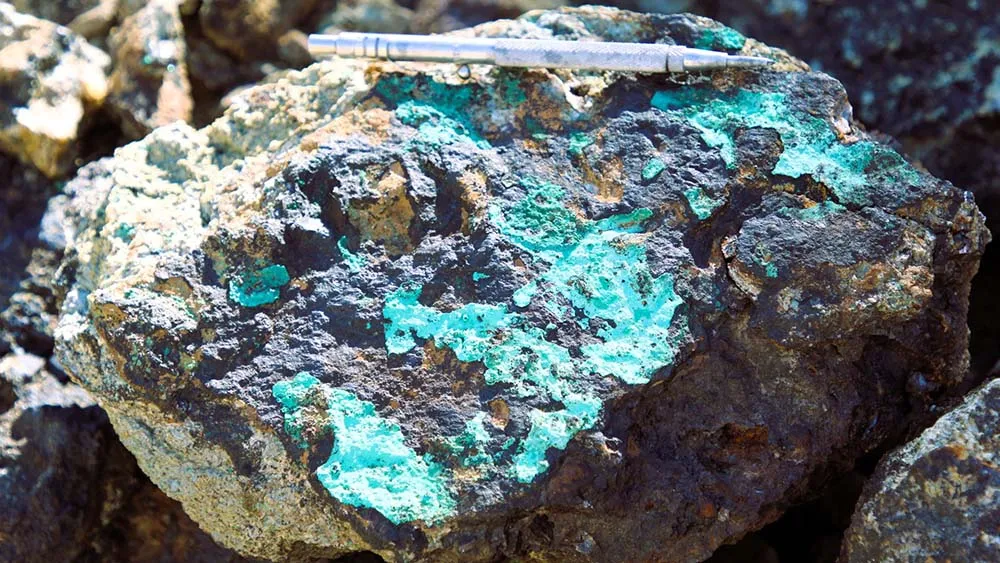
- The Elk Creek project contains four critical minerals - niobium (75% under offtake), scandium (12 tons/year contracted), titanium, and magnetic rare earths.
- NioCorp is in discussions with several federal agencies, including the US Department of War, while building a complete scandium supply chain and exploring downstream opportunities in niobium pentoxide and rare earth metal production.
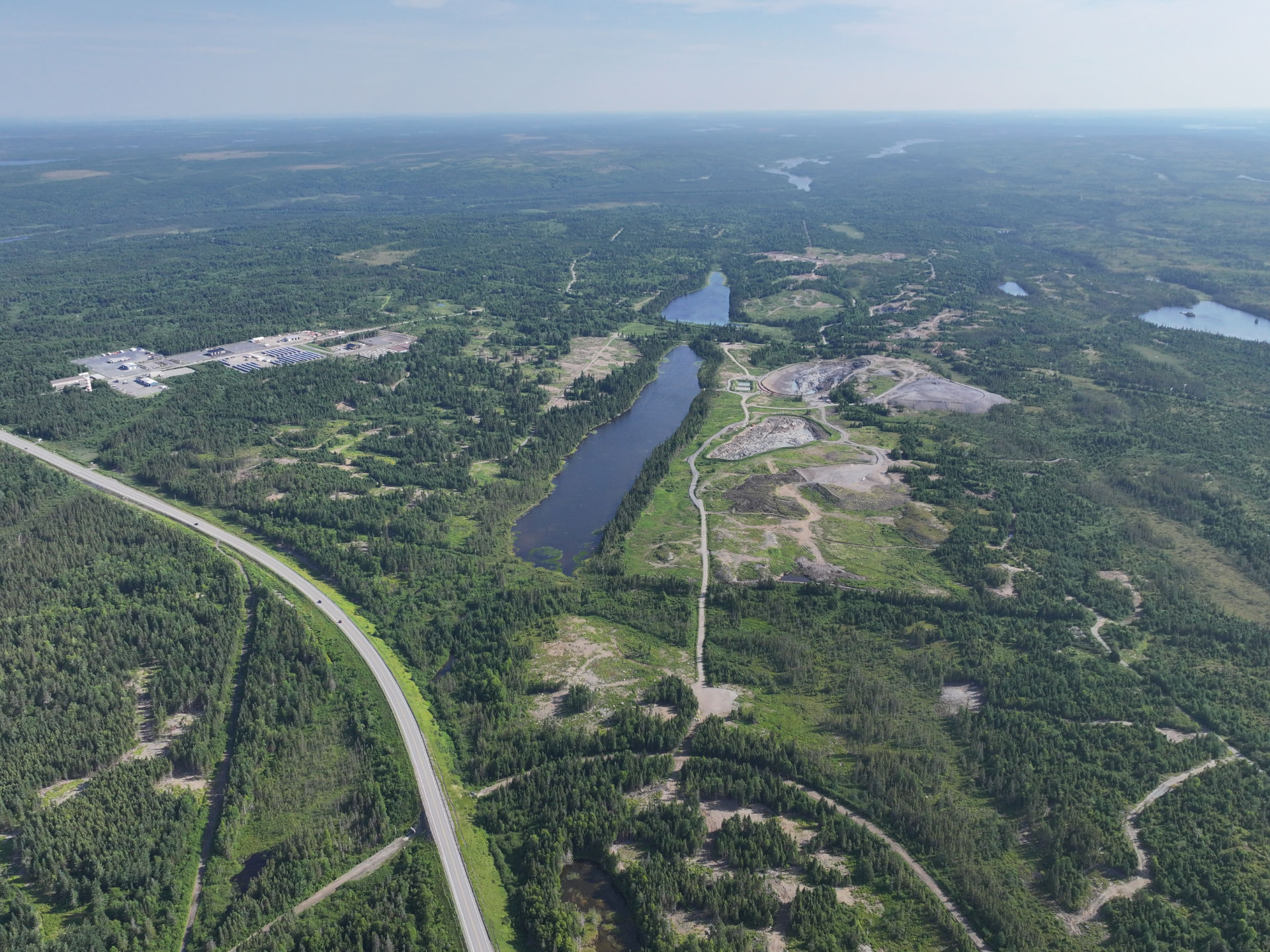
NioCorp Developments stands at a pivotal juncture as the company transitions from development to construction of its Elk Creek critical minerals project in southeast Nebraska. With over $300 million in the bank following a record fundraising year and accelerating engagement with the US Export-Import Bank, the company is positioning itself to capitalise on surging rare earth prices and growing US government support for domestic critical mineral supply chains. The project's significance extends beyond typical mining ventures, as it addresses 100% import dependence for several strategic materials including niobium, scandium, and heavy rare earths essential to defense, aerospace, and advanced manufacturing applications.
Record Capital Raise Enables Portal Construction
NioCorp's 2025 performance was defined by successful capital formation, with Executive Chairman and CEO Mark Smith reporting that the company raised over $370 million during the calendar year. This included a strategically important $10 million grant from the Department of War, which funded a drilling program specifically designed to upgrade reserves from probable to proven status - a critical requirement for Export-Import Bank financing. The grant also supported engineering upgrades for the company's new process flow diagram, ensuring that technical specifications reach feasibility study standards.
With this capital cushion, NioCorp's board has approved commencement of the "portal project," a $45 million undertaking that will establish access from the surface into the underground limestone formation. Detailed engineering has been underway for over a month, with earth-moving operations scheduled to begin in February 2026. This nine-to-ten-month effort demonstrates management confidence in securing full project financing within four to five months, positioning the company for a formal groundbreaking ceremony that Smith anticipates will attract thousands of shareholders.
Accelerated Export-Import Bank Engagement
Perhaps the most significant development is the acceleration in discussions with the US Export-Import Bank. After two and a half years of extensive due diligence - which Smith characterises as exceeding anything he's encountered in his career - the bank designated NioCorp as a "very top priority project".
Smith reports a remarkable shift in engagement intensity:
"In the last two weeks, I have received more emails and more phone calls from EXIM than I did in all of 2025. They are now moving at what we like to call ‘Trump speed’ with this loan process."
The company continues to advance its due diligence process with EXIM, as it works toward a $780 million loan. Smith expresses confidence that full project financing, including both EXIM debt and equity components, can be completed in 2026, though he acknowledges his tendency toward optimism and notes that timelines can vary.
Interview with Mark Smith, Executive Chairman, NioCorp Developments
Diversified Revenue Streams Reduce Risk
Unlike pure-play rare earth projects, NioCorp's diversification across four critical mineral categories provides revenue stability and risk mitigation. Niobium, which represents the project's primary target and approximately the largest revenue component, benefits from exceptional price stability at around $50 per kilogram - a level maintained for considerable time. The company has secured definitive, enforceable offtake agreements covering three-quarters of its ferroniobium production, providing revenue certainty for debt financing purposes.
Scandium represents perhaps the most intriguing opportunity, with the company targeting 100 tons per year of production - roughly triple current global supply outside China. Smith disputes concerns about market saturation, arguing instead that "there is latent demand for this mineral" that vastly exceeds current and projected supply. Applications span defense (where NioCorp is working with Lockheed Martin and other contractors), aerospace, and automotive sectors. The company has already secured a definitive offtake agreement for 12 tons per year. Non-Chinese scandium pricing ranges from $2,000-3,000 per kilogram versus approximately $700/kg in China.
Titanium, where the US imports roughly 85% of supply, provides additional revenue diversification, while the rare earth component could provide additional upside exposure to critical magnet materials without the concentration risk of rare earth-focused projects.
Strategic Off-take Development
Securing sufficient offtake agreements remains a critical near-term priority as NioCorp works to satisfy Export-Import Bank requirements for binding commitments. The company is pursuing two parallel strategies: negotiating individual enforceable agreements with end-users, and exploring a comprehensive agreement whereby a single party would take all production not currently under contract.
Smith acknowledges the complexity of securing enforceable commitments from individual companies for a project that remains three years from operation:
"It's actually quite complicated to get individual companies to take enforceable offtake agreements with a project that isn't fully financed and has three years of construction to go."
He distinguishes sharply between non-binding letters of intent - which he characterises as easy to obtain - and the enforceable agreements that provide the revenue certainty required for project financing. The company expects to announce multiple offtake agreements between now and Q2 2026 to ensure adequate debt capacity.
Government Partnership Philosophy
NioCorp is actively engaged with several federal agencies and Smith frames government intervention not as concerning overreach but as necessary correction to Chinese market dominance achieved through sustained subsidisation and strategic price manipulation.
"It's courageous of the US government to do that and it stops this cycle that we keep going through with China lowering prices, getting 100% market share, letting prices go up until junior miners can get financing, and then as soon as financing is just about done, they pull the market their way again."
He views price supports as providing a protective period - typically ten years - during which US companies can develop competitive advantages while creating domestic supply chains.
Rather than viewing government equity participation as problematic, Smith sees strategic benefits: credibility with other investors, access to a partner with substantial resources, and elimination of constant market financing pressures. He emphasises that government stakes remain minority positions (5-15%) that provide voice without commanding control, characterising the arrangement as partnership rather than nationalisation.
Downstream Integration Strategy
NioCorp is selectively pursuing vertical integration where it addresses supply chain gaps or serves national security interests. For scandium, the company is committed to a complete domestic supply chain, having invested $8.4 million to acquire aluminum-scandium master alloy assets and intellectual property. The company has demonstrated the capability to produce the 0.1-2% scandium-content alloys that end-users require, in partnership with IBC Advanced Alloys in Indiana.
For niobium, NioCorp plans to begin with ferroniobium production due to broad customer specifications, but intends to move downstream into high-purity niobium pentoxide - a material desired by the Department of War and MRI manufacturers - and ultimately niobium metal, which offers the highest margins in the niobium space. Smith is clear about boundaries:
"We won't become a competitor to a customer. That's very central to me."
In rare earths, the company is exploring metal production to address a significant supply chain gap, as current production is concentrated in Vietnam, China, and limited operations at Less Common Metals in the UK. NioCorp believes its scandium metal process may be adaptable to rare earth metal production, with testing currently underway.
Competitive Positioning and Market Outlook
Smith positions NioCorp as complementary to, rather than competitive with, other US rare earth developers. He acknowledges MP Materials' world-class light rare earth ore body, but notes limitations in heavy rare earth production from that deposit. Similarly, USA Rare Earth focuses primarily on light rare earths and magnet manufacturing.
NioCorp's heavy rare earth resource base - particularly for dysprosium and terbium essential to high-temperature permanent magnets - could position the company as a critical supplier to both MP Materials and USA Rare Earth as they develop magnet manufacturing operations. Smith emphasises that even combined production from current and planned operations will not satisfy total US demand, making multiple supply sources necessary rather than excessive.
This only addresses a fraction of US requirements, supporting Smith's confidence in market absorption. He views potential rare earth economics as enhancing rather than defining the project, with the stability of niobium and titanium revenues providing downside protection against rare earth price volatility.
The Investment Thesis for NioCorp Developments
- Accelerated Funding: With over $300 million in cash and the $45 million portal project representing the only pre-financing construction commitment, NioCorp has eliminated near-term funding risk while maintaining substantial liquidity through anticipated Q2 2026 project financing close
- Rare Earth Pricing Inflection: Non-Chinese rare earth prices have doubled to tripled since mid-2025, with government price floors and Chinese export restrictions creating sustained pricing differentials
- De-Risked Financing Path: After 2.5 years of due diligence, US Export-Import Bank has designated NioCorp as top priority with accelerated engagement ("Trump speed"), targeting 65/35 debt-to-equity structure for the $1.2 billion project providing approximately $780 million in debt financing
- Product Diversification: Four distinct critical minerals (niobium, rare earths, scandium, titanium) reduce concentration risk, with niobium providing exceptional price stability and 75% of ferroniobium production under definitive offtake agreements
- Strategic Government Partnership Potential: Active Department of War discussions, with company well-positioned given multiple critical minerals at single site addressing 100% import dependence
- Supply Chain Criticality: Project addresses complete US import dependence for niobium, scandium, with the potential of heavy magnetic rare earths (dysprosium, and terbium), with production insufficient to meet domestic demand even when combined with other planned US operations
- Scandium Market Creation: 100 tons annual scandium production (3x current ex-China supply) positions company to capture latent demand from defense, aerospace, and automotive applications, with acquisition of master alloy capabilities generating immediate customer inquiries
- Heavy Rare Earth Advantage: Dysprosium and terbium resource provides optionality for high-temperature permanent magnet supply
- Valuation Disconnect: Despite 350-400% share price appreciation over past year, management views current valuation as significantly below intrinsic value based on project economics, with catalysts including updated feasibility study, offtake announcements, EXIM binding loan approval, and potential DoW support
- Near-Term Catalyst Pipeline: Multiple value-recognition events scheduled including an updated feasibility study, offtake agreement announcements, EXIM loan approval, and potential Department of War support
Macro Thematic Analysis
The US government's intervention in critical mineral markets represents a fundamental shift from free-market principles toward strategic industrial policy, driven by recognition that Chinese dominance in processing and refining creates unacceptable supply chain vulnerabilities for defense, technology, and energy transition applications. Price floors, equity investments, and direct grants are establishing protected development periods allowing domestic producers to achieve scale and develop competitive advantages without facing the cyclical price manipulation that has historically prevented Western mining projects from reaching production.
This approach acknowledges that China's subsidised pricing and integrated supply chains cannot be competed against through purely capitalistic means, requiring government partnership to re-establish regional supply chains. Smith captures the strategic imperative: "These products need to be available in regional markets now, not worldwide markets. And that's where all these economies are headed." The policy framework creates sustained pricing support while maintaining private ownership and operational control, enabling companies like NioCorp to justify the substantial capital investments required for complex critical mineral projects.
As protection periods are time-limited (typically ten years), the approach incentivises technological innovation and operational efficiency rather than creating permanent dependence, balancing near-term support with long-term competitiveness requirements for a post-subsidy environment.
TL;DR: Executive Summary
NioCorp Developments is advancing toward complete project financing in 2026 with over $300 million in cash, accelerated US Export-Import Bank engagement, and an updated feasibility study that will include rare earths. The Elk Creek project offers exposure to a unique and diversified critical minerals basket addressing 100% US import dependence, with 75% of ferroniobium production under definitive offtake and active Department of War discussions.
Analyst's Notes





Subscribe to Our Channel




Stay Informed


