




Omai Gold's Fifth Resource Estimate Raises Indicated Gold to 2.5 Million Ounces Across Wenot and Gilt Deposits



A 50,000-metre drill programme is now active across both deposits, with an updated PEA incorporating Wenot and Gilt expected within two to three months.
- The combined Indicated Mineral Resource Estimate (MRE) grew 17.6% to 2,495,000 ounces of gold at an average grade of 2.04 grams per tonne (g/t Au), while the combined Inferred MRE rose 24.7% to 5,465,000 ounces at 1.59 g/t Au.
- At the Wenot Deposit, the Indicated MRE increased 49.8% to 1,453,000 ounces at an average grade of 1.59 g/t Au, following 31 additional drill holes totalling 15,004 metres since the August 2025 estimate.
- At the Gilt Deposit, the Inferred MRE rose 120.3% to 1,465,000 ounces at 3.22 g/t Au, supported by new deep drilling and a refined geological model that expanded the number of mapped gold zones from 11 to 26.
- A 50,000-metre drill programme is underway with five active drill rigs, focused on resource expansion and conversion of Inferred ounces to Indicated.
- An updated PEA incorporating both the Wenot open pit and Gilt underground deposit is planned for completion within two to three months.
Omai Gold Mines Corp. (TSXV: OMG | OTCQB: OMGGF) is a Canada-based gold exploration and development company focused on expanding and advancing two gold deposits at its wholly owned Omai Gold Project in Guyana, South America. The Omai Gold Project is one of the fastest-growing gold camps in the Guiana Shield, a prolific gold-bearing belt spanning northern South America. The project is located on the same site as the former Omai Gold Mine, which produced over 3.7 million ounces of gold between 1993 and 2005, and benefits from existing infrastructure including an on-site airstrip, cleared land, and road access to Guyana's two largest cities, Georgetown and Linden. Guyana has shown government and community support for large-scale mine development.
Updated Mineral Resource Estimate: Expansion for Wenot and Gilt Deposits
Omai Gold's fifth MRE, effective 7 April 2026, covers the company's two gold deposits at the Omai Gold Project. An MRE categorises the gold in the ground into two tiers: "Indicated" resources are estimated with sufficient confidence to be used in mine planning, while "Inferred" resources carry less certainty and require further drilling to confirm. The combined Indicated MRE rose 17.6% to 2,495,000 ounces at 2.04 g/t Au, and the combined Inferred MRE grew 24.7% to 5,465,000 ounces at 1.59 g/t Au. Both deposits remain open at depth.
The Wenot Deposit accounted for the majority of the Indicated resource growth. Following 31 additional drill holes totalling 15,004 metres since the August 2025 MRE, the geological model for Wenot was substantially refined. The Indicated MRE increased 49.8% to 1,453,000 ounces, with average grade improving 8.9% to 1.59 g/t Au. Increased drilling density within the high-grade "Dike Corridor" and the central Quartz Feldspar Porphyry zone allowed approximately 483,000 ounces to be upgraded from the Inferred to the Indicated category. The Inferred MRE for Wenot also grew 7.6% to 3,999,000 ounces, with additions along the full 2.5-kilometre strike of the deposit, including extensions at the western end and within the sedimentary sequence on the southern side.
The Gilt Deposit update was driven by two new deep drill holes, the deepest of which reached 960 metres. These enabled a comprehensive revision of Gilt's geological model, expanding the number of individually mapped gold zones from 11 to 26. This refined approach better confines above-grade mineralisation and reduces internal waste within each zone. The Inferred MRE for Gilt more than doubled, rising 120.3% to 1,465,000 ounces at 3.22 g/t Au. The Indicated MRE decreased 9.5% to 1,042,000 ounces, though average grade improved 3.4% to 3.33 g/t Au, reflecting the application of a higher cut-off grade of 1.7 g/t Au and more selective mineralisation domain criteria.
Wenot and Gilt Creek Deposits: Development Progress
The updated Wenot MRE was modelled using a gold price assumption of US$3,000 per ounce, up from US$2,500 per ounce in the prior estimate, while maintaining the same cut-off grade of 0.30 g/t Au. Mineralisation at Wenot spans a 2.5-kilometre corridor, with recent drilling adding resources at the western end of the deposit and along the southern side within the sedimentary sequence. The Wenot resource is modelled under a constrained open pit approach with a minor underground component. Process gold recoveries for Wenot are assumed at 90% for softer surface material and 92% for fresh rock at depth.
Gilt is modelled as an underground deposit, with its shallowest point approximately 275 metres below surface and its deepest drilled point at 960 metres. The upper section of the deposit was previously mined between 1993 and 2005 and produced 2.4 million ounces of gold. The current resource estimate begins below that mined-out zone. The two new deep drill holes each intersected more than 700 metres of the Gilt intrusion, confirming that gold mineralisation extends into the surrounding volcanic rocks beyond the intrusion's edges. Process gold recoveries for Gilt are assumed at 92%.
The two deposits are modelled separately, with Wenot under an open pit scenario and Gilt under an underground scenario. A deep hole drilled at Wenot in 2025 intersected the deposit's main mineralised structure 700 metres below the base of the current resource, confirming that the system is open at depth. Similarly, Gilt remains open at depth, and new drilling has shown the gold zones extending into the adjacent volcanic rocks, which contributed to the substantial increase in Gilt's Inferred MRE. Both deposits will be incorporated into the upcoming updated PEA for the first time.
Updated Preliminary Economic Assessment and Future Plans
The baseline PEA, published in April 2024, was based on an open pit-only scenario at Wenot and incorporated less than 30% of the current global resource. An updated PEA is now planned, covering the expanded Wenot open pit and the Gilt underground deposit.
President and CEO Elaine Ellingham stated:
"Our next major catalyst is the Preliminary Economic Assessment, expected to be completed in 2 to 3 months. We are continuing to aggressively drill to increase the Mineral Resources and to upgrade the Inferred Resources, as we set our sights on a future Prefeasibility or Feasibility Study."
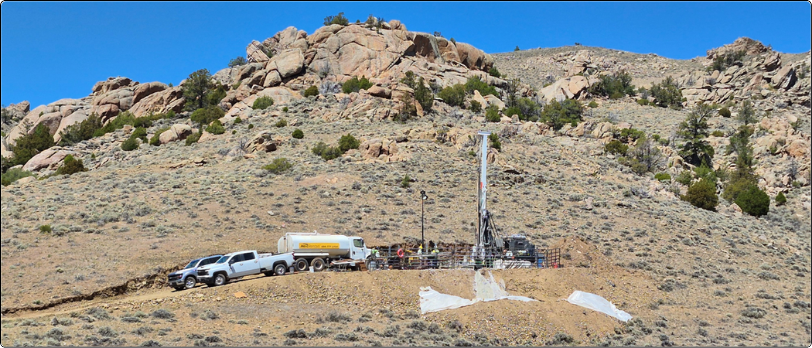
The 50,000-metre drill programme is currently running five drill rigs simultaneously. At Wenot, drilling is focused on testing the limits of the deposit at both its eastern and western extents, and on converting Inferred ounces to Indicated. Additional drilling is also targeting nearby gold occurrences for possible near-surface, higher-grade satellite deposits. Conversion of Inferred ounces to Indicated is a requirement for advancing to a Prefeasibility Study (PFS), where Inferred resources cannot be used in an economic analysis.
The Omai Gold Project benefits from road access connecting the site to Guyana's main highway, which links Georgetown, Linden, and northern Brazil.
President and CEO Elaine Ellingham noted:
"Omai's unique road access and location just ten kilometres from Guyana's main road that connects to the two largest towns in Guyana and to northern Brazil, will continue to simplify logistics as the project advances. Omai's legacy benefits include an on-site airstrip, a cleared site, known metallurgical recoveries, and established tailings sites."
The project also benefits from government and community support for large-scale mine development in Guyana, which the company has cited as a favourable permitting environment.
Conclusion
Omai Gold's fifth successive resource update records a combined Indicated MRE of 2,495,000 ounces at 2.04 g/t Au and an Inferred MRE of 5,465,000 ounces at 1.59 g/t Au across the Wenot and Gilt deposits. Both deposits remain open at depth, with the current drill programme targeting further resource growth and category upgrades. The next stated milestone is the updated PEA, expected within two to three months, which will for the first time incorporate both the Wenot open pit and the Gilt underground deposit. Following the PEA, the company's stated objective is advancement towards a Prefeasibility or Feasibility Study.
Analyst's Notes





Subscribe to Our Channel




Stay Informed






















