Perseus Upsizes Debt Facility to US$400m & Signals a New Phase of Capital Flexibility in African Gold


Perseus Mining's US$400m refinancing strengthens balance-sheet optionality, with 125bp margin compression and oversubscription from eight banks validating asset quality.
- Perseus Mining's US$400m refinancing, executed on 23 December 2025, materially strengthens balance-sheet optionality at a point where capital discipline, not capital access, is the key differentiator in gold equities.
- Oversubscription and margin compression validate asset quality and cash-flow durability across Perseus's West African portfolio.
- Enhanced liquidity reframes the investment debate from funding risk to capital allocation efficiency, growth sequencing, and shareholder returns.
- The refinancing positions Perseus as a scarce, self-funded mid-tier African producer capable of advancing growth without dilution.
- For investors, the refinancing is less about leverage and more about strategic timing, execution confidence, and valuation re-rating potential.
Why Balance-Sheet Strength Is Becoming the Primary Differentiator in Gold Equities
The gold mining sector has entered a phase where capital access alone no longer separates winners from laggards. With spot gold prices trading above US$2,500 per ounce for much of 2024 and into 2025, most producers can demonstrate theoretical profitability. The more consequential question for institutional investors has shifted from whether a company can fund itself to how efficiently that capital will be deployed.
From Capital Scarcity to Capital Selectivity
Rising equity costs across mining equities have coincided with strong gold prices, creating an unusual dynamic. Companies that once might have tapped equity markets for growth capital are now constrained by investor selectivity. The cost of dilution has increased even as the underlying commodity has appreciated. In this environment, liquidity buffers serve a dual function. They provide resilience against volatile macro and geopolitical conditions while simultaneously enabling opportunistic capital deployment when competitors face funding constraints.
What Lenders See That Equity Markets Often Miss
Bank underwriting represents a distinct form of asset validation. Unlike equity markets, which often discount emerging-market exposure or apply blanket risk premiums to African jurisdictions, credit markets conduct granular assessments of cash-flow resilience, operational consistency, and management credibility. When lenders compete to participate in a facility, they are expressing forward-looking confidence in asset quality that equity valuations may not yet reflect.
Craig Jones, Managing Director and Chief Executive Officer of Perseus Mining, framed the company's financial position in terms that underscore this distinction:
"We continued to build on our cash position for the quarter, ending up with net cash and bullion of US$837 million... We've got over US$800 million of money in the bank."
Perseus's US$400m Refinancing & What Changed for Investors
The refinancing executed on 23 December 2025 represents more than a routine extension of existing credit facilities. The transaction's structure, terms, and market reception each carry distinct signals about how lenders and, by extension, institutional capital view the company's operating model and growth trajectory.
Facility Structure & Terms That Matter
The upsized facility increased from US$300m to US$400m, with an additional US$100m accordion option available for future expansion. The three-year tenor includes 1+1 year extension options, providing flexibility to align drawdowns with capital expenditure timing. Notably, the facility carries no minimum hedging requirements, allowing Perseus to maintain full exposure to gold price movements rather than locking in forward sales at potentially lower prices.
Covenant flexibility has also improved, reflecting the enhanced credit profile that lenders assigned to the company. These structural features collectively indicate that banks view Perseus's cash-flow generation as sufficiently robust to support repayment across a range of gold price scenarios.
Margin Compression as a Signal
Perhaps the most telling aspect of the refinancing is the 125 basis point reduction in margin achieved through reverse-flexed pricing. This compression occurred in the context of oversubscription exceeding 100 percent, with participation from a broad syndicate including Citi and Nedbank as Mandated Lead Arrangers and Bookrunners, alongside Macquarie Bank, Absa Bank, FirstRand Bank, Standard Bank, and new participants JP Morgan and Standard Chartered. When multiple global and regional banks compete to lend at lower rates, they are effectively expressing a collective view that the borrower's risk profile has improved.
Lee-Anne de Bruin, Chief Financial Officer, characterized the market response:
"The oversubscription was a major endorsement of our credit profile and asset quality."
Liquidity as a Strategic Asset
For Perseus, the refinancing transforms liquidity from a defensive buffer against operational or market disruptions into an offensive tool for value creation. The distinction matters for how investors should evaluate the company's capital allocation framework and growth optionality.
The US$1.2bn Liquidity Position
With net cash and bullion of US$837m as of 30 September 2025 and the new US$400m facility, Perseus commands total liquidity exceeding US$1.2bn. This positions the company in a fundamentally different category than peers who remain reliant on equity markets or project-level financing to fund development. The liquidity surplus creates optionality that would be difficult for competitors facing tighter capital constraints to replicate.
Capital Allocation Pathways
The refinancing opens multiple capital allocation pathways that were previously constrained or unavailable. Organic growth can be accelerated without the need to sequence projects based on funding availability. Selective merger and acquisition opportunities in West Africa, where asset quality varies widely, can be pursued from a position of strength. Counter-cyclical investment during periods of market stress becomes viable when competitors are forced to retrench. Share buybacks and dividend sustainability gain credibility when backed by demonstrated liquidity rather than projected cash flows.
Jones addressed the company's capacity to fund its strategic objectives without external capital:
"At this stage, there's no need for us to take any debt on. We can fund all of our aspirations through the cash that we have on the balance sheet."
Operational Cash Flow as the Foundation of Credit Confidence
The willingness of Tier-1 banks to extend credit on improved terms ultimately reflects their assessment of Perseus's ability to generate consistent operating cash flow across market cycles. This confidence rests on observable cost structures and margin resilience rather than speculative projections.
Cost Structure & Margin Resilience
Perseus delivered fiscal year 2025 weighted average all-in sustaining costs of US$1,235 per ounce, beating guidance of US$1,250-1,280 per ounce and positioning the company in the lower half of the global cost curve. At prevailing gold prices above US$2,500 per ounce, this translates to cash margins exceeding US$1,300 per ounce.The reported EBITDA margin of 59.3 percent for FY2025 compares favorably to global peer medians and provides substantial buffer against gold price volatility.
Why Operating Leverage Matters More Than Gold Price Beta
For investors evaluating gold equities, the distinction between gold price exposure and operating leverage carries significant implications for returns. Companies with high AISC require gold prices to rise substantially before incremental revenue converts to free cash flow. Perseus's cost structure enables self-funding of development capital expenditure, reduces reliance on hedging or equity issuance, and converts a higher proportion of gold price upside into shareholder returns.
Jones emphasized the organization's commitment to cost discipline:
"I look at the cost performance of this organization and the cost commitment of this organization is very strong."
Asset Quality, Jurisdiction & Lender Considerations
Credit markets assess not only current cash generation but also the durability and extensibility of the underlying asset base. Perseus's diversified production portfolio and development pipeline provide lenders with visibility into cash-flow generation extending well beyond the facility's tenor.
Diversified West African Production Base
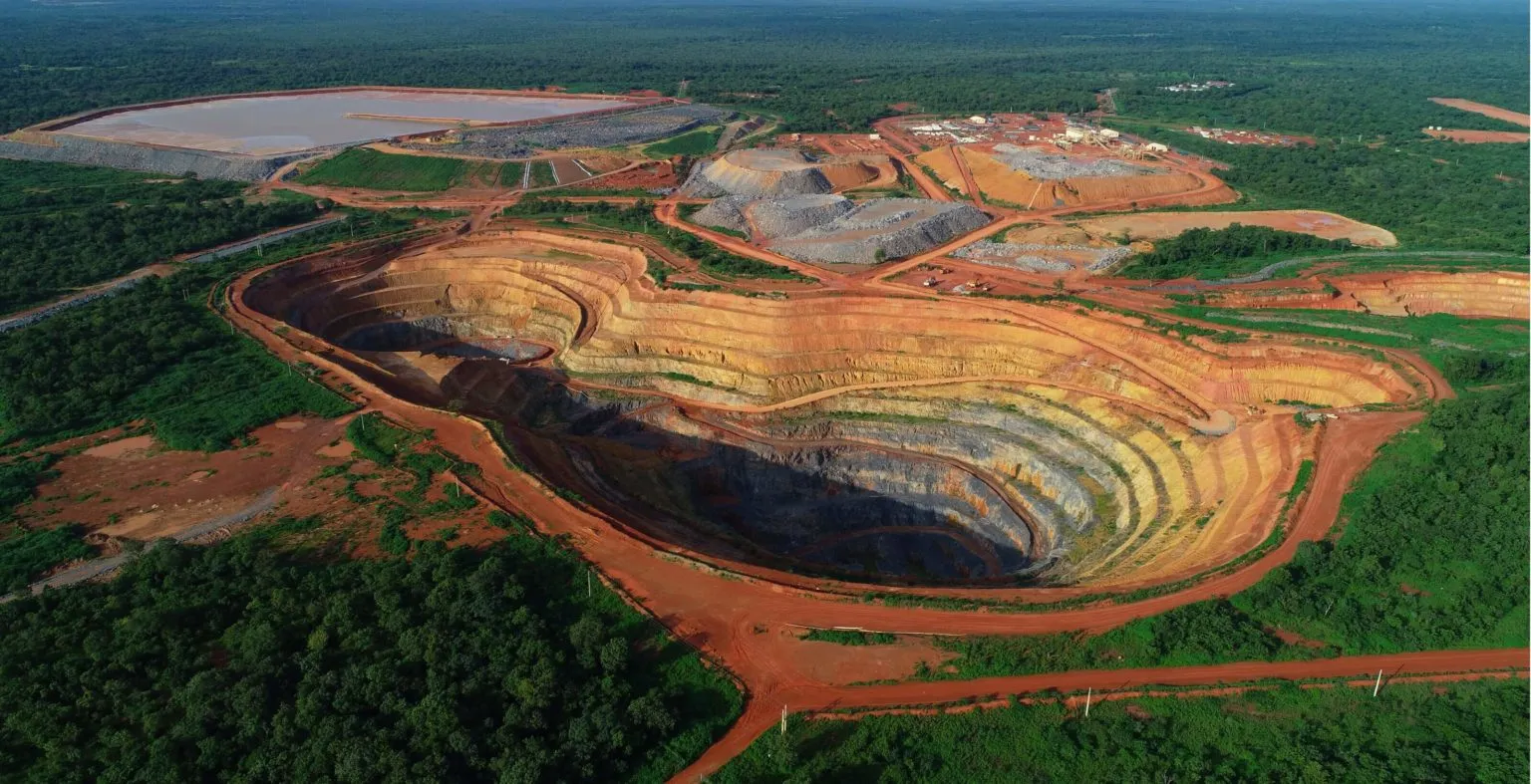
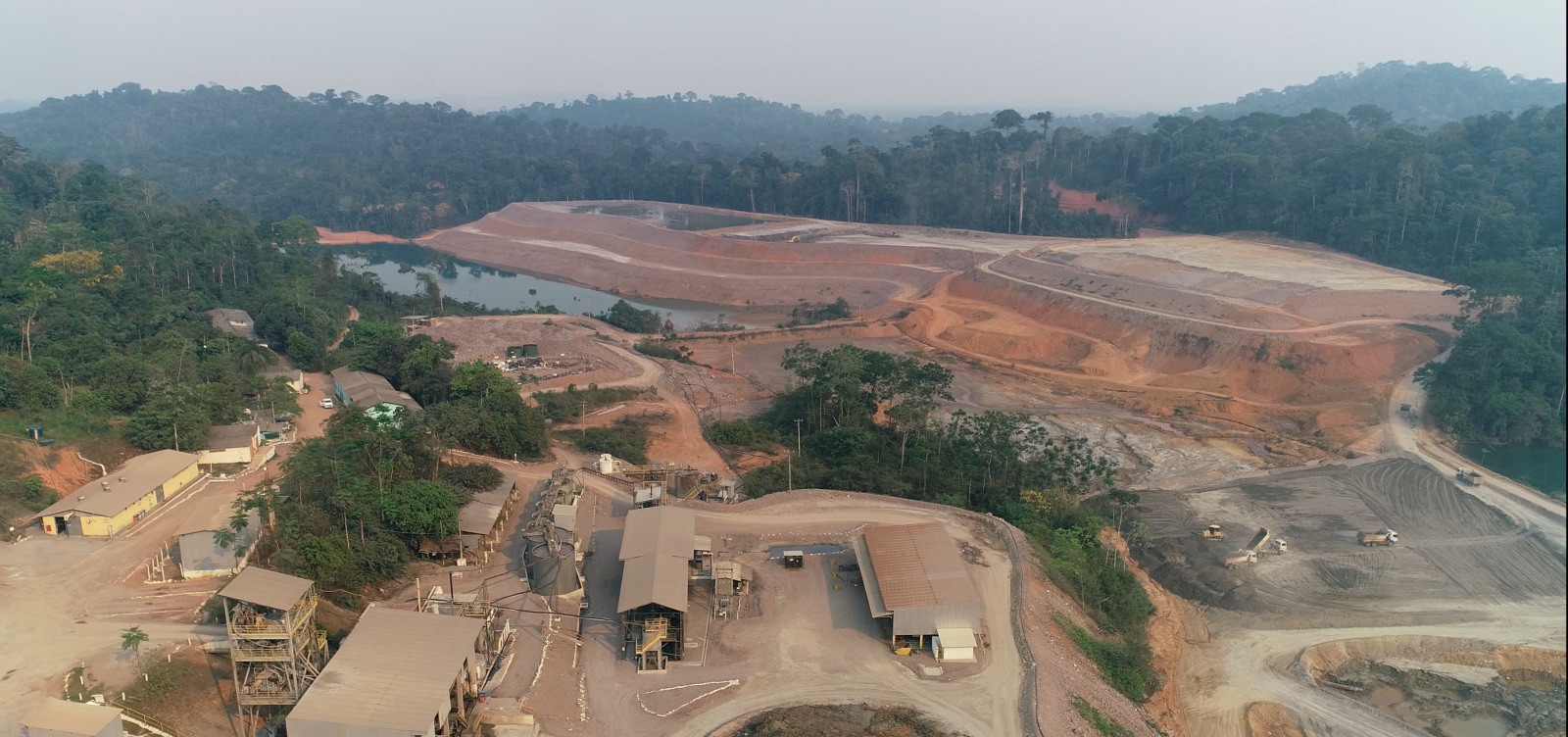
Perseus operates three producing mines across two West African jurisdictions. Yaouré and Sissingué in Côte d'Ivoire, along with Edikan in Ghana, collectively contributed production of 496,551 ounces in fiscal year 2025. Geographic diversification across multiple regulatory regimes and geological settings reduces operational concentration risk, a factor that credit committees weigh heavily in underwriting decisions.
Development Pipeline & Cash-Flow Extension
The company's development pipeline extends the cash-flow horizon beyond current mine lives. Nyanzaga in Tanzania represents the most significant near-term catalyst, with first gold targeted for January 2027. Early works and earthworks for the CIL and milling areas are progressing, with Ngoma Bypass roadworks underway.
The CMA Underground development at Yaouré addresses mine-life extension, with the potential to sustain operations through 2035. Following a Final Investment Decision in January 2025, Byrnecut has been appointed as contractor and mobilized in April 2025, with portal work commencement contingent on formal granting of an Arrêté by the President of Côte d'Ivoire.
Jones provided context on project progress:
"It's all looking positive for CMA Underground…The Nyanzaga project is progressing very well, on time, on budget, which is what we like. "
Jurisdictional Risk & Social Licence
Perseus's approach to local employment, procurement, and fiscal contributions has established social licence that translates into permitting continuity and operational stability. The company reported zero fatalities and zero significant environmental events for FY2025, distributing US$813 million in economic value to host countries during the fiscal year.
Jones framed execution capability as a cultural attribute:
"The company earned its reputation of being able to build and operate mines in Africa, not to mention the great balance sheet that the company has."
Valuation Implications
The refinancing creates conditions for potential equity re-rating, though the timing and magnitude of such re-rating remain subject to broader market dynamics and continued operational execution.
Credit Strength & Equity Discount
A disconnect persists between Perseus's enterprise value per ounce metrics and the asset quality validated by credit markets. Institutional ownership of approximately 81 percent as of August 2025 suggests that long-term capital has already recognized the company's quality, yet valuation multiples have not fully reflected this positioning.
What a Self-Funded Growth Profile Enables
Companies that can fund growth organically offer cleaner net present value attribution to existing shareholders. Reduced dilution risk improves internal rate of return sensitivity to project outcomes. The board's commitment to a further A$100 million share buyback program, announced in August 2025, reinforces this shareholder alignment.
The Investment Thesis for Perseus Mining
Investors evaluating Perseus Mining within the context of gold sector exposure should consider several structural factors that differentiate the company from peers.
- Balance-sheet strength enables Perseus to pursue organic growth and selective acquisitions without equity dilution, preserving shareholder value through the capital cycle.
- Consistent delivery against cost and production guidance has established a track record that supports lender confidence and reduces execution risk premiums.
- Few mid-tier African gold producers offer the combination of production scale, liquidity depth, and jurisdictional diversification that Perseus has assembled.
- AISC positioning in the lower half of the global cost curve provides downside resilience during gold price corrections while amplifying returns during price appreciation.
- Substantial liquidity creates optionality to pursue counter-cyclical acquisitions or accelerate development timelines during periods when competitors face capital constraints.
The US$400m refinancing represents a strategic inflection point rather than a defensive capital raise. Executed in December 2025 with participation from eight leading financial institutions, the transaction shifts how the market should evaluate Perseus, moving the narrative from capable operator to capital-flexible consolidator within African gold.
For investors, the key consideration is not leverage but optionality. The refinancing demonstrates execution confidence from credit markets, creates asymmetric exposure to gold price appreciation, and positions the company to act opportunistically when competitors cannot. As capital markets remain selective, balance-sheet strength increasingly influences which gold producers can pursue growth on favorable terms. Perseus has positioned itself on the advantaged side of that divide.
TL;DR
Perseus Mining completed a US$400m debt refinancing in December 2025, upsizing from US$300m with an additional US$100m accordion option. The transaction achieved 125 basis points of margin compression and attracted over 100% oversubscription from eight major financial institutions including JP Morgan and Standard Chartered. Combined with US$837m net cash and bullion, Perseus now commands over US$1.2bn in liquidity. The company delivered FY2025 AISC of US$1,235/oz against guidance of US$1,250-1,280/oz, generating 59.3% EBITDA margins. This balance-sheet strength positions Perseus to fund growth organically, pursue opportunistic acquisitions, and continue shareholder returns without equity dilution.
FAQs (AI-Generated)
Perseus upsized its corporate debt facility from US$300m to US$400m, with an additional US$100m accordion option available for future expansion. The three-year facility includes 1+1 year extension options.
Perseus secured a 125 basis point reduction in margin through reverse-flexed pricing, reflecting improved credit profile assessment by lenders and strong oversubscription exceeding 100%.
With net cash and bullion of US$837m as of 30 September 2025 plus the new US$400m facility, Perseus commands total liquidity exceeding US$1.2bn.
Perseus delivered weighted average AISC of US$1,235 per ounce, beating guidance of US$1,250-1,280/oz and positioning the company in the lower half of the global cost curve.
Eight institutions participated: Citi and Nedbank as Mandated Lead Arrangers and Bookrunners, alongside Macquarie Bank, Absa Bank, FirstRand Bank, Standard Bank, and new participants JP Morgan and Standard Chartered.
Analyst's Notes





Subscribe to Our Channel





Stay Informed