




Platinum Surplus Hinges on Fund Selling, Leaving Room for a Price Rebound


Secured funding can help PGM projects advance through platinum’s downturn, preserving exposure to a recovery despite high borrowing costs.
- Platinum fell to about $1,594/oz on 22 October, a three-month low and 17% below its 9 September high of $1,929, according to Trading Economics and StoneX.
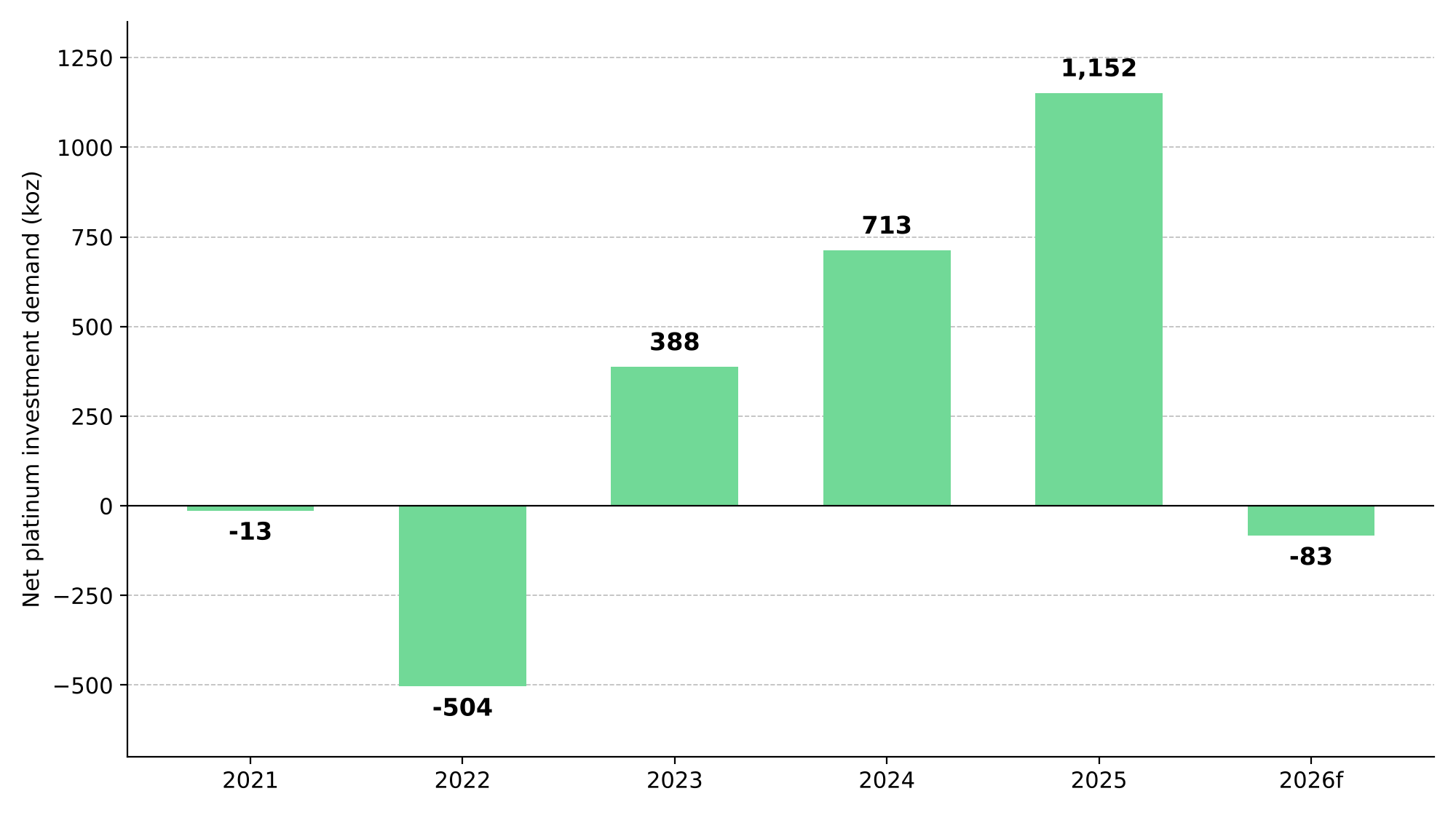
- The WPIC’s forecast 2026 surplus of 265 koz rests on investment, which swings from 1,152 koz of buying in 2025 to 83 koz of selling while industrial demand rises 5%.
- A US 10-year Treasury yield above 5% makes non-yielding platinum costly to hold, and a December Fed hike priced near 90% keeps that pressure in place.
- Pre-construction PGM developers without closed financing carry the cost twice, through a weaker price deck and through costlier debt.
- An LBMA price back above $1,700, the top of the summer range, would reverse the bearish direction; a break below $1,525 extends it.
Oil Above $110 Weighs on Platinum Prices
Platinum fell to around $1,600 per ounce, a three-month low within its $1,525-$1,700 summer trading range. Brent above $110 a barrel fueled inflation concerns, supporting higher Fed rate expectations that make interest-paying bonds more competitive with platinum.
Lease rates, the cost of borrowing platinum, fell from above 10% to around 2% as investment selling released metal. Lower borrowing costs signal reduced supply pressure in the lending market. Renewed investment buying could absorb available metal and support a price recovery.
Investment Outflows Drive the Forecast Surplus
Platinum’s 2026 forecast shifted from a 297,000-ounce deficit to a 265,000-ounce surplus, mainly because projected investment demand weakened. Net investment is forecast to swing from 1.152 million ounces of buying in 2025 to 83,000 ounces of selling in 2026, including 389,000 ounces of exchange-traded fund outflows. Industrial demand is projected to rise 5%. Holding investment buying at its 2025 level, with all other forecast assumptions unchanged, would instead imply a deficit of about 970,000 ounces, illustrating how renewed buying could tighten supply.
The US 10-year Treasury yielded 5.12% on October 20, increasing competition for platinum, which pays no interest. Earning platinum’s roughly 2% lease rate requires lending the metal and accepting borrower risk. Lower Treasury yields could reduce the income advantage of bonds and support renewed platinum buying.
Lower Fed Hike Odds Could Support a Price Recovery
Slower fund selling could reduce available metal and support platinum prices. Trevor Raymond, Chief Executive Officer of the WPIC, attributed the shift to a forecast surplus overwhelmingly to investment outflows.
The prevailing outlook favored a Fed hold on October 27-28, with a December hike priced near 90%. Lower hike odds could encourage renewed platinum buying by reducing the anticipated income advantage of bonds.
The forecast second-half deficit of 283,000 ounces already assumes recovering investment demand; additional fund selling could narrow or eliminate it. With year-end stocks forecast at 3.4 months of demand, stronger buying could increase competition for available metal and support prices.
Weekly futures positioning data can show whether funds are adding buying positions or reducing bets on lower prices, although publication lags trading. A sustained move above $1,700 could strengthen the recovery case and encourage traders to buy back bearish positions.
Higher Rates Favor PGM Projects With Secured Funding
Lower PGM prices reduce producer cash flow and projected developer returns, while higher interest rates can raise new borrowing costs. Long development timelines also limit how quickly new mines can respond to higher prices. Paul Dunne, Chief Executive Officer of Northam Platinum, said aging mines and years of underinvestment would constrain supply despite firmer prices.
Tharisa issued a $300 million, five-year bond paying 11% annual interest to complete construction of its Karo PGM project in Zimbabwe. The financing covers the remaining construction budget after $240 million of investment against an estimated total cost of $516 million. Funds remain in a restricted account pending release conditions, with first ore to the mill targeted for the fourth quarter of 2027.
Sufficient funding can help projects advance through a price downturn and preserve exposure to a recovery. Funding reduces capital-raising risk, while project returns still depend on metal prices, construction costs and debt repayments.
Slow Mine Supply Could Amplify a Platinum Rebound
Platinum’s forecast surplus mainly reflects investment selling, leaving scope for renewed buying to tighten available supply. A price pullback can create opportunities in PGM businesses when valuations understate their ability to fund development or sustain profitable production. Limited inventories and long mine-development timelines could amplify price gains if buying returns faster than supply can respond. The contrarian case favors businesses able to withstand weaker prices and benefit from recovery without depending on a single Fed decision.
Analyst's Notes





Subscribe to Our Channel






Stay Informed


