




Abitibi Metals Targets 500-Meter Deep Step-Out at B26 Ahead of 2027 Economic Study


Abitibi Metals reports B26 copper-gold intercepts near 1 kilometer downhole and plans a 500-meter deep step-out before a 30 to 35 million ton resource update.
- Abitibi Metals' latest B26 drilling returned 1.25% copper equivalent over 60.2 meters from 548.8 meters downhole, including 3.72% copper equivalent over 9.2 meters.
- Western down-plunge drilling intersected 1.45% copper equivalent over 14.1 meters and 0.66% copper equivalent over 40 meters between 966 meters and 1,006 meters downhole.
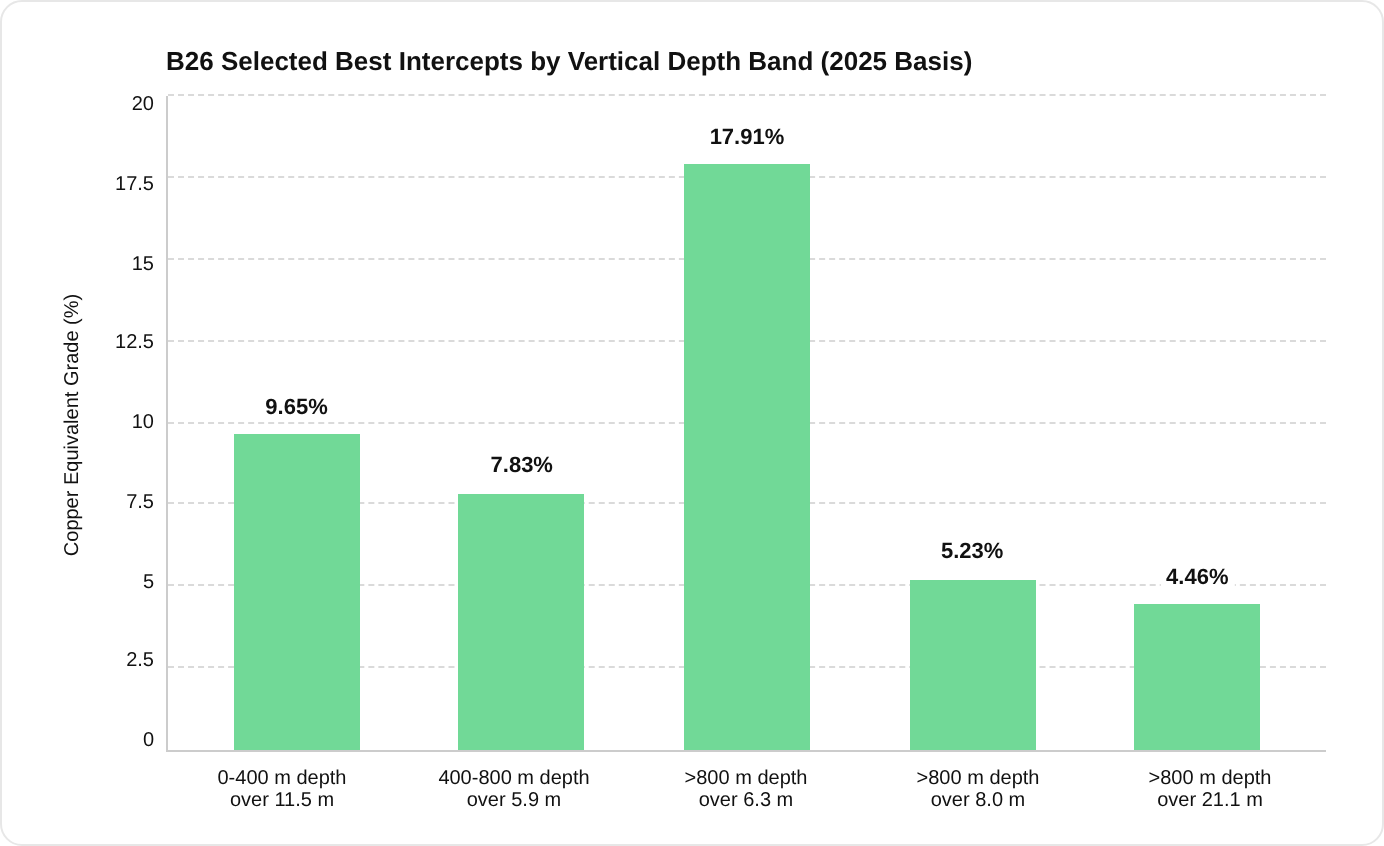
- The company's selected best individual intercepts by vertical depth band include 9.65% copper equivalent over 11.5 meters near surface and 17.91% copper equivalent over 6.3 meters below 800 meters.
- Drilling for the rest of 2026 shifts to Inferred growth, plus an exploration hole stepping out about 500 meters down-dip toward a potential vertical depth of 1.5 kilometers.
- Abitibi holds about C$34 million in cash and targets 30 to 35 million tons in its next resource update, with a preliminary economic assessment (PEA) targeted for 2027.
Abitibi Metals Corp. (CSE: AMQ | OTCQB: AMQFF | FSE: FW0) is testing how deep its B26 polymetallic deposit in northern Quebec extends. September assays returned a 60.2-meter copper-gold interval from 548.8 meters downhole and further mineralization in the western down-plunge corridor near 1 kilometer downhole. The company cites near-surface high-grade zones as a lever for optimizing payback; the deep hole tests whether the system extends far enough to support the long-life potential management describes.
September Drilling Returns a Wide Copper-Gold Zone at Mid-Depth
The widest interval in the September results graded 1.25% copper equivalent over 60.2 meters from 548.8 meters downhole, including 2.45% copper equivalent over 18.8 meters and 3.72% copper equivalent over 9.2 meters from 590.0 meters downhole. The 9.2-meter interval graded 3.4% copper, 0.3 grams per tonne gold and 9.9 grams per tonne silver, and the estimated true width of the full 60.2-meter interval is 52.1 meters.
Deeper in the western down-plunge zone, a hole returned 1.45% copper equivalent over 14.1 meters from 985.3 meters downhole, including 2.21% copper equivalent over 5.9 meters. A second hole cut 0.66% copper equivalent over 40 meters from 966 meters downhole, with an estimated true width of 30.6 meters. A deeper hole confirmed down-dip continuity at a reported depth of approximately 1,417 meters.
The company states that drilling into the eastern extension of the western down-plunge zone could increase overall tonnage in future resource estimates. Copper equivalent values use copper at $4.50 per pound, zinc at $1.50 per pound, silver at $28 per ounce, and gold at $3,000 per ounce, with metallurgical recoveries applied.
Grade Distribution by Depth
Abitibi lists its selected best individual intercepts by vertical depth band. These are single intervals chosen by the company, not representative grades, and they use the company's 2025 copper equivalent basis, which differs from the September 2026 basis. The best near-surface interval (0 to 400 meters) returned 9.65% copper equivalent over 11.5 meters, and the best interval between 400 meters and 800 meters returned 7.83% copper equivalent over 5.9 meters.
Below 800 meters, the top interval returned 17.91% copper equivalent over 6.3 meters, grading 13.48% copper and 5.15 grams per tonne gold; 2 other holes returned 5.23% copper equivalent over 8.0 meters and 4.46% copper equivalent over 21.1 meters. The selection does not establish a systematic change in grade with depth.
The deposit dips near-vertically at about 80°, averages about 8 meters in width, and extends as stacked lenses over more than 1.5 kilometers of strike, a geometry described as amenable to conventional underground mining.
The 500-Meter Deep Step-Out & What It Tests
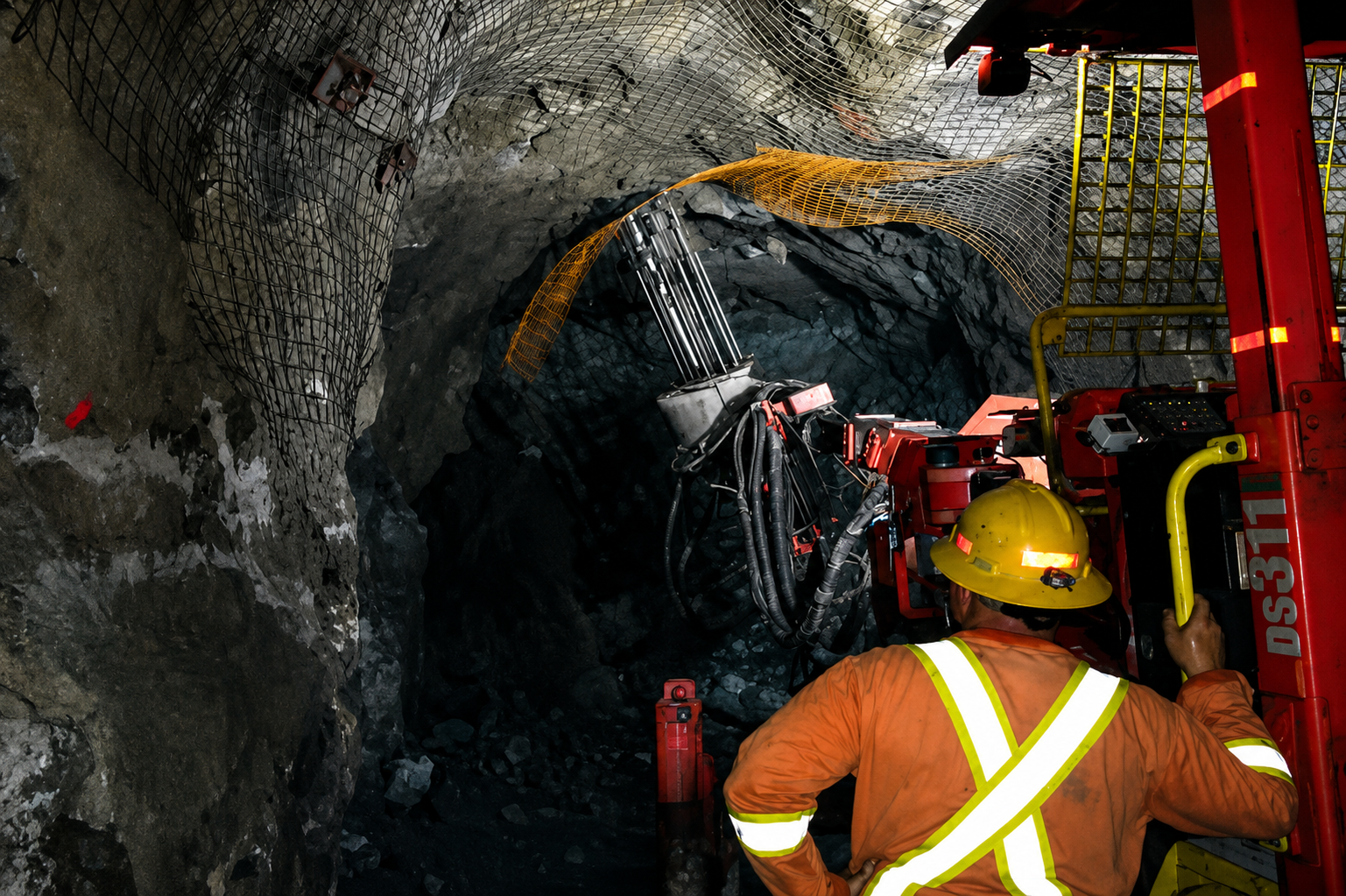
Abitibi has drilled just under 30,000 meters in 2026 with 3 rigs. For the rest of the year, drilling moves to Inferred growth and to a pilot hole, possibly with several branches, stepping out about 500 meters down-dip toward a potential 1.5 kilometers vertical depth. Downhole magnetotelluric surveys are being used to look for the source of the copper stringer mineralization.
Chief Executive Officer of Abitibi Metals, Jon Deluce, described the deep hole as a test of the system's source, not a conversion target:
"We think there's a higher-grade source of the stringer mineralization. If we're able to do a 500-meter step-out at depth, it shows long-life potential and hopefully hitting potentially a higher-grade zone."
The company does not plan to infill behind that hole. Deluce tied the target to the depth profile of the region's volcanogenic massive sulfide (VMS) systems:
"In Abitibi, these are very deep-seated systems, and our ability to target this in a deeper hole will provide a look at the potential upside of this being a much larger system."
Project & Regional Context
B26 is a VMS deposit with 12.96 million tonnes Indicated at 2.08% copper equivalent and 12.34 million tonnes Inferred at 2.20% copper equivalent. Of that total, the Feeder Cu lens hosts 9.29 million tonnes Indicated at 2.10% copper equivalent and 11.82 million tonnes Inferred at 2.23% copper equivalent. At resource price assumptions, copper accounts for 62% of in-situ value and gold for 20%.
Abitibi has owned 100% of B26 since June 2026, subject to a 1% net smelter return royalty held by SOQUEM, and holds a 10-year right of first refusal over SOQUEM's surrounding Wagosic and Carheil ground.
The deposit lies about 7 kilometers southeast of the former Selbaie mine, where operations were suspended in 2004. The site has all-weather road access, access to rail and 120 kV power.
Funding, Metallurgy & the Path to a Development Study
Abitibi holds about C$28 million to C$29 million by year-end, and Deluce says the company is funded to drill 40,000 meters in 2027. Metallurgical testwork returned 98% copper recovery and a concentrate grading 22% to 30% copper, ahead of a preliminary economic assessment (PEA) targeted for 2027.
The demonstrated base at B26 includes the current resource, reported intercepts, and metallurgical results. The company targets a 30 to 35 million-ton resource update and a 2027 PEA. The 500-meter step-out is a separate exploration test of the vertical dimension: it will not add to the near-term resource count, and its result will show whether the long-life case management describes has geological support at depth.
FAQs (AI-Generated)
Analyst's Notes





Subscribe to Our Channel






Stay Informed


