




Platinum’s Third Supply Deficit Collides With $1,785 Resistance


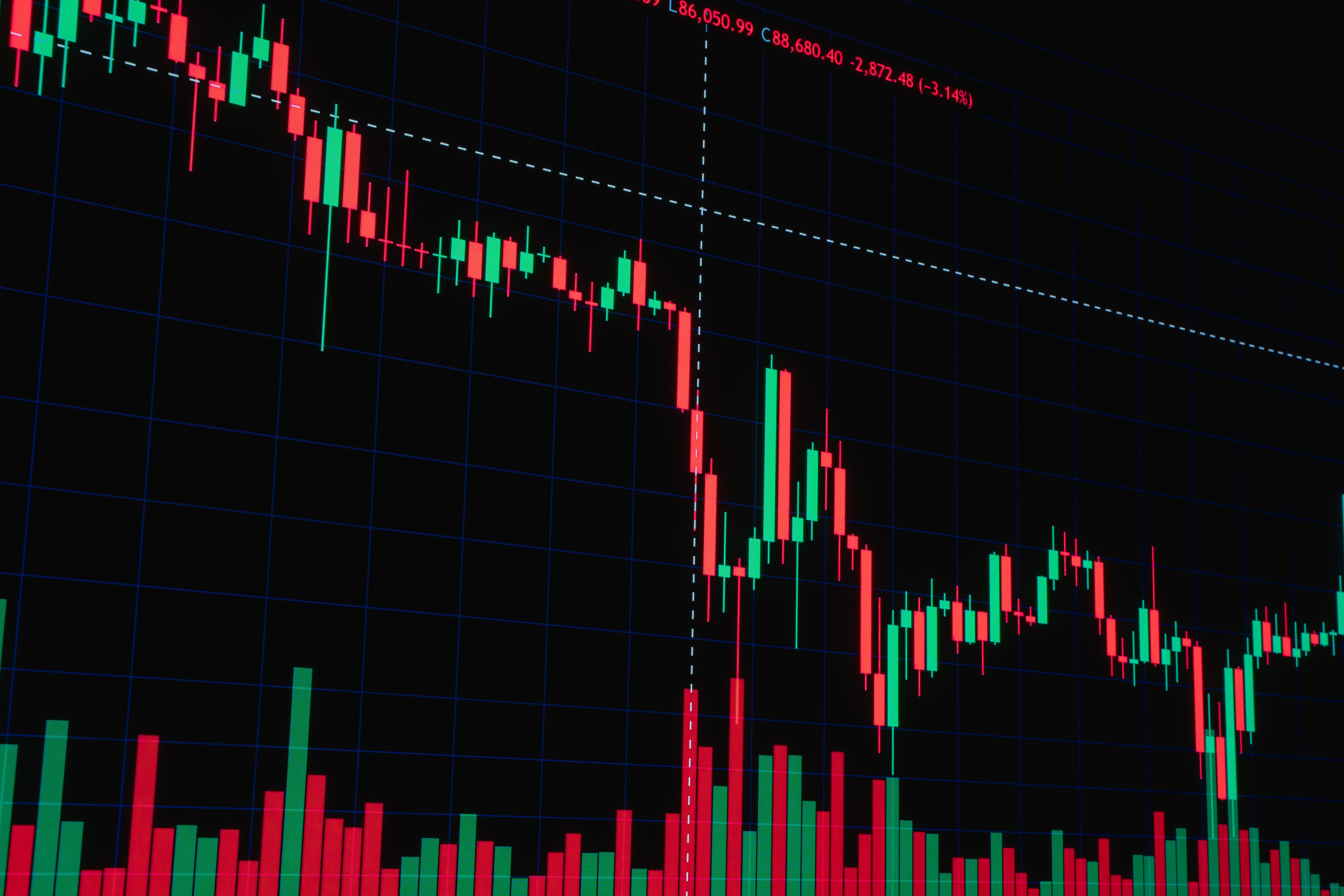
Platinum trades near $1,728 amid a third supply deficit, with $1,785 resistance and weak spot demand defining the contrarian setup.
- Spot platinum traded near $1,728/oz, still well above the $900-$1,100 range that held for most of the past decade.
- Platinum is in a third consecutive annual supply deficit, continuing to draw down above-ground stocks.
- Platinum remains bearish below $1,785 resistance, with downside targets at $1,685 and $1,642.
- GFEX PT2610 futures rose 2.64% to 432.95 yuan/g while spot demand stayed weak, showing futures strength has not yet carried into the physical market.
- About 70% of platinum mine supply comes from South Africa and 11% from Russia, leaving platinum more concentrated in one producing jurisdiction than palladium.
Dollar Strength Pulls Platinum to $1,728 While Physical Tightness Supports the Contrarian Case
Spot platinum traded near $1,728/oz, still well above the $900-$1,100 range that held for most of the past decade. Platinum remains bearish below $1,785 resistance, with downside targets at $1,685 and $1,642.
Three consecutive annual supply deficits have continued to draw down above-ground stocks, leaving the current pullback against a physically tight supply backdrop.
Concentrated Supply & Slower EV Substitution Limit Platinum’s Rebalancing
Mine supply has trailed demand for three straight years, forcing the market to draw down above-ground stocks. About 70% of platinum mine supply comes from South Africa versus 11% from Russia, concentrating supply risk in one jurisdiction.
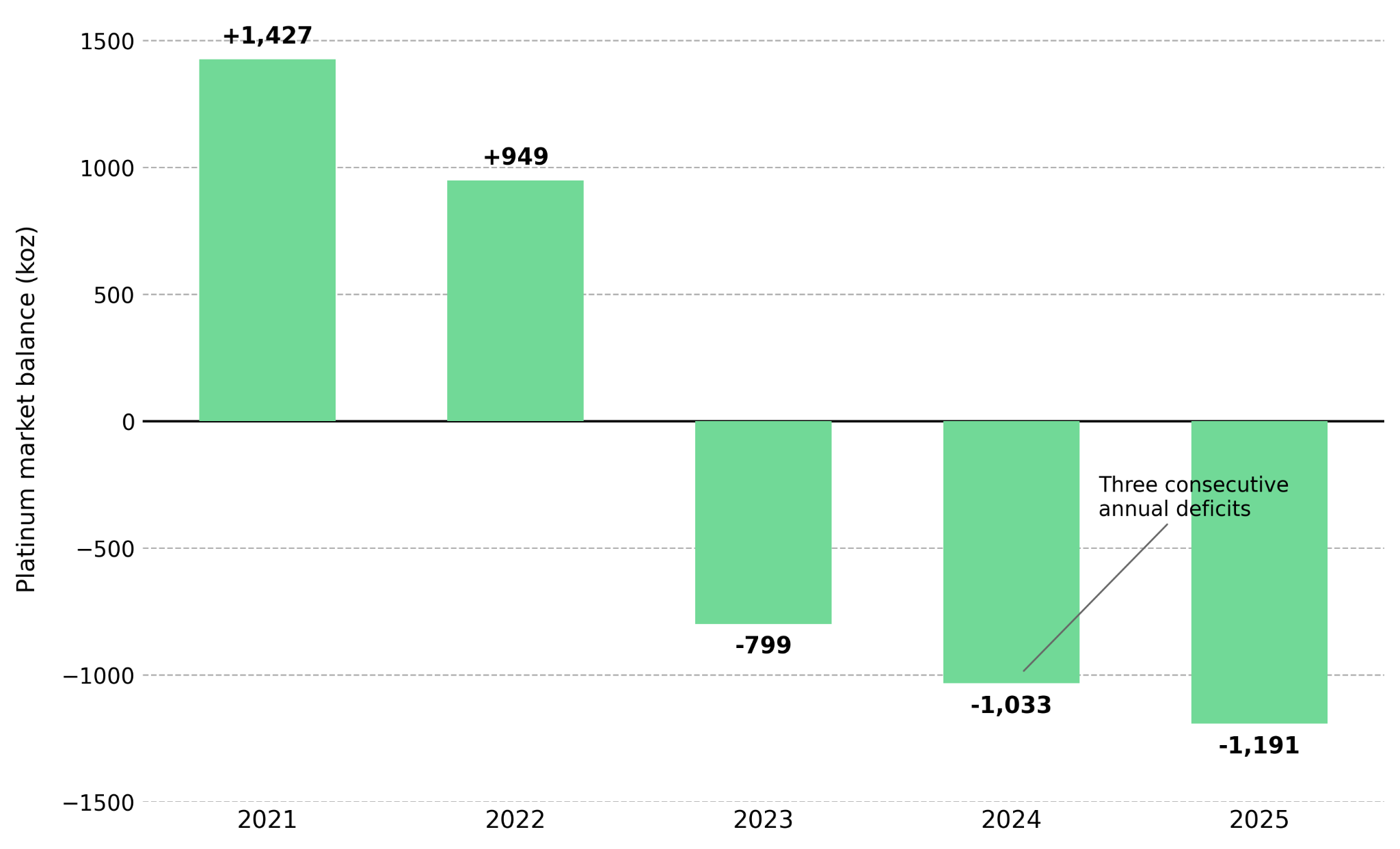
Dollar strength and higher inflation expectations pressured platinum prices without adding new mine supply. Only about 40% of platinum demand comes from internal-combustion catalysts versus more than 80% for palladium, slowing the demand impact from vehicle electrification. Mine supply has not risen enough and demand has not fallen enough to close the three-year deficit.
Increasing Futures Rebound Outruns Spot Demand, Delaying Confirmation of a Price Recovery
GFEX futures rose 2.64% to 432.95 yuan/g, while spot buyers purchased only small lots for immediate needs and higher-priced cargo remained difficult to sell. Futures strength has not yet been confirmed by physical demand, limiting conviction in a near-term price recovery.
Base case: Continued stock draws support platinum above $1,650 and a retest of $1,785 resistance.
Bear case: Failure to close above $1,785 keeps downside risk toward $1,642.
The GFEX futures premium over spot, near 2 yuan/g, is the key confirmation signal: narrowing toward parity supports the base case, while widening supports the bear case.
Higher Gold Prices Improve Platinum Jewelry Value
Gold’s rally has pushed some white-gold jewelry above comparable platinum prices, improving platinum’s relative value in retail markets. In some US and European markets, platinum jewelry can now price below comparable white-gold pieces.
Shanghai buyers purchased only small lots for immediate needs, showing limited conviction despite the supply deficit. Any position should be sized to withstand a decline to $1,642 without forcing a sale.
Neither scenario has a sourced probability. The $1,650-$1,740 forecast is a same-day range, so extending it into a multi-week outlook exceeds the source. Position sizing can account for downside to $1,642, but the timing of any reversal remains uncertain.
A $1,785 Close would Weaken the Bearish Case
Platinum remains bearish below $1,785 resistance, with a $1,650-$1,740 daily range and downside risk toward $1,642. Staying below $1,785 keeps the short-term downside case intact.
A daily close above $1,785 would weaken the bearish case and strengthen the three-year deficit thesis. That breakout would show physical tightness is gaining more influence over price.
Track the GFEX futures premium over spot, near 2 yuan/g, and whether $1,785 remains resistance or becomes support. A narrowing futures premium alongside a close above $1,785 would strengthen the deficit thesis.
Analyst's Notes





Subscribe to Our Channel
.jpg)
.png)



Stay Informed


