Project Deep Dive: enCore Energy's Dual-Plant ISR Platform & US Licensed Production Capacity


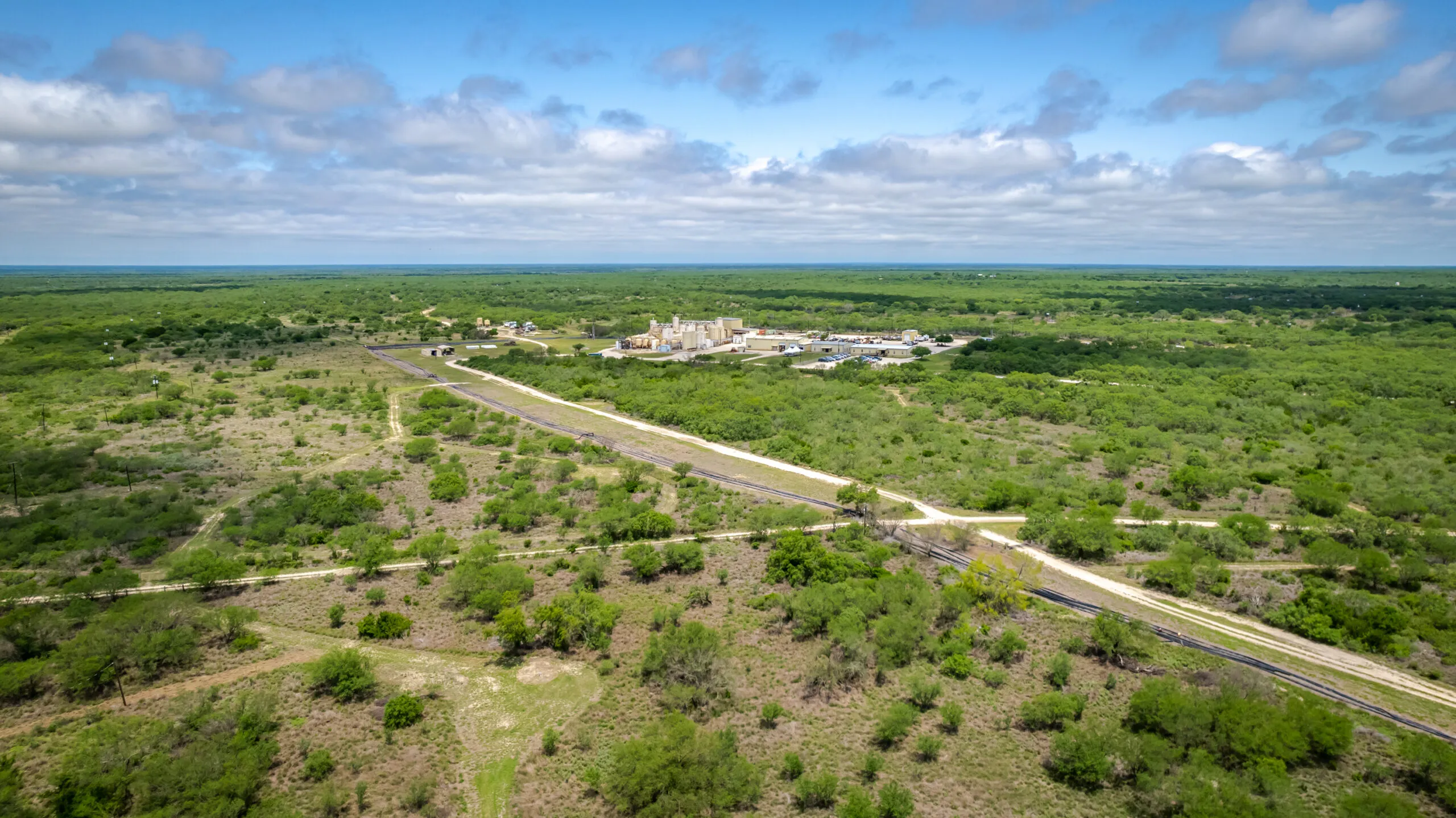
enCore Energy operates the only dual-plant ISR uranium platform in the US, with licensed capacity at Rosita and Alta Mesa positioning it for production growth through 2026.
- The United States consumes approximately 48 million pounds of uranium annually yet produces only a fraction domestically, creating structural import dependence and elevating the strategic value of licensed in-country in-situ recovery capacity.
- In-situ recovery remains the lowest capital-intensity uranium extraction method, with capital expenditure requirements typically below 15% of conventional hard-rock mining, enabling faster production ramp-ups and reduced stranded capital risk.
- enCore Energy operates as the only US uranium company with multiple licensed in-situ recovery processing plants, specifically Rosita and Alta Mesa, providing scalable processing infrastructure rather than single-asset concentration.
- Alta Mesa's ramp-up trajectory and Rosita's development pipeline offer incremental production visibility into 2026, while Dewey Burdock and Gas Hills add development optionality with pre-tax internal rates of return ranging from 39% to 54.8%.
- The investment case centers not on uranium price speculation alone, but on enCore's infrastructure positioning through licensed plants, modular satellite strategy, and execution capability within a favorable in-situ recovery jurisdiction.
The US Uranium Supply Gap & the Role of Licensed Processing Capacity
The domestic uranium market presents a structural imbalance that has persisted for over a decade. The United States remains the world's largest consumer of uranium at approximately 48 million pounds annually, driven by its substantial fleet of operating commercial reactors. Yet domestic primary production has remained structurally depressed, leaving utilities dependent on imports from Kazakhstan, Canada, Australia, and historically, Russia.
This supply gap has attracted renewed policy attention. Nuclear restarts, small modular reactor development programs, energy security legislation, and federal permitting acceleration through the FAST-41 framework have collectively shifted the regulatory posture toward domestic uranium production. For investors, the implication is straightforward: in constrained supply environments, processing infrastructure rather than resource ownership alone becomes the bottleneck asset.
Distinguishing Resource Ownership from Processing Readiness
The uranium sector contains numerous companies with substantial measured and indicated resources. However, the pathway from resource delineation to commercial production involves regulatory approvals, environmental permits, and licensed processing facilities that can require years to secure. In-situ recovery, or ISR, represents a distinct extraction methodology that dissolves uranium from porous sandstone formations using a lixiviant solution, typically oxygen and sodium bicarbonate, and recovers it through ion exchange circuits at central processing plants.
Compared to conventional hard-rock uranium mining, ISR offers several structural advantages. Capital expenditure requirements typically fall below 15% of conventional operations. Surface disturbance remains minimal. Restart timelines compress significantly where licensed facilities already exist. Permitted central processing plants represent regulatory and time-to-market barriers that create competitive separation between licensed operators and development-stage peers.
William Sheriff, Executive Chairman of enCore Energy, frames the competitive landscape directly:
"There's a real shortage of producers. The last year or two, we have seen a lot of hurdles to that production. It's a lot easier to talk about than to actually do."
Companies with operating plants can monetize pounds faster than peers navigating permitting or feasibility stages.
South Texas Operations: Infrastructure Configuration & Capacity
South Texas hosts favorable geology for ISR uranium extraction, specifically roll-front uranium deposits hosted in porous sandstones of the Gulf Coast Uranium Province. enCore Energy's operational footprint in this region comprises two licensed central processing plants with distinct capacities and development timelines.
The Hub-and-Spoke ISR Model
ISR operations function through a hub-and-spoke architecture. Satellite wellfields inject lixiviant into uranium-bearing sandstones, and the uranium-laden solution is pumped to ion exchange circuits. These circuits capture uranium onto resin beads. The resin is then transported to the central processing plant for elution, precipitation, and drying into yellowcake (U₃O₈). Stripped resin returns to the circuit for reuse.
Key technical terms for investors include:
- In-Situ Recovery (ISR): A mining method that extracts uranium by dissolving it in place and pumping the solution to surface facilities.
- Ion Exchange (IX): A chemical process using resin beads to capture dissolved uranium from solution.
- Central Processing Plant (CPP): The licensed facility where uranium is concentrated, precipitated, and dried into marketable yellowcake.
Rosita & Alta Mesa: Operational Parameters
Rosita Central Processing Plant operates with licensed annual capacity of 800,000 pounds U₃O₈. Uranium extraction began from Production Area 5 in November 2023 and continues, with a feed pipeline including Upper Spring Creek and Rosita South.
Alta Mesa Central Processing Plant operates with licensed capacity of 1.5 million pounds annually plus 500,000 pounds of drying capacity, for a total design capacity of 2 million pounds. The first ion exchange circuit was commissioned in June 2024, with the second brought online in the first quarter of 2025. The project operates under a 70/30 joint venture between enCore Energy as managing partner and Boss Energy Ltd.
The dual-plant configuration reduces single-asset operational risk while providing capacity headroom that enables production ramp-up without major facility reconstruction.
William Sheriff emphasizes the rarity of this configuration:
"We're the only company out there, certainly in our arena and our part of the world that has two plants that are operational."
Production Ramp-Up Trajectory Through 2026
Production velocity metrics often precede revenue inflection points in resource companies. enCore's near-term growth trajectory centers on wellfield development at both Texas facilities.
Alta Mesa Wellfield Expansion
At Alta Mesa, Wellfield 7 continues ramping through 2026. Wellfield 3-Extension and Wellfield 6 are targeted for production initiation in late 2025 to early 2026. Daily production rates have demonstrated meaningful acceleration, averaging 2,678 pounds per day in June 2025 compared to 2,103 pounds per day in May 2025.
Drilling capacity is expanding correspondingly. The company reported 24 drill rigs in operation at the end of the most recent quarter, with plans to increase to 30 rigs to support both production well installation and continued exploration.
William Sheriff quantifies the operational improvement:
"What we've done in the four months since then is implement the plan and overachieve what we'd expected to do. Our production rate on a daily basis has gone up, depending on what time frame you're measuring it against, from up 200% to up 300%."
He further details drilling efficiency gains:
"We went from a little over seven days average of getting a production or injector well into about 1.3 now. That metric is rather profound, but it explains that in order to up your production you've got to get more wells in the ground."
Rosita Development Pipeline
Rosita's development pipeline includes Upper Spring Creek (Brown Area), scheduled for development by 2026 and Upper Spring Creek (Brevard Area), dependent upon permitting, with remaining permits in process with the Texas Commission on Environmental Quality. Deep exploration continues in the Oakville Formation at depths of 500 to 700 feet.
ISR Economics & Capital Efficiency Characteristics
In volatile uranium markets, cost structure and capital efficiency determine which producers can maintain margins across price cycles. ISR operations exhibit several structural characteristics that differentiate them from conventional uranium mining.
Cost Structure Considerations
ISR facilities typically require lower capital intensity than conventional operations. Reclamation bonding requirements are reduced relative to open-pit mining. All-in sustaining costs tend toward lower variability once wellfields reach steady-state production. ISR operators retain the ability to throttle production in response to uranium price movements, providing operational flexibility that conventional mines cannot easily replicate.
Development Project Economics: Gas Hills & Dewey Burdock
Beyond operating assets, enCore holds development projects that provide leverage to higher uranium prices. Gas Hills in Wyoming carries a pre-tax internal rate of return of 54.8% at $87 per pound uranium, with measured and indicated resources of approximately 7.7 million pounds, according to the Preliminary Economic Assessment prepared by WWC Engineering with an effective date of December 31, 2024.
Dewey Burdock in South Dakota carries a pre-tax internal rate of return of 39% at a long-term uranium price assumption of $86.34 per pound, with measured and indicated resources of approximately 17.1 million pounds, per the PEA prepared by SOLA Project Services with an effective date of October 8, 2024. The project received FAST-41 permitting designation on August 28, 2025.
These projects function as price-leveraged optionality: they become economically compelling at uranium prices above incentive thresholds but do not require near-term capital commitment.
William Sheriff notes the strategic value of the FAST-41 designation:
"Recently our South Dakota project got FAST-41, which is certainly nice... It gives you a more certain and more acceptable timeline to get through all of your filing... You cut your timelines dramatically, you increase your certainty."
Domestic Supply Positioning & Contract Structure
US utilities face long-term contracting cycles that increasingly favor domestic and politically stable supply sources. The structural import dependency that has characterized the US uranium market creates potential premium valuation for licensed domestic producers.
enCore employs a balanced approach combining market-related contracts with floor and ceiling price mechanisms alongside spot market participation. This hybrid structure provides revenue smoothing while preserving exposure to uranium price upside.
William Sheriff addresses the company's positioning:
"We're America's leading ISR firm. In-situ recovery of uranium, that's our business. We only use in-situ methods and have been in production now going on our second year and have expanded operations considerably."
Key Risks for Investor Consideration
Permitting timelines outside Texas remain subject to federal agency review schedules that can extend beyond company projections, even with FAST-41 designation.
Uranium price volatility directly affects revenue realization and project economics.
Wellfield depletion rates and restoration costs represent operational uncertainties affecting long-term production profiles.
Joint venture alignment at Alta Mesa requires coordination with Boss Energy.
Capital discipline during expansion remains essential as the company scales drilling and development activity.
The Investment Thesis for enCore Energy
- Licensed processing infrastructure scarcity positions enCore as the only US company controlling multiple operating ISR plants in a market defined by permitting constraints.
- Near-term production visibility through Alta Mesa ramp-up and Rosita pipeline development offers measurable output growth into 2026.
- Capital efficiency advantages inherent to the ISR model support lower capital intensity and flexible scaling relative to conventional mining.
- Development optionality through Gas Hills and Dewey Burdock provides internal rate of return-driven leverage at elevated uranium prices.
- Geopolitical premium attaches to US-only operations positioned within domestic nuclear fuel security narratives.
- Operational depth through a leadership team with ISR experience provides execution capability for complex wellfield development.
William Sheriff emphasizes organizational capability:
"I've always said that our biggest assets are people, our bench strength. We're probably the only team out there that can go and open up another duplicate operation and staff it with talented people that have had experience in the industry."
In uranium markets defined by contracting cycles and regulatory friction, plant ownership becomes a valuation anchor separating operating producers from development-stage peers.
Investors evaluating uranium exposure should assess not only resource size but processing readiness, jurisdictional alignment, and ramp-up credibility, variables that directly affect cash flow timing and equity re-rating potential.
TL;DR
enCore Energy holds a differentiated position in the US uranium sector as the only domestic company operating two licensed in-situ recovery processing plants. The US consumes approximately 48 million pounds of uranium annually while producing minimal domestic supply, creating structural import dependence that elevates the value of permitted processing infrastructure.
Alta Mesa and Rosita together provide over 2 million pounds of annual licensed capacity, with production rates accelerating meaningfully in 2025. The ISR model offers capital intensity below 15% of conventional mining, enabling faster ramp-ups and reduced stranded capital risk.
Development projects at Gas Hills and Dewey Burdock add price-leveraged optionality with pre-tax IRRs ranging from 39% to 54.8%. The investment thesis centers on infrastructure scarcity and execution capability rather than uranium price speculation alone.
FAQs (AI-Generated)
In-situ recovery dissolves uranium from porous sandstone formations using a lixiviant solution, typically oxygen and sodium bicarbonate, then pumps the uranium-laden solution to surface processing facilities. This method requires substantially lower capital expenditure than conventional hard-rock mining and minimizes surface disturbance.
Processing plants require years of regulatory approvals and environmental permits. In supply-constrained markets, licensed infrastructure becomes the bottleneck asset, separating operating producers from development-stage peers still navigating permitting timelines.
Alta Mesa continues wellfield expansion with daily production rates accelerating from 2,103 pounds in May 2025 to 2,678 pounds in June 2025. Additional wellfields are targeted for late 2025 to early 2026, while Rosita's pipeline includes Upper Spring Creek development.
Key risks include permitting timeline uncertainty outside Texas, uranium price volatility affecting revenue and project economics, wellfield depletion rates, joint venture coordination at Alta Mesa, and maintaining capital discipline during expansion.
Gas Hills carries a 54.8% pre-tax IRR at $87/lb uranium, while Dewey Burdock carries 39% IRR at $86.34/lb. These projects become compelling above incentive price thresholds without requiring immediate capital commitment.
Analyst's Notes





Subscribe to Our Channel


Stay Informed