Energy Fuels' Critical Minerals Pivot & Its Valuation Implications for US Supply-Chain Exposure


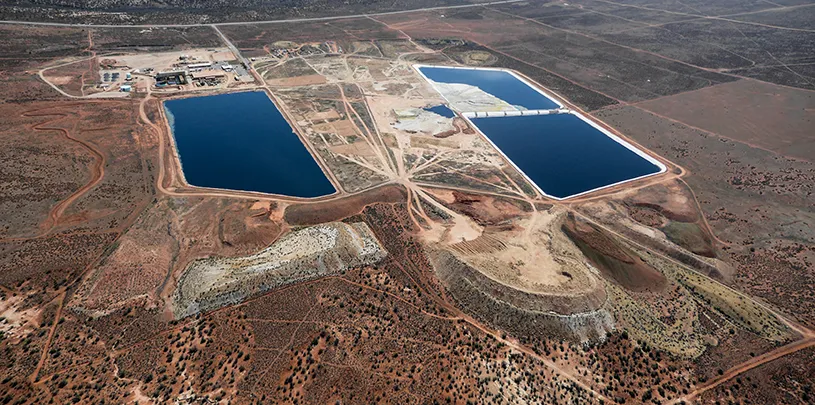
Energy Fuels’ valuation reflects uranium cash-flow support and rare earth optionality, with re-rating dependent on execution at White Mesa, not policy narratives alone.
- Energy Fuels sits at a valuation inflection between uranium cash-flow optionality and downstream rare earth processing, creating a hybrid profile that does not map cleanly onto traditional EV/lb or single-asset peer comparisons.
- Uranium operations provide a financial anchor rather than the full valuation thesis, with permitted processing capacity and competitive costs supporting potential cash generation during favorable price cycles, but insufficient on their own to explain current market capitalization.
- Rare Earth separation introduces infrastructure scarcity that resists conventional valuation models, as White Mesa represents one of the only US-based facilities capable of advancing toward commercial-scale separation, limiting clean peer benchmarks.
- The market currently prices Rare Earth exposure primarily as optionality, not earnings, reflecting Phase 1 mixed carbonate production while discounting Phase 2 oxide separation due to limited visibility on throughput, costs, and binding offtake agreements.
- Balance sheet flexibility enables strategic execution but constrains near-term multiple expansion, as low-cost financing supports development while dilution and pre-revenue downstream operations remain a live investor consideration.
- Valuation re-rating depends on execution, not policy alignment alone, with commissioning performance, specification-grade oxide production, and contracted revenue required to shift Energy Fuels from an optionality-driven narrative toward cash-flow-supported valuation frameworks.
Why Critical Minerals Break Traditional Uranium Valuation Models
Uranium equities historically relied on comparable metrics, enterprise value per pound of uranium, production cost positioning, and net asset leverage to spot and term prices. These frameworks worked because production and sales were standardized across the sector. Rare earth separation fundamentally disrupts this simplicity. Unlike uranium, which is sold as a relatively homogenous commodity, rare earth processing produces a suite of individual oxides with differentiated pricing, purity requirements, and end-market demand. Heavy rare earths such as dysprosium and terbium trade at significant premiums to light rare earths like cerium and lanthanum, yet most feedstocks contain both. As a result, economic value is driven less by tonnes processed and more by separation efficiency, feedstock composition, and the ability to market discrete products into fragmented buyer networks.
Valuation now depends on separation efficiency, feedstock composition, and the ability to market discrete products, creating a tension between predictable uranium cash flows and the optionality of rare earth processing. White Mesa’s domestic separation capacity is unique in the US, limiting clean peer benchmarks and complicating traditional Discounted Cash Flow (DCF) or multiple-based valuation approaches. Investors must weigh the demonstrable cash-flow potential of uranium operations against the optionality embedded in critical minerals processing, creating a hybrid valuation profile that does not map neatly onto single-metric approaches. Policy further complicates valuation discipline, with Western governments shaping asset pricing through procurement frameworks, strategic reserves, and regulatory acceleration.
As President & Chief Executive Officer of Energy Fuels, Mark Chalmers frames the strategy:
“We are like no other company in the critical mineral space where we're building a critical mineral hub using our longstanding uranium processing capabilities, but also the ability to mine and recover rare earths into oxides and potentially other value-added steps in due course.”
What the Market is Pricing Today & What It is Not
Energy Fuels’ current market capitalization reflects its dual exposure to uranium and rare earths. Equity performance continues to track uranium price cycles, with market reactions also observed around US critical minerals policy developments and operational milestones at White Mesa. Elevated volatility indicates ongoing uncertainty in how investors weigh uranium cash flows versus rare earth optionality.
Conventional valuation metrics provide limited clarity. Price-to-book ratios now include legacy uranium assets, rare earth separation infrastructure, and working capital fluctuations, while enterprise value incorporates net cash and convertible debt. Earnings-based multiples remain constrained, as uranium production is opportunistic and rare earth separation is still developmental.
Downstream rare earth margins remain largely unpriced. Phase 1 operations produce mixed rare earth carbonate, capturing only part of the potential value. Full Phase 2 separation into individual oxides, particularly heavy rare earths, could materially increase margins, but there is currently limited visibility on throughput, costs, and offtake agreements. As a result, rare earth value is reflected primarily as optionality rather than realized earnings.
Peer Comparisons in a Fragmented Valuation Landscape
Relative valuation highlights Energy Fuels’ uniqueness and the analytical challenges it entails. Among North American uranium peers, comparisons typically focus on EV per pound of U₃O₈, balance sheet leverage, and restart optionality. Energy Fuels screens competitively on cost structure and benefits from White Mesa’s permitted capacity, enabling production ramp-up when uranium prices justify.
Energy Fuels has emphasized the margin potential during active operations. Chalmers noted:
“We've said that our costs at Pinyon are between $23-$30 per pound, so if you're selling at $75 a pound plus, you'll get a really nice margin. If you multiply that times one and a half million pounds or two million pounds, that's a lot of cash coming into the company.”
On uranium metrics alone, Energy Fuels can appear expensive relative to developers with large inferred resources but no processing infrastructure. However, the rare earth component fundamentally alters the comparison. Direct rare earth peers are also imperfect comparables. Upstream developers trade on resource multiples and project advancement, while downstream processors, primarily offshore, are valued on throughput efficiency and margin stability. Energy Fuels bridges both segments, sourcing feedstock externally while operating domestic separation infrastructure.
This hybrid model creates valuation gaps. Uranium-focused investors may underweight rare earth processing optionality, while critical minerals specialists may underappreciate uranium cash-flow support. The result is a fragmented valuation landscape where neither peer group fully captures the integrated exposure. Scarcity compounds the effect: White Mesa remains the only permitted, operating conventional uranium mill in the United States, and adding rare earth separation capabilities introduces a second layer of infrastructure scarcity that resists conventional benchmarking.
Capital Structure & the Cost of Strategic Flexibility
Energy Fuels’ balance sheet has been a key enabler of its strategic pivot. Cash and working capital provide flexibility to time uranium production and advance processing infrastructure without immediate reliance on asset sales. Debt remains modest, with the convertible note offering representing the primary obligation. The structure preserves operational flexibility while providing low-cost capital relative to sector peers.
Recent dilution, however, remains a live investor concern. Equity issuance and acquisition-related share increases have pressured per-share metrics, and the convertible introduces potential future dilution if conversion thresholds are met. Management has framed this trade-off as the cost of securing long-duration strategic optionality at an attractive cost of capital.
Chalmers has highlighted the competitive positioning of the financing:
“People saw the convertible note, which had a coupon of three-quarters of a percent. I looked at the other uranium companies, and there have been three or four other converts done in the uranium sector, but they have coupons of between four and five and a half percent. The attention we got from doing that conversion and this quantum that we secured at seven hundred million got a lot of attention.”
Funding requirements for Phase 2 separation are expected to be manageable within the existing balance sheet, preserving optionality for additional opportunities or contingencies. The key valuation question is whether this flexibility translates into returns on invested capital that justify dilution already incurred. Until rare earth operations generate visible cash flow, capital structure discipline remains a constraint on multiple expansion.
Economic Optionality Versus Execution Risk
Rare earth separation economics represent the largest source of valuation asymmetry. Heavy rare earth oxides command premium prices due to supply constraints and critical applications in permanent magnets. Energy Fuels’ ability to separate dysprosium and terbium at White Mesa introduces margin potential not captured in mixed carbonate pricing.
However, this optionality comes with execution risk. Separation is technically complex, requiring precise chemical control and consistent feedstock quality. While Phase 1 operations demonstrate technical feasibility, Phase 2 introduces additional separation stages that must perform reliably at scale. Feedstock security adds another variable, as external sourcing exposes margins to supply availability and pricing volatility.
Operational ramp-up timelines further influence valuation. Pilot-scale success does not guarantee smooth commercial-scale execution, and delays in commissioning, permitting modifications, or offtake negotiations could postpone revenue realization. These risks cap near-term valuation upside even as strategic positioning attracts investor interest.
Chalmers has pointed to White Mesa’s operational track record as a reference point:
“We processed 350,000 pounds in one month at the mill in December, which is pretty significant when you compare it to others in the United States that are operating - 350,000 pounds in a single month when a lot of people are trying to get to 100,000 pounds in a quarter.”
What Would Justify a Valuation Re-Rating & What Would Not
Observable execution milestones will determine whether Energy Fuels’ valuation evolves from optionality-driven to cash-flow-supported. Successful commissioning of Phase 2 separation, achievement of design throughput, and production of specification-grade oxides would materially reduce execution risk. Binding feedstock or offtake agreements would further improve cash-flow visibility and support earnings-based valuation frameworks.
Policy alignment alone is insufficient. While government procurement programs and strategic stockpiles can underpin demand, investors require evidence that policy support translates into contractual revenue. Until that occurs, the policy premium embedded in the valuation remains vulnerable to delays or funding uncertainty.
Conversely, setbacks would constrain valuation. Cost overruns, technical challenges, or extended losses without a clear path to profitability would pressure multiples regardless of strategic importance. In this sense, Energy Fuels’ valuation hinges less on macro narratives and more on operational delivery.
The Investment Thesis for Energy Fuels
- Hybrid exposure with asymmetric valuation dynamics: Energy Fuels offers investors simultaneous exposure to uranium cash-flow optionality and downstream rare earth processing, creating a valuation profile that blends near-term commodity leverage with longer-dated strategic optionality. This duality differentiates the company from single-asset uranium producers and upstream rare earth developers.
- Uranium provides a financial anchor, not the full thesis: Permitted processing capacity at White Mesa and competitive operating costs position uranium operations as a source of potential cash generation when market conditions justify production. However, uranium alone does not explain current valuation levels, which increasingly reflect expectations beyond EV/lb metrics.
- Rare earth separation introduces scarcity value that resists clean benchmarking: Domestic separation capacity in the US remains structurally limited, and White Mesa’s adaptation for rare earth processing introduces infrastructure scarcity that is difficult to replicate. This scarcity supports strategic relevance but complicates conventional DCF or multiple-based valuation frameworks.
- Optionality dominates current rare earth valuation: Phase 1 mixed carbonate production demonstrates technical feasibility but captures only a fraction of potential downstream margins. Phase 2 oxide separation, represents the primary source of valuation upside, but remains unpriced due to limited visibility on throughput, costs, and commercial offtake.
- Balance sheet flexibility enables execution but constrains multiples: A strong liquidity position and low-cost convertible financing provide the flexibility to advance both uranium and rare earth strategies without immediate funding stress. At the same time, dilution risk and pre-revenue downstream operations cap near-term multiple expansion.
- Execution, not policy alignment, is the decisive variable: While US critical minerals policy underpins strategic relevance, valuation support ultimately depends on observable milestones, commissioning performance, specification-grade oxide output, and binding commercial agreements that convert optionality into cash flow.
For investors, Energy Fuels represents a case study in how critical minerals strategy is reshaping mining valuations. The investment thesis is not predicated on policy narratives or speculative re-rating alone, but on the company’s ability to translate unique infrastructure and balance sheet flexibility into durable, returns-driven operations. Until rare earth separation contributes measurable earnings, the market is likely to continue valuing Energy Fuels through a hybrid lens, anchored by uranium fundamentals, tempered by execution risk, and selectively assigning a premium to strategic scarcity rather than fully realized cash flow.
TL;DR
Energy Fuels occupies a hybrid valuation position, anchored by uranium cash-flow optionality but increasingly shaped by downstream rare earth processing that defies traditional EV/lb frameworks. The market currently prices rare earth exposure largely as strategic optionality rather than earnings, with valuation support contingent on execution at White Mesa, specifically Phase 2 separation performance, cost control, and binding offtake agreements, rather than policy alignment alone.
FAQs (AI-Generated)
Energy Fuels combines uranium production optionality with downstream rare earth processing, creating a hybrid business model. Traditional EV/lb metrics capture uranium exposure but fail to reflect the scarcity and optionality embedded in domestic rare earth separation infrastructure.
Uranium operations provide a financial anchor through permitted capacity and competitive costs, but the market increasingly reflects expectations around rare earth processing. However, rare earth value is still priced primarily as optionality rather than realized earnings.
White Mesa is the only permitted, operating conventional uranium mill in the US and is being adapted for rare earth separation. This combination of legacy uranium infrastructure and emerging downstream processing limits clean peer comparisons across both uranium and rare earth sectors.
A re-rating would require observable execution milestones: successful Phase 2 separation commissioning, achievement of design throughput, production of specification-grade oxides, and binding feedstock or offtake agreements that improve cash-flow visibility.
Key risks include technical execution challenges in rare earth separation, feedstock sourcing volatility, dilution from capital structure decisions, and delays in converting policy alignment into contractual revenues.
Analyst's Notes





Subscribe to Our Channel











Stay Informed