




Turkey’s 67% Upstream Allocation Puts Oil Explorers in Focus


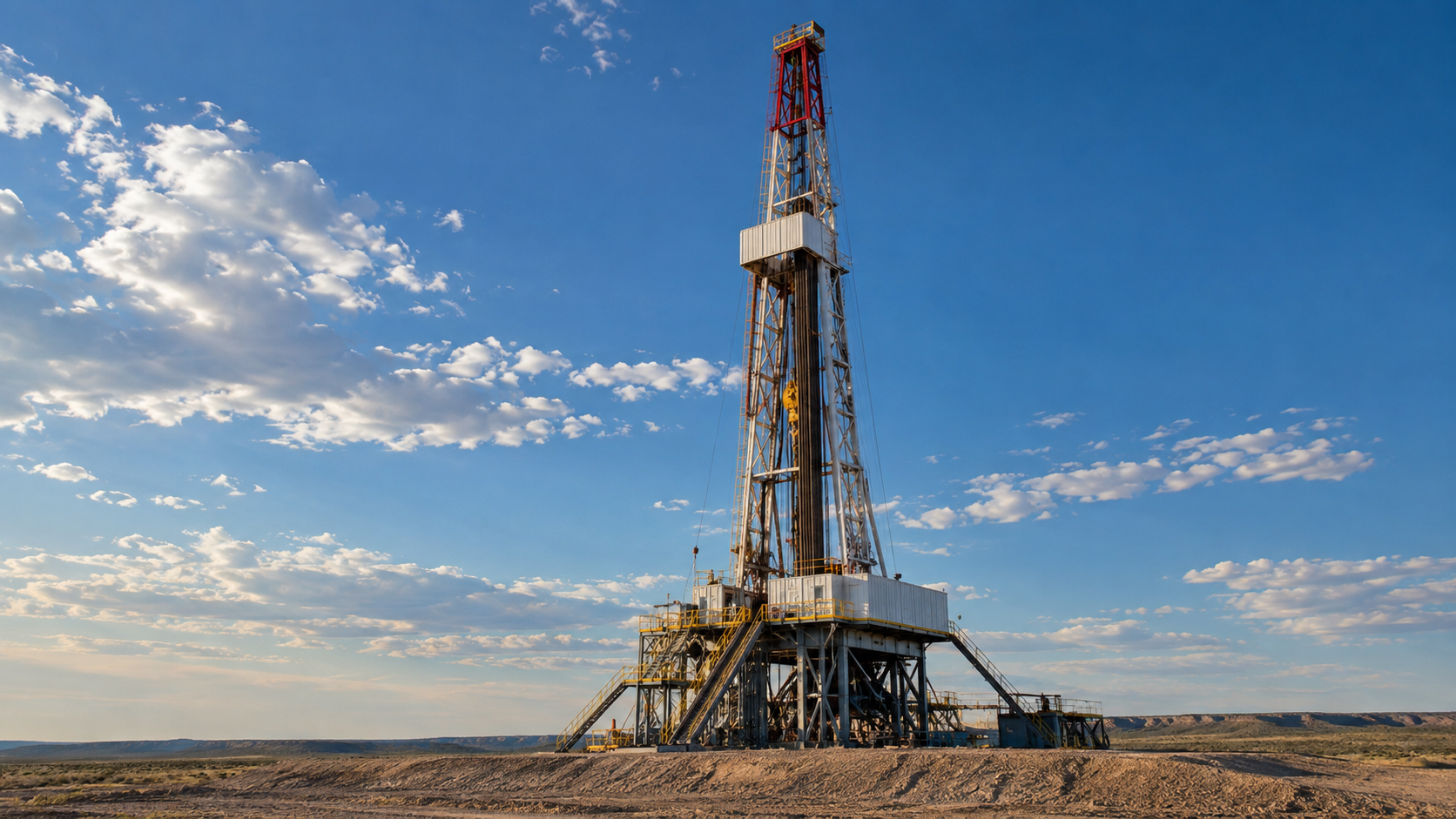
Turkey’s 2026 upstream allocation neared 67% of public energy and mining investment, strengthening the case for new domestic oil supply.
- Oil and gas exploration and production represented approximately 67% of Turkey’s combined public energy and mining allocation in 2026, up from more than 54% in 2025.
- Turkey allocated TRY332.6 billion to the Sakarya gas field and other oil and gas exploration and production in 2026, extending upstream funding beyond one budget cycle.
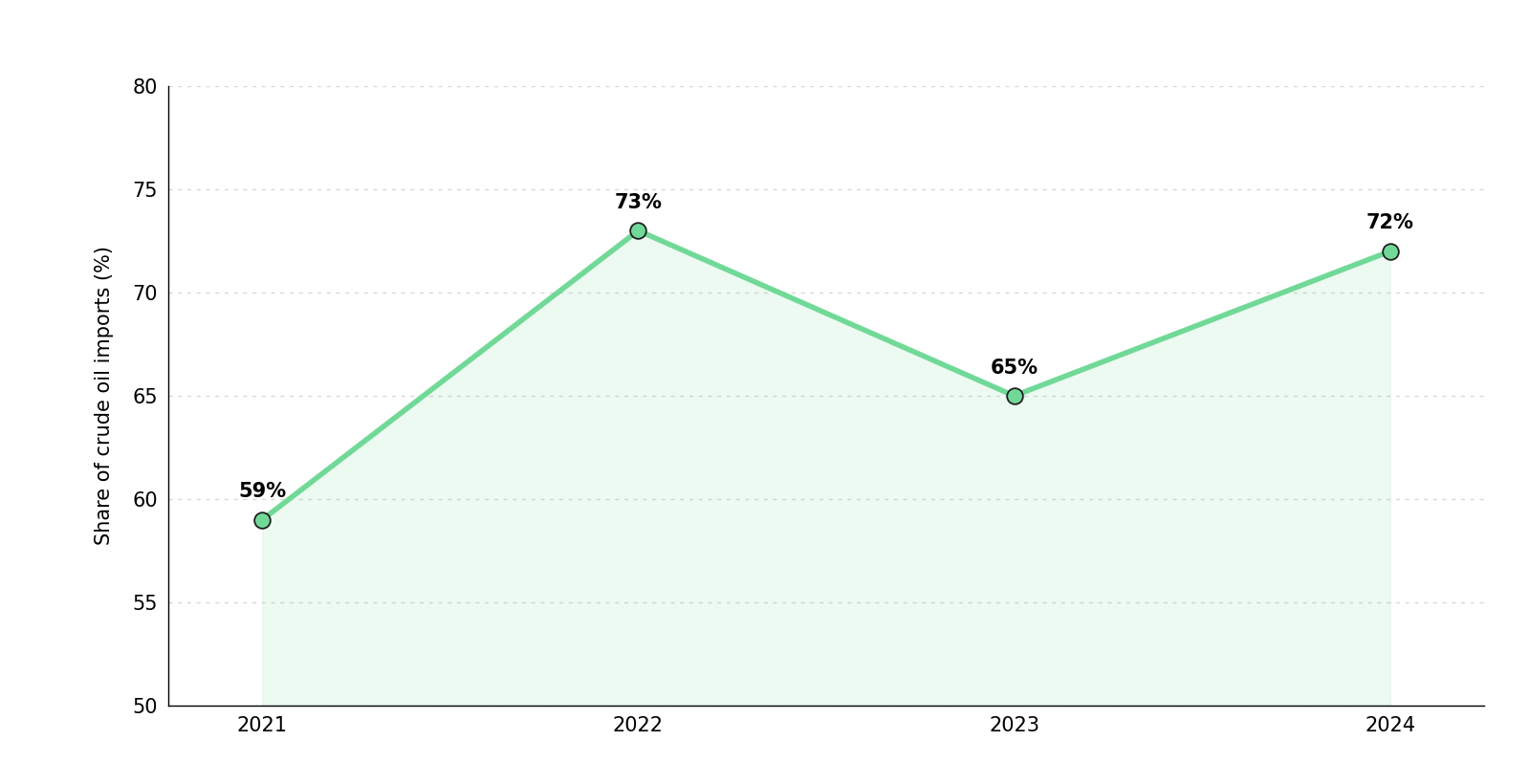
- Crude import dependence remained almost 90% in 2024, while Russia and Iraq supplied 72% of imports, giving new domestic production an established import-replacement market.
- Oil supplied 98% of transport energy in 2024, and transport energy use is projected to rise 17% by 2035, supporting liquid-fuel demand during the energy transition.
- Exploration assets in producing petroleum regions can gain value as seismic work, testing, and appraisal convert geological potential into reserves and cash flow.
Turkey’s Import Gap Directs Public Capital Toward Upstream Supply
Turkey is expanding renewable and nuclear capacity while continuing to fund oil and gas development. This dual-track strategy reduces import exposure on two fronts. Low-carbon generation lowers imported fuel use in the power sector, while domestic upstream investment addresses continued oil demand from transport and industry.
67% Allocation Makes Exploration a National Supply Priority
International Energy Agency (IEA) reported that oil and gas exploration and production received more than 54% of Turkey’s TRY260 billion, or USD5.7 billion, energy and mining investment program in 2025. That historical figure established upstream development as the largest use of public capital across those two sectors.
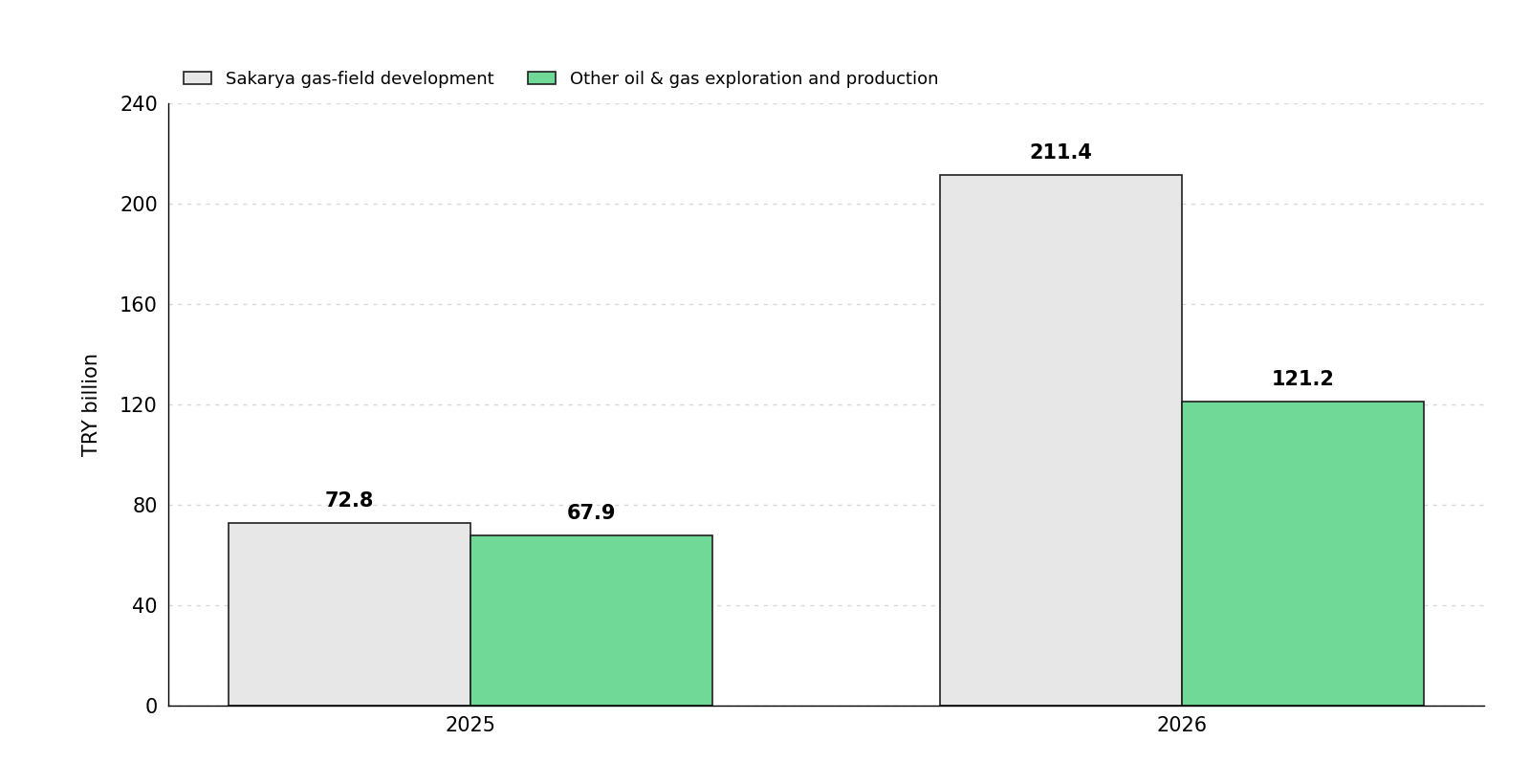
The Strategy and Budget Office’s 2026 program allocated TRY211.4 billion to the Sakarya gas field and TRY121.2 billion to other oil and gas exploration and production, bringing total upstream funding to TRY332.6 billion. The same program allocated TRY344.8 billion to mining and TRY151.8 billion to energy, or TRY496.6 billion combined. Upstream activity therefore represented approximately 67% of the combined allocation.
Oil-Dependent Transport Sustains Demand & Expands Import-Replacement Value
Turkey’s upstream program serves transport demand that cannot change quickly. Power generation can shift among coal, gas, nuclear, hydro, wind, and solar, but road freight and existing vehicles remain overwhelmingly dependent on petroleum products. Domestic oil therefore retains economic value even as low-carbon power capacity expands.
Transport’s 98% Oil Share Extends the Market for Domestic Barrels
Transport accounted for 29% of Turkey’s total final energy consumption and 24% of energy-related emissions in 2024. Oil supplied 98% of transport energy, unchanged over the previous decade, while diesel represented 69% of sector consumption. This dependence ties petroleum demand to the existing vehicle fleet and freight network, making rapid substitution difficult.
IEA projects Turkey’s transport energy use to rise 17% between 2024 and 2035. Electric vehicles, rail, and public transit can moderate oil demand growth, but only as fleets turn over and supporting infrastructure expands. During that transition, new domestic production can replace imports in an established market without depending on export growth.
210,000 Barrels per Day Target Leaves a Large Oil Import Gap
Turkey aims to increase oil production from 125,000 barrels per day in 2025 to 210,000 barrels per day by 2028. IEA estimates that even at this level, domestic output would cover only one-fifth of 2024 demand, which exceeded one million barrels per day. The target would reduce imports while leaving substantial room for additional domestic discoveries and production.
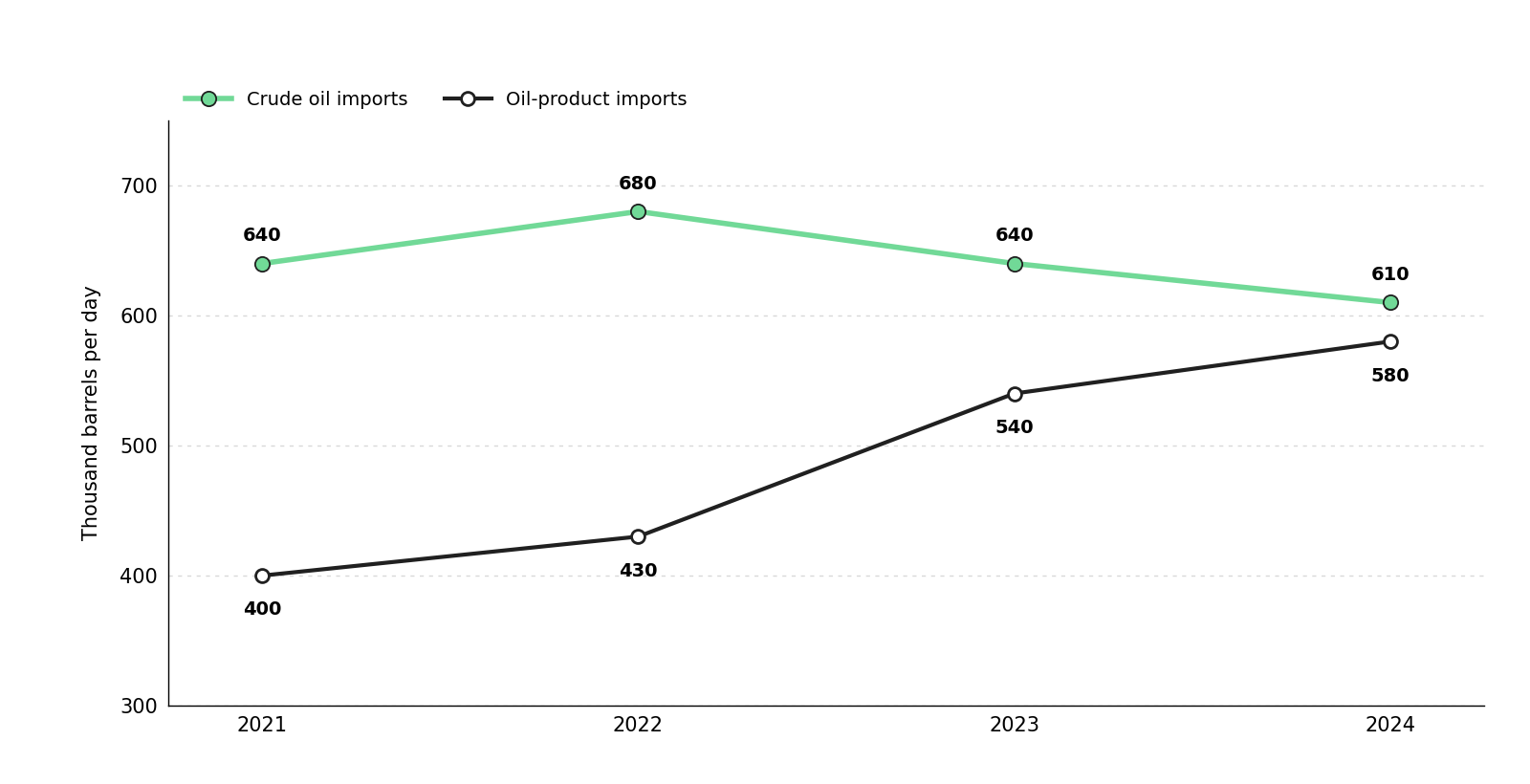
Turkey remained almost 90% dependent on crude imports in 2024, with Russia and Iraq supplying 72% of those volumes. Gross oil-product imports averaged approximately 580,000 barrels per day, while oil supplied 35% of final energy consumption and 29% of total energy supply. This import gap gives policymakers a direct incentive to support domestic production because each commercial barrel can replace established foreign supply.
Higher Production Target Makes New Oil Discoveries Essential for Growth
Recent gains in domestic oil output provide an operating base for the 2028 target. Existing fields can support near-term growth, but natural well declines require appraisal, field extensions, and new discoveries to replace lost capacity. As the production target rises, continued exploration becomes essential to sustaining growth.
26% Output Increase Shows Domestic Supply Can Respond
The Ministry of Energy and Natural Resources reported that domestic oil production rose 26% from 38 million barrels in 2024 to 47.9 million barrels in 2025. Daily crude output also reached a record 135,671 barrels on April 25, 2025. These gains show that drilling and field development can deliver measurable supply growth, strengthening the operating foundation for the broader upstream program.
Reaching the 210,000-barrel-per-day target requires capacity beyond the record daily rate of 135,671 barrels, while national demand still exceeds one million barrels per day. Existing fields provide infrastructure, operating capability, and subsurface data, but continued exploration is needed to offset depletion and expand supply. New discoveries are therefore central to sustaining production growth rather than optional additions to existing output.
Gabar Oil Infrastructure Shortens the Route From Resources to Revenue
The Gabar region links Turkey’s production target with exploration-stage opportunities. IEA identifies the area as a focus of national oil expansion, while existing operations provide geological analogues, service capacity, and routes to domestic buyers. These advantages can shorten the path from discovery to market, with project value depending on resource confirmation, funding, and execution.
Turkey’s upstream spending creates value when discoveries advance toward reserves and production. Projects with defined resources and access to domestic buyers therefore provide a direct path from exploration spending to import-replacing supply.
Dune Oil is advancing Block M47’s North Field toward production in Turkey’s Gabar region, where it holds a 29% working interest in 27.6 million barrels of net best-estimate contingent resources (2C). The project is approximately 130 kilometers from the Tupras Batman refinery, providing a near-term route to revenue through trucking in a market that imports more than 85% of its oil. Planned seismic work, testing, and drilling can advance the project toward production, while nearby refining capacity provides a direct route to market.
Scott Lower, President of Dune Oil, connects regional oil scarcity with new production potential:
“We think this is going to be a big producing block, and we’re just at the outset of that at a time where oil is scarce and prices are high, especially in this region.”
Import Exposure Raises the Economic Value of Successful Domestic Supply
Domestic oil creates value beyond field-level revenue by reducing Turkey’s exposure to imported energy. Higher global prices increase the national import bill, while supply disruptions raise procurement risk. Local production remains linked to international pricing, but each additional barrel reduces the volume Turkey must purchase abroad.
Turkey’s energy minister estimates that every USD1 increase in oil prices adds approximately USD400 million to the country’s energy bill. The ministry places the annual bill at USD60 billion to USD70 billion and states that imports supply two-thirds of Turkey’s energy. This price exposure supports domestic upstream investment because additional local production reduces the volume subject to external costs.
Conventional onshore light oil can reach markets with less infrastructure than projects requiring offshore platforms or export terminals. An established producing region can also provide access to drilling services and domestic refineries. Project economics depend on well performance and operating costs, while fiscal terms and transport charges shape margins. Turkey’s import gap provides the market, while execution determines the value created from each barrel.
Production Evidence Determines Whether Public Spending Reduces Import Reliance
Budget allocations establish policy intent, while sustained production growth shows whether capital is adding useful supply. The strongest outcome is higher domestic output that replaces imports across a range of oil prices. Projects with resilient economics can support that objective through multiple commodity cycles.
Progress toward the 210,000-barrel-per-day target is the clearest measure of Turkey’s upstream strategy. Annual output, import dependence, and exploration spending will indicate whether investment is adding supply. Transport demand and electric vehicle adoption will also determine how quickly the remaining import gap narrows.
At project level, flow rates and appraisal results show whether geological scale can support commercial production. Reserve conversion, financing, and market access then determine whether an asset can deliver sustained output. Turkey provides the domestic opportunity, while project execution determines which producers and explorers can capture it.
The Investment Thesis for Oil & Gas
- Public allocations support continued upstream activity because oil and gas exploration and production represented approximately 67% of Turkey’s combined public energy and mining allocation in 2026.
- Almost 90% crude import dependence gives successful domestic projects a defined import-replacement market without requiring national oil self-sufficiency.
- Oil’s 98% share of transport energy supports petroleum demand while vehicle electrification, rail, and public transport expand from a limited base.
- Producers, developers, and explorers in established petroleum regions can benefit from domestic demand, existing services and clearer routes to market.
- Capital discipline remains decisive because staged seismic, appraisal, and early production work can reduce uncertainty before larger development commitments are required.
Turkey’s energy strategy combines cleaner power growth with continued investment in domestic oil. While renewable and nuclear power can reduce fuel imports for electricity generation, domestic production can address continued petroleum demand from transport and industry. This dual approach keeps exploration relevant, particularly in regions where established infrastructure connects new discoveries with domestic buyers. Commercial value will ultimately depend on appraisal, financing, reserve conversion, and sustained production.
TL;DR
Turkey is expanding low-carbon power while maintaining substantial investment in domestic oil and gas. Approximately 67% of its combined public energy and mining allocation supported upstream activity in 2026, up from more than 54% in 2025. Oil still supplies 98% of transport energy, and crude import dependence remains close to 90%, creating a large market for additional domestic barrels. Achieving the 210,000-barrel-per-day production target will require existing fields, appraisal, and new discoveries. Producing regions such as Gabar offer infrastructure and access to domestic buyers. Dune Oil’s Block M47 illustrates how defined resources and nearby refining capacity can support the transition from exploration to domestic production.
FAQs (AI-Generated)
Analyst's Notes





Subscribe to Our Channel


Stay Informed


