




Revival Gold Targets 2028 Construction Decision as Mercur Advances Toward Q1 2027 PFS


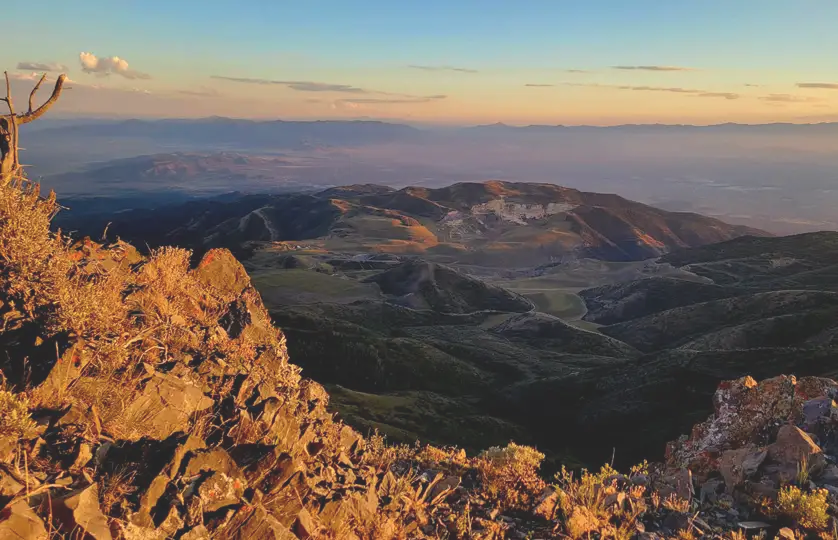
Revival Gold (TSXV:RVG) builds the team, advisers and lender-led financing plan to take Mercur from a Q1 2027 PFS to a 2028 construction decision.
- Revival Gold is advancing Mercur towards a Q1 2027 PFS and an early 2028 construction decision, and states it is funded through to that decision.
- The 2025 PEA outlined about 100,000 ounces per year over 10 years for $208 million in pre-production and working capital, with a 57% after-tax IRR at $3,000 gold.
- Management expects the PFS to land close to the PEA, with trucking and leach pad refinements offset by higher energy costs.
- New local hires, including a General Manager with 14 commissionings, and an established consultant group support the company's stated intention to build rather than sell.
- At Beartrack-Arnett, the Joss zone grew 70% vertically and remains open, with an internal resource update and next-phase drill planning under way.
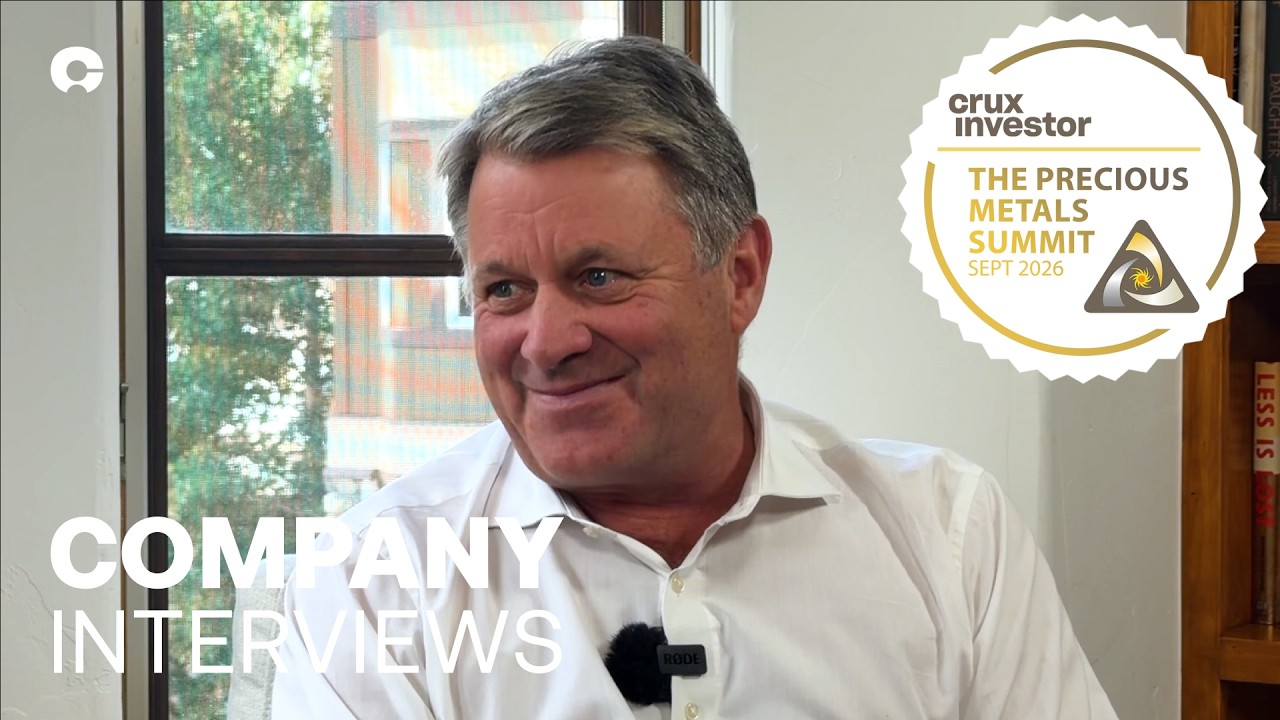
Capital is returning to the junior mining sector, and the market is becoming more selective about which developers can actually reach production. Hugh Agro, President and CEO of Revival Gold Inc. (TSXV:RVG, OTCQX:RVLGF), described another year of record attendance and new money arriving from generalist investors. Revival Gold is advancing the Mercur Gold Project in Utah towards a Preliminary Feasibility Study (PFS) in Q1 2027 and a construction decision in early 2028. Its second asset, the Beartrack-Arnett Gold Project in Idaho, is being run as a high-grade exploration story in parallel.
With Mercur's study economics already public, the investment question has moved on. It is no longer simply whether Mercur works on paper. It is whether Revival Gold has the people, advisers and financing plan needed to build it, and this interview focused squarely on that execution case.
Mercur's Move From PEA to PFS
Mercur's 2025 Preliminary Economic Assessment (PEA) outlined an open-pit heap leach operation producing about 100,000 ounces of gold per year over a 10-year mine life. Agro described a 20,000-tonne-per-day operation requiring pre-production and working capital of $208 million. At a gold price of $3,000 per ounce, the PEA returned an after-tax net present value (NPV) of $752 million and an after-tax internal rate of return (IRR) of 57%. Agro placed capital intensity at just over $200 per ounce and put the capital requirement at roughly one-third of underlying net asset value (NAV). He also said the project's all-in sustaining cost (AISC) would sit in the bottom quartile in North America.
The PFS will tighten engineering and cost estimates, and Agro expects some pluses and some minuses. The team is examining leach pad locations, the size of the truck fleet and haulage cycle times. Higher energy prices will feed into both capital and operating costs. Agro does not expect material scope changes and anticipates a result not far from the PEA. On cut-off grades, he was explicit that Revival Gold will not chase ounces at the expense of recovery.
"Our choice is to be at a healthy grade, choose a conservative cutoff, and deliver for our investors. If we can deliver extra upside beyond that, well, that's just gravy."
Infill Drilling, Metallurgy and Permitting
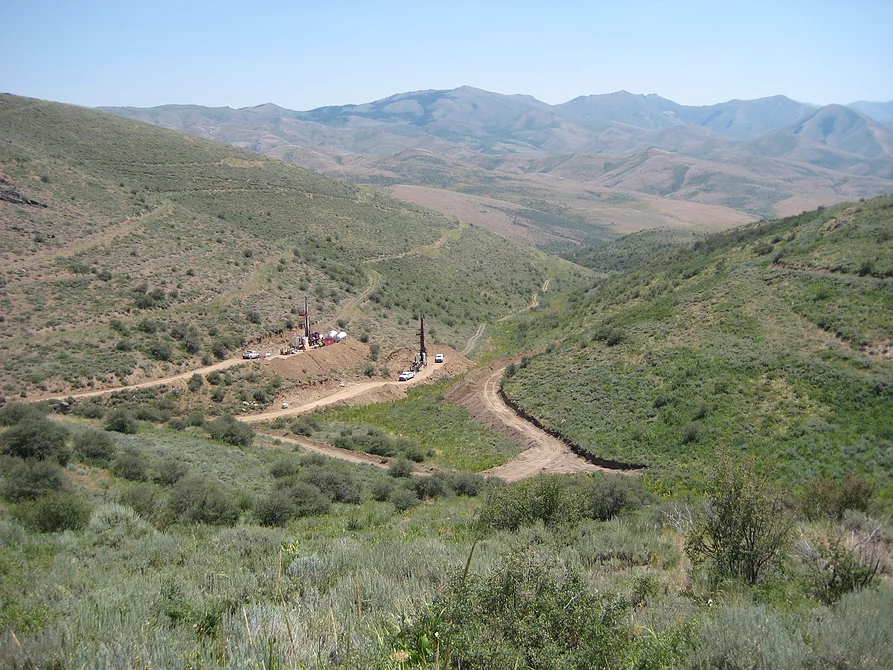
The 2026 infill programme is designed to convert Inferred Mineral Resources to the Measured and Indicated categories, which can then support a maiden reserve in the PFS. The company had completed approximately 11,600 metres, around 64% of planned 2026 drilling, across 119 reverse circulation (RC) and core holes. Recent results include 0.92 grams per tonne (g/t) gold over 33.5 metres, following 1.82 g/t gold over 29.0 metres, and 1.32 g/t gold over 45.7 metres earlier in the month. The company states that results continue to support the grade and leachability estimates in the PEA, with more infill holes awaiting assays as of early September.
Metallurgical work is running alongside the drilling. Agro said 18 columns are under leach, with initial results constructive for the PFS and in line with the PEA. Environmental baseline fieldwork is complete, and Agro said nothing emerged as a red flag. Revival Gold has now begun working with the lead agency, Utah's Division of Oil, Gas and Mining (DOGM), to formulate its notice of intent. These workstreams are intended to converge in early 2027, leading to a feasibility study (FS), a permit and a financing plan ahead of the construction decision.
Building a Team That Intends to Build
Revival Gold currently employs about 20 people, supported by a further 20 contractors and consultants. Agro argued that this scale is necessary if the company is to move promptly from a construction decision into construction. Recent hires are weighted towards Utah and operational experience. Tim Barnett joined as General Manager from Rio Tinto's neighbouring operation, bringing 14 project commissionings across his career, and he already lives in the local community. Everett Brill joined as Exploration Manager from Kinross Gold, where he worked on the comparable Bald Mountain operation in Nevada, and is relocating to the Salt Lake City and Tooele area. A Utah-based manager of permitting and environmental affairs has also been appointed.
The local team reports to John Meyer, Executive VP Engineering & Development, who previously worked on the Stibnite project and came originally from Barrick. Around half a dozen further hires are planned over the next five to six months, covering mining, processing and human resources. Asked what would convince the market that Revival Gold is a builder rather than a company waiting to be acquired, Agro was direct.
"We have full intention to build. We have the capability, the assets, the financing, I think will fall into place nicely here given the fact that we've got a 60% institutional ownership and a project in the western United States with such strong margins."
Interview with Hugh Agro, President and CEO of Revival Gold Inc
Consultant Selection & Technical Credibility
Lenders scrutinise who produced a study as closely as the study itself. Agro said the balance lies in choosing firms large enough to carry weight but not so large that a straightforward project is handed to a junior team. Kappes, Cassidy & Associates, a leading name in western US heap leaching, is leading metallurgy, the economic plan and the PFS report. WSP is handling mine planning and geotechnical work. RESPEC, which also worked on the PEA, is responsible for the resource and reserve. Stantec is leading permitting from its Salt Lake City base, which Agro said makes Mercur a meaningful local project for the firm. He also pointed to the depth of the Salt Lake City supply ecosystem, including Caterpillar, FLSmidth and Boart Longyear, as a practical advantage when the consultant team is expanded for the FS and construction.
Financing Process Designed Around Lenders
Revival Gold states that it has enough cash to take Mercur through to the 2028 construction decision. Project financing will begin in the March to April 2027 window, following the PFS. The company plans to engage lenders early for an eight-month period of data review and feedback. An independent engineer will be appointed well before the FS is complete, so that any required changes can be incorporated into the study rather than discovered afterwards.
Beyond bank debt, Agro said the company will weigh streams, royalties, convertibles, private equity, offtake arrangements with traders and equity, and will likely appoint an adviser to compare the cost of capital across these options. The aim is to enter early 2028 with the team in place, engineering complete, a permit in hand and a credible delivery plan.
Beartrack-Arnett: Exploration Without the Pressure
Because Mercur carries the development workload, the Beartrack-Arnett team can concentrate on exploration. The 2026 programme at the Joss target increased the vertical extent of the zone by 70% and extended it to the south, with mineralisation still open. The team is now updating an internal mineral resource estimate to assess the effect on roughly 877,000 ounces of underground material. Underground engineering specialists are assisting, a metallurgical test phase is planned, and a market study will assess where concentrates could be sold. The next phase of drilling will be planned over the coming three to four months. The work is led by Chief Geologist Dan Pace and General Manager Pete Blakeley, who previously ran the operation. Agro acknowledged a tension between delivering Mercur and advancing Beartrack-Arnett, and stressed that dilution will be managed against value creation.
The Investment Thesis for Revival Gold
- Mercur's capital requirement of roughly one-third of NAV at $3,000 gold, together with management's expectation of bottom-quartile AISC, gives the project room to absorb some cost pressure in the PFS.
- Management expects the PFS to land close to the PEA, and a conservative cut-off grade approach should protect heap leach recoveries rather than inflate headline ounces.
- The company states it is funded through to the 2028 construction decision, which reduces near-term financing risk.
- Recent appointments add local, operations-focused experience, including a General Manager with 14 commissionings behind him.
- Investors should monitor the remaining Mercur infill assays and the Q1 2027 PFS as the next major re-rating catalysts.
- Investors should watch for the DOGM notice of intent and the appointment of an independent engineer as signals that permitting and financing are on schedule.
- Key risks include higher energy costs flowing into the PFS, permitting delays and dilution if Beartrack-Arnett is accelerated ahead of Mercur cash flow.
Macro Thematic Analysis
The junior mining sector is changing shape. Agro noted that a junior was once a $50 million company, whereas several now carry billion-dollar valuations. He argued that this reflects growing relevance for the sector, with more generalist investors bringing more market capitalisation and liquidity. The composition of that capital matters as much as its volume.
"We're seeing pools of capital come out of the oil and gas space in Texas looking for deployment and other hard assets. They really understand cyclical businesses and they do not see this as a top by any means."
For developers, this shift has two implications. First, investors who understand cyclical commodity businesses are more likely to underwrite construction risk than momentum-driven money, which favours projects with clear timelines and conservative engineering. Second, record producer cash flow is looking for a home. Agro observed that many companies at the conference were trying to decide where to deploy recent gains, which increases the strategic value of permittable, low-capital-intensity projects in the western US.
Jurisdiction is part of that calculation. Utah and Idaho offer established mining regulation and infrastructure, and Agro pointed to growing investment activity in Idaho, including Agnico Eagle's involvement at Stibnite. Market volatility remains a risk, but Agro argued that a funded company with a set plan can keep hiring and investing for the long term rather than reacting to headlines. He cited long-term shareholders such as EMR Capital as evidence of that approach. For investors, the macro backdrop rewards developers that can demonstrate execution capacity rather than simply ounces in the ground.
TL;DR
Revival Gold is shifting from study economics to build readiness at its Mercur Gold Project in Utah. The 2025 PEA outlined about 100,000 ounces a year over 10 years for $208 million in pre-production and working capital, with a 57% after-tax IRR at $3,000 gold. Management expects the Q1 2027 PFS to land close to that case. Infill drilling continues to support PEA grades, baseline permitting work is complete and a notice of intent is being prepared with Utah regulators. New local hires include a General Manager with 14 commissionings. Lender engagement starts in early 2027, and the company says it is funded to a 2028 construction decision. Beartrack-Arnett adds exploration upside at Joss.
FAQs (AI Generated)
Analyst's Notes





Subscribe to Our Channel



Stay Informed






















