U.S. Gold Corp.'s SEC 10-Q Signals Capital-Intensive De-Risking & Sets the Stage for a Construction-Ready Re-Rating


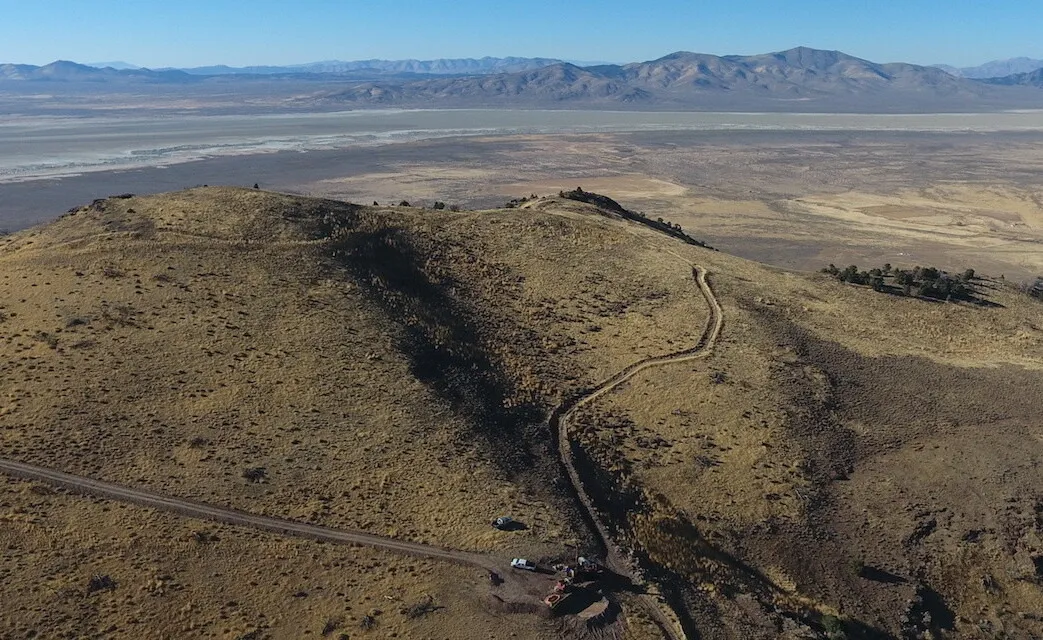
U.S. Gold Corp.'s 10-Q reveals strategic spending shift as CK Gold advances toward feasibility. Fully permitted Wyoming asset targets $937/oz AISC, 30% IRR.
- U.S. Gold Corp.'s October 2025 SEC 10-Q highlights a deliberate shift from capital preservation to capital deployment, reflecting the final de-risking phase ahead of feasibility completion and construction decisions.
- The $4.5 million quarterly loss is driven primarily by engineering, permitting, and technical optimization rather than operational underperformance, an important distinction for development-stage investors.
- The CK Gold Project emerges as a fully permitted US gold-copper development asset with projected AISC of $937 per gold equivalent ounce, post-tax NPV of $356 million, and post-tax IRR of 30% based on February 2025 pre-feasibility study estimates.
- Liquidity of approximately $8.8 million in cash as of October 31, 2025 remains sufficient for near-term objectives, with construction financing representing the next major value inflection point.
- For investors, the 10-Q reframes USAU as an execution-driven development story entering its highest-impact phase ahead of targeted feasibility study publication in early 2026.
Why SEC 10-Q Filings Matter for Mining Investors Right Now
Quarterly SEC filings serve a fundamentally different analytical purpose for development-stage mining companies than they do for operating producers. For pre-revenue developers, these documents reveal capital allocation priorities, management confidence levels, and project advancement velocity in ways that income statements for mature miners cannot. Understanding how to interpret these signals separates sophisticated resource investors from those who misread standard development economics.
Development-Stage Miners Are Defined by Cash Flow, Not Revenue
Quarterly filings become most valuable before production begins, when capital allocation decisions signal management's conviction about project viability and timeline. For development-stage companies, the relevant question is not whether the company generated revenue but whether capital deployment patterns indicate genuine progress toward construction readiness.
Sophisticated investors interpret losses differently for explorers versus developers. An exploration company reporting elevated losses may indicate capital destruction through unsuccessful drilling programs. A late-stage developer reporting elevated losses typically reflects non-recurring de-risking expenditures tied to feasibility completion, permitting finalization, and engineering optimization.
Distinguishing Value-Destructive Burn from Value-Accretive Spend
Engineering, feasibility, and permitting represent non-recurring costs that establish the foundation for construction financing and eventual production. Unlike operating expenses that recur indefinitely, these expenditures conclude once the project achieves construction readiness. Cost growth tied to feasibility study optimization frequently precedes valuation uplift rather than indicating deteriorating fundamentals.
U.S. Gold Corp.'s 10-Q Reveals a Strategic Pivot Toward Execution
The 10-Q filing for the quarter ended October 31, 2025, filed December 10, 2025, demonstrates a company transitioning from capital preservation into active capital deployment. This shift reflects management's determination that the CK Gold Project has reached sufficient technical and permitting maturity to justify accelerated investment in final de-risking activities.
Losses Rise, But the Drivers Are Strategic, Not Structural
The $4,482,551 net loss for the three months ended October 31, 2025 warrants examination of underlying drivers rather than surface-level interpretation. Professional fees, consulting expenses, and engineering costs constitute the majority of elevated spending, indicating project maturity advancement rather than operational deterioration.
George Bee, President and Chief Executive Officer of U.S. Gold Corp., addresses the company's development trajectory and near-term milestones:
"What we will be seeing in the short term is our feasibility study. We anticipate seeing a little bit of inflation on some of the capital cost numbers, operating costs, but that's more than offset by the increase in metal prices."
Capital Deployment as a Signal of Confidence
Many development-stage mining companies have delayed significant expenditures amid macroeconomic uncertainty, preserving capital while awaiting improved financing conditions. U.S. Gold Corp.'s decision to accelerate spending during this period implies management conviction that CK Gold meets the buildability, financeability, and competitiveness thresholds necessary to proceed. The company commenced access road construction in December 2025, funded from treasury.
CK Gold Project: A Fully Permitted US Gold-Copper Development Asset
The CK Gold Project occupies an increasingly valuable position in the global development pipeline as a fully permitted gold-copper asset located in Wyoming. The combination of permitting completion, favorable infrastructure positioning, and metallurgical simplicity differentiates CK Gold from the majority of development assets competing for financing.
Asset Quality in a Constrained Development Pipeline
Proven and probable reserves defined under S-K 1300 standards total 1.672 million gold equivalent ounces, comprising 1.022 million ounces of gold, 260 million pounds of copper, and 3.008 million ounces of silver, based on the February 2025 pre-feasibility study. The asset benefits from location on State of Wyoming land, with the project footprint confirmed as not impacting waters of the US per Army Corps of Engineers jurisdictional delineation, eliminating federal permitting requirements.
All major permits have been obtained. The Mine Operating Permit was approved in April 2024 with a 10-year renewable term. The Industrial Siting Permit was approved in June 2023 and extended through 2026. The Air Quality permit was approved in November 2024.
George Bee emphasizes the locational advantages that reduce execution complexity:
"You land in Denver International Airport and an hour and a half later you're on the project. We've got the interstate highway system. We're about two miles off of pavement… With our location, people can go home at night."
Metallurgy, Design Optimization & the Role of Jameson Cell Technology
The clean sulfide metallurgical profile at CK Gold supports high recovery rates while minimizing processing complexity. In August 2025, the company announced adoption of Glencore Technology's Jameson Cell flotation equipment for inclusion in the feasibility study, addressing multiple economic levers simultaneously through improved recovery rates, reduced plant footprint, and lower power consumption.
George Bee details the technical optimization work:
"We looked at the Jameson cells, the Glencore technology, that has demonstrated itself to give us a little bit more recovery. It's a smaller footprint in the plant. We save a little bit on the capital costs and the power costs are a little lower."
Economics That Matter in a Volatile Gold & Copper Price Environment
Project economics determine financing optionality, margin resilience, and ultimately investment returns across commodity price cycles. The CK Gold Project's cost structure positions it favorably relative to global development peers while providing meaningful margin protection against commodity price weakness.
Stress-Testing CK Gold Against Cost Curves
The February 2025 pre-feasibility study projects an All-In Sustaining Cost of $937 per gold equivalent ounce based on metal price assumptions of $2,100 per ounce gold, $4.10 per pound copper, and $27 per ounce silver. This cost positioning supports profitability across a range of gold price scenarios while providing protection against margin compression during cyclical weakness.
Copper by-product credits contribute to the favorable AISC profile. The company anticipates producing approximately 110,000 gold equivalent ounces annually over a 10-year mine life. Management notes that concentrate quality is clean with no impurities that would draw smelter penalties, supporting favorable offtake discussions.
Interpreting NPV & IRR for Development-Stage Assets
The February 2025 pre-feasibility study reports post-tax net present value at a 5% discount rate of $356 million and an internal rate of return of 30%, based on the metal price assumptions noted above. The upcoming feasibility study, targeted for publication in early 2026, will incorporate updated cost estimates and the Jameson Cell technology optimization.
Liquidity, Warrants & the Real Meaning of Going Concern Language
Balance sheet analysis for development-stage companies requires understanding that liquidity adequacy relates to specific near-term objectives rather than indefinite operational sustainability. The 10-Q provides clarity on U.S. Gold Corp.'s financial position relative to its current stage requirements.
Cash Position & Near-Term Runway
As of October 31, 2025, cash totaled approximately $8.8 million with working capital of approximately $8.2 million, providing adequate funding for feasibility study completion, permitting maintenance, and corporate overhead through the construction financing decision point.
The company has contracted with Cheyenne Light, Fuel and Power, a subsidiary of Black Hills Corp., to begin pre-construction planning, engineering, and procurement activities for power facilities. This arrangement addresses a critical infrastructure requirement with the utility bearing infrastructure costs under a demand charge structure.
George Bee confirms the treasury position supports near-term development activities:
"Even this month we're breaking ground on the access road… We're treasury at the moment, we're fine. We're going to be building the access road out of treasury. "
Warrant Exercises as a Vote of Confidence
Net cash of approximately $8.35 million was received from warrant exercises during the six months ended October 31, 2025, demonstrating existing shareholder conviction in the company's trajectory. Warrant holders chose to deploy additional capital rather than allowing positions to expire, providing both funding and a market signal regarding perceived value.
Reading the Going-Concern Statement Correctly
Going concern language appears routinely in filings from pre-construction development companies and reflects accounting disclosure requirements rather than imminent financial distress. The company is exploring traditional and non-traditional funding sources, including vendor financing options, with management targeting construction financing in the first half of 2026.
Optionality Beyond CK Gold: Exploration & Non-Core Upside
While CK Gold represents the primary value driver and near-term focus, U.S. Gold Corp.'s portfolio includes additional assets that provide exploration optionality without requiring immediate capital allocation.
Keystone: Strategic Leverage to the Cortez Trend
The Keystone property in Nevada offers geological exposure to one of North America's most prolific gold districts. Located approximately eleven miles from the Cortez Complex, Keystone shares geological characteristics with adjacent tier-one systems. The company is discussing potential partnership opportunities at Keystone with industry-leading companies.
George Bee describes the strategic value:
"I look at our Keystone asset, just 11 miles away from the Cortez Complex. We've got all the same kind of parameters, the same geology, we've got excellent prospects there. What we hope to be able to do with CK Gold, up and running, turn our attention back to Nevada because quite frankly that's where the huge prizes really are."
Challis: Permitting Progress as a Value Signal
In October 2025, the company received approval from the United States Forest Service for its revised Plan of Operations for mineral exploration at the Challis Gold Project in Idaho, demonstrating execution capability and regulatory relationships beyond the CK Gold primary focus.
Aggregate & Infrastructure-Linked Revenue Upside
The company has secured a non-binding letter of intent for delivery of ballast to a major railway, representing potential by-product revenue from waste rock monetization not fully incorporated into current project valuations.
Management, Jurisdiction & Execution Risk
Development-stage investment fundamentally represents a bet on management's ability to execute complex technical and financial transitions. Jurisdictional positioning determines the regulatory and fiscal environment within which that execution occurs.
George Bee emphasizes the team's development experience:
"Our team and I have built mines before…I've been in the business for 40 years and building mines and so on. We've got a lot of experience and bench strength."
US jurisdiction provides permitting timeline predictability, ESG risk mitigation, and fiscal stability. Wyoming specifically offers state-level regulatory efficiency that has enabled CK Gold's fully permitted status without federal involvement; a characteristic management notes applies to only a handful of development projects in safe jurisdictions.
The Investment Thesis for U.S. Gold
- Investors are rotating toward build-ready, lower-cost assets as discovery pipelines thin and new project development timelines extend beyond historical norms.
- Projects positioned below global AISC curves retain financing optionality even in weaker commodity price environments, providing downside protection during market volatility.
- Fully permitted US development assets command scarcity premiums as regulatory complexity and social opposition constrain new project advancement globally.
- Feasibility study completion and financing clarity create asymmetric re-rating potential as projects transition from development-stage valuations toward production-stage multiples.
- Exploration and by-product revenue opportunities offer upside exposure without requiring near-term dilution or management distraction from primary asset development.
What the SEC 10-Q Really Tells Investors About U.S. Gold
U.S. Gold Corp.'s October 2025 SEC 10-Q documents a strategic transition from preparation to execution. Elevated spending reflects confidence in the CK Gold Project's buildability, economics, and permitting status rather than operational stress. With all major permits secured, feasibility study publication targeted for early 2026, and construction financing discussions advancing, the company is approaching the phase where execution becomes the primary driver of valuation. For investors evaluating gold-copper development opportunities, CK Gold's combination of US jurisdiction, established infrastructure relationships, and favorable cost positioning merits attention as the project advances toward a construction decision.
TL;DR
U.S. Gold Corp.'s October 2025 SEC 10-Q signals a deliberate transition from capital preservation to capital deployment as the CK Gold Project enters its final de-risking phase. The $4.5 million quarterly loss reflects engineering, permitting, and feasibility optimization costs rather than operational problems. CK Gold stands as a fully permitted gold-copper development asset in Wyoming with projected AISC of $937 per gold equivalent ounce, post-tax NPV of $356 million, and 30% IRR based on the February 2025 pre-feasibility study. With approximately $8.8 million in cash, feasibility study publication targeted for early 2026, and access road construction now underway, the company is positioned for a potential construction-ready re-rating as financing discussions advance.
FAQs (AI-Generated)
The loss reflects strategic capital deployment into engineering, professional fees, consulting, and permitting activities required to complete the feasibility study and advance CK Gold toward construction readiness. These are non-recurring de-risking expenditures rather than signs of operational deterioration.
CK Gold has secured all major permits including the Mine Operating Permit (April 2024), Industrial Siting Permit (June 2023, extended through 2026), and Air Quality permit (November 2024). The project does not require federal permitting as it sits on State of Wyoming land.
The February 2025 pre-feasibility study projects AISC of $937 per gold equivalent ounce, post-tax NPV of $356 million at a 5% discount rate, and post-tax IRR of 30%, based on metal price assumptions of $2,100/oz gold, $4.10/lb copper, and $27/oz silver.
Management targets feasibility study publication in early 2026, which will incorporate updated cost estimates and the Jameson Cell flotation technology optimization announced in August 2025.
As of October 31, 2025, the company held approximately $8.8 million in cash with working capital of approximately $8.2 million, which management indicates is adequate for feasibility study completion and near-term development activities including access road construction.
Analyst's Notes





Subscribe to Our Channel




.jpg)
Stay Informed