




U.S. Gold Targets New Ounces Beside CK Gold Pit


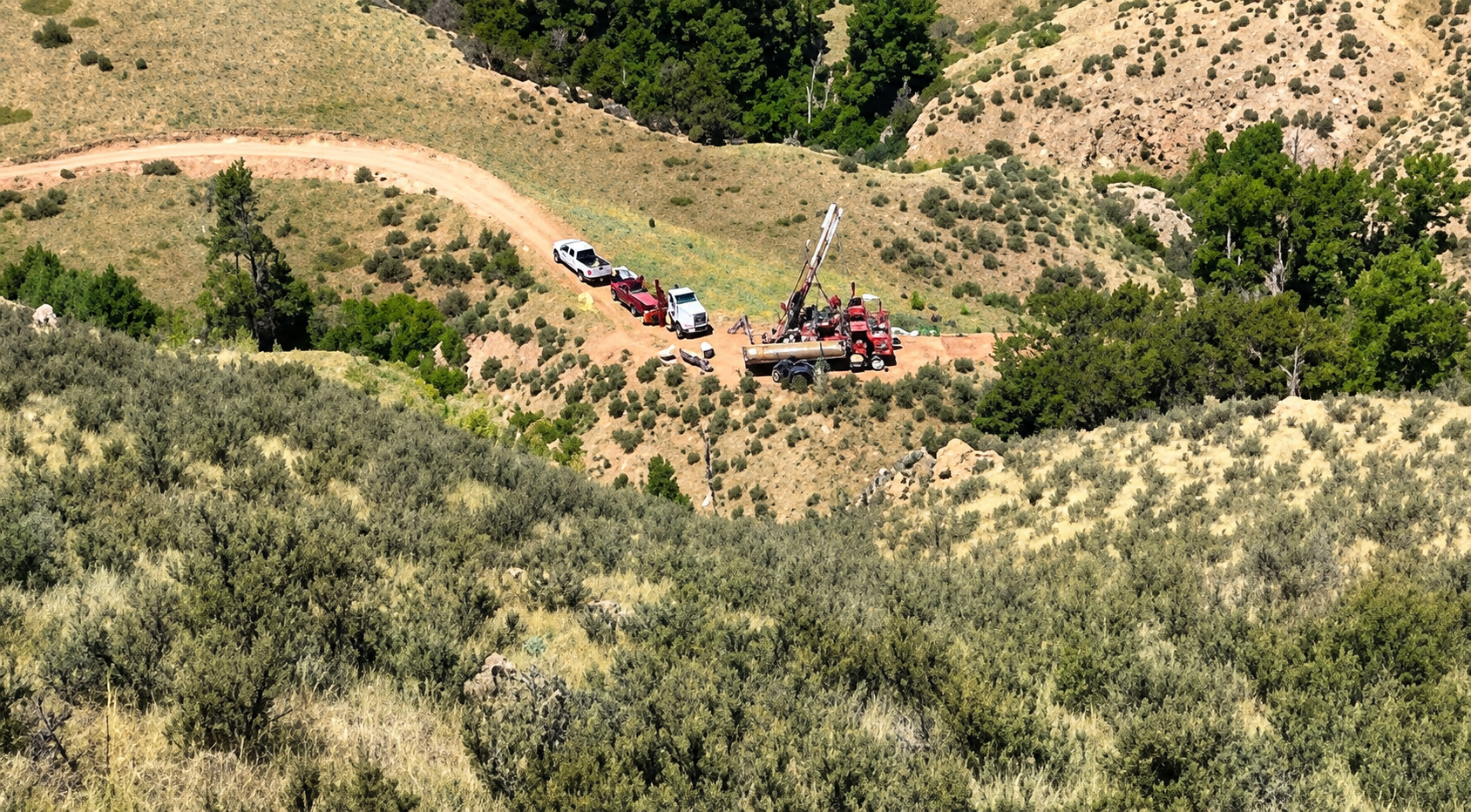
U.S. Gold Corp is using low cost geophysics to hunt for gold and copper next to its permitted CK Gold pit in Wyoming, ahead of new drilling.
- U.S. Gold Corp. flew a drone equipped with a magnetometer, a tool that detects magnetic patterns in rock, over 325 line kilometers of its fully permitted CK Gold Project in Wyoming.
- The survey, conducted by Zonge International, builds on magnetic patterns first spotted in a 2017 ground survey, pointing to rock structures that may contain additional gold and copper.
- A drilling program is being developed to test for mineralization both below the existing pit design and in new target areas outside the proposed pit footprint, meaning the physical boundary of the planned mine.
- Wright Geophysics is now interpreting the new data, and Zonge is scheduled to run a follow up gravity survey in late July over the same ground.
- Management is focused on converting known mineral resources into mineable reserves through pit expansion, alongside testing former high grade mining areas the CEO linked to the Silver Crown Mining District.
For a mining company, one of the biggest questions after a project earns its permits is where the next ounce of gold will come from, and how much it will cost to find it, a question made sharper by global gold discovery rates sitting at generational lows. U.S. Gold Corp (Nasdaq: USAU) is answering that question at its CK Gold Project in Southeast Wyoming by looking sideways and downward from its existing pit design rather than starting a new project from scratch. The company has completed an updated, wider ranging drone magnetometer survey across the project area and is developing a drilling program to test what it found, both beneath the existing pit design and in new target areas outside the proposed pit footprint.
U.S. Gold Corp is a US focused company that explores for and develops gold and copper projects. Its flagship asset, the CK Gold Project, is located in Southeast Wyoming and is supported by a completed feasibility study prepared by Halyard-Micon International, Inc. The company also holds the Keystone exploration property on the Cortez Trend in Nevada and the Challis Gold Project in Idaho. CK Gold lies near the Copper King Mine, an area management has linked to the historical Silver Crown Mining District, where mining companies extracted high grade ore, meaning rock with a relatively high concentration of metal, in the past.
Key Development
At the center of this announcement is a drone mounted magnetometer survey, a low cost method that measures magnetic signals in the ground from the air to find rock structures that may hold metal. Zonge International, Inc. of Reno, Nevada flew the drone over 325 line kilometers at an average height of 32 meters above the ground. The results build on magnetic patterns first found by a ground based survey in 2017, and they point to additional rock structures and magnetite altered zones, meaning rock chemically changed in a way tied to magnetic minerals, that may contain gold and copper. This matters because known mineralization at CK Gold already carries a similar high magnetic signature, so areas with a matching signal are considered worth testing. The anomalies follow a strong northwesterly pattern in the rock, called a structural fabric, with signals immediately southeast of the Copper King Mine sitting on that same trend beneath a layer of younger rock called the Oligocene White River Formation. The company says this cover does not reduce the strength of the signal underneath.
Wright Geophysics has been brought in to complete a more advanced interpretation of the new magnetic data, and Zonge is scheduled to run a follow up gravity survey in late July over the same project area.
Vice President of Exploration & Technical Services of U.S. Gold Corp, Kevin Francis, connected the results to the district's mining history:
"We are excited to see the additional anomalies similar to the historical Copper King Mine."
Strategic Significance
The idea behind brownfield exploration, meaning exploration next to an existing project rather than in new, unproven ground, is simple. A project that already has a completed feasibility study, permits, and planned infrastructure can add newly found mineralization to its existing mine plan, skipping the years of permitting and construction that a brand new, standalone project would need. A drone magnetometer survey of this size is also a relatively low cost way to search for targets compared with drilling, which lets the company narrow down its best targets before spending money on a drilling program.
President and Chief Executive Officer of U.S. Gold Corp., George Bee, tied the program to where the project stands today:
"With the initial CK Gold Project Feasibility Study now published and our fully permitted project moving to development, we can now turn attention to both the potential to expand the pit into known mineralization through conversion of our resources into reserves, and to explore into areas of former mining of high-grade ore conducted by the original developers of the Silver Crown Mining District."
Current Activities
The magnetometer survey is complete, and Wright Geophysics is now working through a more advanced interpretation of the data. A gravity survey by Zonge is scheduled for late July over the same footprint, which will help confirm which magnetic anomalies sit on rock types similar to those already known to host mineralization. Both surveys are feeding into a drilling program being designed to test mineralization below the existing pit design and at new targets outside the proposed footprint. No drill results have been reported yet from this specific program, and the company has not disclosed a timeline for when drilling will begin.
The Investment Thesis for U.S. Gold Corp
- CK Gold's permitted status and completed feasibility study may shorten the time between confirming new mineralization and adding it to the mine plan, compared with an unpermitted project.
- The Wright Geophysics interpretation and the late July gravity survey are the remaining steps before a defined drilling program is announced, meaning any exploration upside from this survey stays unconfirmed until that program is set.
- Any new mineralization found below the pit design or outside the proposed footprint would need to appear in a future resource or reserve update before it adds measurable value, since resources are potential deposits while reserves are the portion proven to be economically mineable.
- A 325 line kilometer drone magnetometer survey is a comparatively lower cost way to generate drill targets than an equivalent amount of drilling.
- CK Gold sits in Southeast Wyoming, inside the United States, rather than in an emerging or unpermitted mining region.
- This release describes exploration targeting, not a completed resource or reserve estimate, so it does not yet quantify any addition to CK Gold's mine plan.
This update, published on June 10, 2026, describes a completed geophysical survey and a drilling program still being designed, not a new discovery or a resource estimate. For a new investor, the key point is that this work sits on top of a project that already has a finished feasibility study and full permits, so any future drilling success would be added to an existing plan rather than needing to build one from nothing. Watch for the Wright Geophysics interpretation, the outcome of the late July gravity survey, and any future announcement of a defined drilling program, since none of those have been released yet.
TL;DR
U.S. Gold Corp flew a low cost drone magnetometer survey over 325 line kilometers of its already permitted CK Gold Project in Wyoming, and the results point to rock structures near the existing pit design that may hold more gold and copper. Because CK Gold already has a completed feasibility study and full permits, any mineralization confirmed here could be folded into the existing mine plan rather than needing a new project, the core idea behind brownfield exploration. Wright Geophysics is interpreting the data, a gravity survey follows in late July, and both feed into a drilling program management is still designing, with no drilling timeline or resource update disclosed yet.
FAQs (AI-Generated)
Analyst's Notes





Subscribe to Our Channel


%20(1)%20(1).jpg)
.jpg)
Stay Informed






















