




Namibia Critical Metals Secures New Partner and Funding for Lofdal Heavy Rare Earth Project Towards FID


JOGMEC and Toyota Tsusho complete $23M earn-in on Namibia Critical Metals' Lofdal heavy rare earth project, unlocking non-dilutive funding to FID.
- Japan's JOGMEC and Toyota Tsusho have completed a C$23 million earn-in and formed TJ Namibia Rare Earths Corporation, acquiring 50% interest in the Lofdal Heavy Rare Earth Project roughly 18 months ahead of schedule.
- JOGMEC has committed a further C$47.7 million to capitalise the new joint venture, funding Lofdal through DFS completion and toward FID on a non-dilutive, interest-free basis.
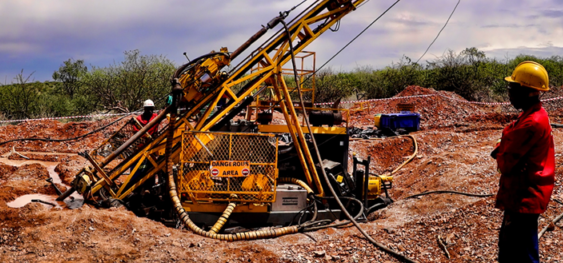
- A 13,000-metre drill programme is underway targeting a maiden resource at Area 5, a first deep hole at Area 4 to 800 metres, and expanded resources at Area 2B.
- The company's 2025 PFS delivered a $275 million after-tax NPV and 19% IRR in its base case, rising to $748 million and 35% IRR in a divergent pricing case.
- Namibia Critical Metals trades at roughly 0.15-0.2x price-to-NAV, a discount management attributes to low liquidity, versus 0.4-0.8x for comparable PFS/DFS-stage peers.
As Western and Japanese manufacturers scramble to secure heavy rare earth supply outside China, Namibia Critical Metals (TSXV:NMI) has reached a milestone six years in the making. The Japan Organization for Metals and Energy Security (JOGMEC) and Toyota Tsusho Corporation have completed their earn-in on the company's Lofdal Heavy Rare Earth Project in Namibia, formally establishing a jointly owned vehicle to fund the asset through to a construction decision. President and CEO Darrin Campbell spoke what the completed earn-in means, the technical work still ahead, and why he believes the market has yet to catch up with the story.
A Six-Year Partnership Reaches the Next Phase
JOGMEC first partnered with Namibia Critical Metals in 2020, structuring a staged earn-in toward a 50% interest in Lofdal. The process originally scheduled to run until March 2028 was concluded in July 2026, roughly 18 months early. Campbell attributed the acceleration to steady, funded execution rather than announcements of intent. Along the way, JOGMEC agreed to lift its total funding commitment from $20 million to $23 million, in recognition of the dilution Namibia Critical Metals took on to issue a 5% minority free-carried interest to a historically disadvantaged Namibian group, a condition of its mining licence.
With the earn-in complete, JOGMEC and Toyota Tsusho established TJ Namibia Rare Earths Corporation (TJNREC) to hold their combined 50% participating interest, subject to TSX Venture Exchange and shareholder approval. JOGMEC has separately committed to invest up to C$47.7 million (¥5.5 billion) into TJNREC, with an initial tranche completed in July 2026, to fund the project through Definitive Feasibility Study (DFS) completion and toward a Final Investment Decision (FID).
Toyota Tsusho's Role in the Value Chain
Toyota Tsusho's formal entry in March 2026, following several years of due diligence that intensified after Lofdal's PFS was published in January, brings more than capital. As the trading arm of the Toyota Group, the company holds an interest in a rare earth separation plant in India and maintains established relationships with major Japanese magnet producers Shin-Etsu Chemical and Proterial. Campbell described the intended role plainly:
"Toyota Tsusho will ultimately be, is a trading house. They will ultimately take our product, sell it, and then presumably buy it back to the Toyota automotive group for their EV motors."
That downstream access matters because Japan, the second-largest consumer of rare earth magnets outside China, has grown increasingly sensitive to supply disruption. Should the consortium's stake rise from 50% to 51%, the offtake arrangement shifts from a first right of offer to a first right of refusal on all production, an option JOGMEC retains for a further $5 million cash payment.
Non-Dilutive Funding to FID
Perhaps the most consequential structural change is the move to Pre-FID Capital Funding. Under the amended joint venture agreement, all project spending beyond the completed earn-in is non-interest-bearing and does not dilute Namibia Critical Metals' ownership until a Final Investment Decision is made. Campbell called it a rare position for a junior developer:
"Any money spent between now and FID is going to be funded under this pre-FID capital funding arrangement, which is essentially a temporary free carry for NMI. So it's non-dilutive at this stage, we don't have to make a decision to equalize or dilute until we reach an FID, which is a fantastic option for our shareholders."
Namibia Critical Metals retains the option to participate at up to 45% by funding pro rata once the decision point arrives, or to dilute to a carried working interest no lower than 21% by repaying a $5 million dilution-protection payment to JOGMEC. Campbell indicated management's preference is to retain maximum exposure.
Interview with Darrin Campbell, President & CEO of Namibia Critical Metals Inc.
Technical De-Risking Underway
The company's PFS outlined a 13-year mine life and two economic scenarios. The base case, built on moderately higher spot pricing, generated a $275 million after-tax NPV and 19% IRR on $348 million of capex. A divergent case, assuming continuation of the elevated non-Chinese pricing seen over the past 18 months, produced a $748 million after-tax NPV and 35% IRR. Campbell noted that current market pricing increasingly resembles the divergent case rather than the base case.
A 13,000-metre, 83-hole drill programme commenced in June 2026 across two rigs, targeting a maiden resource at the Area 5 xenotime system between the company's two main deposits, the project's first deep hole at Area 4 to roughly 800 metres to test underground potential, and infill drilling to upgrade measured and indicated categories at Area 2B. In parallel, the company awarded metallurgical contracts to SGS in July for pilot-scale flotation and integrated hydrometallurgical testwork aimed at producing separated light and heavy rare earth products, rather than a mixed concentrate, which Campbell said offtakers increasingly demand. A DFS completion target of Q3 2027 is intended to lead quickly into an FID with the Japanese partners.
A Valuation Disconnect
Despite the strategic backing, Campbell argued the market continues to price Lofdal as an early-stage exploration story:
"We are currently still priced as an early stage green field exploration company at a 0.1 to 0.15 NAV (net asset value). If we look at the economics of our PFS, I would say that we should be more priced as a more advanced strategically backed project, which would have from what I've seen in the market of a 0.8 to 1 NAV."
He pointed to low institutional coverage, thin liquidity, and 63% insider ownership, led by Bannerman Energy at 43%, as contributing factors, along with market confusion over the earn-in's dilution mechanics.
The Investment Thesis for Namibia Critical Metals
- Strategic validation now complete: JOGMEC and Toyota Tsusho have finished a $23 million earn-in for 50% of Lofdal and capitalised a joint venture vehicle with up to C$47.668 million in further funding, removing near-term financing risk.
- Non-dilutive path to FID: Project spending through DFS completion and beyond is funded on an interest-free, non-dilutive basis, preserving Namibia Critical Metals' equity position until a construction decision is made.
- Ownership optionality: The company can elect to participate at up to 45% or dilute to a floor of 21% carried interest, with the decision deferred until FID - management has signalled intent to retain maximum exposure.
- Resource growth catalysts: A 13,000-metre programme could deliver a maiden Area 5 resource, extend Area 4 to depth, and support a future underground mining case; results expected through the remainder of 2026 and into 2027.
- Offtake structure in flux: Final offtake pricing terms remain under negotiation; watch for clarity on potential floor pricing tied to Japanese government coordination on heavy rare earths.
- Valuation re-rating watch-item: Monitor DFS progress and peer P/NAV multiples (0.4-0.8x for comparable PFS/DFS projects versus NMI's current 0.15-0.2x) as a potential catalyst.
- Risks: Non-Chinese heavy rare earth pricing has been elevated for roughly 18 months and may not persist at current levels; dilution mechanics at FID remain a swing factor for per-share economics.
Macro Thematic Analysis
Heavy rare earths have become one of the most acute flashpoints in the broader push to diversify critical mineral supply chains away from China, which continues to control the substantial majority of global processing capacity for elements like dysprosium, terbium and yttrium. Non-Chinese pricing for these elements has decoupled sharply from Chinese spot rates over the past 18 months, driven by geopolitical tension and by government-backed floor pricing initiatives, most notably the US government's earlier NdPr floor price, which Chinese spot prices have since exceeded. Campbell framed the trend as durable:
"I think there's a recognition that heavier earth prices at these levels that we're seeing right now are likely sustainable for at least the midterm."
Lofdal's position as one of a small number of large, permitted heavy rare earth deposits outside China, now backed by both a Japanese government agency and an industrial trading house with downstream magnet-sector relationships, places it among the more advanced non-Chinese supply candidates as OEMs across automotive, defence and renewable energy sectors look to lock in secure, diversified sourcing.
Closing Paragraph
The completion of Japan's earn-in marks a genuine inflection point for Namibia Critical Metals: financing risk through to a construction decision has been substantially addressed, technical de-risking is well underway, and the company retains meaningful optionality over its final ownership stake. What remains outstanding is market recognition. Campbell's own framing, that industrial and sovereign investors identified Lofdal's value before public markets did, is a claim investors will be able to test over the next 12-18 months as DFS results, drilling outcomes, and clarity on final offtake pricing accumulate. For investors focused on non-Chinese heavy rare earth exposure, Lofdal's combination of permitting, partnership depth and non-dilutive funding is a differentiated profile, even if the valuation gap Campbell describes has yet to close.
TL;DR
Namibia Critical Metals' Lofdal Heavy Rare Earth Project has cleared a major financing milestone: JOGMEC and Toyota Tsusho have completed a $23 million earn-in, taking a combined 50% interest through newly formed TJ Namibia Rare Earths Corporation, and JOGMEC has committed a further C$47.668 million to fund the project through DFS completion and toward FID, all on a non-dilutive basis. A 13,000-metre drill programme is testing resource growth at Area 5 and depth extension at Area 4, alongside pilot-scale metallurgical work with SGS. CEO Darrin Campbell argues the market still prices Lofdal like an early-stage explorer despite PFS-stage economics and sovereign-industrial backing, citing low liquidity and thin institutional coverage as the main reasons for the disconnect.
Frequently Asked Question (FAQs) AI-Generated
Analyst's Notes





Subscribe to Our Channel
%20(1)%20(1).jpg)
.jpg)
Stay Informed


