




US Battery Strategy Omits Price Floors, Making Contracts Key for Refiners


Signed sales contracts now decide which Western battery refiners hold their value, as operating costs run 50% higher and US price floors remain in trade talks.
- The US Department of Energy released its Strategy for American Leadership in Batteries on October 28, 2026. It sets a goal of a fully integrated domestic battery supply chain by 2030.
- The release names no funding total, price floor or offtake mechanism for the strategy's upstream and midstream investment pillar.
- China held over 80% of global lithium-ion cell capacity in 2025, against 6% to 7% each for the US and EU, according to the IEA.
- The IEA puts refining operating costs outside today's leading producer countries about 50% higher, and capital costs 20% to over 150% higher.
- The price floors under US trade negotiations remained unsigned as of 7 August 2026, and the benchmarks USTR welcomed covered no battery minerals.
US Battery Strategy Targets Domestic Supply as Demand Heads for 707 GWh
The US Department of Energy (DOE) released its Strategy for American Leadership in Batteries on October 28, 2026. It sets a goal of a fully integrated domestic battery supply chain by 2030. DOE projects US battery demand across transportation and energy storage rising from 179 gigawatt-hours (GWh) in 2025 to 707 GWh in 2035, close to a fourfold increase.
The first of six strategy pillars targets investment in upstream and midstream supply: the mining, refining and materials-processing steps before battery cell manufacturing. The DOE release names no dollar amount, project count or support mechanism for the pillar. A day later, Secretary of State Marco Rubio and Finnish Foreign Minister Elina Valtonen signed a Critical Minerals Framework as a memorandum of understanding, with no minerals, volumes or investment terms disclosed.
China's 80% Share of Cell Capacity Keeps US Battery Supply Import-Dependent
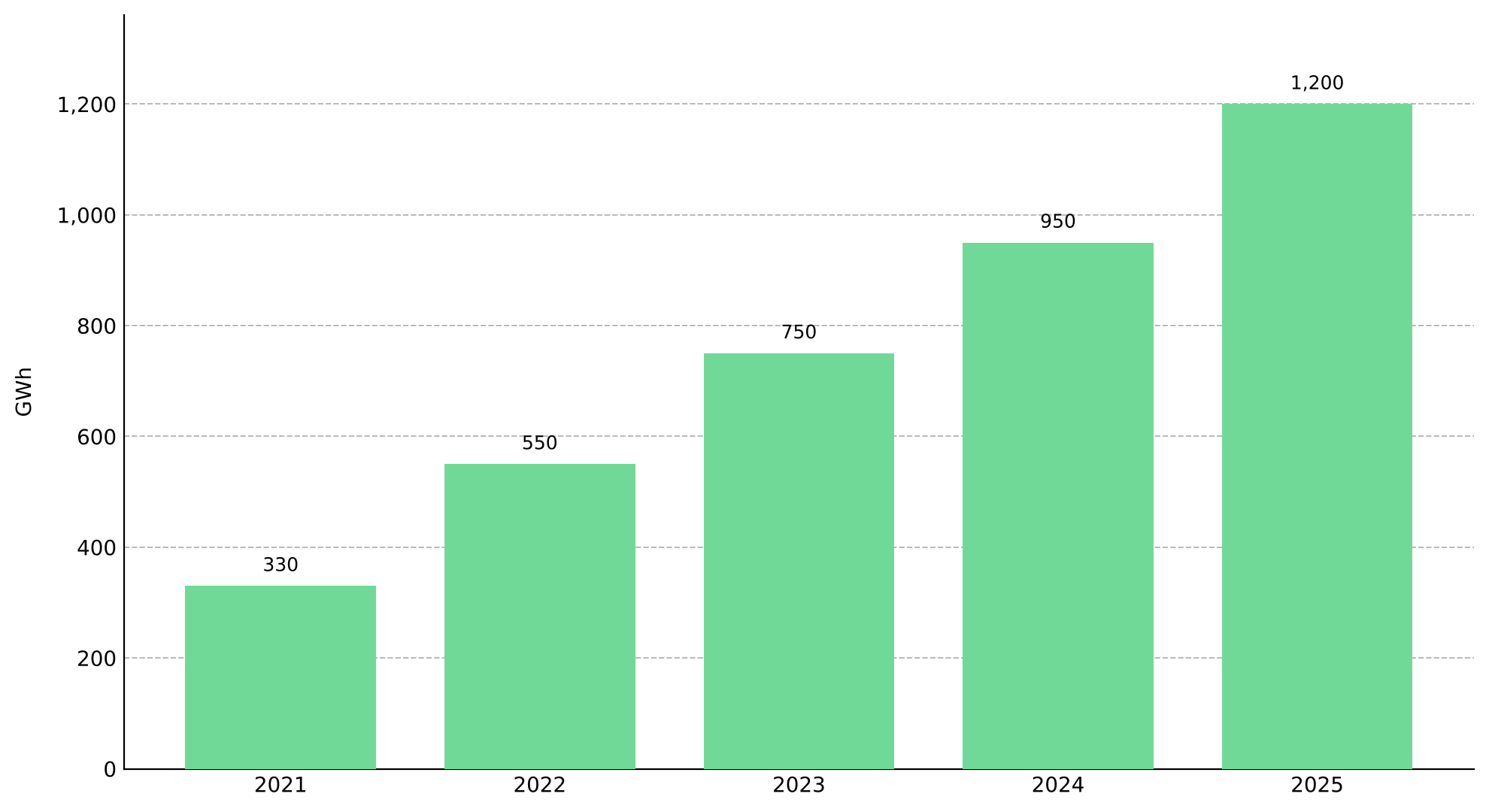
The physical gap sits in cell manufacturing and its material inputs. The IEA Global EV Outlook 2026 puts global EV battery demand at 1.2 terawatt-hours (TWh) in 2025. It puts global lithium-ion nameplate capacity above 4 TWh, with China holding over 80% and the US and EU 6% to 7% each. North American firms own over 35% of US capacity, yet they supplied about 3% of batteries in EVs sold in 2025.
Cost keeps the gap open. The IEA Global Critical Minerals Outlook 2026 puts capital costs for projects outside today's leading producer countries 20% to over 150% higher, and refining operating costs about 50% higher. On the IEA's cost figures, a refiner outside China competing for the same buyers carries the extra cost on its own margin.
US Price-Floor Talks Leave Battery Refining Projects Without a Revenue Floor
Price floors for critical minerals remain a negotiating position. Proclamation 11001, signed on 14 January 2026, directed the Commerce Secretary and the US Trade Representative to negotiate with trading partners and to consider price floors, and the resulting Agreement on Trade in Critical Minerals remained under negotiation as of a USTR statement on 7 August 2026.
The S&P Global price benchmarks USTR welcomed on 7 August 2026 cover gallium, germanium, tungsten, antimony, and neodymium and praseodymium, with no lithium, nickel, cobalt or graphite. EXIM's Project Vault, approved on 2 February 2026 with a loan of up to $10 billion, stores raw materials against supply shocks and names no price floor.
In an IEA rare earth refining model, price support lifts a project's internal rate of return by about 2.4 percentage points, nearly double the gain from an upfront grant.
Higher Costs Expose Non-China Battery-Materials Developers to Price Swings
Non-China refiners and cathode developers carry the cost gap directly. With operating costs about 50% above Chinese peers, their margins compress first when mineral prices fall. Lithium prices in early 2026 were more than double early 2025 levels, yet about 70% below the 2022 peak, according to the IEA Global EV Outlook 2026. A range that wide can move a high-cost refiner between profit and loss.
What separates developers is whether their revenue is contracted. A project holding a sovereign offtake or price floor carries the cost gap without carrying the price risk. A project selling at spot carries both. According to the State Department transcript, the US-Finland framework, signed as a memorandum of understanding, named no project, offtake or price term at the 29 October signing.
No one outside the administration knows whether or when price support reaches battery minerals. For a retail holder of a pre-production refining developer, position size rather than policy timing is the variable within reach. Shares in high-cost developers can fall sharply, and capital can be lost entirely, when prices drop before support arrives.
What Sets the Value of Non-China Processing
US policy names domestic processing and partner countries such as Finland as the route to battery supply, and price floors sit inside US trade negotiations. Neither has yet reached lithium, nickel, cobalt, or graphite. The gap between Chinese and Western production costs remains the price of diversification.
Value in the segment accrues to developers with contracted or supported revenue. The IEA calls the diversification cost a mineral security premium, shared by governments, industry and consumers. As price floors move from negotiation into force, the premium moves from a risk footnote into project valuations. With US demand alone heading toward 707 GWh, non-China capacity financed on contracted terms has room to scale.
Analyst's Notes





Subscribe to Our Channel


Stay Informed


