




Bypass Route Attacks Lift Brent Past $116, Rewarding Producers Beyond the Gulf


Reliable export access could help oil producers convert elevated crude prices into stronger operating cash flow, supporting long-term valuations.
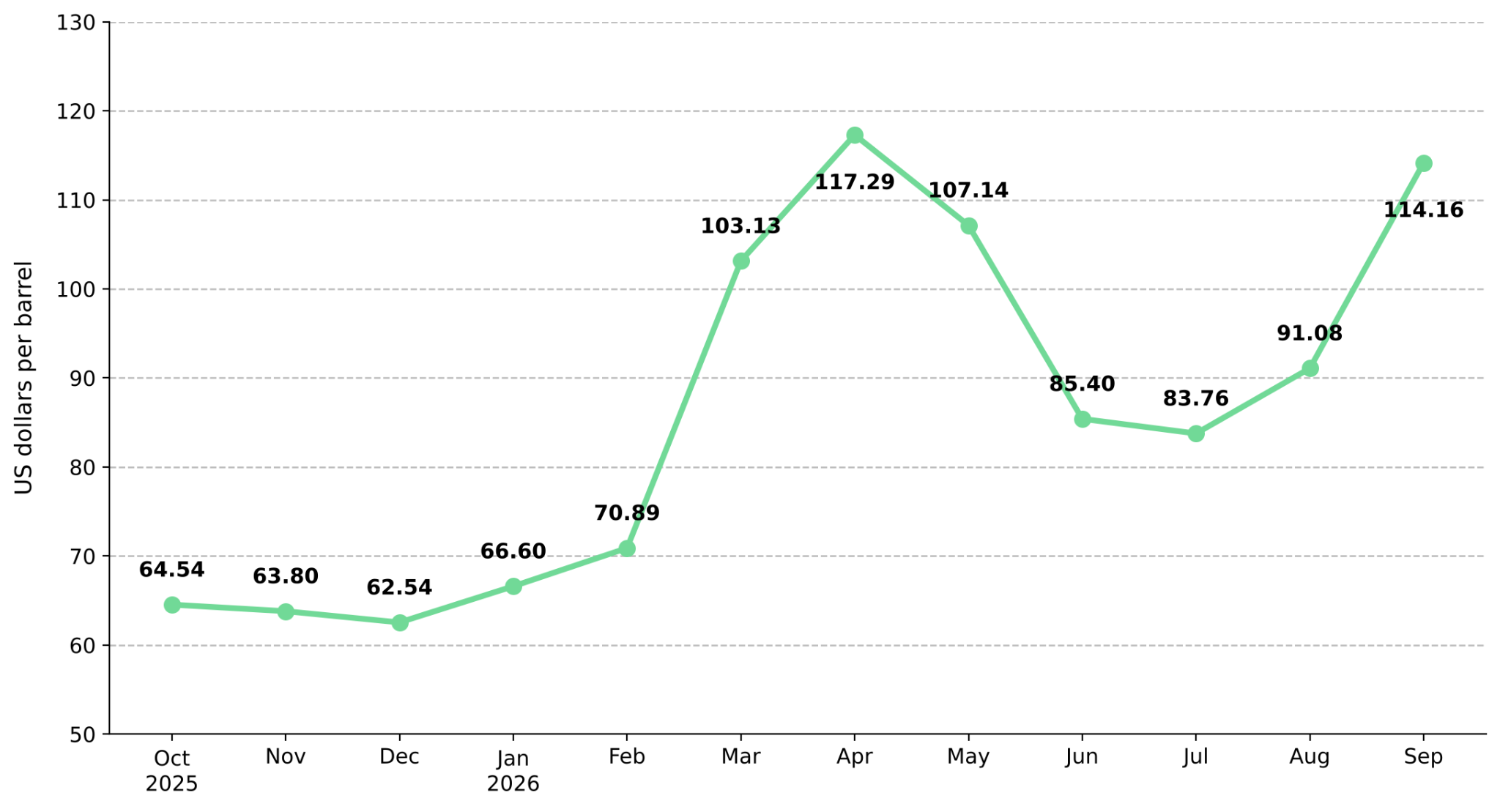
- Brent traded at $116.56 per barrel and West Texas Intermediate (WTI) at $103.35 on October 30, 2026, rebounding from the previous session's diplomacy-driven decline.
- Iran reported that four tankers struck mines, including three along what the Islamic Revolutionary Guard Corps (IRGC) called an unauthorized southern route near the Omani coast, outside the main transit channel.
- The UK Maritime Trade Operations agency reported that a small boat attached two explosive devices to a tanker 25 nautical miles northeast of Khasab, Oman, causing an engine-room fire that disabled the vessel.
- US Central Command stated it had cleared mines from the primary transit routes, a claim publicly disputed by IRGC.
- Daily transits through the Strait of Hormuz fell to single digits in late February, with a return to double digits signaling a recovery in shipping activity.
Tanker Mine Reports Reverse Crude's Price Decline
Brent crude traded at $116.56 per barrel and WTI at $103.35, reversing the previous session's diplomacy-driven decline. Iran reported that four tankers struck mines in the Strait of Hormuz.
The IRGC said three tankers caught fire after striking mines along what it called an unauthorized southern route near the Omani coast, while Iran's army reported a fourth burning east of the strait. Both locations lie outside the primary transit channel. Before the war, the strait carried about one-fifth of global energy supplies, but daily transits have fallen to single digits since fighting began in late February.
Attacks on Alternative Routes Threaten Gulf Exports
Alternative routes and logistical adjustments have helped sustain Gulf crude exports through nine months of disruption, preventing supply shortfalls from reaching buyers. However, the reported attacks along a southern route near Oman and 25 nautical miles northeast of Khasab now threaten these shipping alternatives.
Iran-backed Houthi forces said they launched six military operations targeting airports and oil facilities across Saudi Arabia, days after senior Saudi and Iranian officials met in Tehran and agreed to resolve regional differences through dialogue. US Central Command stated that American forces had cleared mines from the primary transit routes, a claim disputed by the IRGC.
Infrastructure Damage Could Reduce Oil Export Capacity
Ole Hansen, Head of Commodity Strategy at Saxo Bank, warned that further attacks could damage production, processing, or export infrastructure. Unlike shipping delays, damage to these facilities could reduce export capacity, shifting the oil price premium from transportation costs toward supply losses.
Avoiding Gulf Transit Reduces Producer Delivery Risk
Oil producers whose crude reaches buyers without relying on Gulf shipping routes or bypass infrastructure face lower delivery risks than producers dependent on the region's loading and processing facilities.
Despite a four-month oil rally, UK North Sea operators have favored consolidation over new drilling amid a 78% total tax burden. This limits the benefit of higher crude prices for new projects, making after-tax returns a key consideration in producer valuations.
Officials warned that fighting could resume around the November 3 vote, even as Vice President JD Vance pursues talks with Iran through Qatari mediators. Since crude price quotes do not reveal shipping-route exposure, a reversal from Brent's $116.56 level could weigh on oil-linked holdings, making position sizing important.
How Could Security Risks Lift Producer Valuations
Oil price premiums driven by shipping delays can decline once traffic resumes, while those tied to a lack of safe alternative routes could last longer. This supports the valuation case for producers whose exports avoid the Gulf, as their lower exposure to shipping disruptions could provide a more durable advantage.
Security risks could deter investment in new oil projects, limiting supply growth over the next decade. This could support higher realized oil prices and operating cash flow for existing producers, strengthening their long-term valuations.
Analyst's Notes





Subscribe to Our Channel






Stay Informed


