Fed Hike Bets Lower Gold’s Entry Price as Custody Shapes Digital Demand



First-time buyers represent 65% of untapped demand. Easier redemption and verifiable backing could bring new money into digital gold.
- Gold fell 0.6% to US$3,997.39 an ounce on October 30, 2026, as September PCE inflation reached 3.6% and December Fed hike odds hit 75%, making interest-paying assets more competitive.
- At October 30’s quoted price, digital gold’s estimated 370 tonnes were worth approximately US$47.6 billion; falling prices reduce that value even when holdings remain unchanged.
- WGC and BCG’s October 19, 2026 Digital Gold report models US$70-80 billion in its 2031 bear case and US$160-170 billion in its base case, assuming unchanged gold prices and, for the base case, stronger protections, wider access and competitive costs.
- The estimated US$6.3 billion Binance breach reported on October 30, 2026 highlights security risks excluded from those scenarios, but does not establish losses in gold-backed tokens.
- October CPI, due November 10, 2026, could change December Fed hike expectations; lower odds could support gold, without guaranteeing a rebound.
Fed Hike Bets Push Gold Below US$4,000
Spot gold fell 0.6% to US$3,997.39 an ounce, heading for a second consecutive monthly decline. September PCE inflation rose to 3.6% year over year from 3.4% in August, reinforcing December Fed hike bets. CME FedWatch put the probability at 75%, despite the Fed holding rates at 3.75-4.00%; higher rates make interest-paying assets more competitive with gold.
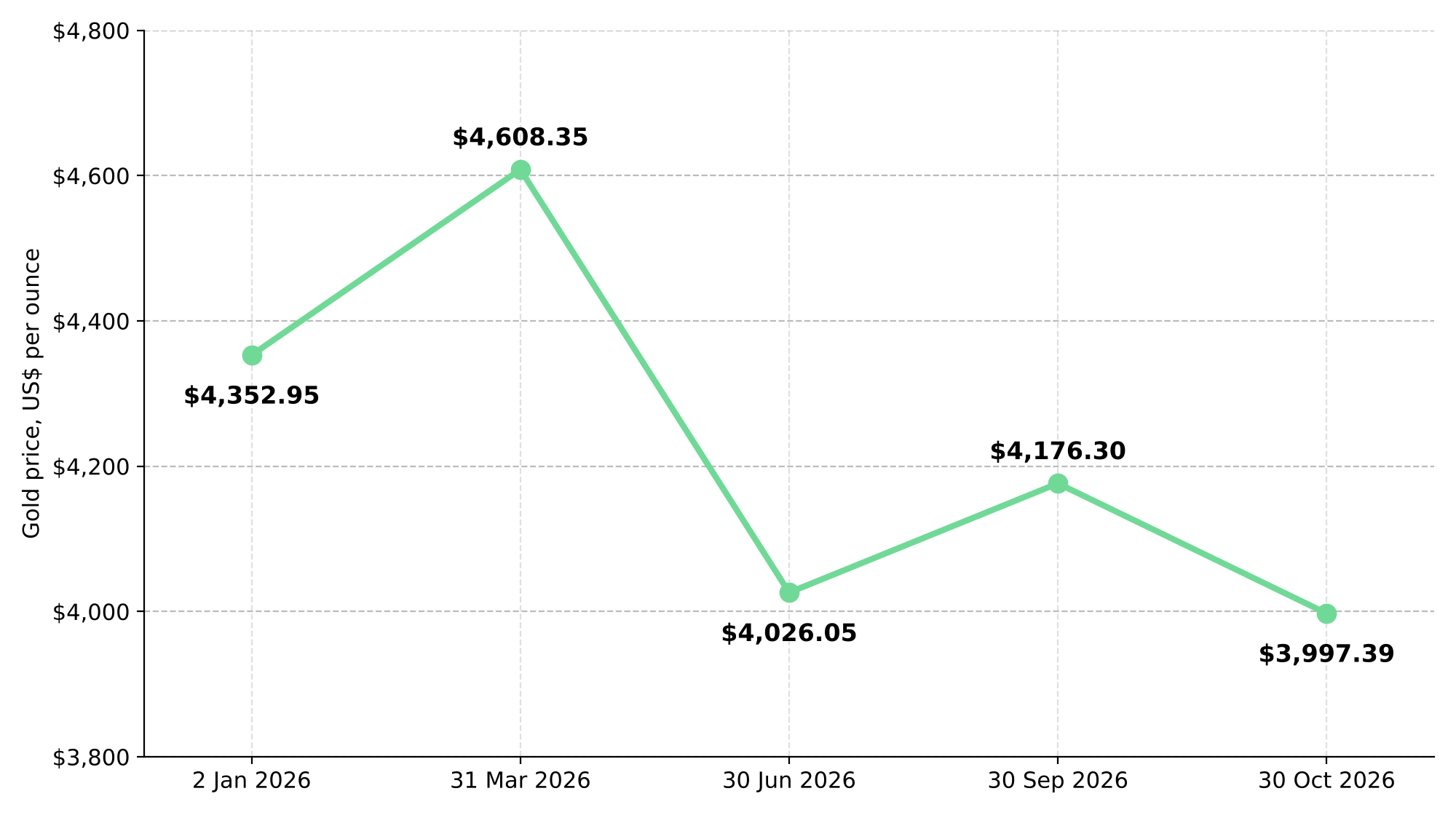
Gold traded about 27% below the LBMA benchmark record of US$5,501.70, allowing the same cash allocation to buy more metal. LBMA sees opportunities to use tokenized gold as collateral, but adoption requires clear ownership rights and protections if a provider fails. Binance’s estimated US$6.3 billion breach highlights exchange custody risk, without establishing losses in gold-backed tokens, strengthening the case for examining custody protections alongside price.
Security Fears Could Favor Digital Gold With Stronger Custody
Higher US rates make interest-paying assets more competitive with gold, potentially reducing digital holdings’ value. WGC and BCG estimate holdings of 370 metric tons, worth US$47.6 billion at US$3,997.39 an ounce; lower prices let the same cash buy more metal.
Stronger custody protections could attract buyers: 44% of WGC respondents said a major hack would most undermine confidence, a risk excluded from its scenarios. The FCA consultation creates no new safeguards by itself, while Binance’s breach highlights platform vulnerabilities without establishing gold-token losses.
Lower Redemption Minimums Could Expand Digital Gold Demand
Lower redemption minimums could attract smaller accounts, as some products restrict delivery to one location and require a 400-ounce bar. Robin Kolvenbach, Chief Executive Officer of Argor-Heraeus, identified trust as the most important factor in gold products.
WGC and BCG’s 2031 base case models US$160-170 billion with unchanged gold prices and adoption barriers partly removed, versus US$70-80 billion if barriers remain unresolved. Neither scenario includes a major hack or custody failure; 41% of respondents said custody failure or issuer fraud would most damage confidence.
October CPI, due November 10, could change rate expectations before the December 8-9 Fed meeting. Lower hike odds could support gold, but no probability threshold guarantees a rebound or resolves custody risk.
Bank Channel Preference Creates a Digital Gold Distribution Opportunity
Margin pressure lands first on gold token issuers earning custody fees and relying on crypto exchanges for distribution: a lower price shrinks the fee base, and a breach raises the trust bar for buyers. Mints, refiners and banks with vaulted gold share the price exposure but sit in the bank channel 50% of WGC respondents prefer, against 27% for crypto platforms.
Redemption separates the two groups: whether a holder can take delivery of metal, where, and at what minimum. Andrew Dickey, Managing Director of The Royal Mint, said in the WGC report that its DigiGold product acts as a gateway into physical bullion.
Holders of exchange-custodied gold tokens cannot know how far exposure runs until Binance's investigation closes; about $3 billion of $6.3 billion was frozen by Friday, Reuters reported. No holder can know the 9 December decision. A digital gold position carries the full gold price downside, including a break of the 2026 LBMA low of $3,978.55, plus issuer and custody risk. For retail portfolios holding digital gold, position size is the variable within reach; the Fed date is not.
Why Redemption Rights Matter for Digital Gold
Fed policy influences gold prices by changing the appeal of interest-paying assets, while clear ownership rights and secure custody could attract new digital gold buyers.
The contrarian opportunity combines more gold per dollar after the decline with potential new demand: WGC estimates that 65% of untapped demand comes from first-time gold buyers. Banks, mints and refiners could capture purchases by offering competitive fees, verifiable backing and practical redemption.
The breach strengthens the case for examining custody arrangements before changing gold exposure. Better safeguards can reduce custody risk, while position size limits exposure to further price declines.
Analyst's Notes





Subscribe to Our Channel









Stay Informed