




Gulf-to-Asia Oil Freight Tops US$37/Barrel, Favoring Lower-Cost Domestic Supply



Refinery access, well performance, and development costs determine whether domestic oil projects can generate cash flow as global supply recovers.
- Shipping disruptions raise refiners’ crude delivery costs, creating a potential advantage for domestic producers whose local transport costs are lower.
- Oil in transit cannot replenish refinery stocks until it arrives, so reliable domestic supply can reduce refiners’ exposure to costly import delays.
- Domestic oil projects in Türkiye can compete with imported crude when their oil meets refinery requirements at a competitive delivered price.
- Funded well tests help explorers assess production potential and estimate operating costs, providing a firmer basis for evaluating future cash flow.
- Testing domestic projects against lower oil prices and normal freight rates helps identify developments whose returns do not depend on today’s shipping disruptions.
Tanker Disruption Raises Delivered Oil Costs
Longer voyages and delays tie up tankers, reducing the number available for new cargoes and raising refiners’ delivery costs. Domestic producers may gain a delivery-cost advantage where they can supply suitable refineries without using those disrupted shipping routes.
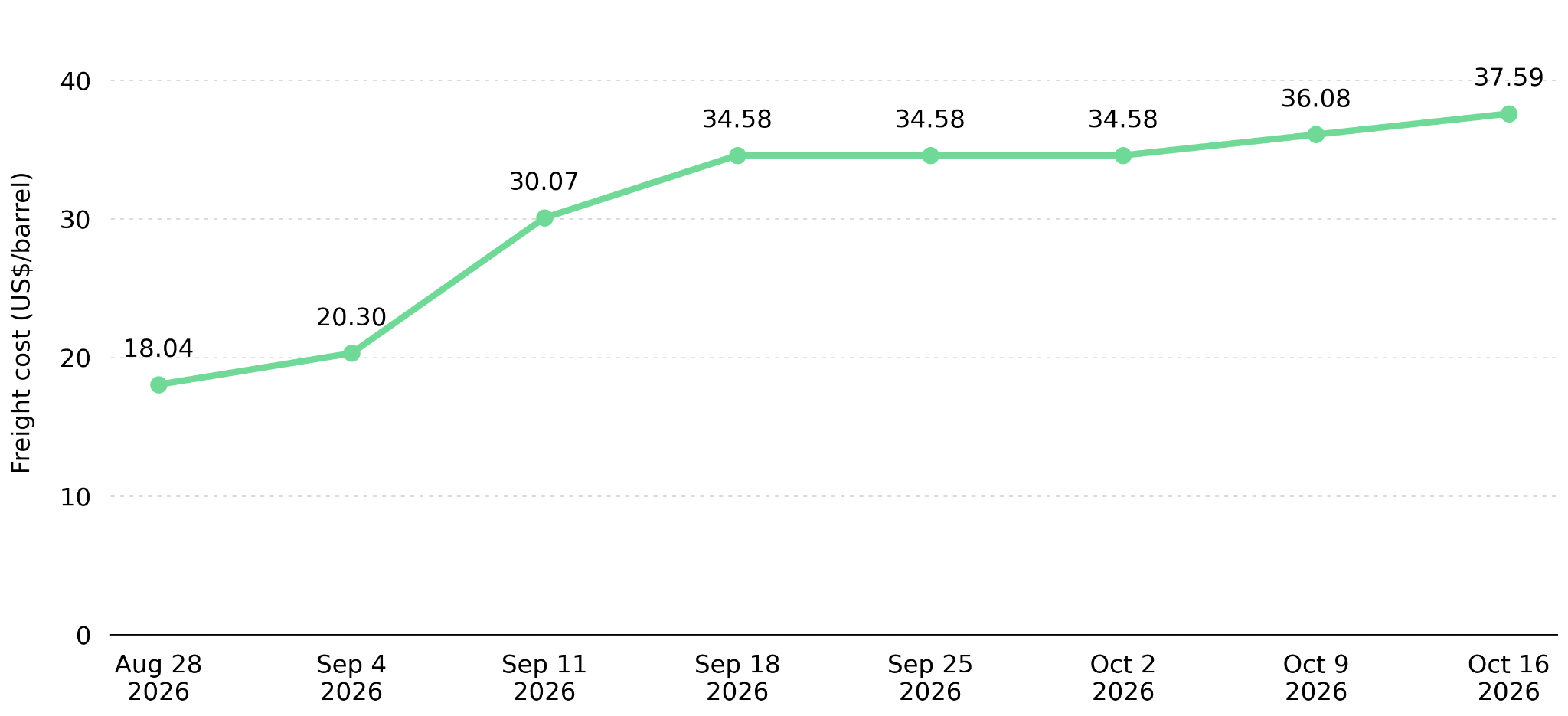
The International Energy Agency (IEA), in its October 21, 2026 shipping commentary, reported that Middle East Gulf-to-Asia crude freight exceeded US$37 per barrel by mid-October, more than five times its pre-war level. West Africa-to-Europe freight exceeded US$22 per barrel, more than four times its pre-conflict level, while North Sea rates tripled to above US$6 per barrel.
Proximity to a refinery can lower trucking costs when roads, storage, trucking capacity, and unloading facilities support regular deliveries. Any spending required to build or upgrade those facilities must be counted against the savings from shorter transport distances.
Expensive Alternative Routes Limit Savings From Switching Suppliers
The same commentary put mid-October crude freight from the US Gulf Coast at approximately US$33 per barrel to Singapore and US$24 per barrel to Europe. The European rate exceeded four times its pre-conflict level, demonstrating that alternative suppliers also carried higher shipping costs.
Crude quality affects processing requirements, fuel yields, and the price a refinery will pay. Establishing a cost advantage for Turkish production therefore requires comparing local delivery expenses and quality-adjusted selling prices with imported alternatives; the quoted international freight rates do not establish those savings.
Inventory Depletion Keeps Oil Markets Tight Despite Weaker Demand
When oil supply falls below consumption, buyers draw down inventories to cover the shortfall, leaving less stored oil available to absorb further delivery disruptions.
The IEA’s October 2026 Oil Market Report (OMR), published October 14, forecasts a year-over-year decline of 2.6 million barrels per day in global oil demand, but projects supply shortfalls through year-end. Observed oil inventories ended September 509 million barrels below end-February levels. During September, on-land stocks fell by 113 million barrels while oil on water rose by 103 million barrels, showing that higher volumes in transit had not replenished inventories on land.
Türkiye’s Import Dependence Strengthens Domestic Supply Opportunities
Domestic producers could replace part of Türkiye’s crude imports if they meet refinery quality requirements at competitive delivered prices. Türkiye’s Ministry of Energy and Natural Resources (MENR), in its Crude Oil information page updated August 31, 2026, reports 2025 crude imports of 31.94 million metric tons against domestic production of 6.68 million metric tons. MENR puts crude-import dependence at approximately 83%.
The Energy Market Regulatory Authority (EPDK), in its August 2026 Petroleum Market Sector Report published October 13, 2026, records approximately 2.84 million metric tons of crude imports and 1.17 million metric tons of diesel imports. Domestic petroleum-product sales rose 5.29% year over year to approximately 3.38 million metric tons.
The IEA’s Türkiye 2026 Energy Policy Review, published September 4, 2026, identifies national targets to raise oil production from 125,000 barrels per day in 2025 to 210,000 in 2028, and natural gas production from 3.1 billion to 15.5 billion cubic meters over the same period. Achieving these targets could replace part of imported supply.
Freight Pressure Makes Project Economics More Important
Higher import-delivery costs can make domestic crude more competitive, but project profitability still requires oil sales to cover production, transport, and development costs.
A production netback measures the revenue retained per barrel after the operating and selling deductions specified in the calculation. Comparisons must use consistent treatment of royalties, transportation, and other costs. Profitability over a project’s life also requires recovery of development spending, future capital requirements, and closure costs.
Well Evaluation Guides Spending on Domestic Oil Supply
Well tests help estimate oil output and water-handling requirements, while technical reviews help define completion work and preliminary costs. These findings allow further drilling budgets to be assessed against potential oil revenue.
Dune Oil’s October 26 announcement proposed converting C$14 million of legacy 12% debenture obligations into shares, which would remove those obligations from its balance sheet. Its October 28 appointment of two technical advisors supports evaluation of existing wells at M47 in southeastern Türkiye, including preliminary costs and options for potential production.
Scott Lower, President of Dune Oil, describes potential refinery demand for replacing imported oil:
“You're selling to the refinery that's just up the road and they'll buy every bit of it because they're displacing Russian oil and they're displacing Iranian oil and Iraqi oil.”
Supply Recovery Favors Domestic Projects With Lower Lifetime Costs
The OMR projects global oil supply growth of 7.7 million barrels per day in 2027, with an eventual surplus as disrupted supply recovers.
The US Energy Information Administration (EIA), in its October 6, 2026 Short-Term Energy Outlook (STEO), forecasts Brent averaging US$105 per barrel in the fourth quarter of 2026 and US$74 in the fourth quarter of 2027. The forecast uses inputs finalized October 1 and assumes recovering Middle Eastern supply and rebuilding oil inventories.
Domestic producers benefit from shorter delivery routes when they retain part of the savings through lower costs or better selling prices. Testing project returns at lower oil prices and normal freight rates helps establish whether future oil sales could recover development spending after the current disruption.
The Investment Thesis for Oil
- Lower delivery costs give domestic producers room to offer competitive prices or retain more cash per barrel, provided production costs do not offset those savings.
- Developers need the required permits, funded infrastructure, and access to buyers to convert completed wells into revenue-generating production.
- Explorers can use sustained well tests to estimate oil output and water-handling costs before committing further capital to drilling.
- License duration affects the time available to recover development spending, while royalties and taxes reduce cash retained from domestic oil sales.
- Domestic projects whose sales cover operating, delivery, and lifetime capital costs under lower oil prices and normal freight rates depend less on temporary shipping disruptions to justify development.
The broader opportunity lies in domestic oil projects that can compete on delivered cost and generate cash flow across commodity cycles. Demonstrated well performance, practical refinery access, and funding matched to defined work programs should be prioritized, since these determine whether potential supply can become revenue-generating production. Projects whose sales can recover operating and development costs across a range of oil prices can turn proximity to local demand into lasting investment value.
TL;DR
Shipping disruptions raise the cost of imported crude, creating a potential advantage for competitively priced domestic oil. Türkiye’s reliance on imports provides opportunities for projects with suitable crude, refinery access, and manageable development costs. Dune Oil’s proposed debt conversion and technical appointments support evaluation of potential production from existing wells. Well performance, water-handling costs, and funding determine whether that potential can generate cash flow. With global supply projected to recover, the investment case favors projects that remain profitable under lower oil prices and normal shipping costs.
FAQs (AI-Generated)
Analyst's Notes





Subscribe to Our Channel







Stay Informed


