




Novel Processing and PEA Catalyst Drive Pedra Branca Strategy



ValOre Metals targets a 2026 PEA for its 2.2Moz Brazilian PGE project, backed by a novel bioleaching process showing high-70s recoveries and exclusive global IP rights.
- ValOre Metals is advancing its 2.2 million ounce Pedra Branca PGE project in Brazil toward a Preliminary Economic Assessment targeted for year-end 2026, with $4 million work programme underway covering engineering, metallurgical testing, and ongoing exploration.
- The company is developing a novel bioleaching process for the weathered ore body in partnership with the University of Cape Town, with Phase 1 trials delivering metal recoveries consistently in the high 70s percentage range - a result that, if maintained at scale, would support a low-cost processing route with near-term revenue potential.
- ValOre has secured exclusive global rights to the bioleaching intellectual property developed jointly with the University of Cape Town, positioning the company to retain the full commercial benefit of what would be the first application of this process to a PGE deposit.
- The project's development pathway includes a Brazilian trial mining permit route that allows small-scale production and a demonstration plant targeting 10,000 to 15,000 ounces of platinum and palladium per year, serving as a stepping stone toward an ultimate industrial-scale target of 150,000 to 200,000 ounces annually.
- ValOre has sharpened its corporate focus by divesting its legacy Hatchet uranium properties to Future Fuels in exchange for a shareholding, concentrating the company entirely on Pedra Branca and PGE development in a Brazil market that is actively courting foreign investment in critical minerals.
ValOre Metals is entering a pivotal phase in the development of its Pedra Branca platinum group element (PGE) project in Ceará state, Brazil. Speaking at PDAC 2026 in Toronto, CEO Nick Smart outlined the company's progress toward publishing a Preliminary Economic Assessment (PEA) by the end of this year, and detailed the technical work underpinning that milestone. With a 2.2 million ounce inferred resource, a near-surface ore body, and a novel metallurgical process under development, ValOre is working to translate exploration success into demonstrated project economics.
Smart joined ValOre as CEO in October 2025, with a clear mandate from the board: put the project on a development track and advance toward commercialization. Since then, the company has appointed engineering consultancy Lycopodium to lead PEA work, engaged the University of Cape Town on metallurgical testing, and divested non-core uranium assets.
The Pedra Branca Resource: Scale and Structure
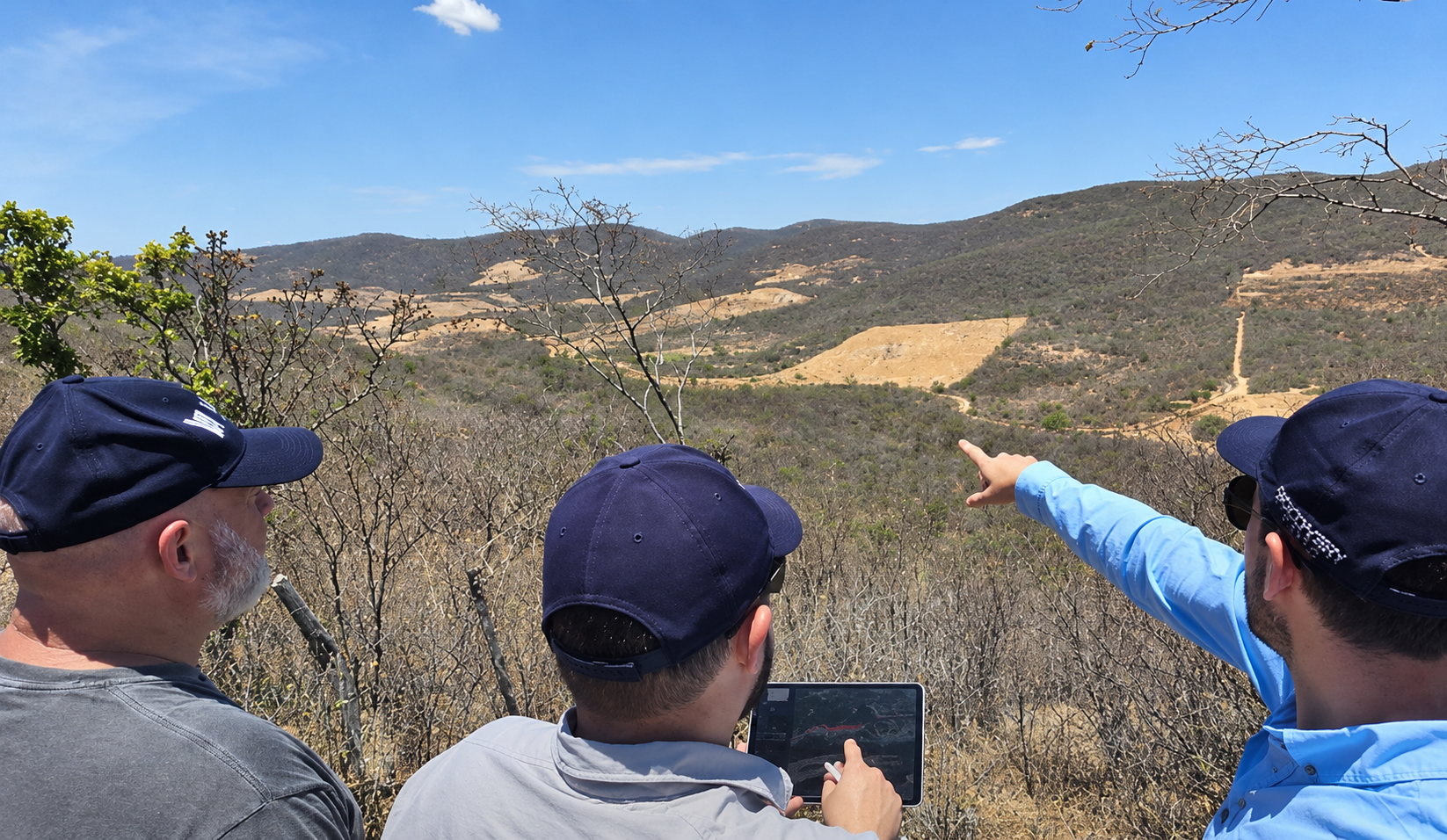
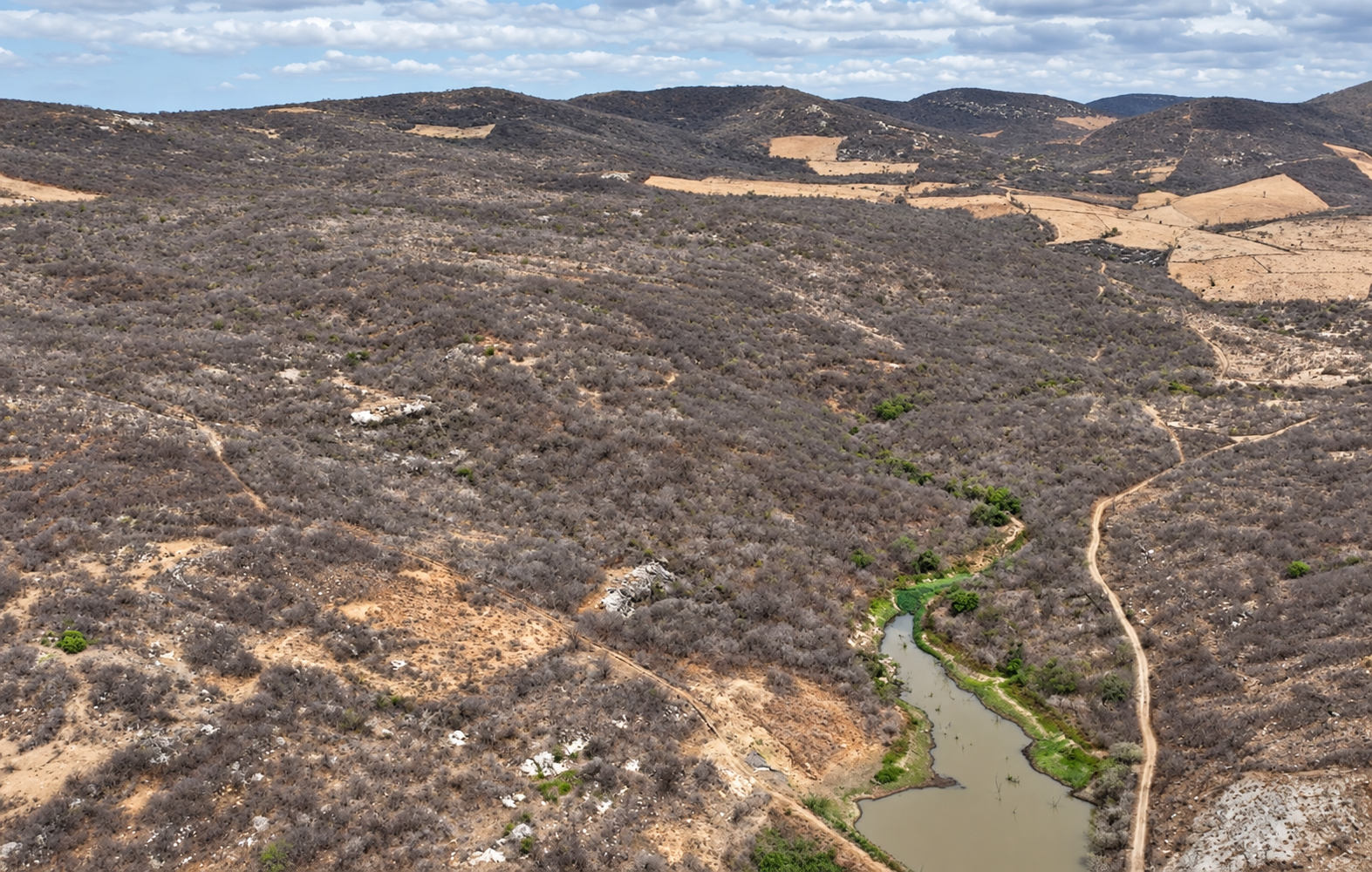
Pedra Branca is a large-scale PGE project located in Ceará state, approximately four hours by paved highway from the state capital. The project sits on a 50,000-hectare land package and hosts an inferred resource of 2.2 million ounces at 1.08 grams per tonne (g/t), with a metal split of approximately 60% palladium and 40% platinum. The resource was defined in 2022, and over 50,000 metres of drilling has been completed on the property to date.
The near-surface nature of the deposit is a notable advantage. Shallow mineralisation reduces initial mining costs and supports the case for a phased development approach, with the weathered zone potentially serving as the basis for an early-stage, lower-capital production scenario before the company advances into the higher-grade fresh ore below.
Engineering Economics Into the Project
The PEA, which ValOre is targeting for publication by year-end, will seek to define the economic parameters of the project across several dimensions: mining method, processing route, capital and operating costs, and route to market. Smart described the work programme as comprehensive, with an approximate budget of $4 million covering engineering design, metallurgical test work, and ongoing exploration in Brazil.
Lycopodium, the appointed engineering consultancy, is driving the technical work forward. The PEA will cover both the weathered and fresh ore bodies, presenting an integrated view of the project's development potential. Smart noted that while the PEA does not need to deliver final feasibility-level precision, it must credibly demonstrate the viability of mining and processing Pedra Branca's ore and provide a foundation for subsequent development decisions.
"The main ambition of the PEA is showing the economics of the project. So proving viability of what we've got on the ground," Smart said.
The publication of the PEA is intended to address what Smart acknowledged has been a gap in the ValOre investment story to date: investors have understood the resource, but lacked a framework for evaluating the project's economic potential. The PEA is designed to provide that framework.
Bioleaching: A Novel Processing Route for the Weathered Ore
The most technically distinctive element of ValOre's development programme is its exploration of bioleaching as a processing route for the weathered ore body. This process, which uses microorganisms to liberate metals from ore, is well established in copper processing as Smart noted that 15 to 20% of the world's copper is produced through bio-heap leaching and is gaining traction in refractory gold applications. However, its application to PGE deposits is novel.
ValOre has been working with the University of Cape Town's Department of Chemical Engineering, which houses a dedicated centre for bioprocess research. Phase 1 trials conducted at lab scale using one-litre shake flask tests have demonstrated consistently high metal recoveries in the high 70s percentage range for the weathered ore. The company is now scaling up to large-scale column testing, designed to simulate how the biological process would function in an operational heap leach environment.
Smart described the potential implications of a successful bioleaching route in direct terms:
"It opens the possibility of low-cost mining and low-cost processing, which in my opinion puts us in a very attractive position for the project."
The combination of near-surface mineralisation, simple mining methods, and a low-cost processing route would, if validated at scale, represent a materially different
From Lab to Demonstration Plant: The Development Pathway
Smart outlined a staged development pathway from the current test work phase through to commercial production. The immediate priority is completing the column-scale bioleaching tests at the University of Cape Town during 2026, with results expected to be published in the near term. These results will feed directly into the PEA, alongside conventional flotation test work on the fresh sulphide ore.
Following PEA publication, the company intends to apply for a trial mining permit in Brazil, which Smart described as a regulatory route that enables a company to begin small-scale mining and construct a demonstration plant. This pathway is recognised under Brazilian mining law and provides a mechanism to validate a novel process at operational scale without the full capital commitment of a commercial mine.
At demonstration plant scale, Smart indicated the operation would target production of approximately 10,000 to 15,000 ounces of platinum and palladium per year. The ultimate ambition is to scale to an industrial operation producing in the range of 150,000 to 200,000 ounces per year. The demonstration plant is therefore not simply a technical validation exercise, it is also the foundation for a near-term revenue stream, an attribute Smart acknowledged is resonating with investors in the current market environment.
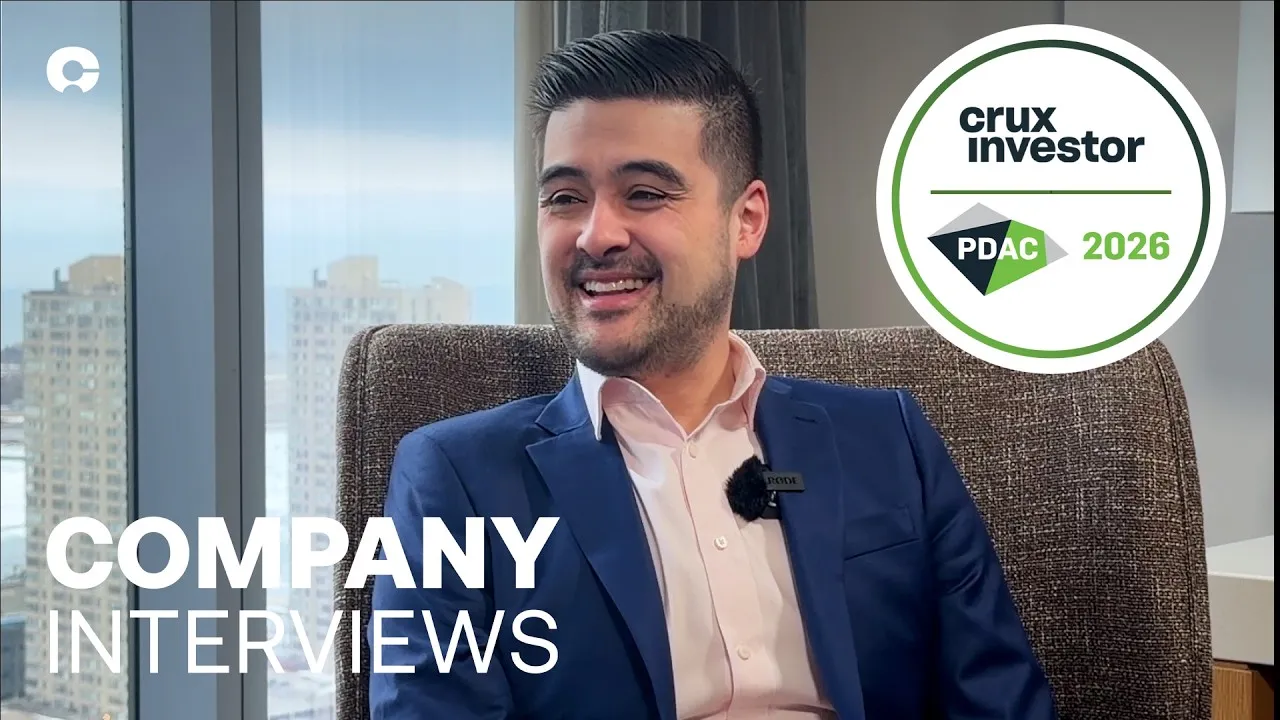
Interview with Nick Smart, Director & CEO of ValOre Metals
Portfolio Rationalization and Brazil Strategy
Alongside the PEA work programme, ValOre has taken steps to simplify its corporate structure. The company announced the divestiture of its Hatchet uranium properties to Future Fuels, in exchange for a shareholding in that company. The transaction eliminates a legacy, non-core asset from ValOre's portfolio and focuses the company entirely on Pedra Branca and PGE development.
Smart also indicated that the company is actively evaluating additional opportunities in Brazil, consistent with his own prior experience in the country characterizing Brazil as open to foreign direct investment, supportive of critical minerals projects, and well-represented at PDAC 2026 through an active national delegation. The company is not restricting its focus to Pedra Branca if complementary, synergistic opportunities emerge.
The Investment Thesis for ValOre Metals
- Large-scale resource with near-surface access. The 2.2 million ounce inferred resource at Pedra Branca, with near-surface weathered mineralisation, reduces the capital intensity of early-stage development and lowers the bar to initial production.
- PEA publication provides a valuation catalyst. Investors currently lack a framework for valuing the project economically. The PEA, targeted for year-end 2026, is designed to fill that gap and could serve as a significant re-rating event.
- Novel bioleaching IP with exclusive global rights. If validated at scale, the bioleaching process could deliver a low-cost processing route for the weathered ore that is not replicable by competitors, representing a durable technical and commercial advantage.
- Phase 1 recovery data already in the high 70s. Early-stage test results are encouraging. Investors can begin to model project economics with the current recovery figures while anticipating potential improvement as test work matures.
- Near-term revenue pathway via demonstration plant. The Brazilian trial mining permit route allows for small-scale production without full mine-build capital. This reduces time to first revenue and provides operational validation ahead of a larger financing.
- Focused management team with direct Brazil experience. Smart's background building and operating mines in Brazil is directly relevant to Pedra Branca's development, reducing execution risk in a market where country expertise matters.
- Uranium divestiture sharpens the investment case. By exiting the Hatchet uranium properties, ValOre removes a distraction from its core narrative and signals clear strategic intent around precious metals and PGEs.
- Brazil macro tailwinds. Increased government support for foreign investment in critical minerals, as evidenced by the strong Brazilian delegation at PDAC 2026, strengthens the operating environment for a project in Ceará state.
- Investors should monitor: PEA publication timing and headline economics; bioleaching column test results expected in the near term; trial mining permit application progress; and any announcement of additional Brazilian asset acquisitions.
PGEs, Critical Minerals, and the Case for Novel Processing
Platinum group elements occupy an increasingly important position in the global critical minerals landscape. Palladium and platinum remain essential to automotive catalytic converters, a market that continues to generate significant demand despite the long-term shift toward electric vehicles. More significantly, both metals are gaining relevance in hydrogen economy applications in which platinum in particular plays a central role in fuel cell technology, positioning PGEs as dual-use metals straddling the legacy combustion economy and the emerging clean energy transition.
The global supply of PGEs remains heavily concentrated. South Africa and Russia together account for the overwhelming majority of primary production, a concentration that has drawn increasing scrutiny from Western governments seeking to secure supply chains for strategically critical materials. Brazil, with its large and underexplored geological endowment and improving investment environment for critical minerals, represents a credible alternative supply jurisdiction and one that is actively positioning
Smart captured the broader significance concisely:
"The world is increasingly realising that we can't leave stranded deposits around the world or high-value waste materials."
A structural shift underway in extractive metallurgy, in which bioprocessing is moving from an experimental technique to a mainstream tool for unlocking complex ore bodies. ValOre, through its partnership with the University of Cape Town and its exclusive IP position, is placing itself at the leading edge of that shift within the PGE sector.
TL;DR
ValOre Metals holds a 2.2 million ounce PGE resource in Brazil and is spending circa $4 million this year to publish a PEA that will, for the first time, put economic numbers around the project. The company is developing a bioleaching process - novel for PGEs but proven in copper and gold - that has delivered high-70s metal recoveries in Phase 1 trials and could significantly reduce processing costs. ValOre owns the exclusive global IP for this process. A Brazilian regulatory pathway allows the company to move from demonstration plant to small-scale production without full mine-build capital, providing a credible route to early revenue. Non-core uranium assets have been sold. The PEA, expected by year-end, is the key near-term catalyst.
Frequently Asked Questions (FAQs) AI-Generated
Pedra Branca is ValOre Metals' flagship platinum group element project in Ceará state, northeastern Brazil. It hosts a 2022 inferred resource of 2.2 million ounces at 1.08 grams per tonne, with a metal split of approximately 60% palladium and 40% platinum, on a 50,000-hectare land package roughly four hours by paved highway from the state capital.
Bioleaching uses naturally occurring microorganisms to break down ore and liberate metals. It is well established in copper processing, accounting for 15 to 20% of global copper production, and is increasingly used in refractory gold. Its application to PGE deposits is novel. For Pedra Branca, bioleaching offers a potentially low-cost route to process the weathered upper ore body, which conventional flotation handles less efficiently. Phase 1 trials have produced recoveries consistently in the high 70s, and the company holds exclusive global rights to the jointly developed IP.
ValOre is targeting PEA publication by the end of 2025. The assessment will cover both the weathered and fresh ore bodies and address mining method, processing route, capital and operating cost estimates, and route to market. Engineering consultancy Lycopodium is leading the work, supported by ongoing metallurgical test work at the University of Cape Town. The total PEA budget is approximately $4 million.
Following PEA publication, ValOre intends to apply for a trial mining permit under Brazilian mining law, which enables small-scale mining and the construction of a demonstration plant. At that scale, the company is targeting 10,000 to 15,000 ounces of platinum and palladium per year. This provides operational validation of the bioleaching process and a potential early revenue stream ahead of a larger financing for full industrial-scale production, ultimately targeted at 150,000 to 200,000 ounces per year.
ValOre divested its Hatchet uranium properties to Future Fuels in exchange for a shareholding in that company. The move eliminates a legacy non-core asset and signals that management is concentrating entirely on precious metals and PGE development. CEO Nick Smart has explicitly stated the team is now fully focused on Pedra Branca and the PEA programme, while also evaluating complementary Brazil-based acquisition opportunities.
Analyst's Notes





Subscribe to Our Channel





.jpg)
Stay Informed


