




West Red Lake Gold's Madsen Ramp-Up Beats Its Own Mill Capacity, Targets Steady State After Strong Q2 Step-Up


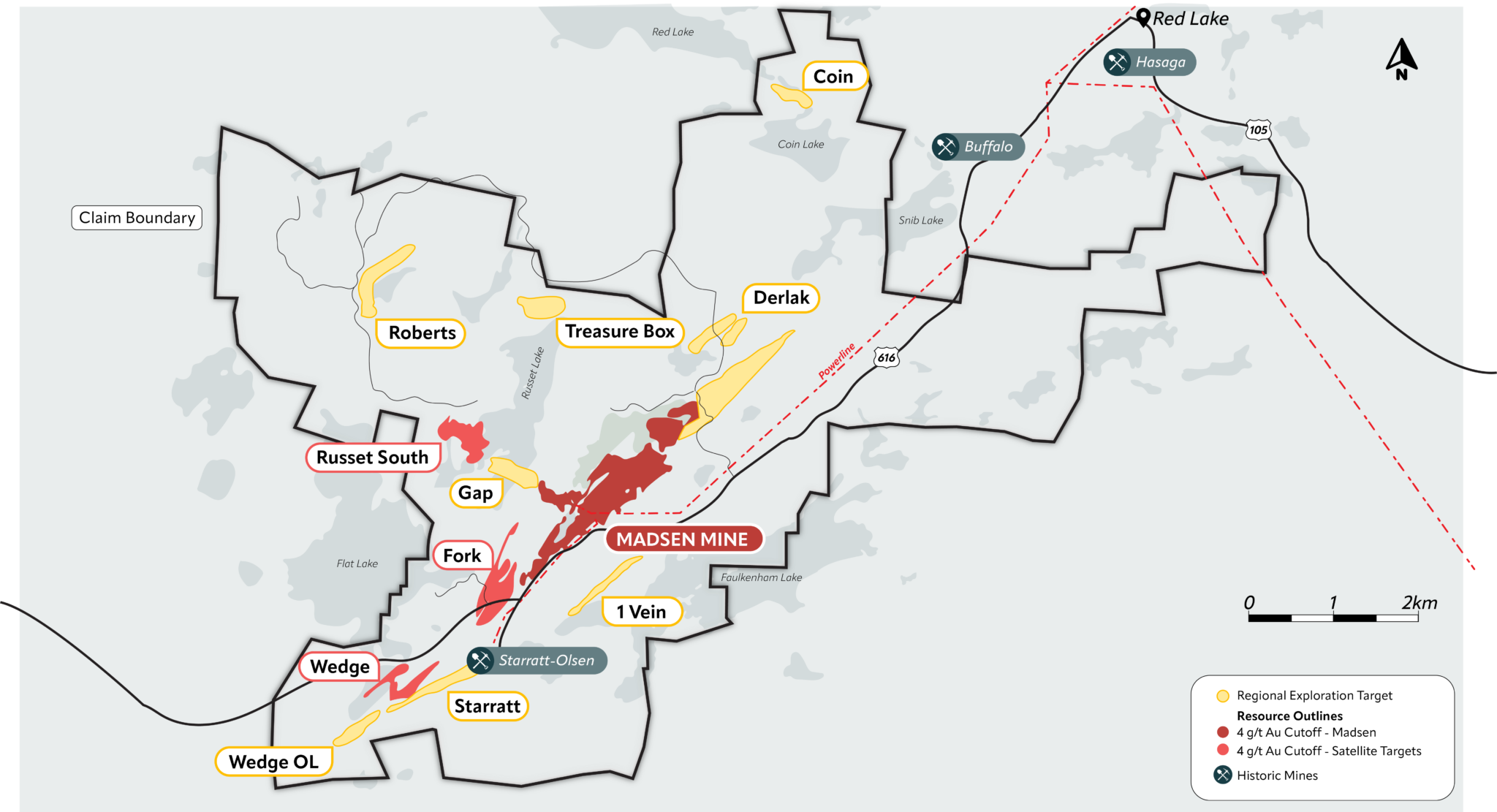
West Red Lake Gold posts 51% higher Q2 gold output and 73% more mined ounces at Madsen, with grade, cash flow and mill rates all improving.
- West Red Lake Gold's Q2 2026 gold production increased 51% to 8,576 ounces, while mined ounces rose 73% to 10,459 ounces.
- Average mined grade improved 23% to 4.3 grams per tonne, and management expects it to reach 6 to 8 grams per tonne by year-end as mining reaches non-remnant zones.
- Mining rates now exceed the mill's permitted 800 tonnes-per-day capacity, allowing the company to build a stockpile equivalent to roughly half a month of mill feed.
- The company is now building cash on the balance sheet and has begun repaying debt, an improvement from breakeven results in Q1.
- Full-year 2026 guidance of 35,000 to 45,000 ounces remains unchanged, with the second half targeted at approximately 25,000 to 30,000 ounces.
Gold producers rarely get credit for a smooth ramp-up until they've delivered several quarters of it in a row, and that is the test West Red Lake Gold Mines is now setting for itself at the Madsen Mine in Ontario's Red Lake district. Following a first quarter the market judged unfavourably, the company has posted a second quarter in which nearly every operating metric moved in the same direction: up. For a newly commercial producer trying to build institutional confidence, the question is no longer whether Madsen can produce gold, but whether it can do so with the kind of quarter-on-quarter consistency that re-rates a stock.
Q2 Delivers the Step-Up Management Promised
West Red Lake Gold's Q2 2026 operational update showed gold production of 8,576 ounces, a 51% increase from the 5,667 ounces produced in Q1. Mined tonnage rose 46% to 75,524 tonnes, while mined ounces climbed 73% to 10,459 ounces, reflecting both higher mining rates and a 23% increase in average mined grade, from 3.5 g/t to 4.3 g/t. Mill throughput averaged 842 tonnes per day (tpd) in the quarter, up from 572 tpd in Q1.
President and CEO Shane Williams described the quarter as evidence that the mine sequencing strategy implemented in the first half of the year is now translating into operating results, framing Q2 as proof that the company is unlocking multiple stoping fronts rather than relying on a single mining front to carry production. Williams noted that mining rates in the back half of the quarter consistently exceeded the mill's currently permitted 800 tpd capacity, which allowed the company to build a surface stockpile of approximately 10,768 tonnes, equivalent to roughly half a month of mill feed and containing an estimated 1,500 ounces of gold.
Financial Metrics: Building Cash, Paying Down Debt
Beyond the tonnage and grade metrics, the company reached breakeven in Q1 and is building cash on the balance sheet in Q2 while simultaneously beginning to pay down debt taken on during the mine restart.
Williams was direct about the company's cash position.
"We're working on 6-7 stops in a cycle and time, drilling them underground, sealing and stopping them, and then mining them. That sequence to get right takes a long time as you're probably aware and we're just getting to there now."
For a board that Williams says is focused on consistency of tonnage, grade, recovery and cash flow, the combination of rising production and debt repayment is the signal management wants the market to see.
Grade Improving as Mining Moves
Much of Q2's ore came from the Austin and South Austin zones, areas that include a mix of historically mined remnant ground and newer, previously untouched material. Williams explained that average mined grade at currently around 4 g/t is expected to step up to between 6-8 g/t over the remainder of the year as mining advances into non-remnant areas which sit deeper in the ore body and were never mined by the mine's previous operators.

Transition also brought a mining dilution improvement. Williams said the company had expected difficulty mining close to historic stopes, but found that survey inaccuracies from prior operators meant new stopes are often further from old workings than originally modelled, reducing dilution and enabling larger, more efficient long-hole open stoping rather than the higher-cost cut-and-fill method used historically at Madsen.
Catalysts: Q3 Step-Up and a Fuller Operational Disclosure
Williams said the company plans to publish a more detailed operational update later in July, including reconciliation data comparing the resource model against results from over 200,000 metres of underground drilling completed over the past two years. He stated that reconciliation has been strong, giving management confidence to plan mining sequences and access development further ahead of current production. Looking to Q3, Williams said the priority is demonstrating the same gradual, consistent step-up the company delivered from Q1 to Q2, rather than the ramp-up-and-pull-back pattern he said characterised the mine under prior ownership.
Interview with Shane Williams, President & CEO of West Red Lake Gold Mines
Ramp-Up Execution and Gold Price Sensitivity
The principal near-term risk remains execution through the balance of the ramp-up, with Williams estimating roughly one more quarter of ramp-up before Madsen reaches steady state. Mining dilution, equipment availability (currently 75-80%) and the pace of stope sequencing all remain variables management is actively managing. Longer term, the business's economics remain sensitive to gold price, a factor Williams flagged directly when discussing the narrower margin previous operators achieved at lower prices.
The Investment Thesis for West Red Lake Gold Mines
- Q2 2026 delivered a 51% increase in gold production and a 73% increase in mined ounces over Q1, supporting management's stated ramp-up trajectory.
- Average mined grade rose 23% quarter-on-quarter and is guided to reach 6-8 g/t by year-end as mining advances into non-remnant zones including 4447 and 904.
- Mining rates already exceed the mill's permitted 800 tpd capacity, evidenced by a growing surface stockpile; a mill throughput expansion is being pursued for H2 2026.
- The company reports it is now building cash on the balance sheet and has begun repaying debt taken on during the Madsen restart.
- Full-year 2026 guidance of 35,000-45,000 ounces remains intact, with management targeting H2 output of approximately 25,000-30,000 ounces.
- Monitor the fuller operational update expected later in July for resource-model reconciliation detail and additional colour on H2 mill expansion plans.
- Longer-term, watch progress on the Austin 904 Complex and Fork satellite deposit, both targeted for inclusion in the 2027 mine plan, and the combined Madsen-Rowan Pre-Feasibility Study expected in H2 2026.
Closing Summary
West Red Lake Gold's Q2 update gives management a concrete data point to support the ramp-up narrative it has been telling since Madsen achieved commercial production in January 2026. Mined tonnage, grade, mining rate and mill throughput all improved together, and the company says it is now generating cash rather than merely breaking even. With one more quarter of ramp-up expected before steady state, the test for Q3 is whether West Red Lake Gold can repeat the pattern: another step-up in tonnage and grade, continued cash generation, and progress on the higher-grade non-remnant zones that management says will carry the mine to its 150,000 ounce per year district-scale ambition. Investors will also be watching for the more detailed operational disclosure promised for later in July, and for early signals from the combined Madsen-Rowan Pre-Feasibility Study due in the second half of the year.
Macro Thematic Analysis
New and growing gold producers have significantly outperformed established peers over the past twelve months, and West Red Lake Gold's Q2 results place it squarely in the group of newer entrants the market is rewarding for demonstrating operational delivery rather than resource potential alone. As Williams put it when discussing how institutional shareholders will judge the company going forward: "it's all about ounces produced and are we making money in those ounces. Like we are a business, we need to get there." That framing captures the wider thematic shift underway across junior and mid-tier gold producers: with gold prices well above the levels many legacy operations were designed around, the market is increasingly pricing execution and margin delivery over headline resource size. For West Red Lake Gold, a mine restarted from a distressed asset with over $350 million of prior infrastructure investment, consistent quarter-on-quarter delivery is the mechanism by which the market re-rates a story from "restart risk" to "reliable producer."
TL;DR
West Red Lake Gold's Q2 2026 results showed gold production up 51% to 8,576 ounces and mined ounces up 73% to 10,459, with average grade climbing 23% to 4.3 g/t. Mining rates now exceed the mill's permitted 800 tpd capacity, building a stockpile equivalent to half a month of feed. CEO Shane Williams says the company is now building cash and repaying debt, with grade expected to reach 6-8 g/t as mining advances into non-remnant zones like 4447 and 904. Full-year guidance of 35,000-45,000 ounces remains unchanged, with roughly one more quarter of ramp-up expected before Madsen reaches steady state.
Frequently Asked Questions (FAQs) AI-Generated
Analyst's Notes





Subscribe to Our Channel


.png)

Stay Informed


