Kazakhstan’s Tighter Ownership Rules Put Global Uranium Assets in Focus


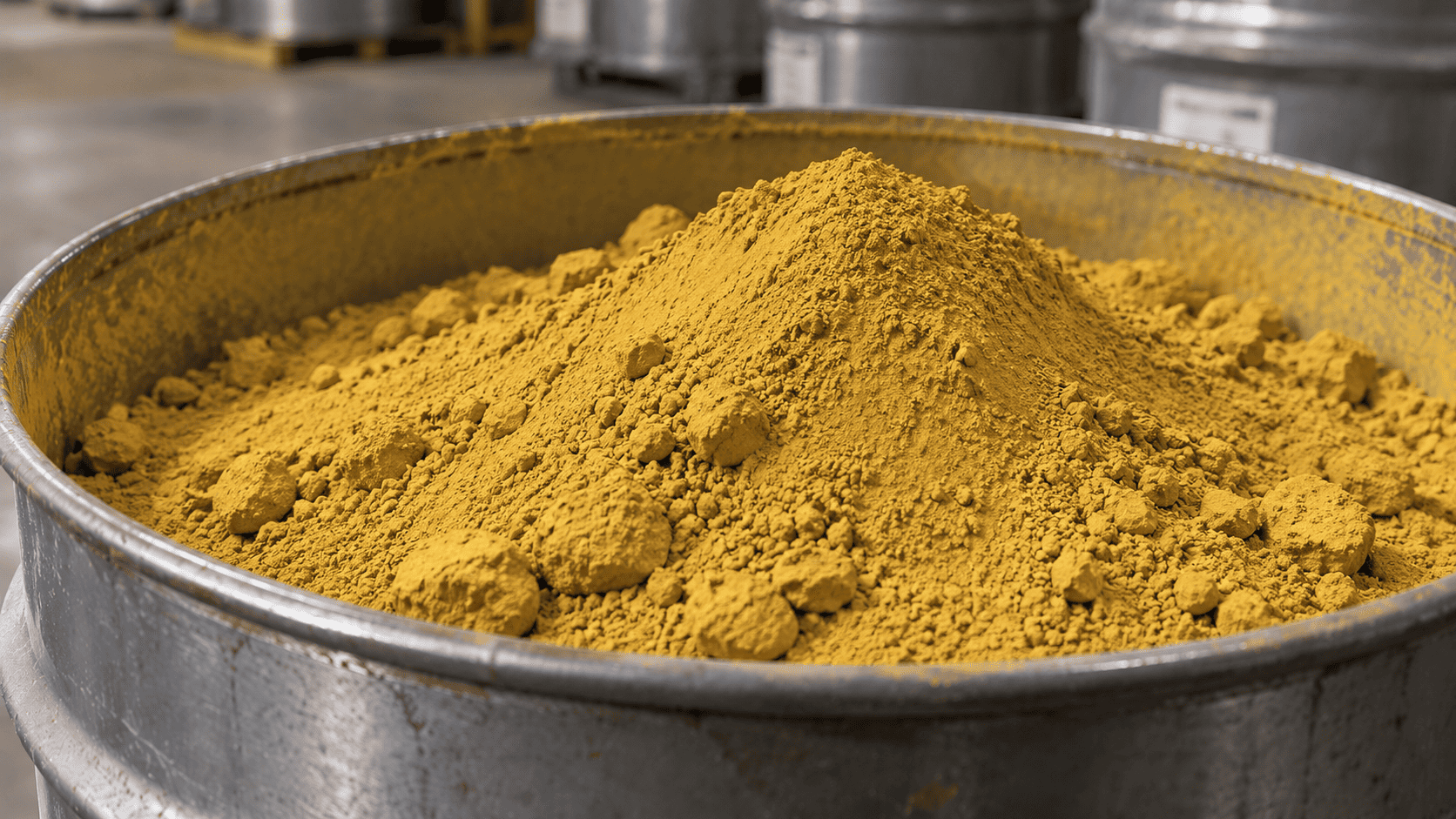
Uranium resource growth, financing terms and existing US processing capacity offer distinct paths toward future supply beyond Kazakhstan.
- Kazakhstan raised the ownership threshold for certain new uranium agreement transfers from over 50% to over 75%, while some extensions require at least 90% national-company ownership or qualifying technology transfer.
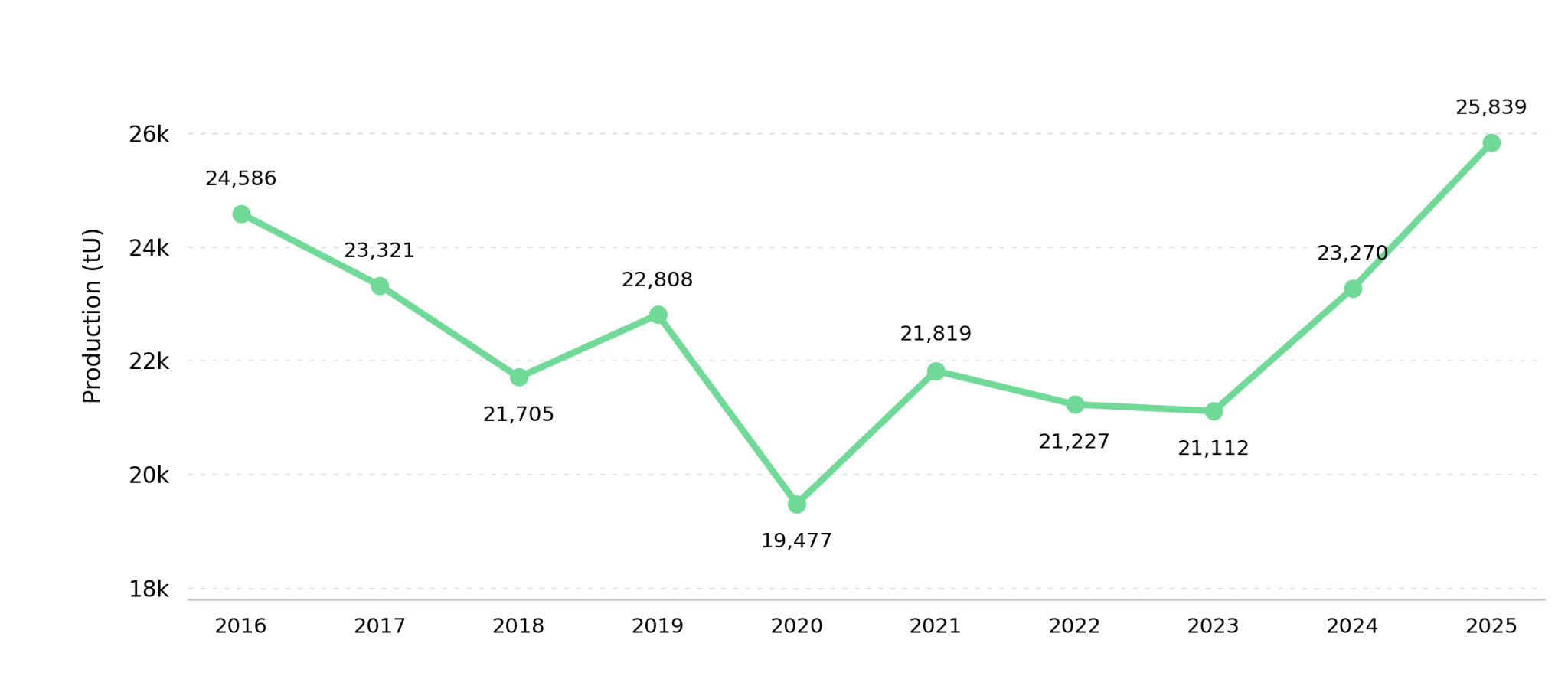
- With 25,839 tonnes of uranium mined in 2025, Kazakhstan accounted for about 40% of global output, making its ownership rules relevant to future uranium investment.
- Kazakhstan supplied 28% of uranium delivered to US utilities and 20.31% of deliveries to EU utilities in 2025, exposing major purchasing markets to its production base.
- Global uranium exploration and development spending exceeded US$1.78 billion in 2023-2024, up 46%, yet no new mines entered production during the review period.
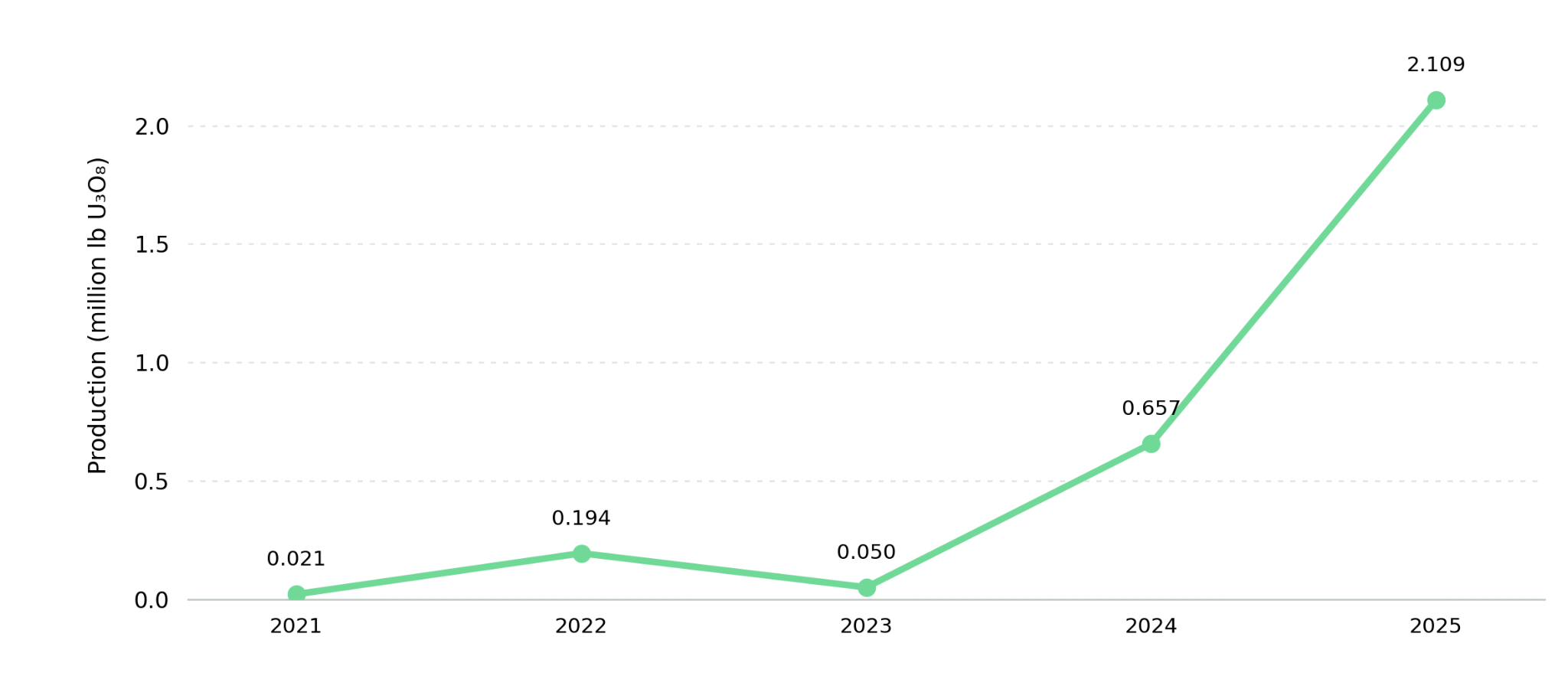
- US uranium production more than tripled to approximately 2.1 million pounds in 2025, while utilities received 46.9 million pounds, highlighting opportunities to expand domestic supply.
Kazakhstan’s Higher Ownership Thresholds Limit Future Foreign Participation
World Nuclear Association (WNA) reports that Kazakhstan produced 25,839 tonnes of uranium (tU) in 2025, accounting for approximately 40% of global mined supply. Of the country's 13 uranium mining projects, three are wholly owned by Kazatomprom, while 10 are joint ventures with foreign equity. The tighter ownership rules could limit foreign participation in certain future uranium agreements and expansions without changing existing joint-venture stakes.
Kazakhstan's December 26, 2025 amendments to its Subsoil Use Code raised the national company's ownership threshold for transfers of certain newly awarded uranium production agreements from more than 50% to more than 75%. Certain agreement extensions or increases beyond approved production or reserve levels require at least 90% national-company ownership or a qualifying uranium conversion and enrichment technology transfer. The technology-transfer alternative includes building a plant and guaranteeing purchases of at least 50% of its output throughout the extension.
Existing joint-venture ownership stakes remain unchanged under current agreements, preserving previously negotiated ownership shares. However, additional exploration rights at producing deposits are reserved for Kazatomprom or entities in which it holds at least 90%, leaving no more than 10% ownership available to other participants under that arrangement.
40% Kazakh Mine Share Highlights US & EU Supply Exposure
WNA estimates Kazakhstan holds 14% of global uranium resources but accounted for approximately 40% of mined supply in 2025. Uranium output rose from 2,114 tU in 2001 to 25,839 tU in 2025, with 2026 production projected at 27,000 to 29,000 tU.
US Energy Information Administration (EIA) reported 46.9 million pounds of uranium oxide equivalent delivered to US civilian reactor operators in 2025, with Kazakhstan-origin material accounting for 28%, Canada for 32%, and domestic sources for 7%. The Euratom Supply Agency (ESA) recorded 2,981 tU from Kazakhstan, representing 20.31% of the 14,678 tU delivered to the EU that year. With 87% of US uranium deliveries under long-term contracts and 13% under spot contracts, changes in uranium sourcing depend on purchasing agreements as well as available mine supply.
46% Rise in Uranium Spending Backs Future Supply Options
OECD Nuclear Energy Agency (NEA) and International Atomic Energy Agency (IAEA) reported more than US$1.78 billion in global uranium exploration and mine-development spending during 2023-2024, up approximately 46% from 2021-2022. With no new uranium mines entering production during the review period, discoveries outside Kazakhstan offer opportunities to expand the resource base for future uranium supply.
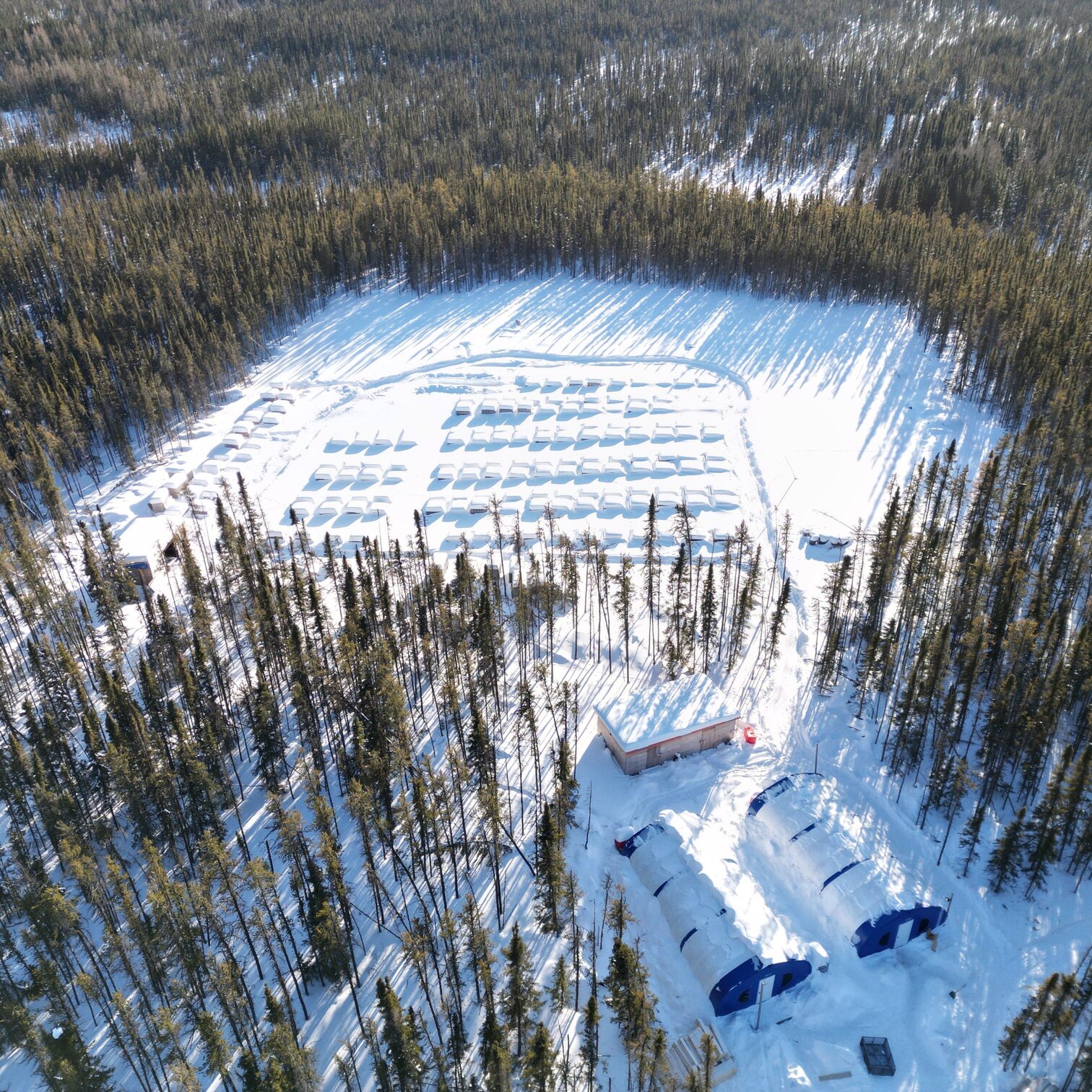
ATHA Energy reported uranium mineralization in 21 of 23 drillholes at its Angilak project in Nunavut in October 2026, connecting two discoveries and expanding the mineralized corridor from 1.45 to 3.4 kilometers. The program also identified a higher-grade zone extending approximately 300 meters in both directions, strengthening the project's potential for further resource growth.
Troy Boisjoli, Chief Executive Officer of ATHA Energy, links major uranium discoveries to projected supply shortages:
“I think it's clear to me what the market is looking for, and this is what the industry needs. It is large, scalable assets that can become a meaningful component to help solve what is nearly an existential supply deficit going into the 2030 decade.”
Mine Restarts Highlight Need for New Uranium Development
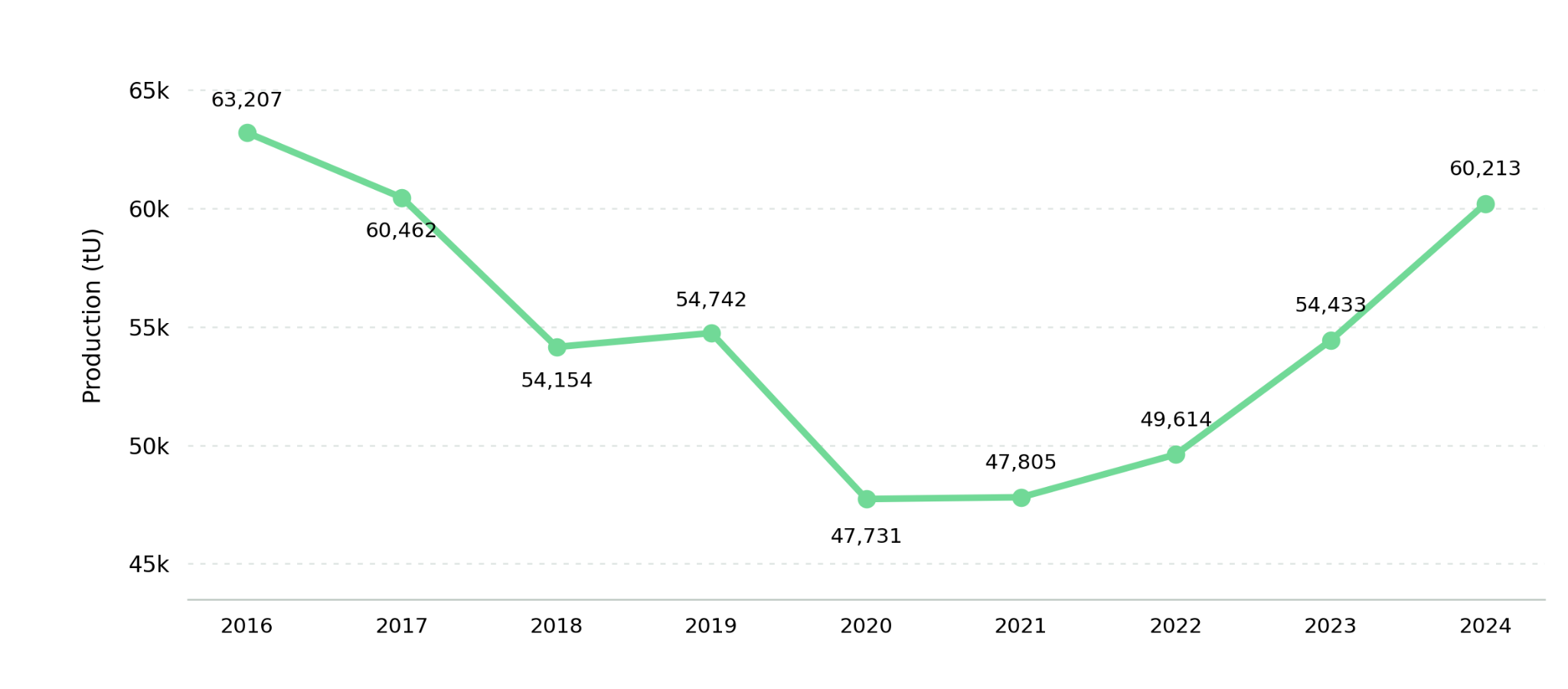
Global uranium production reached 61,924 tonnes of uranium (tU) in 2024, its highest level since 2016. With much of the increase coming from mine restarts and expansions, projects outside Kazakhstan with defined resources, feasibility studies and established mining rights offer opportunities to contribute to future uranium supply.
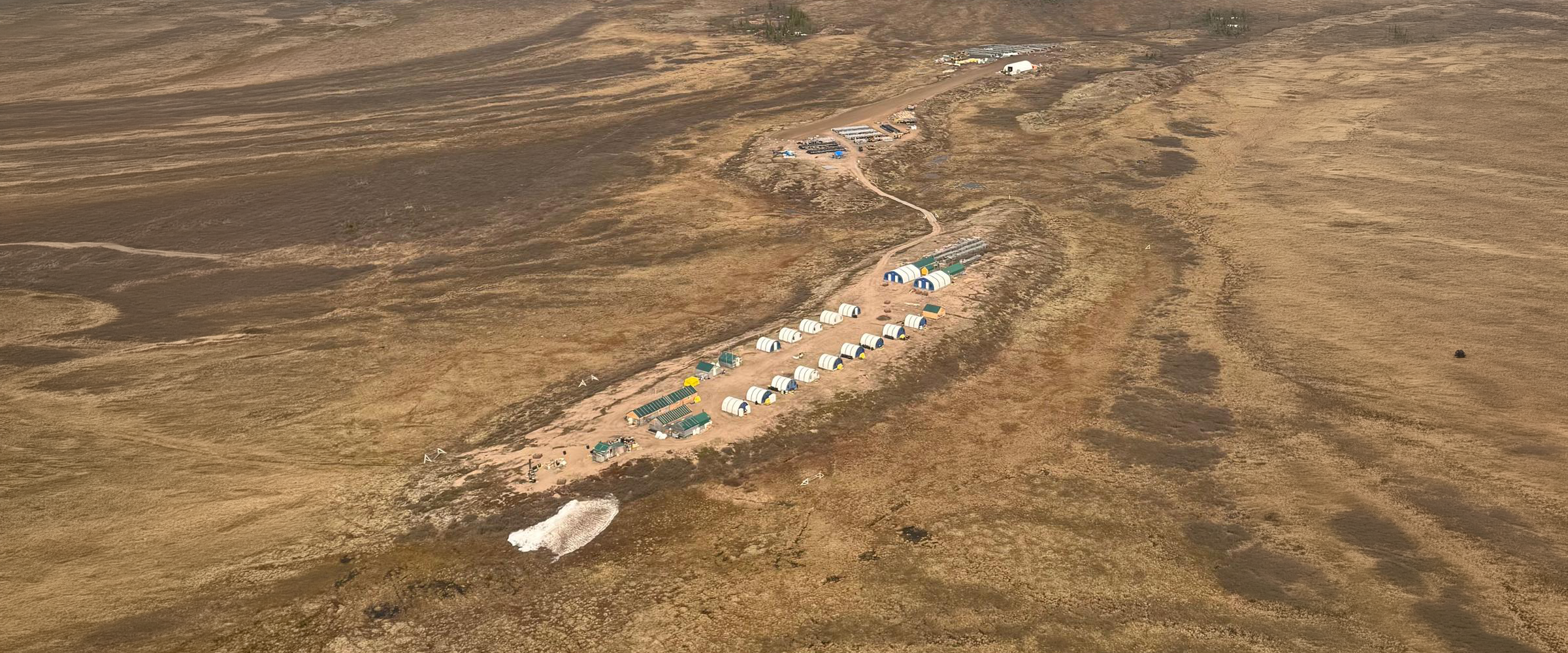
Atomic Eagle secured a September 2026 agreement restoring its Madaouela uranium project in Niger with a 60% ownership stake and a reported 116.5-million-pound uranium resource classified as a foreign estimate. Meanwhile, its Muntanga project in Zambia has a feasibility study projecting annual production of 2.2 million pounds over approximately 12 years, with estimated operating costs of US$32.20 per pound and US$282 million in pre-production capital. These developments establish two advanced uranium projects with clearer ownership terms and defined production potential.
Phil Hoskins, Chief Executive Officer of Atomic Eagle, connects negotiated mining rights with future uranium demand:
“We've spent a lot of time with the government finalizing an agreement that we think is financeable and genuine. What we own is valuable, particularly in a uranium market where the deficit, come the time that this project's capability of coming online, is going to be significant and people will be scrambling for new production assets.”
Tighter Ownership Rules Highlight High-Grade Uranium Alternatives
Kazakhstan's tighter ownership requirements increase the relevance of high-grade uranium resources in other jurisdictions, particularly deposits with established resource estimates and ongoing drilling programs. These assets offer opportunities for further resource growth, while separately financed projects provide additional pathways for advancing uranium development.
IsoEnergy announced an August 2026 transaction transferring its Utah uranium assets into a new US platform backed by US$105 million in financing, while retaining approximately 33% ownership. In Canada, its Hurricane deposit in Saskatchewan contains an estimated 48.6 million pounds of high-grade uranium oxide at 34.5%, supported by continued drilling that reached 43 holes in 2026 through September. The transaction provides a separately financed path for advancing its US assets while maintaining a substantial interest in their future development.
US Uranium Supply Gap Supports Existing Facilities’ Expansion
US uranium concentrate production reached approximately 2.1 million pounds in 2025, more than triple its 2024 level, while reactor operators received 46.9 million pounds of uranium oxide equivalent from all sources. This gap highlights the importance of existing US uranium facilities and opportunities to expand domestic supply through additional permitted operations.
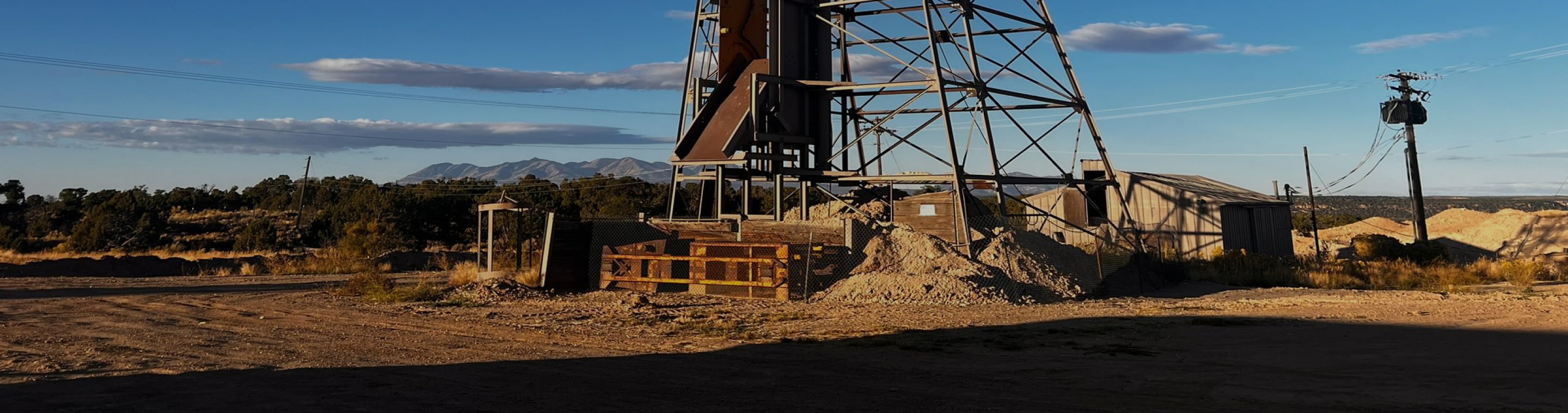
enCore Energy reported extracting 131,274 pounds of uranium oxide during the first half of 2026. Its Alta Mesa Wellfield 3 Extension is ready for operations, while the Upper Spring Creek satellite plant and first wellfield are fully constructed. Both are awaiting final permits anticipated in the fourth quarter of 2026, with the planned start-ups expected to support increased uranium extraction and improved operating efficiency in 2027.
William Sheriff, Executive Chairman of enCore Energy, describes the limits of available US uranium production:
“They asked whether producers could provide 4 million pounds of US-sourced material, but if you took all the production in the US right now, the answer is no. Even by 2030, the answer is probably no because people have contracts in place, so there's going to have to be new production coming on.”
Kazakhstan’s Ownership Rules Put Future Cash Flows in Focus
Kazakhstan's tighter ownership rules could reduce foreign participation in certain future uranium projects, despite the country accounting for approximately 40% of global mined supply in 2025. Some agreement extensions require at least 90% national-company ownership or a qualifying technology-transfer arrangement involving guaranteed purchases of at least 50% of a new plant's output. These conditions could reduce the share of future cash flows available to other participants or introduce additional capital commitments, increasing the importance of ownership rights and financing terms when comparing uranium assets across jurisdictions.
Beyond Kazakhstan, uranium opportunities differ in how quickly resources can generate revenue. Global exploration and mine-development spending exceeded US$1.78 billion during 2023-2024, yet no new uranium mines entered production during the assessment period. Exploration projects offer potential resource growth, development projects provide more measurable economics through feasibility studies, and operating facilities can supply uranium once the necessary permits are secured. Clear ownership terms, manageable capital requirements, and demonstrated production readiness provide stronger grounds for assessing future uranium cash flows than resource size or location alone.
The Investment Thesis for Uranium
- Kazakhstan's over-75% ownership threshold for transfers of certain new uranium production agreements could limit foreign equity, while some extensions require at least 90% national-company ownership or qualifying technology transfer.
- Uranium discoveries outside Kazakhstan become easier to value as drilling confirms grades and resource size, while feasibility studies assess whether projects can be developed economically.
- Developers with defined reserves and feasibility studies can estimate capital costs, recovery rates, and potential output, making project economics easier to assess than early-stage discoveries.
- Producers with established processing facilities can increase output by bringing additional wellfields online, using existing infrastructure to support domestic uranium supply growth.
- Clear mining rights and higher retained ownership allow uranium companies to capture a larger share of potential project cash flows, while lower capital requirements improve development economics.
Kazakhstan's tighter ownership rules place greater importance on who controls future uranium supply and how much of its economic value can be retained. Beyond Kazakhstan, exploration offers opportunities to expand uranium resources, development projects provide pathways toward commercial operations, and established producers can leverage existing infrastructure to increase output. As the nuclear industry seeks to secure long-term uranium supply, projects with clear ownership rights, advancing resources, and defined economic potential offer multiple opportunities to capture value across the uranium market.
TL;DR
Kazakhstan's tighter uranium ownership requirements could limit foreign participation in certain future mining agreements while preserving existing joint-venture stakes. As the country accounts for approximately 40% of global uranium production, these changes increase the relevance of resources and projects outside Kazakhstan. Global exploration and development spending exceeded US$1.78 billion during 2023–2024, yet no new mines entered production during the assessment period. Canadian discoveries, African development projects and established US processing facilities offer different opportunities to expand future uranium supply. Ownership rights, project financing, resource growth and operational readiness remain central to assessing potential uranium cash flows.
FAQs (AI-Generated)
Analyst's Notes





Subscribe to Our Channel








Stay Informed