IsoEnergy's Athabasca Drill Results & Winter Expansion Plans Strengthen Resource Growth Visibility for 2026



IsoEnergy's 2025 Athabasca drilling expands Larocque East mineralization with strongest intersection outside Hurricane deposit, targeting 5,200m winter program.
- IsoEnergy's 2025 Athabasca Basin drilling materially expands the known mineralized footprint at Larocque East, reinforcing the potential for upgraded resources in future estimates.
- The discovery of the strongest intersection outside the Hurricane deposit to date (LE25-202) enhances the prospectivity of the broader Larocque Trend and supports a multi-kilometre growth thesis.
- Winter 2026 drilling (5,200 metres across 13 holes) targets additional high-grade extensions and could unlock further resource conversion and scale.
- IsoEnergy's diversified portfolio, including permitted past-producing United States assets with established toll milling access, positions it for optionality-based production leverage as uranium market conditions tighten.
- With advanced exploration momentum, strengthened management, and a growing project pipeline, IsoEnergy enters 2026 with clearer visibility to value creation across both near-term catalysts and long-term resource growth.
Exploration Momentum and the Investment Signal
Global uranium fundamentals have entered a structural tightening phase characterized by declining commercial inventories, accelerated utility contracting, and long-cycle supply constraints. Industry forecasts project sustained supply deficits through 2040, driven by nuclear capacity additions across Asia, Europe, and North America. Within this context, exploration-led resource growth at high-grade deposits carries disproportionate strategic value.
IsoEnergy's 2025 drilling campaign at the Larocque East property in Saskatchewan's Athabasca Basin delivered material footprint expansions at the Hurricane deposit and identified the strongest intersection recorded outside the main mineralized zone to date. These results, combined with a planned 5,200-metre winter program, advance the probability of future resource conversion and scale expansion.
Why 2025 Results at Larocque East Matter for Investors
Athabasca Basin discoveries command premium market attention due to exceptional grade profiles, proximity to existing milling infrastructure, and established regulatory frameworks. The Hurricane deposit currently hosts 48.6 million pounds of uranium at 34.5 percent uranium trioxide in the Indicated category (Technical Report dated August 4, 2022, effective July 8, 2022), positioning it among the highest-grade undeveloped resources globally.
Uranium Supply Tightening and the Role of High-Grade Discoveries
High-grade uranium deposits generate disproportionate valuation impact due to operational advantages that compound across mine life. Projects with grades exceeding 1 percent uranium trioxide typically achieve lower all-in sustaining costs and improved processing economics. The Athabasca Basin hosts the world's highest concentration of high-grade unconformity-style uranium deposits, though discovering new economically viable resources has become increasingly challenging.
Philip Williams, Chief Executive Officer of IsoEnergy, articulated the company's diversified approach:
"We're a globally diversified uranium miner and explorer with assets in the top jurisdictions in the world for uranium mining being Canada, the United States, and Australia… What we've done and we've done this on purpose is to not have all the eggs in one basket so to speak and give ourselves multiple shots on goal."
This multi-jurisdictional framework positions IsoEnergy to respond flexibly to evolving market conditions across varying development timelines and capital requirements.
2025 Exploration Results: Technical Drivers Behind Resource Expansion
The company's 2025 Athabasca Basin drilling program systematically tested both near-mine extensions and regional step-out targets. Year-to-date drilling at Larocque East totals 15,597 metres in 39 drill holes, with additional geochemical data still pending.
High-Grade Extensions Along the Hurricane Main and South Trends
Nine drill holes intersected mineralized zones across the Hurricane Main and South trends, confirming strongly anomalous geochemistry results that validate expansion targets. Hole LE25-194, located 80 metres east of the deposit, intersected a 3.5 m interval averaging 0.313% U₃O₈, with a peak value of 0.872% U₃O₈ over 0.5 m. Additionally, Hole LE25-207 returned two separate high-grade 0.5 m intervals: 1.61% U₃O₈ above the unconformity and 1.71% U₃O₈ 4.5 m below the unconformity.
These results carry significance beyond incremental resource additions. In unconformity-style uranium systems, high-grade mineralization concentrates at specific structural intersections. The presence of illite alteration, elevated nickel-to-cobalt ratios, and enhanced spectral signatures indicate robust hydrothermal fluid pathways that historically concentrate uranium oxides.
LE25-202: A Step-Change Intersection Nearly 3 Kilometres East of Hurricane
The most significant technical outcome emerged from hole LE25-202, which intersected intersected 1.05% U3O8 over 0.5m about 20m down hole approximately 2.8 kilometres east of the Hurricane Main deposit. This represents the strongest mineralized intersection recorded outside the primary resource area to date, validating the prospectivity of the broader Larocque Trend.
The LE25-202 result demonstrates that structural controls and geochemical conditions favorable for uranium concentration extend significantly beyond current resource boundaries, materially expanding the geological search space for future discoveries.
How Exploration Drives IsoEnergy's Long-Term Value
The Hurricane deposit's existing resource profile establishes it as one of the highest-grade undeveloped uranium assets globally. The 2025 drilling results reinforce this tier-one classification by demonstrating that high-grade mineralization persists across extended strike lengths and depth ranges.
Williams emphasized the strategic importance of the Hurricane asset:
"We're focusing on the highest grade uranium resource in the world in Canada at the Hurricane deposit. The bulk of the value for the business today is in Canada the Hurricane deposit… The characteristics that we have there is a top-tier asset, it will be developed into a mine."
While mineral resources do not constitute mineral reserves and have not demonstrated economic viability, the Hurricane deposit's proximity to Orano Canada's McClean Lake Mill could reduce infrastructure capital intensity compared to developments requiring dedicated processing facilities, though commercial processing agreements would need to be established. Orano's mill has historically processed ore from multiple Athabasca Basin deposits.
Williams outlined the company's production optionality:
"We have near-term production assets, we could be delivering uranium into the strategic reserve or into the market to United States utilities in very short order."
Portfolio Diversification: Optionality Through the United States and Australia
Utah Restart Readiness and Cost Optimization
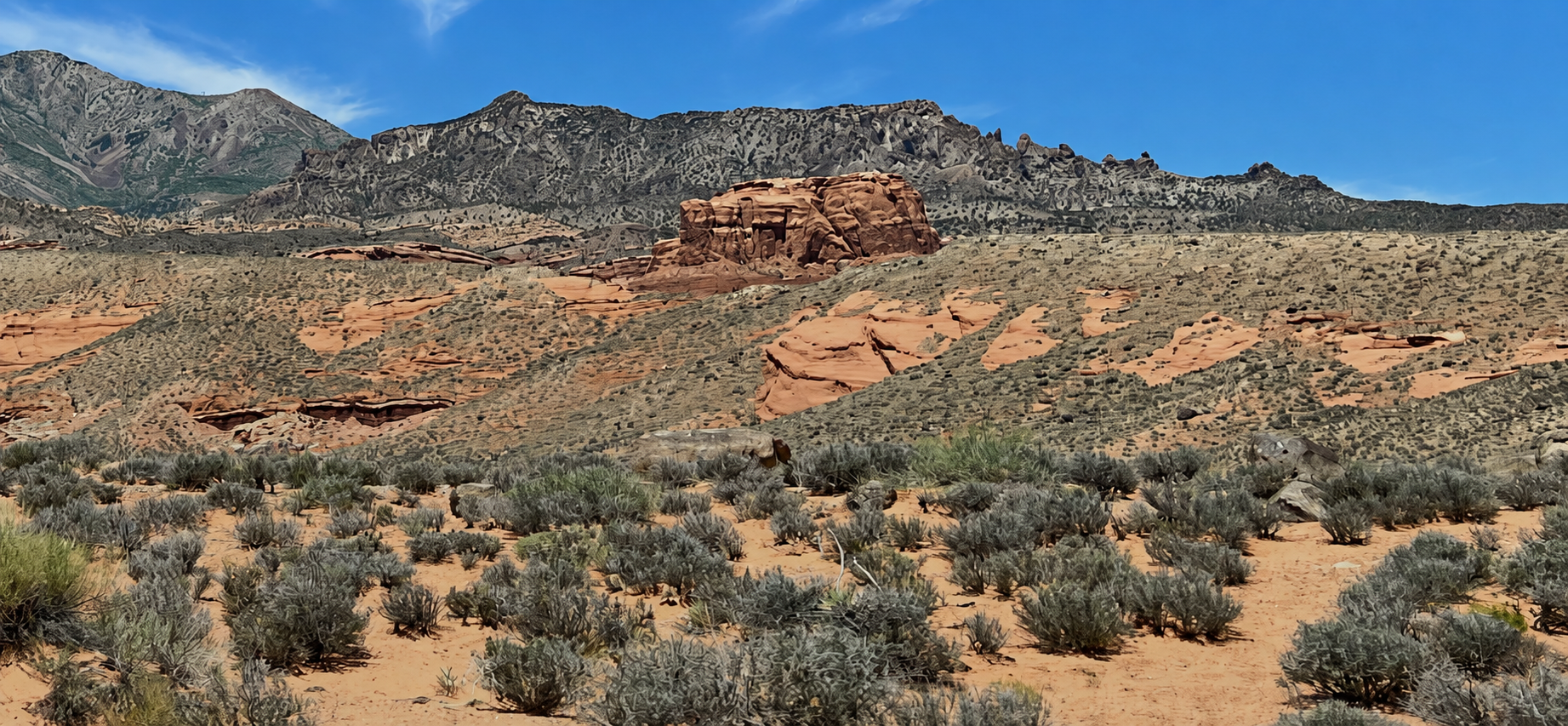
IsoEnergy's United States asset portfolio centers on the Tony M Mine and surrounding properties in Utah, which represent permitted past-producing facilities with key state and federal operating permits in place. The company's 2025 drilling at the adjacent Flatiron property (targeting 15,000 feet) follows up on historical potential.
Williams highlighted current United States exploration activities:
"We are drilling the Flatiron property right now which is adjacent to the Tony Mine… If we have success in this program we'll allocate more resources there and potentially to some of our other US projects."
The Utah assets benefit from existing permits, established infrastructure, and access to toll milling at Energy Fuels' White Mesa Mill, reducing capital requirements. These characteristics position the Utah properties for economic restart under favorable uranium market conditions, subject to restart capital investment and economic feasibility thresholds.
Australian Exposure Strengthening Long-Cycle Optionality
The pending acquisition of Toro Energy will add significant resource endowment, including the Wiluna Uranium Project in Western Australia. The transaction is proceeding by way of a Scheme of Arrangement, with execution completed October 13, 2025. Closing is expected in the first half of 2026, with Toro's delisting from the Australian Securities Exchange anticipated April 1, 2026.
The Wiluna Project hosts measured and indicated resources of 77.8 million tonnes at 403 parts per million uranium trioxide, containing 69.1 million pounds (Toro Energy ASX announcement, September 24, 2024). While Western Australia Premier Roger Cook has stated that a significant shift in the global uranium market is needed before the state will support a sustainable uranium mining industry, the Wiluna Project provides long-cycle optionality.
Management Capability and Corporate Strategy
IsoEnergy's management team combines technical expertise in Athabasca Basin geology with operational experience in uranium production and strategic capability in capital markets navigation. Williams brings extensive leadership experience from previous roles in uranium exploration and development, while Brisbin's geological expertise in unconformity-style uranium systems directly informs targeting decisions.
The company holds equity investments in other uranium companies valued at approximately 54.1 million Canadian dollars based on November 6, 2025 market close, providing financial flexibility to execute exploration programs.
Risk Considerations and Mitigants
Unconformity-style uranium deposits demonstrate significant geological variability, creating inherent uncertainty in resource estimation. IsoEnergy mitigates geological risk through progressive drill density that advances resource classification.
Uranium project development in the Athabasca Basin involves environmental baseline studies, regulatory consultation processes including aboriginal title and consultation considerations, and detailed engineering work. The Hurricane deposit's proximity to existing milling infrastructure could materially shorten development timelines, though commercial processing arrangements would need to be established.
Williams provided perspective on long-term market dynamics:
"The demand is going to far outstrip supply on any period that you want to look at even from the near-term to go out to 2040, so there's a major issue on the supply side."
The Investment Thesis for Uranium
- Structural supply gaps created by declining global inventories and rising utility contracting increase the value of high-grade discoveries that can credibly contribute to future supply additions within decision-relevant timeframes.
- Athabasca scarcity value reflects the geological rarity of high-grade unconformity deposits combined with infrastructure proximity and regulatory frameworks with established uranium mining precedents that could shorten development pathways relative to alternative jurisdictions.
- Exploration momentum demonstrated through systematic drill success advances the probability of future resource expansion across multi-kilometre mineralized trends while reducing geological uncertainty through progressive data density.
- Multi-jurisdiction leverage provided by permitted past-producing United States assets with toll milling access and long-cycle Australian resources diversifies risk and enhances optionality across varying uranium price scenarios and development timelines.
- Financial strength supported by equity holdings valued at 54.1 million Canadian dollars (as of November 6, 2025) enables multi-year exploration and development programs while maintaining strategic flexibility for opportunistic acquisitions or partnerships.
- Management execution capability derived from proven track records in Athabasca exploration, uranium production operations, and strategic capital markets navigation reduces future execution risk across discovery, development, and financing phases.
Strengthening Growth Visibility Into 2026
IsoEnergy's 2025 Athabasca Basin drilling campaign delivered material technical outcomes that sharpen the company's investment profile by expanding known mineralization footprints, validating multi-kilometre growth potential, and de-risking future resource conversion scenarios. The discovery of the strongest intersection recorded outside the Hurricane Main deposit demonstrates that prospective ground extends significantly beyond current resource boundaries.
The planned winter 2026 program represents a high-impact catalyst. Results expected through 2026 will advance geological understanding and either confirm resource expansion hypotheses or refine targeting models for subsequent programs.
IsoEnergy enters 2026 with expanding geological confidence, improved optionality across global assets, and strengthened alignment with long-cycle uranium fundamentals that support structural supply deficits through the next decade. For investors seeking exposure to high-grade uranium resource growth combined with near-term production optionality, the company's technical momentum and strategic positioning warrant continued attention as winter drilling results emerge.
TL;DR
IsoEnergy's 2025 Athabasca Basin drilling campaign materially expanded the Hurricane deposit footprint at Larocque East and delivered the strongest intersection recorded outside the main resource zone—1.05% U₃O₈ over 0.5m located 2.8 kilometres east. The company completed 15,597 metres across 39 drill holes, with a planned 5,200-metre winter 2026 program targeting high-grade extensions and resource conversion. IsoEnergy's diversified portfolio includes permitted past-producing Utah assets with toll milling access and the pending Wiluna Project acquisition in Australia, positioning the company for near-term production optionality and long-cycle resource growth as uranium supply fundamentals tighten through 2040.
FAQs (AI-Generated)
The most significant result was hole LE25-202, which intersected 1.05% U₃O₈ over 0.5m approximately 2.8 kilometres east of the Hurricane Main deposit—representing the strongest mineralized intersection recorded outside the primary resource area to date. Additional notable results included hole LE25-207, which returned two separate high-grade intervals of 1.61% U₃O₈ and 1.71% U₃O₈ over 0.5m each, and hole LE25-194, which intersected 0.872% U₃O₈ over 0.5m located 80 metres east of the deposit.
The Hurricane deposit hosts 48.6 million pounds of uranium at 34.5 percent uranium trioxide in the Indicated category (Technical Report dated August 4, 2022, effective July 8, 2022), positioning it among the highest-grade undeveloped uranium resources globally. Its strategic value derives from exceptional grade profiles, proximity to Orano Canada's existing McClean Lake Mill infrastructure, and location within Saskatchewan's established regulatory framework for uranium mining.
The winter 2026 program will target 5,200 metres across 13 drill holes, focusing on additional high-grade extensions and resource conversion opportunities. Results are expected throughout 2026 and will advance geological understanding while testing resource expansion hypotheses across the broader Larocque Trend.
IsoEnergy controls the Tony M Mine and surrounding properties in Utah, which are permitted past-producing facilities with key state and federal operating permits in place. These assets benefit from established infrastructure and access to toll milling at Energy Fuels' White Mesa Mill, reducing capital requirements for potential economic restart under favorable uranium market conditions. The company is currently drilling the adjacent Flatiron property with 15,000 feet of drilling planned.
The Toro Energy acquisition is expected to close in the first half of 2026, with Toro's delisting from the Australian Securities Exchange anticipated April 1, 2026. The transaction adds the Wiluna Uranium Project in Western Australia, which hosts measured and indicated resources of 77.8 million tonnes at 403 parts per million uranium trioxide, containing 69.1 million pounds of uranium.
Analyst's Notes





Subscribe to Our Channel



.jpg)

Stay Informed