




$108 Brent Prices Chokepoint Risk as Diesel Stocks Hold the Deficit


US crude stocks match their five-year average while distillates sit 13% below theirs, with refineries at 97.8% utilization unable to close the gap quickly.
- Brent crude traded above $108 per barrel on September 10, 2026, its highest since May, as reduced prospects for a US-Iran deal and reports of Houthi forces seizing Mokha raised oil supply risk.
- The reported Houthi seizure of Mokha threatens a second oil chokepoint at the Bab al-Mandeb Strait, while the US emergency crude reserve held 285.4 million barrels on September 4, 2026, down 29.6% year over year and limiting its supply buffer.
- US commercial crude stocks matched their five-year average in the week ending September 4, 2026, while distillate inventories remained 13% below theirs, supporting diesel prices despite adequate crude supply.
- Brent’s monthly average fell from $117.29 in April to $85.40 in June 2026, but 97.8% refinery utilization left only 2.2% spare capacity to increase diesel output and rebuild inventories.
- The timing of any US-Iran agreement cannot be known in advance, leaving portfolio holders able to manage risk through the amount committed to oil holdings, while the diesel case would no longer hold if distillate inventories returned to their five-year average.
Houthi Seizure Raises Bab al-Mandeb Risk & Supports Brent Above $108
Brent traded above $108 per barrel for the first time since May before settling at $107.63, up 6.3%. West Texas Intermediate (WTI) closed at $102.48, up 6.7%. President Donald Trump’s statement that he was not seeking a deal with Iran drove both benchmarks higher.
The reported Houthi seizure of Mokha could give the group control of the Bab al-Mandeb Strait, threatening Saudi oil exports through a second Red Sea chokepoint. With both the Strait of Hormuz and Red Sea routes exposed, disruption risk now extends beyond oil prices to physical deliveries.
Lower Hormuz Flows Drive US Oil Exports as Emergency Reserve Falls 29.6%
Strait of Hormuz oil flows remained below pre-war levels, increasing buyers’ reliance on US supply. US net exports of crude and petroleum products averaged 4.0 million barrels per day over four weeks, up from 2.4 million a year earlier, while distillate exports rose to 1.67 million from 1.34 million barrels per day.
Dozens of nations agreed to release 400 million barrels this year. The US Strategic Petroleum Reserve (SPR) fell to 285.4 million barrels, its lowest since the 1980s and down 119.9 million in one year, leaving fewer barrels available for another emergency release. President Donald Trump said he did not expect oil prices to fall until after the November midterm elections.
97.8% Refinery Utilization Keeps Distillate Prices High
A diplomatic statement can lower crude prices, but limited refining capacity can keep diesel prices elevated. Commercial crude stocks matched their five-year average, while distillate inventories, including diesel and heating oil, remained 13% below their five-year average. Diane Swonk, chief economist at KPMG, said diesel and heating fuel drove much of July’s 5.4% annual producer price index increase.
Retail Diesel at $5.97 Compresses Margins Across Freight, Farming, & Rail
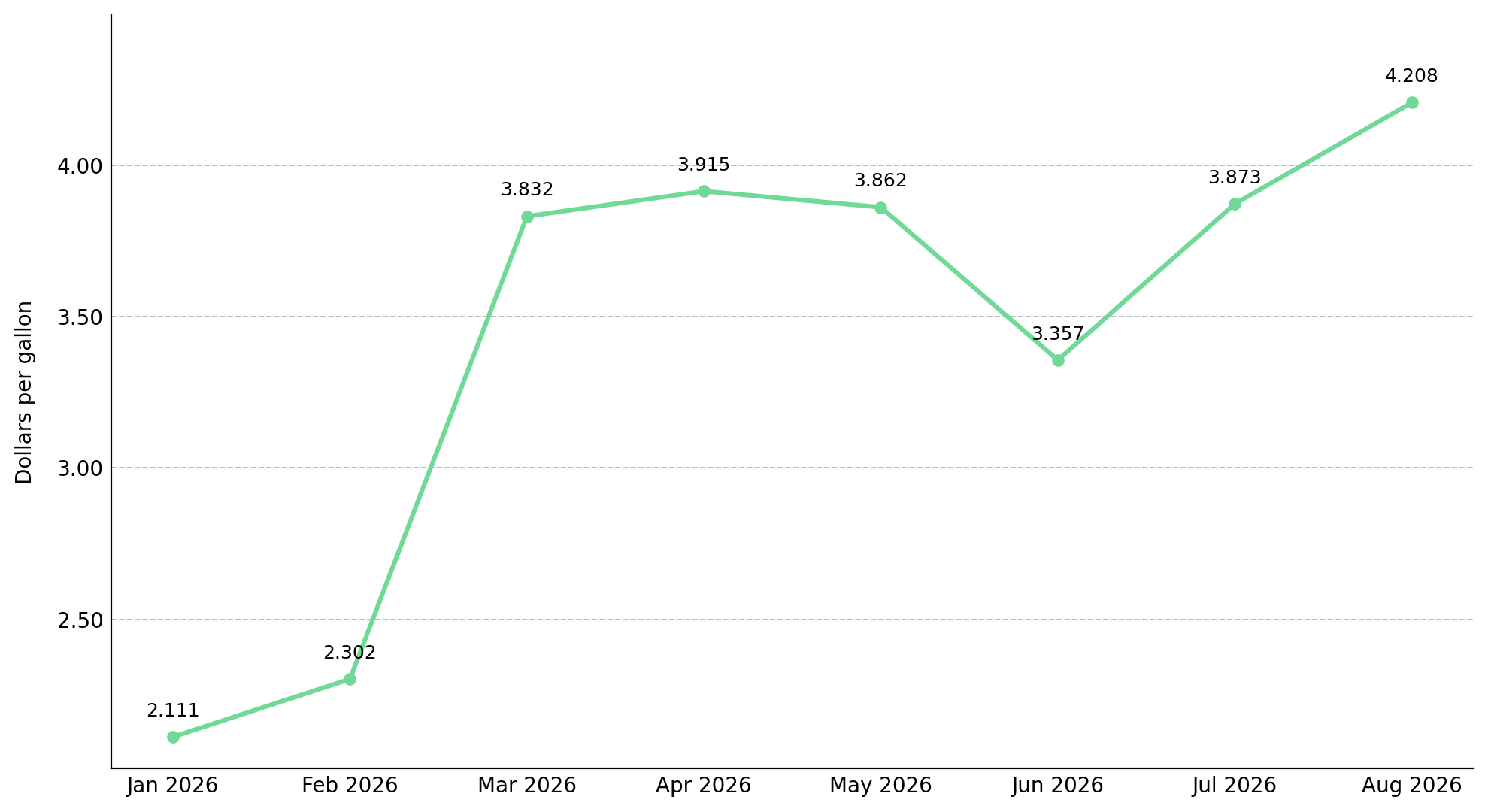
Retail diesel rose $0.368 in one week to a national average of $5.967 per gallon, increasing operating costs for freight, farming, and rail companies. The 10-year Treasury yield reached 4.95%, increasing financing costs for rate-sensitive businesses.
Gulf Coast refineries ran at 98.3% utilization, while West Coast operable capacity fell from 2.56 million to 2.28 million barrels per day year over year. With little capacity available to increase output, refinery earnings depend more on product prices than sales volume.
Public data cannot determine the timing of a US-Iran deal, so a retail portfolio buying crude-linked funds at current prices could lose value if an agreement triggered another crude decline similar to the spring retreat, even if diesel inventories remained tight. Reducing the amount committed can limit the potential loss, but it cannot eliminate the risk of losing capital.
What Ends Diesel Support From the Stock Gap
A chokepoint disruption raises crude prices by increasing the risk that oil shipments will be blocked, while refined-fuel prices depend on whether spare refinery capacity can replace lost supply. Crude prices can reverse within one trading session when the threat recedes, but refineries near full utilization cannot increase output as quickly, allowing refined-fuel price premiums to last longer.
US distillate inventories returning to their five-year average would close the 13% inventory gap and remove the supply constraint supporting higher diesel prices.
The 13% distillate inventory gap supports holding oil assets tied to refined products rather than funds tracking near-term crude futures. With the US reserve at 285.4 million barrels, oil valuations should account for less emergency supply available to restrain price increases through coordinated releases. However, four-week US product supply fell 3.7% year over year, reducing price support from consumption.
Analyst's Notes





Subscribe to Our Channel





Stay Informed


