




Brent Tops $100 as Depleted US Reserves Leave Demand to Cap Prices


Low distillate stocks and near-full refineries shift oil upside toward refining and shipping, while a $69 Brent base case limits the crude trade.
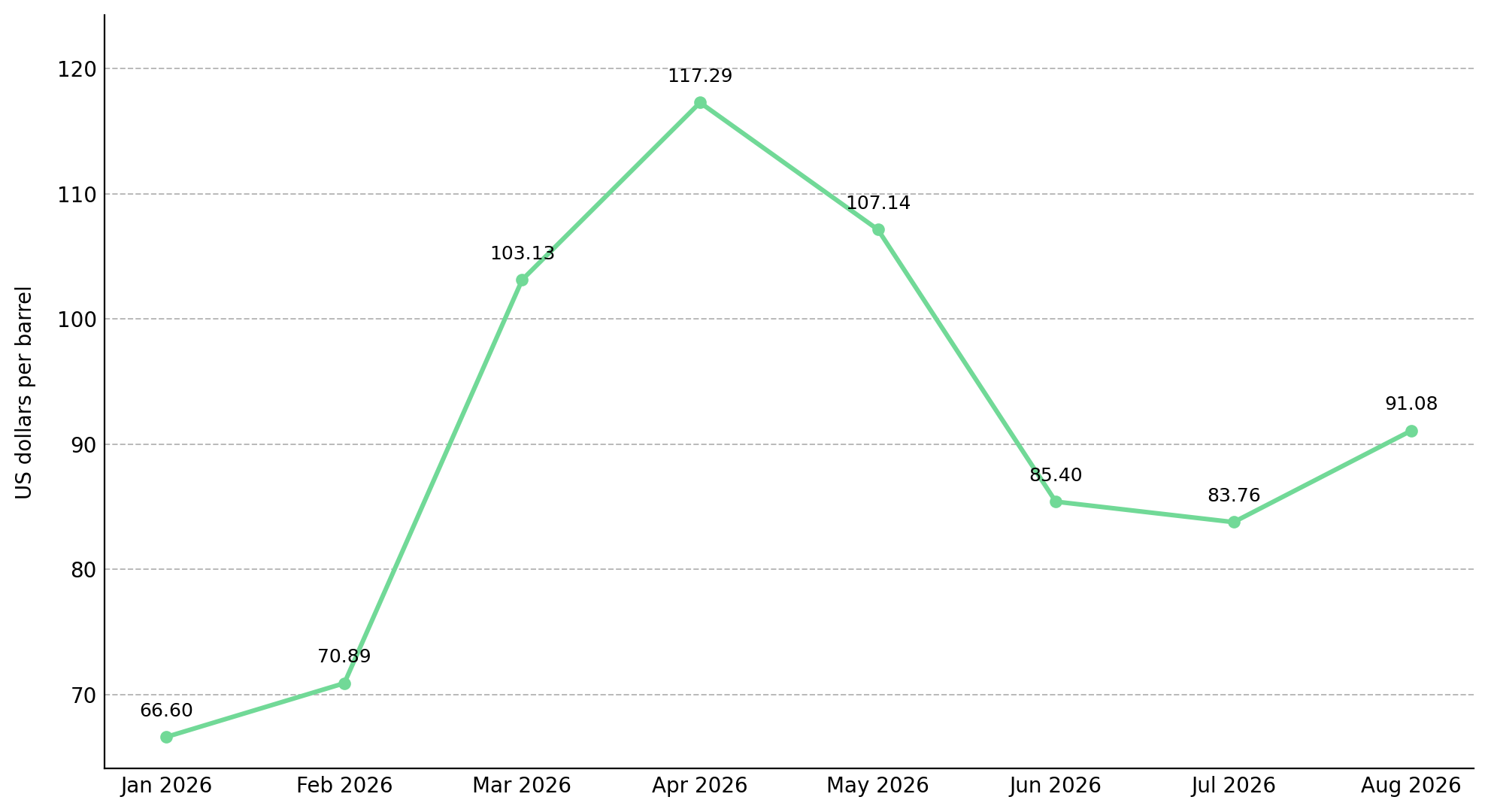
- Brent futures rose 2.57% to $100.44 per barrel and West Texas Intermediate (WTI) November futures 2.03% to $94.92 on September 9, 2026, the first Brent print above $100 since July.
- The Strategic Petroleum Reserve (SPR) held 286.6 million barrels on August 28, 2026, down 29.2% year over year, reducing the capacity for releases that shortened previous supply shocks.
- Goldman Sachs keeps a base case of gradual Persian Gulf export recovery but says the probability of a stagnation case taking Brent above $120 is rising.
- US refineries operated at 98.0% of capacity in the week ending August 28, 2026, while distillate stocks were 14% below the five-year average, supporting refined-product spreads despite adequate crude inventories.
- US product supplied fell 4% year over year in the four weeks to August 28, 2026, and the September 9 Energy Information Administration (EIA) outlook tests whether $69 Brent still holds for 2027.
Tanker Strikes Push Brent Above $100 for the First Time Since July
Brent crude futures rose 2.57% to $100.44 per barrel, their first move above $100 since July, while WTI November futures gained 2.03% to $94.92. The increase followed US military strikes that destroyed five Iranian crude tankers in retaliation for attempted attacks on a US warship.
The SPR held 286.6 million barrels, down 29.2% from 404.7 million a year earlier, leaving less oil available to cushion supply shocks. Commercial crude inventories stood at 424.5 million barrels, 1% above the five-year average, so the shortage lies in the emergency reserve rather than refiners’ supply.
Strategic Reserve Down 29% Removes the Buffer That Capped Past Oil Spikes
The disruption is restricting oil shipments rather than production. In the US-Iran conflict’s seventh month, military action resumed in late August after a roughly month-long pause while Washington applied economic pressure, renewing risks to Gulf oil shipments. The EIA’s August 11, 2026 Short-Term Energy Outlook assumes severe constraints on Strait of Hormuz transits and continued disruption of about 0.6 million barrels per day through 2027, even as regional production returns near pre-conflict levels by early 2027.
A coordinated reserve release can cushion a supply outage, but the SPR held 118.1 million fewer barrels than a year earlier. US crude exports rose by 691,000 barrels per day to 4.483 million barrels per day in the week ending August 28, sending more domestic crude into the global market rather than retaining it to cushion the disruption.
Demand Down 4% Sets the Ceiling That Policy Can No Longer Enforce
Without a negotiation timetable, the disruption’s duration remains uncertain. Goldman Sachs assumes Persian Gulf exports gradually recover through alternative shipping routes and added pipeline capacity, but Daan Struyven, co-head of global commodities research at Goldman Sachs, told CNBC that stagnant exports pushing Brent above $120 per barrel are becoming more likely.
Distillate Stocks 14% Below Average Split Refining Margins From Crude Exposure
Refining margins are supported by distillate inventories 14% below the five-year average despite refineries operating at 98.0% of capacity. Natural gas liquids captured little of the rally because propane and propylene stocks were 25% above the five-year average, while Mont Belvieu propane traded at $0.680 per gallon versus $0.668 a year earlier.
Oil-sector exposure depends on whether cash flow tracks crude prices or crude-to-product spreads. Commercial crude inventories 1% above the five-year average weaken the case for crude scarcity, while distillate stocks 14% below average support refining spreads. Spot prices do not reveal producers’ realized prices because hedge positions and average realizations appear only in quarterly reports.
With no timetable for Gulf flows to normalize and a smaller SPR less able to shorten the disruption, portfolio risk depends more on position size than entry timing. A ceasefire could reverse much of the month’s gain in one session, while futures-tracking products incur roll costs and leveraged exposure carries the risk of a total loss.
What Caps the Upside Trade
Strategic reserves can limit price spikes while enough barrels remain available for release. With less reserve capacity, demand becomes the main brake on prices, and US product supplied fell 4% year over year in the four weeks ending August 28.
The demand-cap thesis would fail if the EIA’s September 9, 2026 Short-Term Energy Outlook raises its 2027 Brent forecast above $80 per barrel. Such a revision would price the disruption into 2027, increasing the value of reserves in the ground rather than only one quarter of cash flow.
The price shock favors refining spreads and tankers still moving Gulf oil, while pre-conflict hedges limit producers’ gains. A 29.2% smaller SPR weakens the assumption that reserve releases can cap geopolitical price spikes. The gap between $100 spot Brent and the EIA’s $69 base case for 2027 discourages long-cycle investment, limiting future supply and supporting a shift toward refining and shipping exposure rather than an exit from oil.
Analyst's Notes





Subscribe to Our Channel







Stay Informed


