




Mineros Outruns Its Nicaraguan Plant Before a December Capacity Target


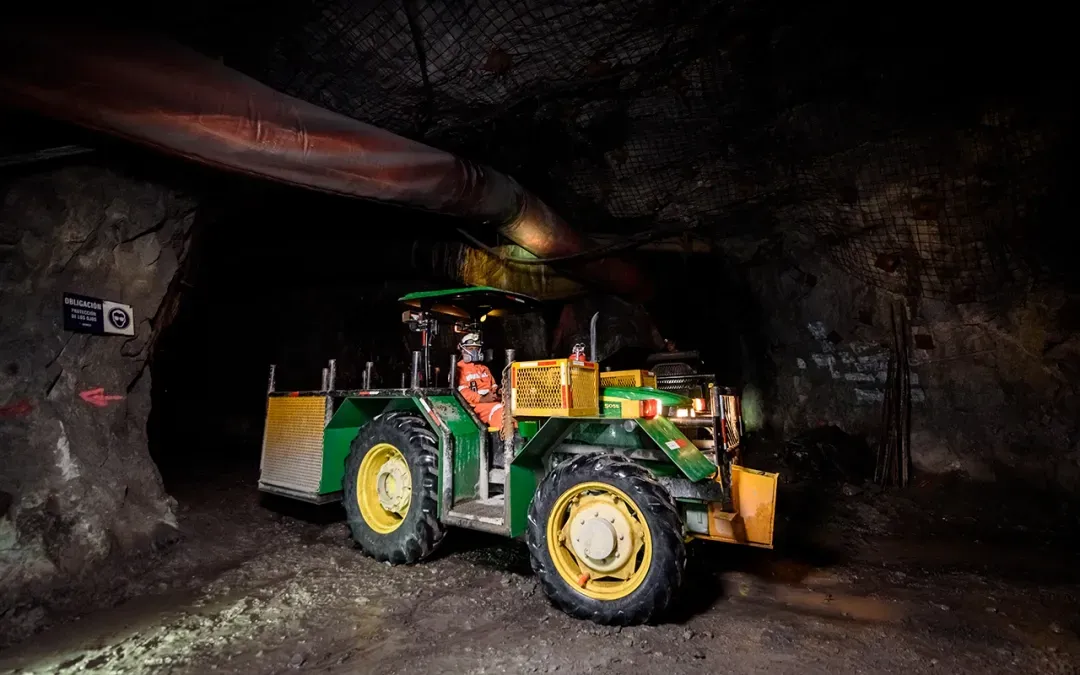
Mineros ran its Panama and Pioneer mines ahead of the Hemco plant, which cut their cash costs and stacked ore that can be treated once capacity expands.
- Mineros mined more ore at its Hemco Property in Nicaragua than the processing plant could treat, and did so by design.
- The Bonanza Mining Partnership (BMP) supplied 83% of ore in the first half of 2026, on terms priced against gold.
- Management said in May that cash costs at the company's own Panama and Pioneer mines fell from close to US$3,000 per ounce to US$1,200 per ounce.
- Hemco's all-in sustaining cost (AISC) reached US$2,521 per ounce in the first half of 2026, against US$1,990 per ounce a year earlier.
- Processing capacity is targeted to reach 2,500 metric tons per day (tpd) by December 2026, and the stockpiled ore can be treated as that capacity comes in.
Mineros (TSX: MSA | BVC: MINEROS | OTCQX: MNSAF) mined more ore in Nicaragua than its processing plant could treat, and it did so deliberately. Management says the earlier plan at the two mines the company owns there, Panama and Pioneer, was to slow them down so their output would stay within what the plant could handle. The current team reversed that instruction while the plant expansion was still underway. The surplus ore is stacked on the ground at the operation, and it can be treated as processing capacity is added toward the December 2026 target.
Two Sources of Ore in Nicaragua
Hemco's plant is fed from two directions, and only one of them is the company's own mining. The Bonanza Mining Partnership (BMP) supplied 83% of the ore in the first half of 2026, under a three-party agreement between the partnership's miners, the local governments, and the company. That purchased ore is bought on terms indexed to the price of gold, which produces a variable all-in sustaining cost (AISC) at the property across the price cycle. More than 5,600 mining partners work inside the model, which was created in 2013.
Panama and Pioneer supply the remainder. They stand in a district that has produced approximately 8 million ounces of gold since 1880, and where partnership miners hold the right to work ground inside the company's own concessions. Because both streams compete for the same processing capacity, the ceiling on Hemco's output is set by what the plant can treat in a day, not by what the mines can raise.
The Decision to Stop Slowing the Mines
The company says its earlier response was to hold back its own mines, planning for 30% less gold than they produced the year before. Management says the instruction to Panama and Pioneer was to slow down and take it easy, and that a new management and technical team rejected that as the wrong answer to the problem.
President and Chief Executive Officer of Mineros, Daniel Henao, identifies the remedy the company chose instead:
"The problem has to be solved by simply removing the bottleneck, expanding processing capacity."
Henao restates the production instruction that the operating teams then received:
"We're going all full steam ahead. Let's produce as much as we produce in our own mines."
That instruction came with an assurance attached. Management says the teams were told not to worry about the processing bottleneck because the company was already solving it, which made the mine plan dependent on the expansion arriving behind it. Nicaraguan output moved with the change: the property produced 75,535 ounces of gold in the first half of 2026, up from 64,047 ounces in the same period of 2025, and full-year guidance for Hemco is 137,000 to 147,000 ounces.
What Happened to Unit Costs
Two cost lines moved in opposite directions over the period, and they measure different things. Management said in May that cash costs at Panama and Pioneer had come down from close to US$3,000 per ounce to US$1,200 per ounce in the first quarter of 2026. At the property level, AISC reached US$2,521 per ounce in the first half of 2026, against US$1,990 per ounce in the first half of 2025.
The two figures are not in conflict. Cash cost at the company's own mines covers only the ore those two mines produce, while property AISC is dominated by purchased ore, which supplied most of the half's feed and is priced against gold. Guidance for the year puts Hemco AISC at US$2,465 to US$2,565 per ounce and consolidated AISC at US$2,370 to US$2,470 per ounce, with consolidated production revised up to 220,000 to 240,000 ounces from 213,000 to 233,000 ounces. Colombia's Nechí Property moved in the same direction, at US$1,933 per ounce in the first half of 2026, up from US$1,420 per ounce a year earlier.
The Ounces Waiting on Capacity
What the mines produced beyond the plant's throughput accumulated as ore stacked in the open yards at the operation, which management calls patios. Management said in May that the balance stood at about 11,000 ounces at the end of the first quarter of 2026.
Henao treats that balance as inventory:
"We believe in gold. So we have about 11,000 oz sitting in patios right now waiting to be processed."
That was the position in May, and the conversion of that ore depends on the plant rather than on anything happening underground. Management expects the stacked ore to become gold, bullion, and cash as the extra processing capacity comes in.
Hemco's processing capacity is targeted to reach 2,500 metric tons per day (tpd) by December 2026. The stockpile is output that the company has already paid to mine and has not yet sold, and processing it depends on that expansion. Consolidated production reached 118,103 ounces of gold in the first half of 2026, or 51% of the midpoint of the revised full-year range.
What This Leaves on the Ground
Mineros has more than 50 years of operating history, and the change at Hemco is a mine-planning decision rather than a new asset. The company accepted a working-capital cost in the form of ore it cannot yet process, in exchange for lower unit costs at its mines and higher output from them. Management says gold recoveries have been moving from 87% toward and beyond 90%, and that silver revenues rose 450% in the first quarter of 2026 on improved silver recoveries, so throughput is not the only lever at the property. The ore is already mined and stacked, so what remains is the plant reaching 2,500 tpd by December.
FAQs (AI-Generated)
Analyst's Notes





Subscribe to Our Channel







Stay Informed






















