




Cobra Resources Drills 74 Holes at Wudinna & Exercises Manna Hill Option



Cobra Resources' half-year results cover 74 sonic core holes at Wudinna, high-grade copper at Blue Rose, and the exercised option to acquire Manna Hill.
- Cobra Resources completed 74 sonic core holes for approximately 3,200 meters (m) across the Boland and Head prospects at its Wudinna Heavy Rare Earth Project.
- Drilling defined a high-grade mineralized flank at Head over approximately 5 kilometers (km), open to the north and south.
- Reverse circulation drilling at the Blue Rose discovery returned 74 m at 1.02% copper and 0.25 grams per metric ton (g/t) gold from 70 m.
- The company formally exercised its option to acquire the Manna Hill Copper Project after the period end.
- ERM was engaged to complete the maiden mineral resource estimate (MRE) at Wudinna, with a scoping study to follow.
- Permitting and engineering advanced for a small-scale in situ recovery (ISR) production demonstration targeted for the first half of 2027.
Company Overview
Cobra Resources (LSE: COBR) is a South Australian critical minerals developer advancing assets across all stages of the pre-production pathway. In 2023, the company identified the Boland ionic rare earth discovery at its Wudinna Project in the Gawler Craton, described as Australia's only rare earth project suitable for in situ recovery (ISR) mining, a low-cost, low-disturbance method that removes the need for excavation. In 2025, it optioned the Manna Hill Copper Project in the Nackara Arc and sold its Wudinna Gold Assets to Barton Gold for up to A$15 million in cash and shares.
Wudinna Heavy Rare Earth Project
Wudinna hosts ionic rare earth mineralization within permeable paleochannel sediments, and at Boland, the mineralized aquifer is confined by impermeable clays. That setting provides the geology for controlled aquifer ISR, which dissolves the rare earths in place. In January 2026, the company completed the acquisition of 3 exploration licenses from Tri-Star Group, which consolidated an enlarged paleochannel position and brought its landholding to more than 3,200 square kilometers. The acquisition let the company progress regulatory approvals, land access, and drilling preparations at the Head and Gillespie prospects alongside Boland.
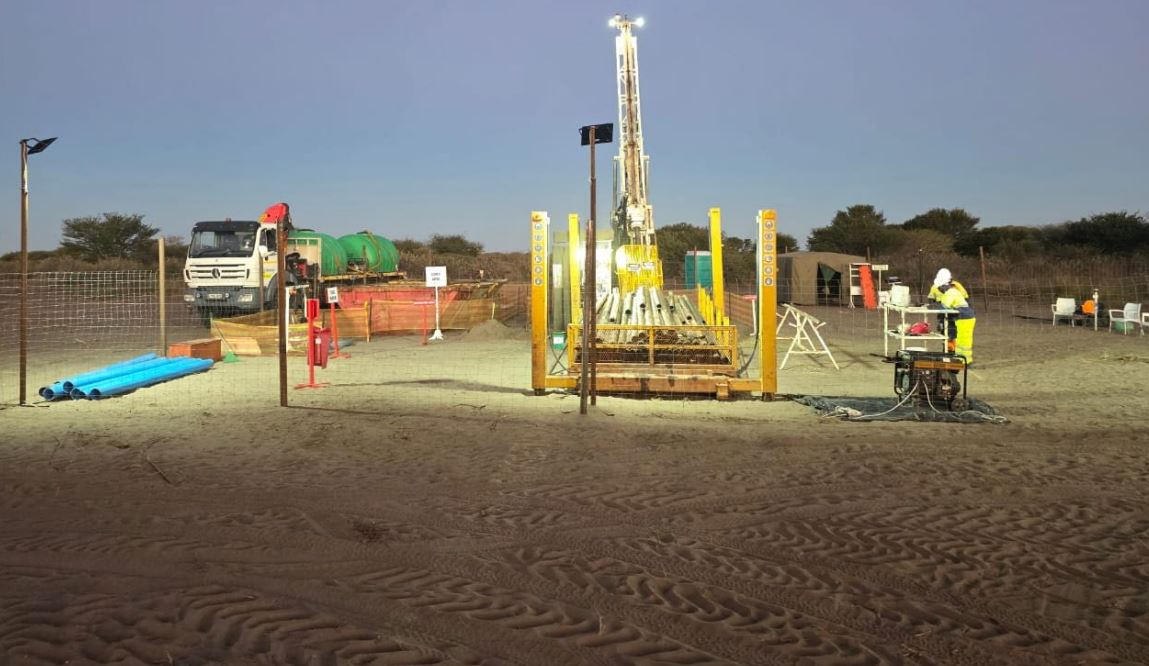
Diagnostic leach tests on historical samples from Head in February 2026 confirmed recoveries from the Pidinga formation. A composite grading 977 parts per million (ppm) total rare earth oxides (TREO) returned recoveries of 48% neodymium, 47% praseodymium, 52% dysprosium, and 54% terbium. Two sonic core rigs began a resource-definition program across Boland and Head in March 2026, designed to generate the geological, assay, particle-size, permeability, acid-generation, and metallurgical data for a maiden mineral resource estimate (MRE) and a subsequent economic assessment. The program finished in May 2026 with 74 holes drilled for approximately 3,200 meters (m).
Initial results announced in June 2026 defined a high-grade mineralized flank at Head over approximately 5 kilometers (km), open to the north and south. Intersections included 5.95 m at 1,232 ppm TREO from 27.8 m, including 1.45 m at 4,186 ppm TREO, and 2.17 m at 1,783 ppm TREO from 30.4 m. Initial net acid production potential results indicate that acid generation exceeds acid consumption in parts of the mineralized system. Particle-size analysis supported favorable estimates of transmissivity, a measure of how readily solution moves through the host sediments.
Manna Hill Copper Project
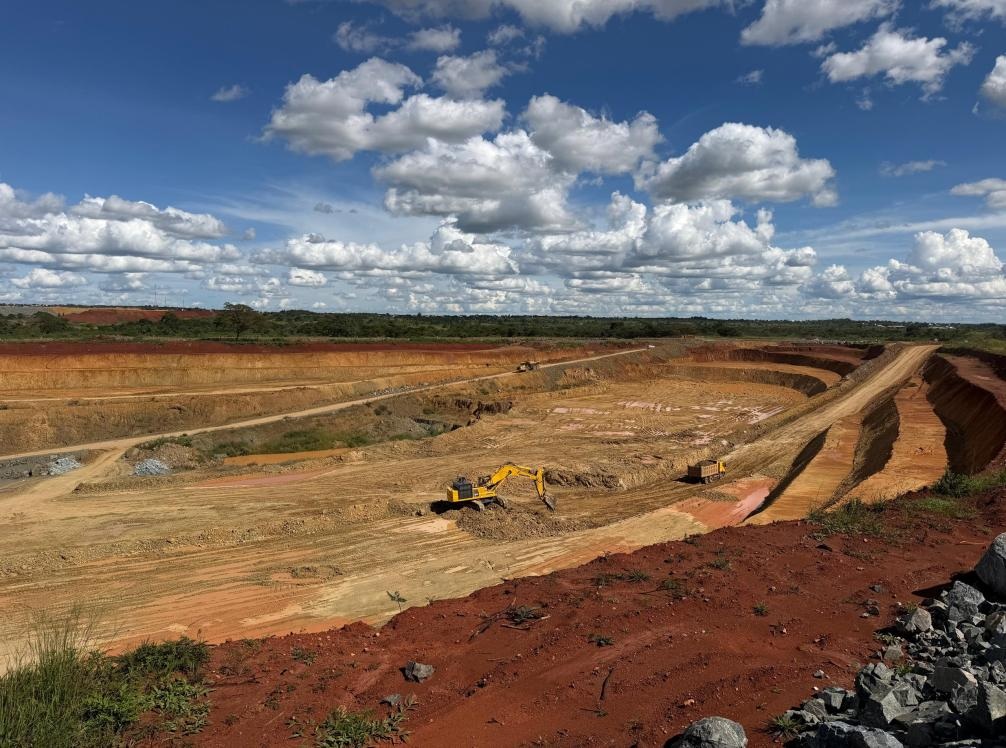
An induced polarization survey at Blue Rose in January 2026 defined the Black Baccara and Neptune Rose targets and strengthened the interpretation of a copper-gold skarn and porphyry system. The survey passes an electrical current through the ground to map sulfide-bearing rock. The company then completed an initial reverse circulation drilling program that returned broad, shallow, high-grade copper intersections over a substantial strike length, which took Blue Rose from a prospect to a discovery.
Results included 74 m at 1.02% copper and 0.25 grams per metric ton (g/t) gold from 70 m, and 62 m at 1.00% copper and 0.08 g/t gold from 62 m, including 30 m at 1.56% copper and 0.14 g/t gold. Drilling also returned 86 m at 0.60% copper and 0.14 g/t gold from 18 m, and 20 m at 0.78% copper and 0.13 g/t gold from 38 m. Molybdenum mineralization and the position of the skarn relative to a central geophysical anomaly supported follow-up diamond drilling.
Chairman of Cobra Resources, Andrew Michelmore, links the copper results at Blue Rose to the two decisions that followed them:
"H1 2026 was a period of material technical progress across both of Cobra's core projects. At Manna Hill, our first drilling program confirmed broad, shallow, and high-grade copper mineralization at Blue Rose and provided the confidence to advance diamond drilling and exercise the acquisition option."
Diamond drilling began in May 2026 to test depth extensions and the interpreted porphyry source. After the period ended, the company completed 4 diamond holes for 1,465 m and formally exercised its option to acquire Manna Hill. Geological observations included bornite, a copper-iron sulfide mineral, associated with potassium-enriched alteration; multiple zones of the copper mineral chalcopyrite; sulfide mineralization extending to depth; and a substantial anhydrite breccia interpreted as a pathway for porphyry fluids. Assays are pending.
Board & Team Changes
Inaugural Chair of Cobra Resources, Greg Hancock, retired during the period, and Michelmore was appointed Non-Executive Chair. The company made further senior finance, technical, and exploration appointments after the period ended.
Financial Review
Cobra Resources reported an unaudited operating loss of £1,913,067 for the six months ended June 30, 2026, equal to a loss per share of £0.0022. That compares with a loss of £448,128, or £0.0006 per share, for the six months ended June 30, 2025, and reflects an increase in operational activity compared with the same period a year earlier. The company held cash of £4,021,223 as of June 30, 2026, up from £841,842 a year earlier, sufficient to execute its planned exploration activities.
The combined carrying value of the company's Barton Gold shares and shares receivable decreased from £4.21 million at December 31, 2025, to £2.70 million at June 30, 2026. The fixed number of shares contractually receivable at final settlement decreased in value from £3.53 million to £2.26 million and produced a £1.40 million fair value loss in profit or loss. The issued shares decreased in value from £0.67 million to £0.43 million and produced a £0.26 million loss in other comprehensive income, which reduced the equity revaluation reserve to £0.02 million.
Next Steps
The company's priorities for the remainder of 2026 are to complete the Wudinna MRE and an economic assessment through a scoping study, progress approvals for small-scale production, evaluate the Manna Hill diamond assays, and carry out follow-up drilling to extend the Blue Rose discovery and test further porphyry and skarn targets. ERM was engaged after the period end to run the MRE, and the hydrological assessment showed favorable parameters across the drilled area to support ISR.
Metallurgical work with ANSTO covers radionuclide management, recovery assessment across a broader resource area, and process trials. Permitting and preliminary engineering also advanced for a small-scale ISR production demonstration at the existing Boland wellfield, which pairs field recovery with downstream processing and is targeted to produce commercial quantities of mixed rare earth oxides for offtake discussions in the first half of 2027.
FAQs (AI-Generated)
Analyst's Notes





Subscribe to Our Channel








Stay Informed






















