




Amex Exploration Reports Latest Grade Control Drill Results at Champagne Zone as Phase 1 Feasibility Study Nears Completion



Amex Exploration's Champagne Zone grade control drilling returns up to 233.96 g/t gold over 1.00 m, as the Phase 1 feasibility study targets delivery by end of Q1 2026.
- Drill hole PE-26-894 intersected 110.05 g/t gold over 2.15 m, including 233.96 g/t gold over 1.00 m, at approximately 145 m vertical depth in the western Champagne Zone
- A second hole, PE-21-371W1, returned 52.36 g/t gold over 0.50 m at roughly 130 m depth, with visible gold observed in multiple holes still awaiting laboratory results
- Drill spacing is being reduced from 12-20 metres to approximately 5-10 metres to validate the existing block model and support mine planning for the bulk sample
- Tighter drill spacing is intended to support the upgrade of indicated resources to measured resources, the highest level of geological confidence under Canadian NI 43-101 standards
- The Phase 1 feasibility study remains on schedule for release by the end of Q1 2026, centred on toll milling economics
Amex Exploration Inc. (TSXV: AMX | FSE: MX0 | OTCQX: AMXEF) is a Montreal-based junior gold developer advancing its 100%-owned Perron Gold Project in Quebec, located approximately 110 km north of Rouyn-Noranda. The project spans 183 contiguous claims covering 65.75 km2 and hosts both high-grade and bulk-tonnage gold mineralisation alongside copper-rich volcanogenic massive sulphide zones. When combined with the adjacent Perron West and Abbotsford-Hepburn projects in Ontario, Amex's consolidated land package totals 501.08 km2 within a greenstone belt. The project has year-round road access, is 30 minutes from an airport, and sits approximately 6.5 km from the Town of Normétal, in close proximity to several process plants owned by major gold producers.
High-Grade Bulk Sample Grade Control Drill Results Including 110.05 g/t Au Over 2.15 m and 233.96 g/t Au Over 1.00 m, With Visible Gold Regularly Observed
Amex's ongoing grade control drill programme at the Champagne Zone has returned results that the company says support the continuity of high-grade mineralisation within the zone. Drill hole PE-26-894 returned 110.05 g/t gold and 7.20 g/t silver over 2.15 m at approximately 145 m vertical depth, including a 1.00 m interval grading 233.96 g/t gold and 14.90 g/t silver. A second hole, PE-21-371W1, returned 52.36 g/t gold over 0.50 m at approximately 130 m depth.
Aaron Stone, VP Exploration of Amex Exploration, commented:
"Today's results once again display the robustness and continuity of high-grade mineralization within the Champagne Zone and the overall accuracy of our existing block model. Based on last year's Preliminary Economic Assessment, the economics of this zone are impressive at a range of gold prices."
Beyond assay results, geologists are consistently observing visible gold in drill core from holes not yet submitted for laboratory analysis. Visible gold refers to gold particles identifiable with the naked eye in rock samples. Directional drilling technology is being used to ensure targets are intersected with precision, improving the reliability of data collected as part of the programme. Remaining samples are currently being processed at the laboratory, and the company has indicated it will announce further results once received, compiled, and quality-control validation is complete.
Drill Spacing Being Reduced to 5-10 Metres to Validate Block Model and Upgrade Indicated to Measured Resources for Planned Bulk Sample
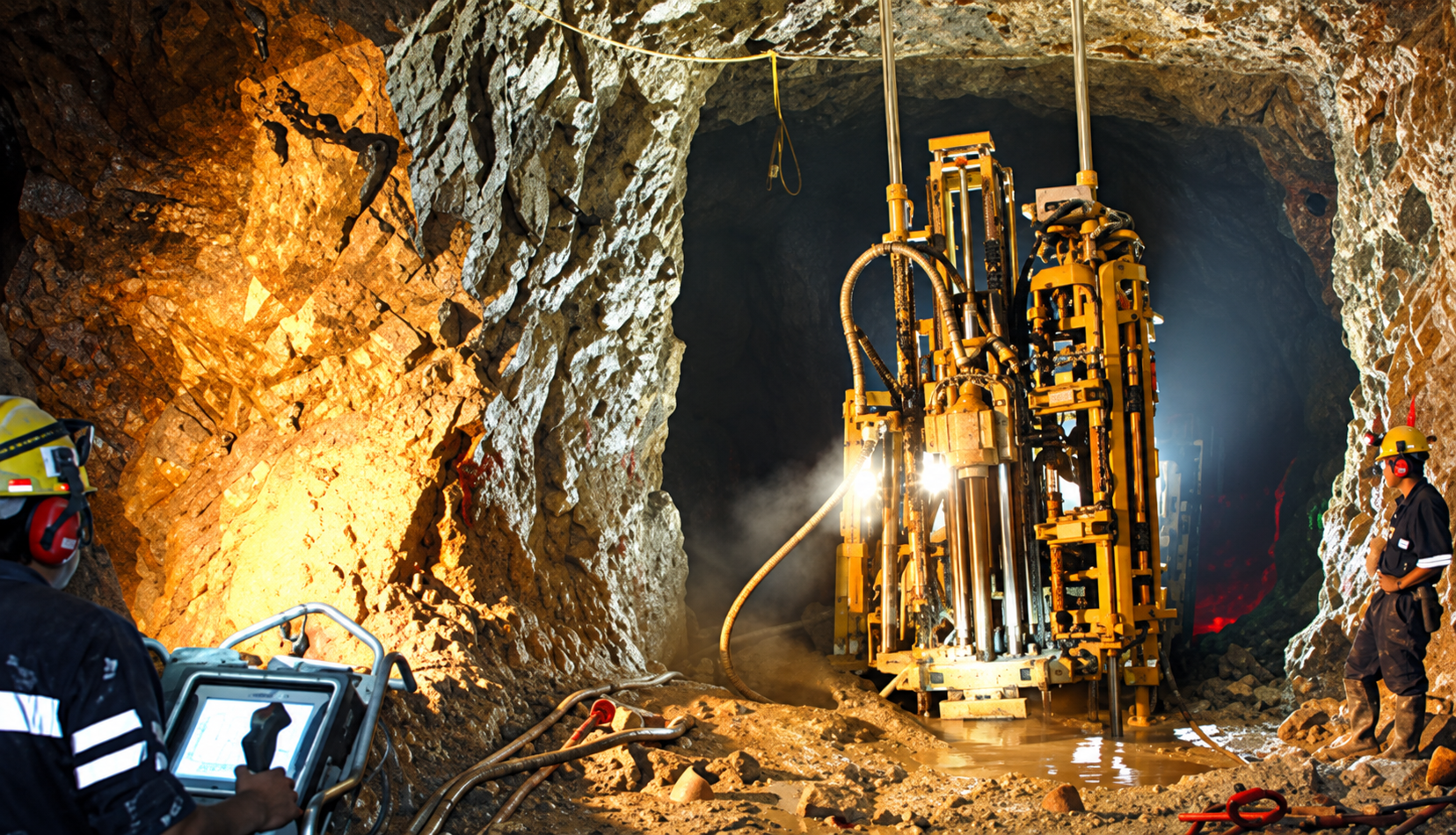
A grade control drill programme differs from standard exploration drilling in that it maps ore and waste boundaries at close intervals to define precisely what will be extracted during mining. Amex is applying this approach to the stopes, the specific sections of rock selected for extraction, planned for its upcoming bulk sample at the Champagne Zone.
Prior to this programme, drill spacing in the bulk sample area ranged from 12 to 20 metres, sufficient to classify the relevant ounces as indicated resources within the existing model. Reducing spacing to approximately 5-10 metres is intended to support the upgrade of those indicated resources to measured resources, the highest classification under the Canadian NI 43-101 standard. Measured resources reflect a level of certainty that is typically required for a bankable feasibility study.
Amex has noted that while individual holes may return grades above or below what the existing block model predicted, the overall model is performing well against the close-spaced verification drilling. This assumption will not be formally confirmed until block model remodelling begins, which is planned for once the grade control programme is complete and all quality-assurance checks are finalised.
Phase 1 Feasibility Study Advancing, On Track for End of Q1 2026, Targeting Toll Milling Economics
Running concurrently with the grade control programme is the Phase 1 feasibility study. A feasibility study is a technical and economic analysis used to determine whether a mining project can be developed profitably, and it is typically required before a major financing or construction decision. Amex's Phase 1 study is focused on the Champagne Zone and structured around a toll milling model, where ore extracted from Perron would be processed at a third-party facility.
Victor Cantore, President and CEO of Amex Exploration, stated:
"The feasibility study for Phase 1 is advancing well and remains on track for the end of Q1. We look forward to releasing the economics on the toll milling phase of the operation. The Champagne Zone is not only unique for its high-grade, but its near vertical geometry which facilitates underground mining in a very economic manner."
The Perron Project's proximity to several operating process plants in the region is a factor the company has highlighted in the context of the toll milling approach.
Outlook
Further assay results from the ongoing grade control programme are expected in the near term, with visible gold already logged in holes currently at the laboratory. Once the programme concludes, Amex plans to begin block model remodelling before proceeding with the bulk sample extraction. The Phase 1 feasibility study, targeted for the end of Q1 2026, represents the company's next scheduled milestone and will present the projected economics of toll milling operations at the Champagne Zone.
Analyst's Notes





Subscribe to Our Channel








Stay Informed






















