ATHA Energy Is Reducing Exploration Risk Through Geological Continuity


ATHA Energy's latest Angilak drill results strengthen geological continuity at Lac 50 and RIB North, reducing exploration risk and advancing the project's investment case.
- ATHA Energy's July 2026 drill results at Lac 50 Northwest and RIB North confirmed mineralisation continuity over 4 kilometres and 300 metres respectively, key evidence for de-risking the Angilak Uranium Project.
- The Lac 50 Northwest intercept, 4 kilometres from the nearest previously drilled mineralisation, converted that stretch of ground from geophysically inferred to drill-confirmed prospective.
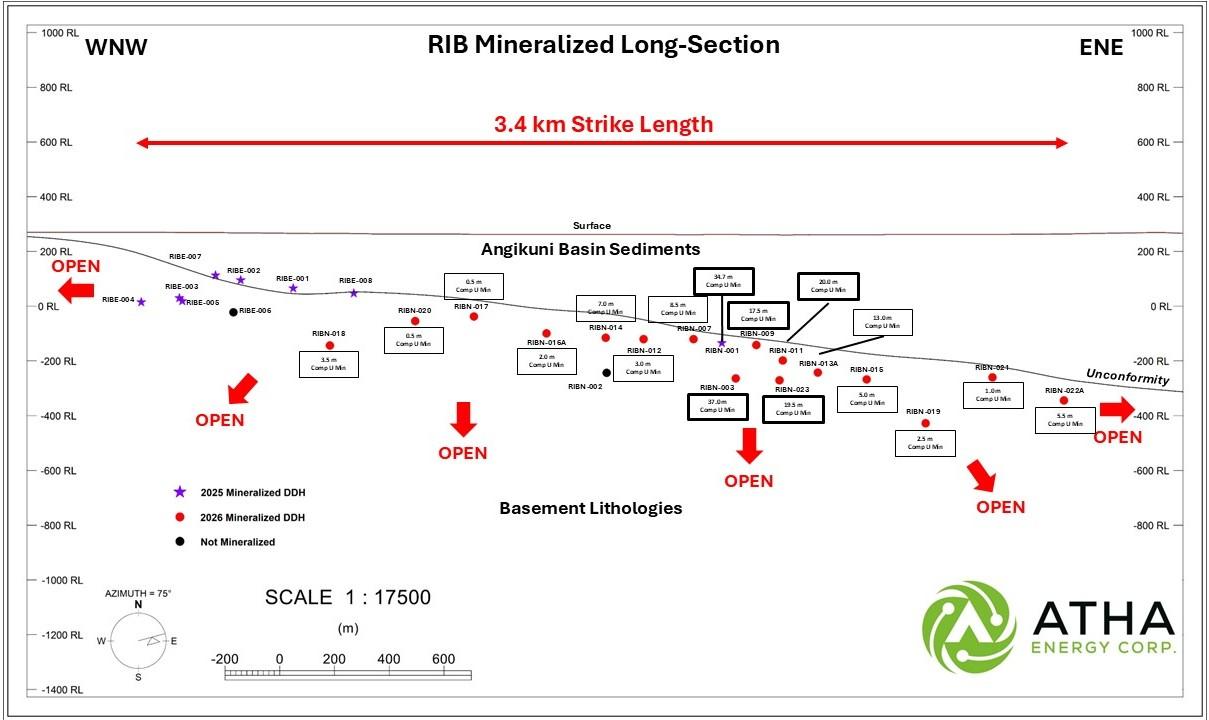
- At RIB North, 6 of 8 new holes intersected mineralisation, including a second, independently mineralised structure roughly 1 kilometre from the main discovery area.
- These results represent step-out drilling aimed at proving system-scale continuity, not a resource estimate, with delineation drilling targeted for 2027.
- The findings arrive against a backdrop of recent supply disruption at Cameco's Saskatchewan operations and management's view that resource-stage uranium assets with confirmed continuity remain scarce.
What Has Happened
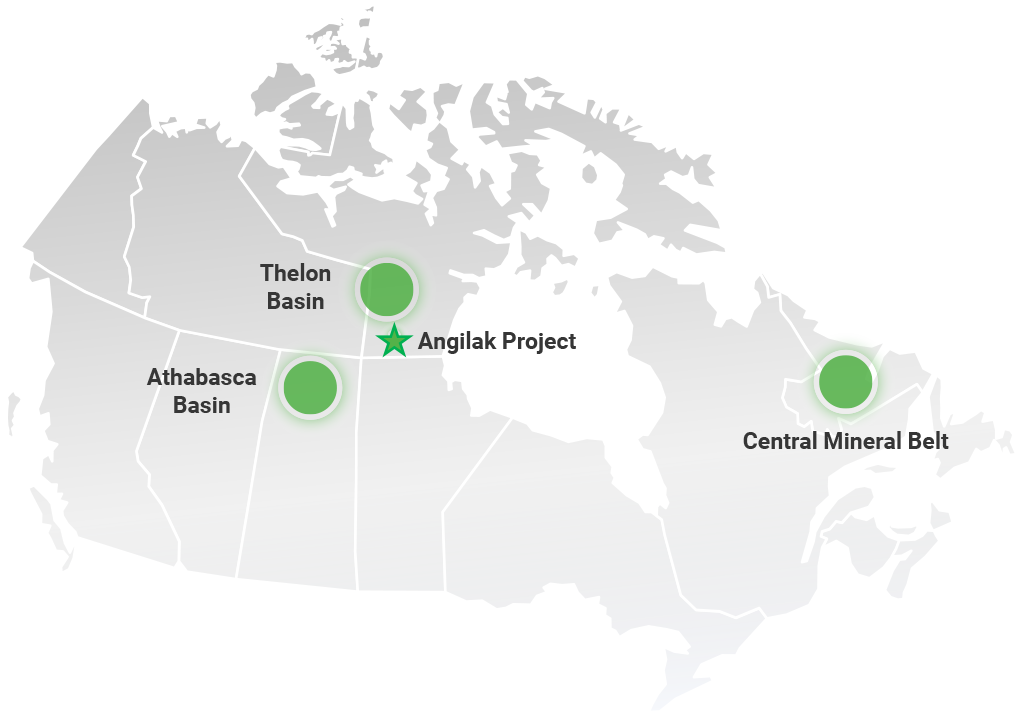
A drill hole 4 kilometres from the nearest known mineralisation either confirms a system or breaks it. At ATHA Energy Corp.'s (TSXV: SASK | FRA: X5U | OTCQX: SASKF) Angilak Uranium Project in Nunavut, two July 2026 results did the former, twice.
On July 8, 2026, ATHA reported a new discovery at Lac 50 Northwest, 4 kilometres along strike from the existing Lac 50 Deposit. On July 9, 2026, it reported the widest composite intercept yet at the RIB North Discovery, plus a second, independent mineralised structure roughly 1 kilometre away.
Both are part of the company's largest-ever drill campaign at Angilak, roughly 20,000 metres across 3 rigs. The headline numbers matter less than what they resolve: whether these systems are continuous enough to eventually carry a resource or are just scattered, disconnected hits. That distinction is the entire investment thesis behind exploration-stage drilling, and it is what these two releases were designed to test.
Why Continuity Is the Risk Metric That Matters
Every step-out hole tests the same thing: whether mineralisation continues beyond the discovery point or stops there.
That continuity, not grade or width, is what tells investors whether they're looking at one system or a series of isolated hits. Grade and width speak to potential economics; continuity speaks to whether the system is real. One high-grade intercept could be an anomaly. Mineralisation showing up again and again across spaced-out holes is harder to dismiss.
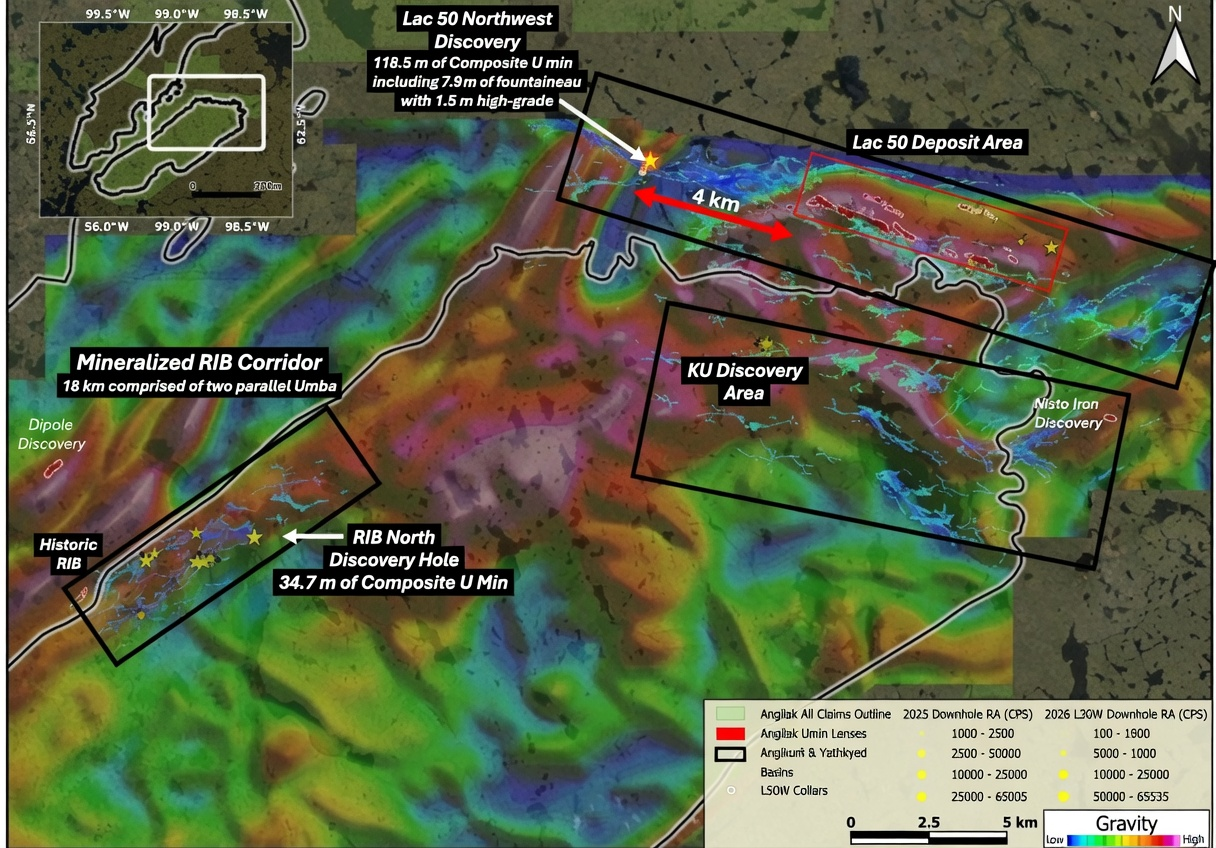
At Lac 50 Northwest, the latest hole intersected 11.5 metres of total composite uranium mineralisation over 5 zones, between 305.0 metres and 479.9 metres downhole, including 7.0 metres of continuous mineralisation averaging 7,974 counts per second (CPS) and 1.6 metres of high-grade material peaking at 40,162 CPS. The result matters because of its location, 4 kilometres from the nearest previously drilled mineralisation. That converts a 4-kilometre stretch of ground from geophysically inferred to drill-confirmed in a single hole.
At RIB North, a follow-up hole intersected 37.0 metres of total composite mineralisation across 15 zones between 541.7 metres and 652.0 metres, the widest at the discovery to date, and was targeted roughly 120 metres northwest of the maiden discovery hole. Step-out distance, not intercept width, is what confirms continuity here rather than a repeat of the same discovery point.
Lac 50 Northwest: Closing the Gap Between Model & Proof
Before this hole, ATHA's geophysical model and its drill record were two separate things. The 3D inversion model, built around a coincident gravity offset, suggested continuity along the Lac 50 trend, but only ground near the original deposit had actually been drilled. This intercept closes that gap over a 4-kilometre span.
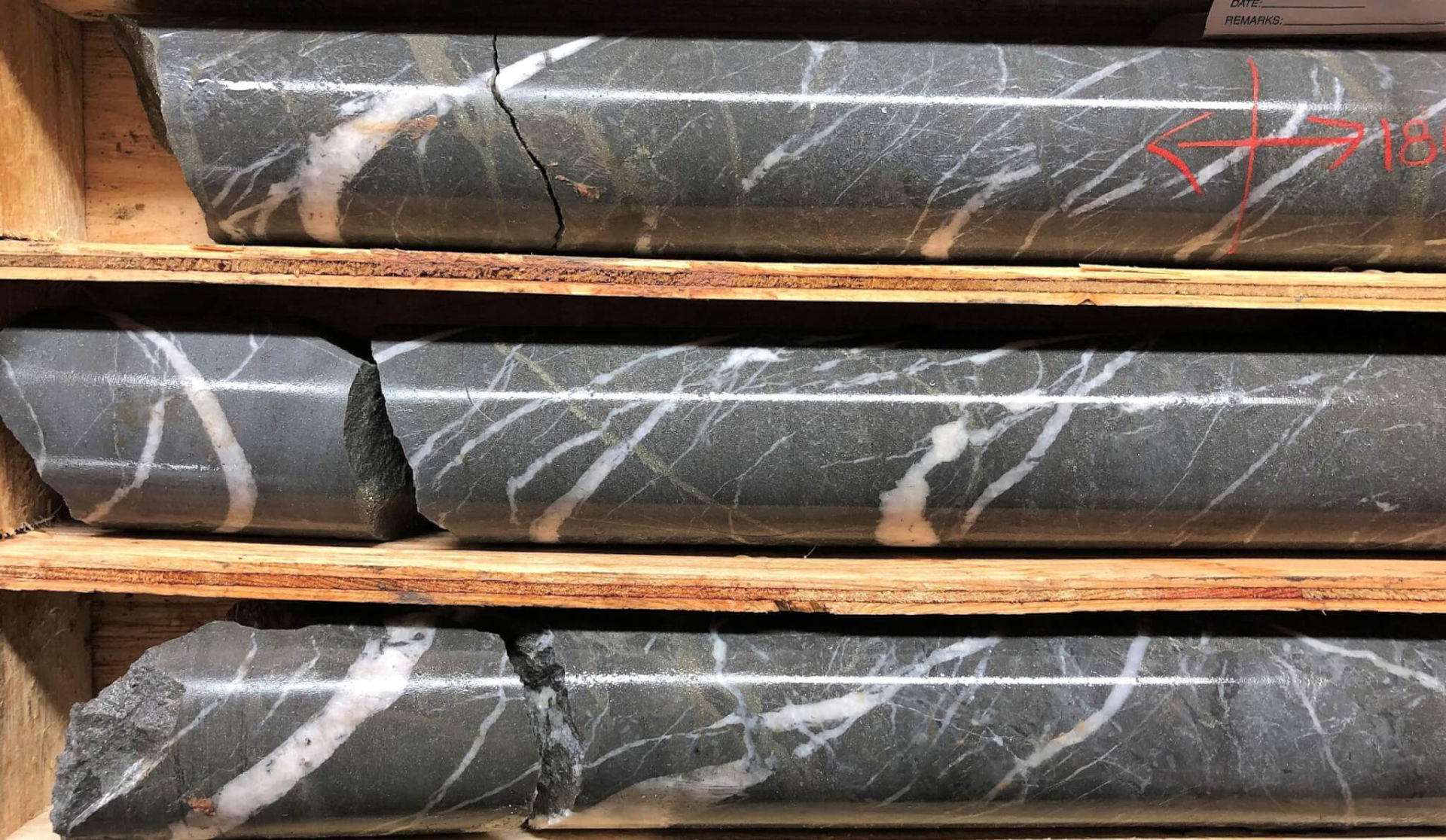
The mineralisation itself is basement-style, hosted in brecciated basalts with quartz-carbonite veining and albite-hematite alteration, mirroring styles seen in Athabasca Basin basement deposits. It is ATHA's sixth regional discovery outside the Lac 50 Deposit area in 15 months.
In an earlier interview, Troy Boisjoli, Chief Executive Officer and Director of ATHA Energy, noted that a re-run of the inversion process after this year's RIB drilling extended the known Lac 50 structure well beyond earlier estimates, out to roughly 21 kilometres along strike, though only the area around the original deposit had been drill-tested at that point. Closing that gap, kilometre by kilometre, is what the rest of the 2026 program is built to do.
RIB North: Ruling Out an Isolated Hit
Of the holes drilled this year at RIB North, 6 of the first 8 intersected uranium mineralisation, a hit rate that alone lowers the odds the system is discontinuous. A follow-up hole intersected 14.0 metres of composite mineralisation across 9 zones on a newly identified secondary east-west structure, roughly 1 kilometre from the main discovery, including two high-grade zones peaking at 11,798 CPS and 11,725 CPS. A second, differently oriented structure carrying mineralisation independently is stronger evidence of a system than a single high-grade zone would be.
A further hole, still being drilled at the time of disclosure, had already returned 17.5 metres of composite mineralisation across 6 zones, including a 14.5-metre continuous interval. The discovery remains open in all directions, and the risk being tested, whether the system eventually terminates, is not yet resolved either way.
None of this amounts to a resource estimate, and ATHA has not published one for either area. What these step-outs confirm is that discovery risk can be retired one hole at a time, narrowing the ground the company will eventually need to cover once it moves to the costlier drilling required for resource definition.
Boisjoli tied both releases to system-scale confidence rather than isolated news:
"Successfully outlining continuity of mineralisation over significant step-outs speaks to the scale of the system we are exploring, along with our technical team's exceptional ability to execute."
Broader Context: Scarcity Raises the Value of De-Risked Ground
Cameco temporarily halted production at the Key Lake mill and reduced activity at McArthur River in May 2026 after flooding caused the partial collapse of the Smoothstone River Bridge, the primary route supplying both sites in northern Saskatchewan.
Boisjoli linked that event to a wider point about where sector risk now sits.
"The supply side fragility in uranium is real, and it's something that can't be ignored."
Management has also pointed to a thin exploration pipeline behind existing producers, with few resource-stage assets converting geophysical targets into repeatable, continuous drill results. That scarcity is what makes Angilak's two now-continuous discovery zones, confirmed over 4 kilometres at Lac 50 Northwest and 300 metres at RIB North, relevant beyond the project itself, since comparable, de-risked, resource-stage uranium assets are uncommon in this market.
What to Watch Next
Investors should watch for assay results to follow the radiometric data already released, which will confirm grade along intervals so far defined only by downhole probe. Further step-out drilling at both Lac 50 Northwest and RIB North will show whether continuity continues beyond the 4 kilometres and 300 metres already confirmed, or whether the systems begin to narrow. The Angikuni Basin aerial geophysical survey, scheduled to begin in early July, is expected to produce a 3D inversion model by the Fourth Quarter of 2026, which should generate the next set of drill targets against which the company's methodology will again be tested. Longer-term, a shift toward delineation-style drilling, which management has flagged for 2027, would mark the point at which de-risked continuity begins to convert into a quantified resource, the next stage in reducing the project's overall risk profile.
FAQs (AI-Generated)
Analyst's Notes





Subscribe to Our Channel






Stay Informed