Uranium's New Challenge Is Finding Supply, Not Demand


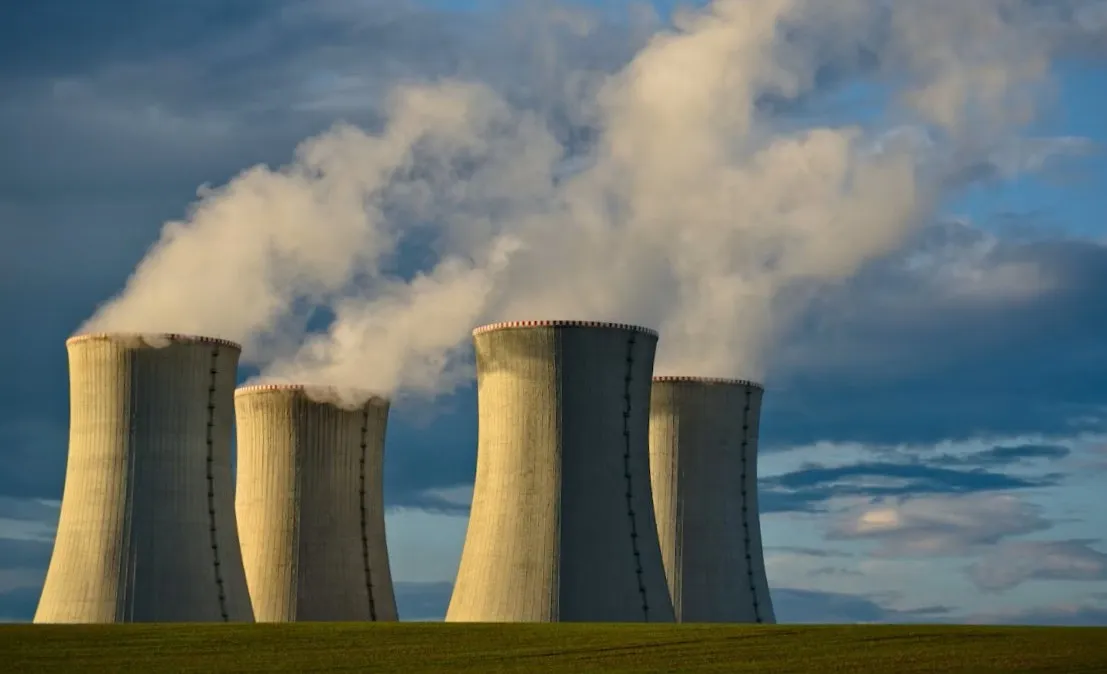
Uranium's key risk is shifting from demand to supply as thin project pipelines, mine disruptions, and rising nuclear growth drive exploration urgency.
- A seasonal flooding event in Saskatchewan forced Cameco to temporarily halt operations at Key Lake and reduce activity at McArthur River, exposing the fragility of a global supply base concentrated in a small number of world-class assets.
- Demand uncertainty, which defined uranium's bear case for decades, has largely been resolved: the US, China, and most industrialised nations are actively expanding nuclear capacity, shifting the sector's primary risk squarely to the supply side.
- The uranium development pipeline is structurally thin, with few resource-stage companies positioned to fill the supply deficit projected toward the end of the decade and into the 2030s.
- ATHA Energy controls 6.8 million cumulative prospective exploration acres across Canada's top uranium basins, including 100% of the Angikuni Basin in Nunavut, where 2024 and 2025 drilling returned uranium mineralisation in 100% of the targets tested.
- ATHA's 2026 Angilak Exploration Program, fully funded following a C$63 million financing, will deploy 3 drill rigs to complete approximately 20,000 metres of drilling through September, targeting continuity of mineralisation across 3 defined corridors as a precursor to formal delineation work.
When Seasonal Weather Becomes a Market Event
The uranium market has spent years navigating the consequences of suppressed demand: idled mines, mothballed projects, and a generation of junior explorers forced to survive on minimal capital in a commodity cycle that offered little reward. That chapter is closing. What has replaced it is a materially different problem, one that the sector is only beginning to confront fully. The question is no longer whether the world wants nuclear power. The question is whether the ground can deliver enough uranium to feed it.
That shift is showing up in production vulnerabilities previously dismissed as manageable operational risk. Cameco temporarily halted operations at the Key Lake mill and reduced activity at McArthur River following a flooding event and ice buildup on the Modstone River Bridge in Saskatchewan. A seasonal weather event was sufficient to threaten output from one of the world's largest uranium production complexes.
The McArthur River Key Lake operation and Cigar Lake produce between 15 and 18 million pounds of uranium per year, representing a significant portion of global supply. That concentration, once framed as an advantage because it placed tier-1 production in a stable jurisdiction, is now also a source of fragility. For investors tracking the uranium cycle, the episode crystallised a structural reality the sector has been slow to price.
Demand Is No Longer the Variable
For most of uranium's modern history, the dominant risk in the sector was demand. Post-1980, and more acutely after the Fukushima event in 2011, uncertainty over nuclear power's long-term role kept a ceiling on uranium prices and suppressed development capital for years. That calculus has shifted decisively.
Every major industrialised economy is currently reassessing its energy security, with nuclear a central part of that reassessment. The US administration has been active in supporting domestic nuclear development. China is deploying nuclear capacity at a pace that commands attention on its own. Beyond those 2 anchors, the broader policy environment has shifted toward treating nuclear as a firm-capacity solution rather than a legacy technology.
ATHA Energy Corp. (TSX.V: SASK | FRA: X5U | OTCQB: SASKF) is among the uranium exploration companies building directly into this supply-side thesis. Chief Executive Officer and Director, Troy Boisjoli, frames the transition in terms of where risk now sits within the market:
"The risk has transitioned from demand-side risk, where historically you would think about post-1980, ‘where is the demand coming from?’, and now we're in a fundamentally different market where the risk, in my view, is fundamentally on the supply side."
That repositioning of risk has direct consequences for how capital should be allocated across the uranium investment spectrum. The constraint on value creation has migrated upstream, toward the exploration and development projects that must eventually feed a production deficit the industry can see building toward the end of the decade and into the 2030s.
The Pipeline Problem
In most commodity cycles, a tightening supply picture triggers capital flows into exploration and development, eventually producing new mines and restoring balance. In uranium, that mechanism faces a structural complication: the development pipeline is unusually thin.
The sector's project pipeline reflects years of underinvestment during the prolonged price downturn. Companies that survived the lean years did so by preserving cash, not by drilling. The result is a landscape in which tier-1 producers are identifiable, a handful of development-stage assets are known, and the resource-stage pipeline that would normally populate the lower end of the development funnel is sparse.
Boisjoli describes the structural gap directly:
"In uranium, more than other commodities, you have a lack of emerging projects. The development-stage companies we know about, the resource-stage companies, are few and far between. And that's core to our workflow, core to our investment strategy, and core to our investment thesis at ATHA."
For a sector where mine lead times can extend across a decade, the absence of advanced-stage projects today translates directly into supply constraints in the early 2030s. Discoveries made now and advanced efficiently represent the only credible path to closing a supply gap that existing producers cannot fill on their own.
Canada's Jurisdictional Advantage & the Exploration Imperative
Canada is home to 2 of the world's highest-grade uranium districts: the Athabasca Basin in Saskatchewan and a series of prospective basins farther north that remain underexplored. ATHA's exploration footprint also extends into the Thelon Basin and the Angikuni Basin in Nunavut, where systematic modern exploration is still in its early stages.
ATHA has assembled a land package of 6.8 million cumulative prospective exploration acres across Canada's most prominent uranium basins, including 100% control of the Angikuni Basin. The company's flagship Angilak Uranium Project in Nunavut sits between the Athabasca and Thelon Basins, in a geological setting that exploration work has now confirmed shares structural characteristics with producing Athabasca Basin deposits.
Over the 2024 and 2025 field seasons, ATHA drilled approximately 22,000 metres across widely spaced targets at Angilak, with no drilling directed into the existing Lac 50 deposit. Every target tested returned uranium mineralisation. In 2025, the campaign made 5 new regional discoveries within the Angikuni Basin, including the Mineralised RIB Corridor, where the maiden hole at RIB North returned 34.7 metres of composite uranium mineralisation with grades up to 8.16% uranium oxide over 0.5 metres. The Lac 50 deposit area carries an exploration target of 61 to 98 million pounds of uranium, and updated 3D inversion modelling has identified a structural strike length of 21 kilometres along the Lac 50 trend, of which only the deposit area proper has been tested by drilling.
2026: Building the Continuity Case
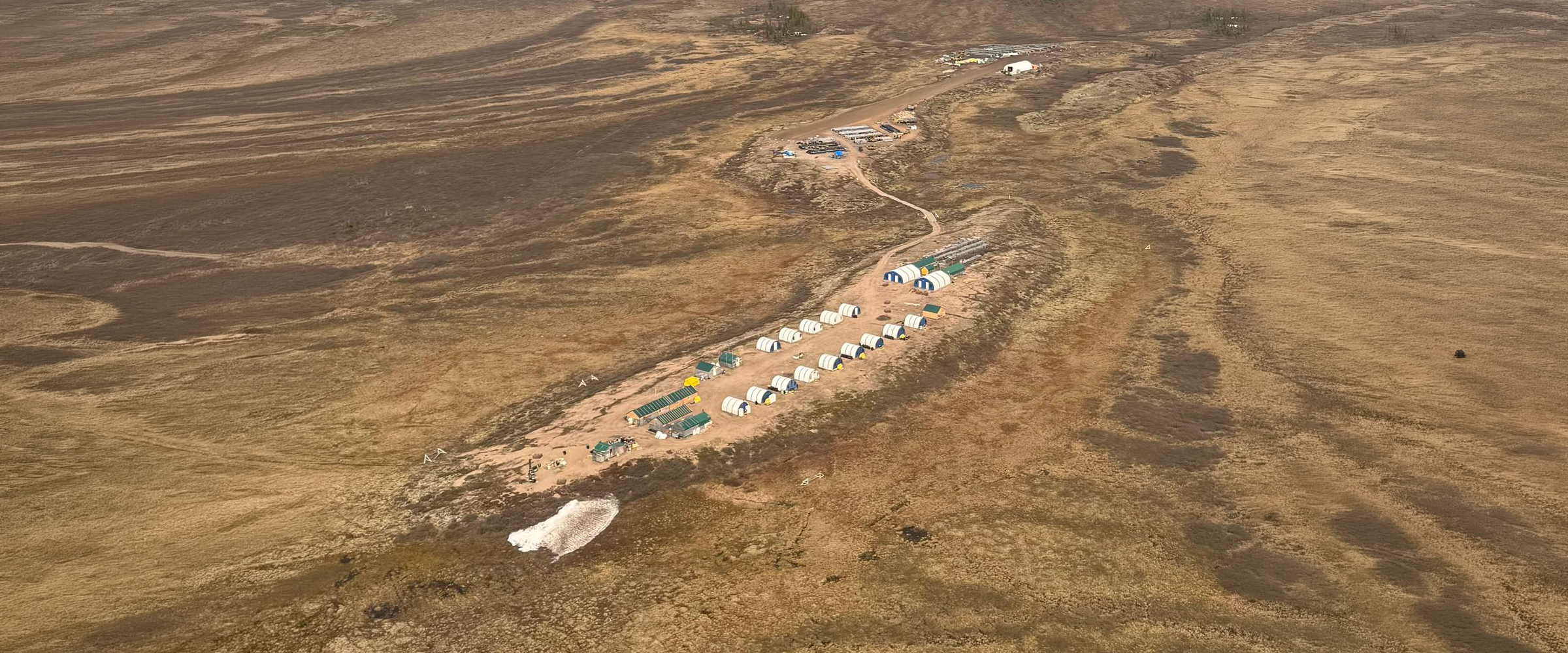
The 2026 Angilak Exploration Program commenced diamond drilling on May 1, 2026, and is the largest to date on the project. 3 drill rigs are scheduled to complete approximately 20,000 metres through to the end of September.
Drilling is focused across 3 defined mineralised corridors: the Mineralised RIB Corridor, targeting additional discovery and expansion; the Lac 50 Deposit Corridor, testing strike extensions identified through 3D inversion modelling; and the KU-Nine Iron Corridor, testing targets that vector directly from 2025 uranium intersections. The program also includes an aerial Magnetotelluric (MMT) electromagnetic survey across the full Angikuni Basin, scheduled to commence at the end of June, with 3D inversion modelling targeted for completion by the Fourth Quarter of 2026.
The program is fully funded following the February 2026 closing of a C$63 million financing, positioning ATHA among the best-capitalised uranium exploration companies globally at a time when exploration capital is a meaningful constraint for most junior companies in the sector.
Supply Scarcity as the Defining Constraint
The uranium sector is entering a period in which supply scarcity, rather than demand uncertainty, will determine how value is distributed across the investment spectrum. Existing tier-1 producers are operating at or near capacity in a jurisdiction where even seasonal weather events can cause material disruptions to output.
The development pipeline that would normally absorb demand growth is structurally thin, and new projects require years of exploration, delineation, permitting, and construction before they contribute to global supply. That structural reality concentrates value in 2 places: the producers whose assets are operating today, and the exploration companies whose discoveries represent the only credible source of future supply.
A recent disruption at McArthur River and Key Lake was a reminder that even the most reliable production assets carry operational risk. The longer-term question for the sector is whether the exploration pipeline being built today across Canada's most prospective uranium basins will be sufficient to replace and expand supply in the timeframe the market requires.
FAQs (AI-Generated)
Analyst's Notes





Subscribe to Our Channel










Stay Informed