ATHA Energy Advances District-Scale Uranium Discovery


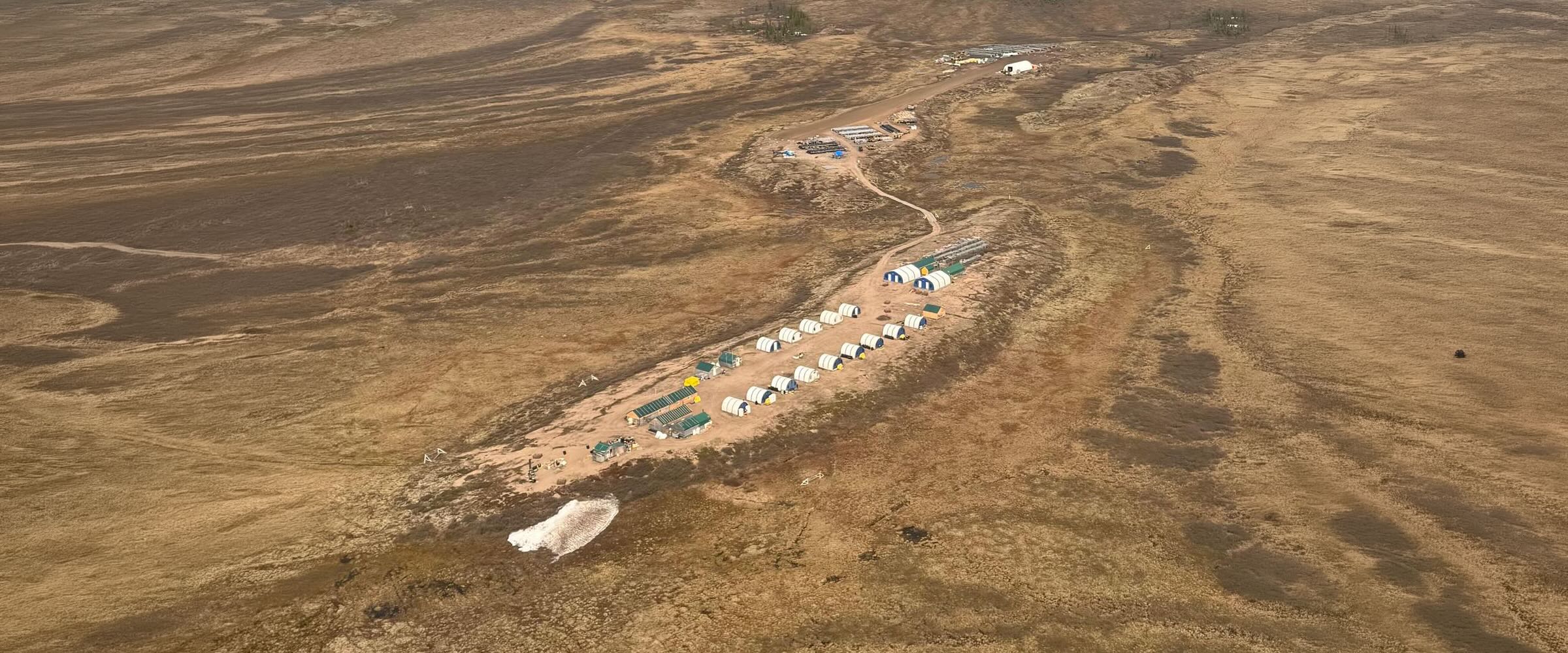
ATHA Energy CEO Troy Boisjoli details 2026 drill results at the Angilak uranium project, mapping district-scale potential across the Lac 50 and RIB corridors.
- ATHA Energy CEO Troy Boisjoli outlined the company's 2026 exploration campaign at the Angilak Uranium Project in Nunavut, describing three drill rigs currently testing mineralization across the Lac 50 and RIB corridors.
- A four-kilometre step-out drill hole at Lac 50 West returned 11.5 metres of composite uranium mineralization, including 7.0 metres of continuous mineralization averaging 7,974 counts per second, extending the known mineralized trend along a 21-kilometre corridor.
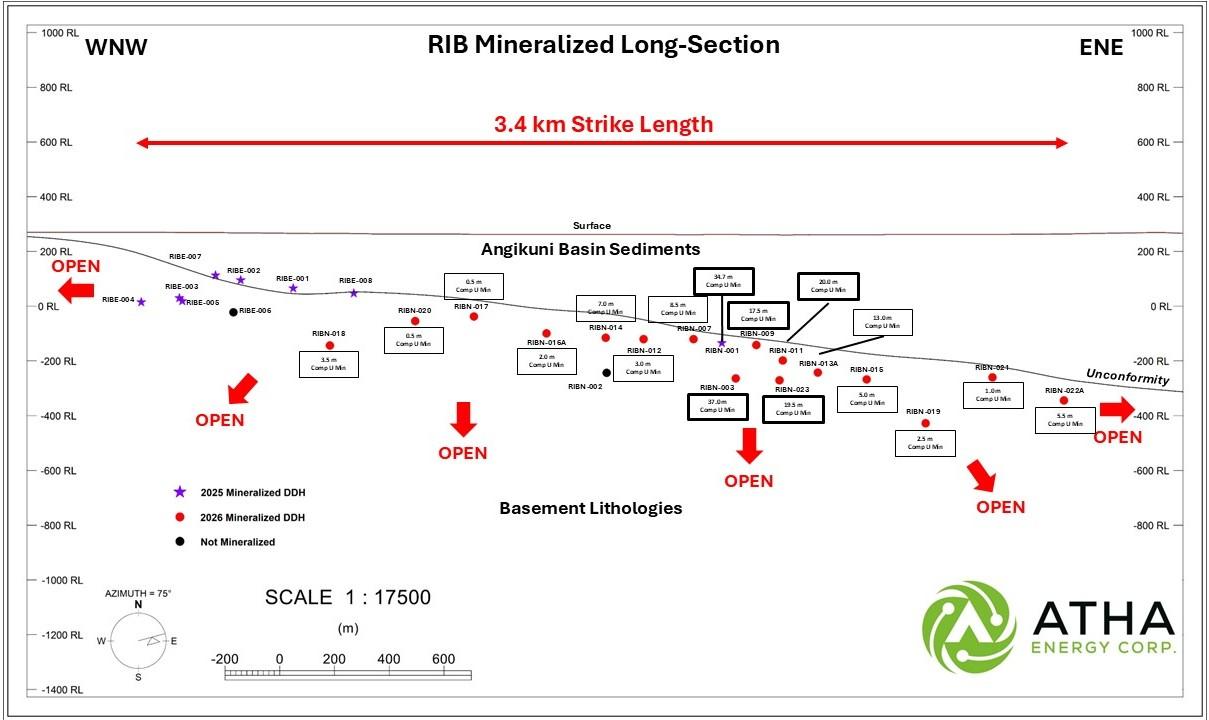
- Early 2026 results from the RIB area, including a 37-metre composite uranium mineralization intersection, are building on the 18-kilometre Mineralized RIB Corridor discovered during the 2025 program.
- ATHA's strategy for 2026 emphasises establishing continuity of mineralization across widely spaced drill holes, with delineation-style infill drilling expected to follow in 2027 if results continue to track as planned.
- The company raised $63 million in the first quarter of 2026, led by Queens Road Capital, providing what management describes as at least a 24-month runway to fund the 20,000-metre drill program.
Introduction to ATHA Energy
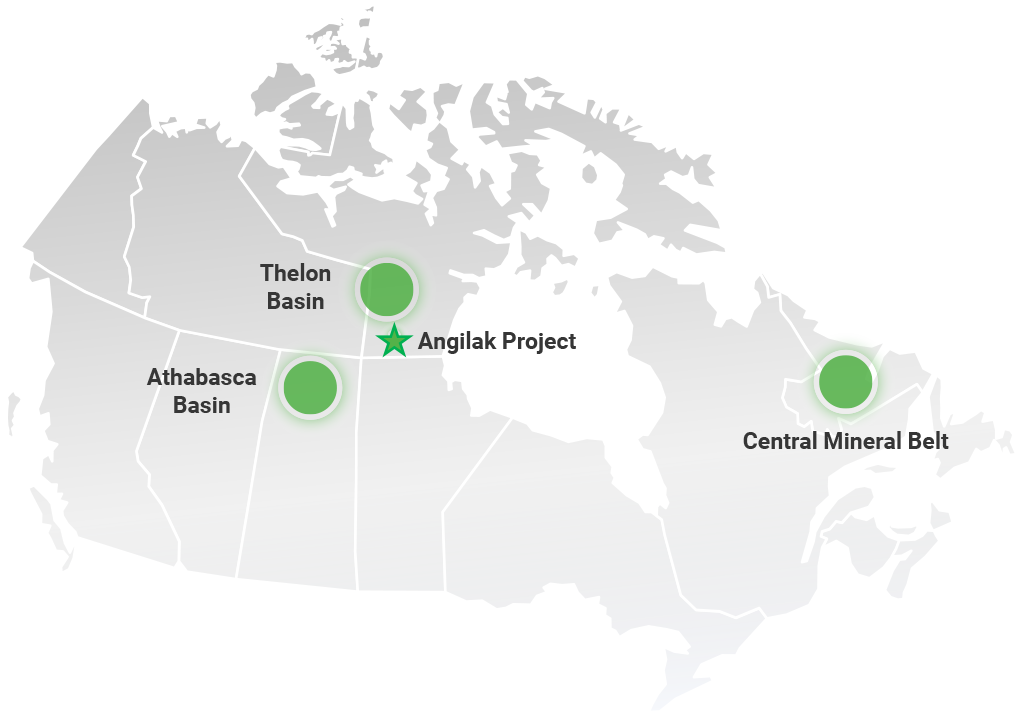
ATHA Energy Corp. (TSXV: SASK; FRA: X5U; OTCQX: SASKF) is a Canadian uranium exploration company that describes itself as focused on the best uranium jurisdictions in the country. Its flagship asset is the Angilak Uranium Project, located within the Angikuni and Yathkyed Basins in Nunavut, an area the company holds on a 100% owned basis. ATHA also controls a broader portfolio spanning roughly three million acres of exploration ground across the Athabasca Basin, the Thelon Basin, and the Central Mineral Belt project in Labrador.
CEO Troy Boisjoli set out the scope of the company's 2026 program at Angilak, where three drill rigs are currently active across two focus areas: the Lac 50 Deposit Corridor and the Mineralized RIB Corridor (MRC). The conversation followed a recent press release detailing new drill results from both areas. Boisjoli noted:
"There's lots going on. Three drills turning in mineralization right now in two to three different areas, which is exciting."
The Angilak project sits within a region the company frames as a district-scale opportunity, with three named structural corridors, the Lac 50 Deposit Corridor, the MRC, and the KU-Nine-Iron Corridor, together spanning more than 50 kilometres of prospective strike.
Interview with Chief Executive Officer, Troy Boisjoli
Exploring Lac 50: Drilling Success & Geological Insights
The Lac 50 Deposit Corridor extends approximately 21 kilometres, hosting the Lac 50 Deposit itself, which the company describes as one of the largest high-grade uranium deposits in Canada outside the Athabasca Basin. According to the company's presentation materials, only around 24% of the corridor has been drill tested to date. Boisjoli explained that a 3D inversion model, built using geophysical data including gravity and electromagnetic surveys, identified the corridor as a much longer conductive structure than previously understood, prompting the company to step out four kilometres from the western edge of the known Lac 50 deposit area.
That step-out drilling produced a notable result. Hole L50W-DD-002 intersected 11.5 metres of composite uranium mineralization across five zones between 305.0 and 479.9 metres depth, including 7.0 metres of continuous mineralization averaging 7,974 counts per second, and 1.6 metres of high-grade mineralization with maximum radioactivity of 40,162 counts per second, based on downhole gamma probe data. Boisjoli stated:
"It is a big step out, and we consider that entire structure to be prospective to host uranium mineralization, which I think is a pretty big differentiating point."
Boisjoli noted that the confidence to test such a wide step-out came from a combination of data sets rather than any single indicator, including multi-level geophysics, geochemistry, and structural geology work, layered against the exploration model that had previously succeeded in the RIB area. Company materials describe a conceptual exploration target range at Lac 50 of 60.8 million to 98.2 million pounds at an average grade range of 0.37% to 0.48%; this figure is explicitly labelled as conceptual in nature, and the company cautions that there has been insufficient exploration to define a mineral resource and it remains uncertain whether further exploration will result in a resource being delineated.
District Scale Potential: Strategy & Objectives
Rather than pursuing a conventional discovery-to-infill sequence, Boisjoli described ATHA's approach as working from the outside in: first outlining the scale of a mineralized system with widely spaced holes, then infilling with confidence once the system's boundaries are better understood. He contrasted this with the more typical Athabasca Basin model of discrete deposits spaced kilometres apart along a structural trend, sometimes described as pearls on a string, noting that at Lac 50 the entire four-kilometre span between the deposit and the step-out hole is considered prospective. Boisjoli said:
"We're at an inflection point in our business. Our objective is to build significant tier-one scale resources going into this cycle."
The company raised $63 million in the first quarter of 2026 and expanded its 2026 program to 20,000 metres of drilling, up from 10,000 metres the prior year, adding a third drill rig in the process. Management framed this year's objective as building continuity of mineralization within the Lac 50 and RIB systems, a precursor to a planned step change in activity in 2027.
Understanding the Drilling Process & Future Expectations
Boisjoli was explicit that 2026 drilling is not intended to delineate a resource. Rather than the 35 to 50 metre hole spacing typically associated with delineation drilling, this year's program is being drilled at spacings of roughly 150 to 500 metres, intended to establish the continuity, thickness, and grade of mineralization across the wider system before committing to tighter infill drilling.
"This year, to be specific, do not expect us to be delineating. We'll be 150 to 500 metre spaced holes. That sets up the ability to infill with the highest degree of confidence."
The company is roughly a quarter of the way through its 2026 metreage as of the interview, and Boisjoli indicated the program was tracking to plan, with an internal expectation that delineation-style drilling could begin in 2027 if current trends continue. He also addressed questions around radiometric versus assay-based reporting, noting that ATHA's downhole probe data is calibrated against assay results and that, in his view, disequilibrium is not a significant concern at Angilak given the vein-hosted, basement-style nature of the mineralization, as distinct from sandstone-hosted roll-front deposits where disequilibrium is more commonly a consideration.
RIB Project: Current Findings & Future Directions
The Mineralized RIB Corridor spans approximately 18 kilometres across two parallel structural limbs and was first identified during the 2025 drill program, when four new discoveries, RIB North, East, West, and South, were made across a 12-kilometre strike with a 100% hit rate on all holes drilled. The 2026 program has continued to build on that discovery, with six of the first eight holes drilled this year intersecting uranium mineralization and a secondary structure identified along the western limb.
"We just released a hole that had thirty-seven metres of uranium mineralization in it. That's a lot of uranium mineralization downhole in a single drill hole."
That 37.0 metre composite uranium mineralization intersection, recorded in hole RIB-N-DD-003, represents the widest intersection at RIB to date. Boisjoli said the current phase of drilling at RIB is focused on establishing whether the RIB East, North, and West structural limbs are connected, and on refining the down-dip and along-strike geometry of the mineralized system using a combination of drilling and real-time 3D geological modelling reconciled against geophysics. He also emphasised that holes which do not intersect mineralization still contribute structural and alteration data that inform the broader predictive model.
Capital Strategy & Market Positioning
ATHA raised $63 million in the first quarter of 2026, which management describes as providing at least a 24-month runway of capital. A significant portion of that raise came through Queens Road Capital, led by Warren Gilman, an investor Boisjoli noted typically invests in more advanced-stage companies closer to a feasibility study than early or pre-resource exploration situations.
"We raised $63 million this year, which is a 24-month runway of capital at least. If you want to draw an analogy, we think about it like exploring in the Athabasca Basin circa 1965."
Boisjoli said the balance sheet is intended to fund the company through to a significant milestone expected around 2027, and that ATHA's technical team, which includes personnel with prior operating experience at producing Athabasca Basin mines, gives the company the internal capability to advance the project without requiring a partner at this stage for either capital or technical expertise.
Portfolio Management & Future Opportunities
Beyond Angilak, ATHA holds a broader exploration portfolio it describes as the largest package of uranium leases in Nunavut, along with land positions across the Athabasca Basin, the Thelon Basin, and the Central Mineral Belt project in Labrador. Boisjoli said the company is evaluating strategies to pull forward value from this wider portfolio for shareholders, alongside the primary focus on Angilak.
"We have mineral tenements and exploration packages in every past producing, current producing, and emerging producing area of the Athabasca. That's a very good opportunity for us in the near term."
He noted that the window to acquire new exploration ground in the Athabasca Basin has narrowed considerably since the 2017 to 2022 period, when much of the basin was staked, positioning ATHA's existing land package as a scarce asset within a jurisdiction with limited remaining acquisition opportunities.
Reflecting on Progress & Future Commitments
Asked whether ATHA had delivered on the objectives it set out when Boisjoli became CEO, he pointed to the company's growth through acquisitions, including Latitude Uranium and 92 Energy, which brought the Angilak project into the portfolio, followed by a systematic exploration program that has produced multiple discoveries across both the Lac 50 and RIB areas.
"We try always to tell people exactly what we intend to do and then work to deliver on that. To date we've been successful in doing so."
Looking ahead, Boisjoli reiterated that 2026 remains a continuity-building year, with a trade-off study planned for later in the year to help determine which of Lac 50 or RIB, or both, will be prioritised for the next phase of investment, potential delineation drilling targeted for 2027.
The Investment Thesis for ATHA Energy
- ATHA controls a 100% owned, district-scale land package across the Angikuni and Yathkyed Basins in Nunavut, anchored by the Lac 50 Deposit, described by the company as one of the largest high-grade uranium deposits in Canada outside the Athabasca Basin.
- A four-kilometre step-out at Lac 50 returned 11.5 metres of composite uranium mineralization, suggesting the known mineralized trend may extend across a 21-kilometre corridor rather than being confined to the currently modelled ~4.5-kilometre deposit area.
- The 18-kilometre Mineralized RIB Corridor has produced a 100% hit rate across holes drilled in 2025 and continues to deliver strong intersections in 2026, including a 37-metre composite mineralization result, the widest to date.
- Management has funded the current 20,000-metre drill program with a $63 million raise completed in the first quarter of 2026, providing what the company describes as at least a 24-month runway.
- A trade-off study expected later in 2026 is intended to determine capital allocation priorities between Lac 50 and RIB ahead of a planned move toward delineation-style drilling in 2027.
- Investors should note that current exploration target figures at Lac 50 are conceptual in nature and are not a mineral resource estimate; there is no guarantee that further drilling will succeed in delineating a resource.
ATHA Energy's 2026 program at the Angilak Uranium Project represents an early but active phase in what the company frames as a district-scale exploration story in one of Canada's less-explored uranium basins. Results to date, including the 11.5 metre intersection at Lac 50 West and the 37 metre composite result at RIB North, indicate that mineralization extends beyond the immediately modelled deposit areas, though the company is careful to characterise its exploration target figures as conceptual rather than a defined resource. With a funded balance sheet and three drills active across two priority corridors, ATHA's near-term milestones will centre on whether widely spaced step-out holes can be tied together into continuous, economically meaningful zones. The company's stated plan is to use the remainder of the 2026 program to establish that continuity, before making a capital allocation decision between Lac 50 and RIB and moving toward delineation drilling in 2027. As with any early-stage exploration company, the ultimate value of ATHA's land package will depend on results still to come, and investors should weigh the scale of the opportunity described by management against the inherent uncertainty of exploration-stage mineralization.
Macro Thematic Analysis
ATHA's Angilak program sits within a broader thematic shift in uranium exploration capital toward underexplored basins outside the Athabasca, as investors search for the next generation of tier-one discoveries in a tightening global uranium supply environment. The Athabasca Basin itself has been the subject of intensive staking and drilling for decades, and much of its most prospective ground was claimed during the 2017 to 2022 uranium cycle. Basins such as the Angikuni and Thelon in Nunavut, by contrast, remain comparatively underexplored despite hosting known uranium occurrences, including Orano's Kiggavik deposit. For generalist and specialist investors alike, the appeal of a company like ATHA lies less in near-term production than in the optionality of controlling a large, structurally favourable land package at an early stage of a jurisdiction's exploration cycle, before infrastructure, permitting pathways, and competitive land positions become established. The comparison Boisjoli draws to the Athabasca Basin in the 1960s is a useful framing device for investors trying to contextualise the risk-reward profile: early-stage district exploration carries higher discovery risk than drilling adjacent to an established resource, but it also offers exposure to scale that later entrants, arriving once a basin is mapped and staked, are structurally unable to access. The most relevant test for ATHA and comparable explorers over the next 24 months will be whether widely spaced step-out drilling can be converted into continuous, economically relevant mineralized zones, the step that separates a promising exploration target from a defined mineral resource.
"If you want to draw an analogy, we think about it like exploring in the Athabasca Basin circa 1965. It's a massive opportunity across multiple mineralized corridors."
TL;DR
ATHA Energy is drilling a district-scale uranium system at its 100% owned Angilak project in Nunavut, with three rigs currently active across the Lac 50 Deposit Corridor and the Mineralized RIB Corridor. A four-kilometre step-out at Lac 50 returned 11.5 metres of composite mineralization, while RIB has delivered a 37-metre composite intersection, its widest to date. CEO Troy Boisjoli describes 2026 as a year focused on establishing continuity of mineralization through widely spaced drilling, ahead of a planned move to delineation drilling in 2027. The program is funded by a $63 million raise completed in the first quarter of 2026, providing a stated 24-month runway.
FAQ's (AI-Generated)
Analyst's Notes





Subscribe to Our Channel







Stay Informed