Atomic Eagle: A Uranium Developer Worth Watching


Atomic Eagle (ASX: AEU) owns a large uranium deposit in Zambia, has a completed mine plan, and is launching its biggest drilling program in 18 years in April 2026.
- Atomic Eagle Limited owns a uranium deposit in Zambia that grew by 24% following its first drilling program, as announced on 10 March 2026, giving the company one of the larger confirmed uranium resources among its listed peers.
- A mine plan completed in March 2026 projects the Muntanga Project could operate for over a decade, generating substantial cash flow and returning the initial construction investment within a few years of first production.
- Zambia is ranked third in Africa as a safe and attractive country for mining investment, according to the Fraser Institute, and sits outside the political tensions affecting Russian uranium supply chains.
- At current share prices, the market is valuing Atomic Eagle's uranium in the ground at a meaningful discount to two comparable listed peers, based on 25 March 2026 data, suggesting the stock may not yet reflect the project's full potential.
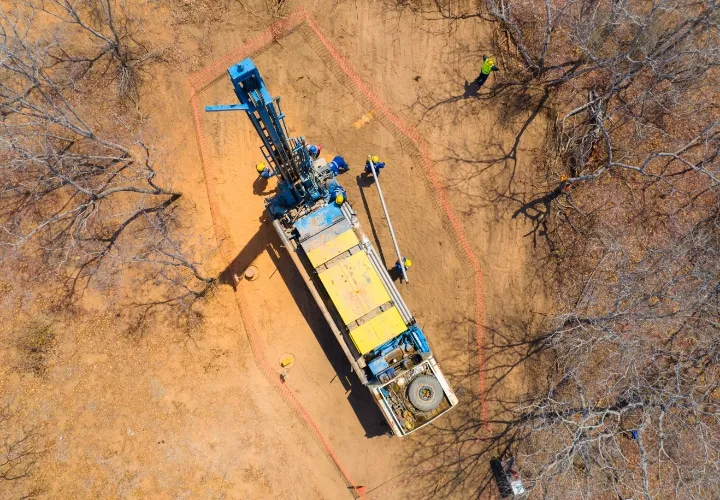
- The company is fully funded for its largest exploration drilling program in 18 years, launching April 2026, with the potential to significantly expand the size of the Muntanga Project.
A Company Built for This Moment
Nuclear energy is having a comeback. Governments around the world are restarting old reactors, building new ones, and signing long-term deals to secure uranium supply. The United States, China, and India are all expanding their nuclear programs, and the push to move away from Russian-sourced uranium has made the hunt for reliable supply more urgent than it has been in decades.
Atomic Eagle (ASX: AEU) is an Australian-listed uranium developer with its primary asset in Zambia, a country with a long history of large-scale mining and a stable, investor-friendly government. The company's Muntanga Project holds tens of millions of pounds of uranium oxide in the ground and already has a completed plan for how it would be mined and processed. For a company of its size, that level of preparation puts it ahead of most early-stage uranium developers.
Atomic Eagle is considered a small-cap mining company, which means higher risk than a large established producer, but also more room for share price movement if key milestones are achieved. For investors looking for early exposure to the uranium sector, that profile is worth understanding clearly before making any decision.
What Atomic Eagle Actually Owns
The Muntanga Project is located in southern Zambia and covers a large licence area spanning over a thousand square kilometres. It contains seven separate uranium deposits spread across the licence, with the total resource independently verified under the JORC Code, the Australian standard for reporting how much mineral a company has reliably identified in the ground.
A significant portion of the total resource sits in the higher-confidence categories, meaning it has been drilled and tested in enough detail to form the basis of a mine plan. The rest has been identified but requires more drilling to confirm. The distinction matters because mine plans and financing discussions are generally built on the higher-confidence portion, and growing that portion is the central task of the upcoming drill program.
Importantly, the 2025 mine plan only used part of the total resource. Nearly half of the uranium identified in the ground was not included in the original plan, either because it needed more drilling to confirm or because the plan was built around a conservative initial mine size. That gap is one of the most straightforward opportunities available to the company: more drilling could translate directly into a larger, more profitable operation.
The Mine Plan: What It Means in Plain Terms
The 2025 mine plan, released on 4 March 2026, is essentially a detailed business plan for the Muntanga operation. It outlines how the mine would be built, run for over a decade, and eventually closed. The mining method proposed is called heap leach processing, where crushed ore is stacked on sealed pads and a weak acid solution is applied to draw out the uranium. It is a well-established, lower-cost approach used at several uranium operations globally, and importantly, it is easier and cheaper to expand than more complex processing methods.
The plan projects a competitive cost to produce each pound of uranium once the mine is operational, a level that leaves room for the project to remain profitable even if uranium prices soften before production begins. The estimated after-tax value of the project's future earnings is US$243 million, using a standard financial calculation, with a projected payback period of 3.5 years from first production. For investors, these figures represent a reference point for assessing whether the current market value of the company reflects what the mine could realistically be worth.
The heap leach method also has a practical advantage for project growth. Because the processing infrastructure is modular and relatively straightforward to extend, any additional uranium confirmed through the upcoming drill program could be added to the mine plan without requiring a complete rebuild of the project economics. That makes the cost of growth lower than it would be at a more complex operation.
Why Zambia Changes the Conversation
One of the less obvious but increasingly important factors in uranium investment is where the uranium comes from. Western utilities, particularly in the United States and Europe, are under political and regulatory pressure to stop buying uranium from Russia. That pressure is creating a defined need for supply from politically neutral countries, and Zambia fits that profile well.
Zambia is the world's seventh-largest copper producer and has hosted large-scale international mining operations for decades. It ranks third in Africa in the Fraser Institute's annual survey of mining investment attractiveness, which assesses factors like regulatory stability, taxation, and the rule of law. The Muntanga Project's resources are already held under Mining Licences, and the company has export access through an established uranium port with the ability to supply buyers in both western and eastern markets.
Grant Isaac, President and Chief Operating Officer of Cameco Corporation, one of the world's largest uranium producers, noted in January 2026 that widely used demand forecasts for uranium are actually understating real demand. He made a similar point in October 2025, saying the uranium market is not accounting for how serious the coming supply shortfall will be. For a developer like Atomic Eagle, operating in a politically stable country with an already-permitted resource and a completed mine plan, that supply gap is a commercial opportunity.
The Investment Thesis for Atomic Eagle
- Atomic Eagle is currently priced at a meaningful discount to comparable listed peers on a per-pound-in-the-ground basis, based on 25 March 2026 market data, suggesting the market has not yet fully valued the project.
- The April 2026 drill program could materially expand the resource, and early positive results may prompt the market to place a higher value on the company's total uranium holdings.
- The completed mine plan removes a major uncertainty that keeps institutional investors away from early-stage developers, lowering the bar for financing conversations to begin.
- Zambia's neutral political position makes Muntanga a credible candidate for long-term supply contracts with Western utilities actively looking to replace Russian-origin uranium.
- The heap leach processing method is relatively low-cost to expand, meaning additional uranium confirmed through drilling could strengthen the mine plan without proportionally large increases in construction spending.
- The unresolved dispute over the Niger project preserves the possibility of recovering value from a separately identified large resource at the Madaouela project, which currently sits outside the company's operational plans but remains subject to ongoing negotiations.
Atomic Eagle is not a producing company, and it carries the risks that come with any development-stage mining project, including execution risk on the drill program, uranium price movements, and the ongoing Niger dispute. Those are real considerations for any investor assessing the stock. At the same time, the combination of a completed mine plan, a growing resource in a stable country, a fully funded drill program, and a valuation that sits at a discount to comparable peers makes the company's risk-reward profile worth examining carefully. The next 12 months of drilling results will be the primary test of whether the broader exploration potential can begin to be confirmed, and whether the market starts to close the gap between Atomic Eagle's current price and the value implied by its mine plan.
TL;DR
Atomic Eagle has a completed mine plan, a growing uranium deposit in a stable African country, and is about to start its biggest ever drilling campaign. The company's shares are currently priced at a discount to comparable peers, and the next 12 months of drilling results could be the key factor in closing that gap.
FAQs (AI-Generated)
Analyst's Notes





Subscribe to Our Channel









Stay Informed