




Bravo Mining Hits High-Grade Nickel-PGM Mineralisation at Babylon Ahead of Q3 PFS


Bravo Mining reports high-grade Babylon nickel-PGM extension at Luanga ahead of Q3 2026 PFS, with metallurgical gains set to lift project economics.
- Bravo Mining reported new Babylon target assays (DDH26LU347) of 13.4m @ 1.55% Ni, 0.33% Cu, 2.02 g/t PGM+Au, plus a separate 6.0m @ 6.81 g/t PGM+Au zone, pointing to potential underground-grade mineralisation adjacent to Luanga's open pit.
- The Q3 2026 PFS remains on track and now incorporates Jameson Cell metallurgical gains of 5-10% (PGM) and 5-30% (nickel) recoveries, independently reviewed by Glencore Technology.
- Approximately $94 million in cash, an undrawn $300 million Orion credit line, and an unmonetised ~$280 million gold-sale option give Bravo multiple financing paths to a construction decision without near-term dilution.
- Management confirmed the vertically-integrated smelter scenario's NPV has risen from ~$1.2 billion to ~$1.68 billion on the back of higher sulphuric acid byproduct pricing since the 2025 PEA.
- A separate copper-gold division under Fabio Masotti is running IP surveying ahead of an 8,000-metre H2 2026 drill programme, with management open to a future spin-off if results support a standalone structure.
Bravo Mining Corp. (TSXV:BRVO) has spent the past two years converting a single Brazilian deposit into three separate investment stories running in parallel: a platinum-group-metals project heading into a Pre-Feasibility Study, a nickel-copper sulphide discovery still being defined, and an early-stage copper-gold exploration programme. Chairman and CEO Luis Azevedo sat down with Crux Investor to walk through the latest results at all three, days after the company reported new high-grade intercepts at its Babylon target.
The backdrop is a platinum-group-metals (PGM) market that has been unloved for years relative to lithium, copper and gold, even as the traditional supply base in South Africa and Russia comes under mounting strain. Azevedo argues that combination - a scarce, high-grade, permittable deposit set against a shrinking supply pipeline - is what continues to draw institutional capital to Luanga, Bravo's 100%-owned PGM+Au+Ni deposit in the Carajás Mineral Province of Pará State.
Babylon Extension Points to Underground-Grade Mineralisation
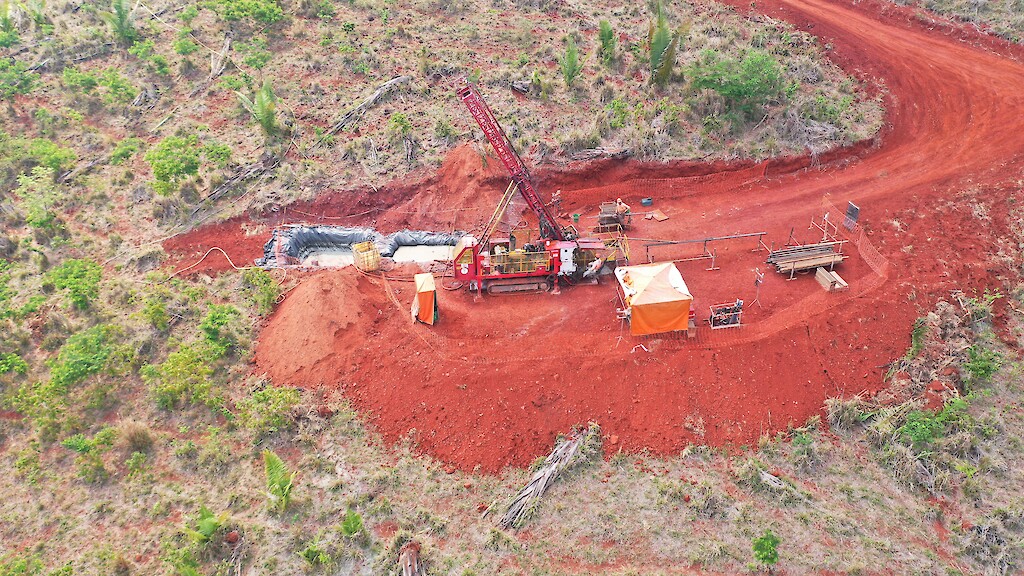
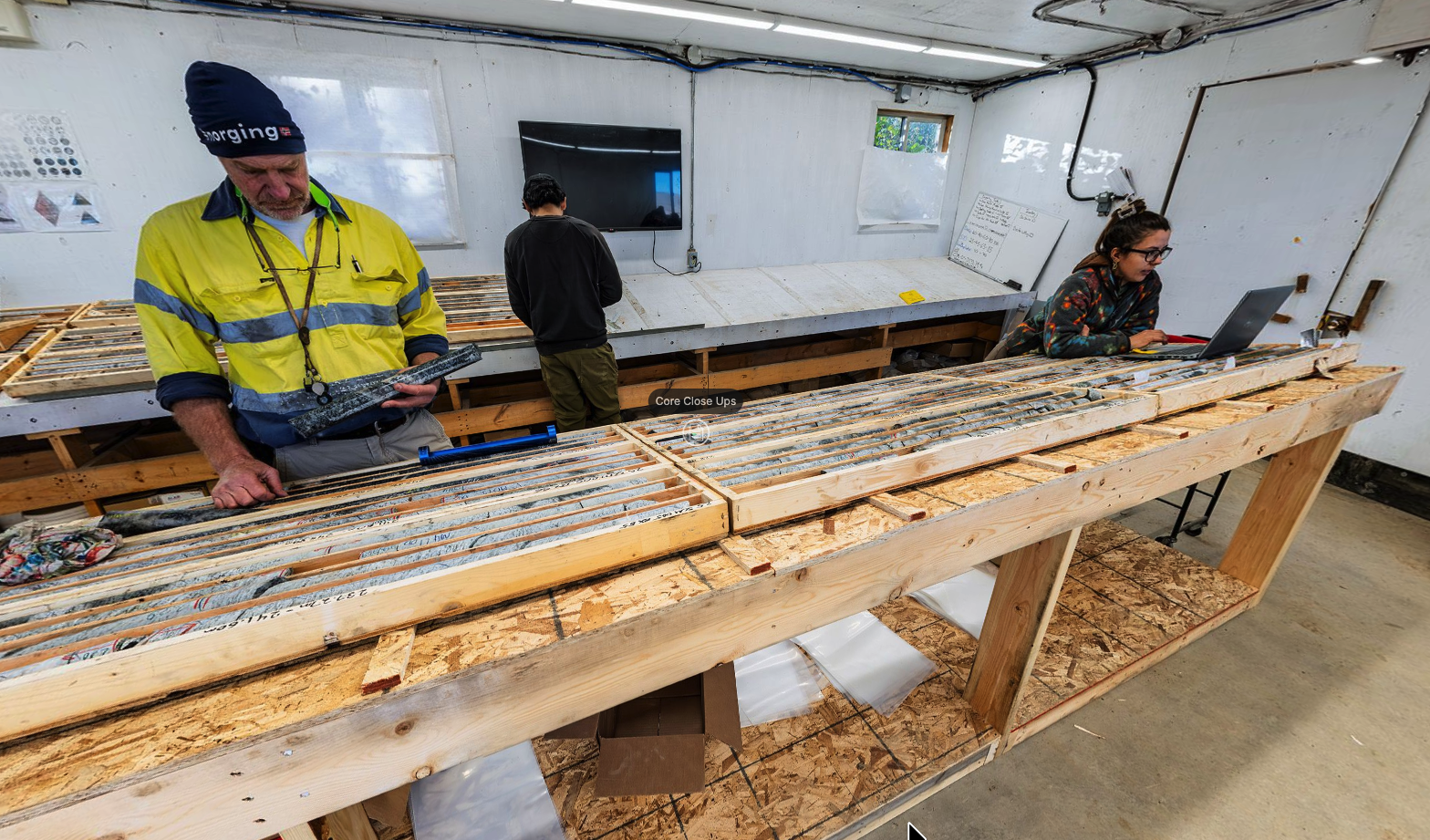
The news driving this interview is a set of assay results from the Babylon target, adjacent to the North Sector of the Luanga deposit. Drill hole DDH26LU347 intercepted 13.4 metres at 1.55% nickel, 0.33% copper and 2.02 g/t PGM+Au from 205.58 metres downhole, including a higher-grade zone of 6.7 metres at 2.25% nickel, 0.55% copper and 3.14 g/t PGM+Au. The same hole also returned a separate 6.0-metre interval grading 6.81 g/t PGM+Au from 122.70 metres, with low sulphide content.
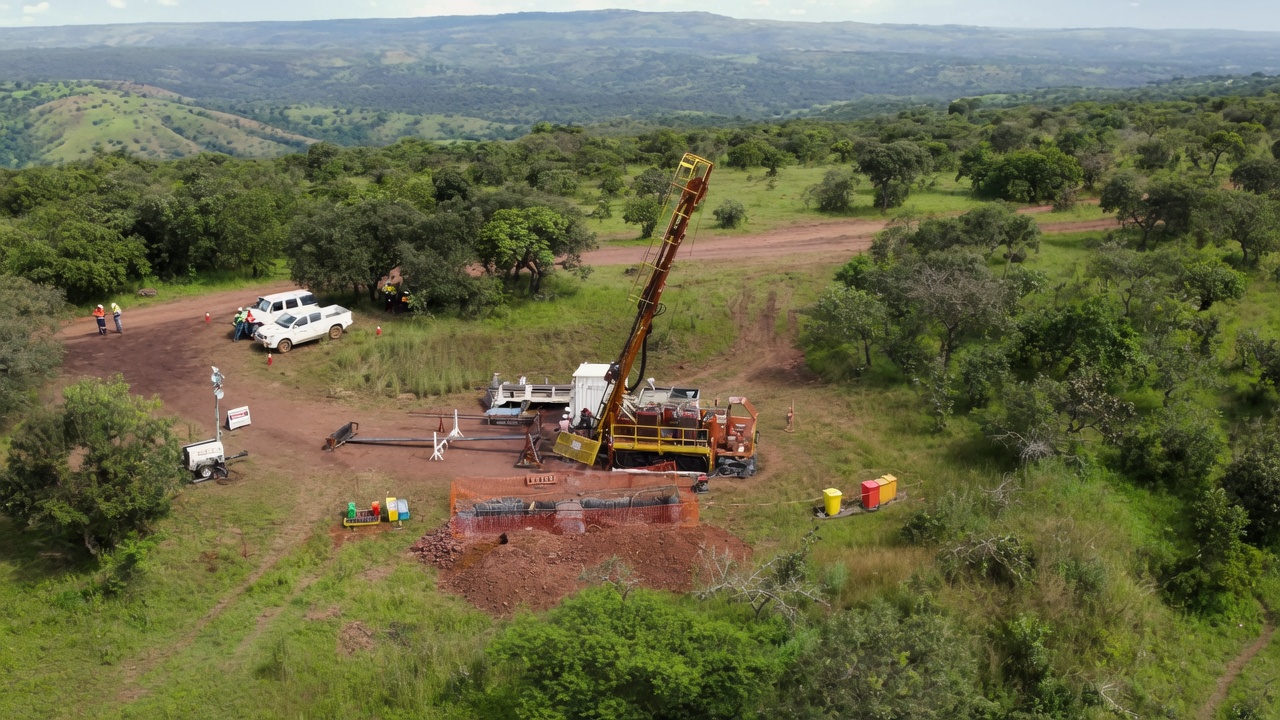
Azevedo frames the nickel-copper intercept as evidence the deposit could support underground mining grades in addition to the open-pit resource Bravo has spent years defining. The company has also completed initial Induced Polarisation (IP) surveying over Babylon, identifying a large anomaly at roughly 700 metres depth that management believes could represent an extension of the same high-sulphidation system, and which is now queued for follow-up drilling. Bravo currently has four rigs active on the property, with two more available to add if results warrant.
Metallurgical Gains Set to Lift PFS Economics
Bravo's PFS was originally guided for Q2 2026 and pushed to Q3 after early Jameson Cell test results suggested the flotation circuit could recover meaningfully more ore than assumed in the 2025 Preliminary Economic Assessment (PEA). Testing through Base Metallurgical Laboratories (Intertek) and reviewed independently by Glencore Technology has reaffirmed a 5-10% improvement in platinum, palladium and gold recoveries and a 5-30% improvement in nickel recoveries versus conventional Denver cells, alongside up to 50% lower mass pull with no loss of recovery. Glencore has indicated it is prepared to issue performance guarantees on the metallurgical assumptions underpinning the PFS.
Azevedo says the practical effect is a larger, more profitable pit: better recoveries mean more ore becomes economic to mine, changing the optimal pit shell and mining sequence rather than simply lifting a recovery percentage in isolation. That is the stated reason for the one-quarter delay - management wanted the improved metallurgical data captured in the study rather than filed as a future upside case.
Balance Sheet Funds Drilling Without Diluting the Equity Story
Bravo held approximately $94 million in cash at the time of the interview, which Azevedo says comfortably funds the PFS, permitting, ongoing metallurgical work and the 2026 drill programme without a near-term equity raise. Beyond the treasury, management points to two additional financing levers it has deliberately not yet drawn on: an offer of roughly $280 million received for a portion of Luanga's gold credit (around 140,000-150,000 ounces, 0.3% of PEA revenue, which management has so far declined to sell to preserve future optionality as PGM prices and project risk profile improve), and an existing $300 million credit line from Orion. A PGM offtake has also drawn interest from multiple groups but has not been negotiated, with Azevedo saying Bravo intends to wait until it has bankable feasibility numbers before pricing that commitment.
"We have $94 million in the bank. Whatever it takes in term of drilling, that doesn't hurt us."
Interview with Luis Azevedo, Chairman and CEO, Bravo Mining
Permitting and Path to Construction
Bravo holds its preliminary licence (Licença Prévia) and is preparing to submit for the Installation Licence roughly one to two weeks after the PFS is released, a step management has already begun the underlying technical work for. Azevedo puts the typical timeline for that approval at six months to a year, arguing Bravo's track record and established relationships with Brazilian regulators should keep it toward the shorter end.
"We used to say that we are kind of different. We squeeze those time frames a lot because we are in Brazil. We know everybody. We've been very well respected by all the authorities."
Assuming that timeline holds, Azevedo targets a construction decision roughly six months after the PFS, with construction starting around mid-2028 - contingent on the Definitive Feasibility Study (DFS), guided for Q3 2027, and an updated Mineral Resource Estimate targeted for Q1 2027 based on the current PGM infill and expansion programme.
Vertical Integration: The Smelter Option
The PEA outlined an alternative "vertically integrated" scenario in which Bravo builds its own smelter rather than selling concentrate. Azevedo says the economics of that option have materially improved since the PEA was published, largely because sulphuric acid prices have risen from roughly $130-150 per tonne to around $1,300 per tonne today - a byproduct credit that would help fund smelter capex.
On the PEA numbers, the smelter case lifts net present value from approximately $1.2 billion to $1.68 billion, with the trade-off being roughly 10% higher operating costs. Management has not yet decided whether to build the smelter alongside the initial plant or defer it, and says the decision will be informed by PFS-level detail.
Investor Base and Copper-Gold Optionality
Bravo now counts around 39 institutional investors and four holders above the 5% ownership threshold besides Azevedo himself. He is candid that those investors bought into a PGM story specifically, and that if the copper-gold division - led by 31-year Vale veteran Fabio Masotti and currently running Induced Polarisation surveying ahead of an 8,000-metre H2 2026 drill programme - proves large enough to stand alone, Bravo may consider spinning it into a separate vehicle rather than running two distinct investment cases inside one stock. No decision has been made, and Azevedo stresses any structural change would be based on exploration results and shareholder input, not a fixed plan.
The Investment Thesis for Bravo Mining
- Resource scale intact and expanding. Luanga's PGM+Au+Ni resource stands at roughly 15 million ounces PdEq across categories, and the Babylon nickel-copper extension adds a second, still-undefined mineralised system on the same land package.
- PFS remains the near-term catalyst. Guided for Q3 2026 and reiterated as on track in this interview, the PFS will be the first study to incorporate the improved Jameson Cell metallurgical assumptions - a genuine, quantifiable upside variable versus the 2025 PEA.
- Funded through to a construction decision. Approximately $94 million in cash, an undrawn $300 million Orion credit line, and an unmonetised gold-sale option (~$280 million indicative) together reduce near-term dilution risk.
- Multiple financing levers beyond equity. Management has structured optionality - gold-stream sale, PGM offtake, smelter byproduct economics - that it can call on selectively as the project de-risks, rather than relying on a single capital source.
- Permitting track record supports the timeline. The preliminary licence is already in hand; management's stated six-to-twelve-month expectation for the Installation Licence is a specific, checkable milestone for investors to track through late 2026 and into 2027.
- Copper-gold and Babylon nickel are free options. Both programmes are early-stage and unpriced by the market relative to the core PGM story; a standalone spin-off, should the copper-gold results warrant it, would be a distinct value-realisation event.
- Watch items: Q3 2026 PFS economics (does the metallurgical upside show up in the NPV/IRR); the resolution of the Babylon 700-metre IP anomaly through follow-up drilling; and the outstanding assay results from 46 pending drill holes.
Macro Thematic Analysis
Platinum-group metals occupy an unusual position in the critical-minerals narrative: essential to internal-combustion and hybrid vehicle emissions control, increasingly relevant to hydrogen and electrification applications, yet largely absent from the "clean energy metals" conversation that has driven capital toward lithium and copper. Supply, meanwhile, is concentrating rather than diversifying. South Africa's PGM mines are getting structurally deeper and more expensive to operate, while Russian production - historically a major swing supplier of palladium - sits under continued geopolitical and capital-allocation pressure tied to the war in Ukraine. Neither trend is new, but both have hardened over the past two years, and neither shows signs of reversing.
Against that backdrop, the pipeline of new PGM projects capable of reaching production at scale is thin. Luanga's combination of high grade, shallow mineralisation, and an already-developed logistics corridor (road, rail and hydroelectric power within kilometres of the deposit) is precisely the profile the market has struggled to find elsewhere. Azevedo's own framing of the opportunity, drawn directly from this interview, captures the case succinctly:
"If you look at the banks that are really experts in PGMs, they are seeing 2027 with a great increase of price for PGMs and we are confident with that."
Whether that price recovery materialises on the timeline banks are forecasting is, naturally, outside any single company's control. What is within Bravo's control is whether Luanga is permitted, financed and metallurgically optimised by the time that recovery arrives - which is the explicit logic behind sequencing the PFS, Installation Licence application and DFS as tightly as management is currently attempting to.
TL;DR
Bravo Mining (TSXV:BRVO) reported new high-grade nickel-copper-PGM intercepts at its Babylon target, adjacent to the Luanga deposit's North Sector, adding underground-grade upside alongside the existing 15-million-ounce open-pit resource. CEO Luis Azevedo confirmed the Pre-Feasibility Study remains on track for Q3 2026, now incorporating Jameson Cell metallurgical improvements of 5-10% in PGM recoveries and 5-30% in nickel recoveries. With roughly $94 million in cash, an undrawn $300 million Orion credit line, and an unmonetised gold-sale option worth an indicative $280 million, Bravo says it can fund the PFS, permitting and drilling without near-term dilution. A separate copper-gold division is preparing an 8,000-metre H2 2026 drill programme.
FAQ (AI-generated)
Analyst's Notes





Subscribe to Our Channel






Stay Informed


