




Brent Falls 20% as Hormuz Stalls: Are Mining Costs About to Drop?


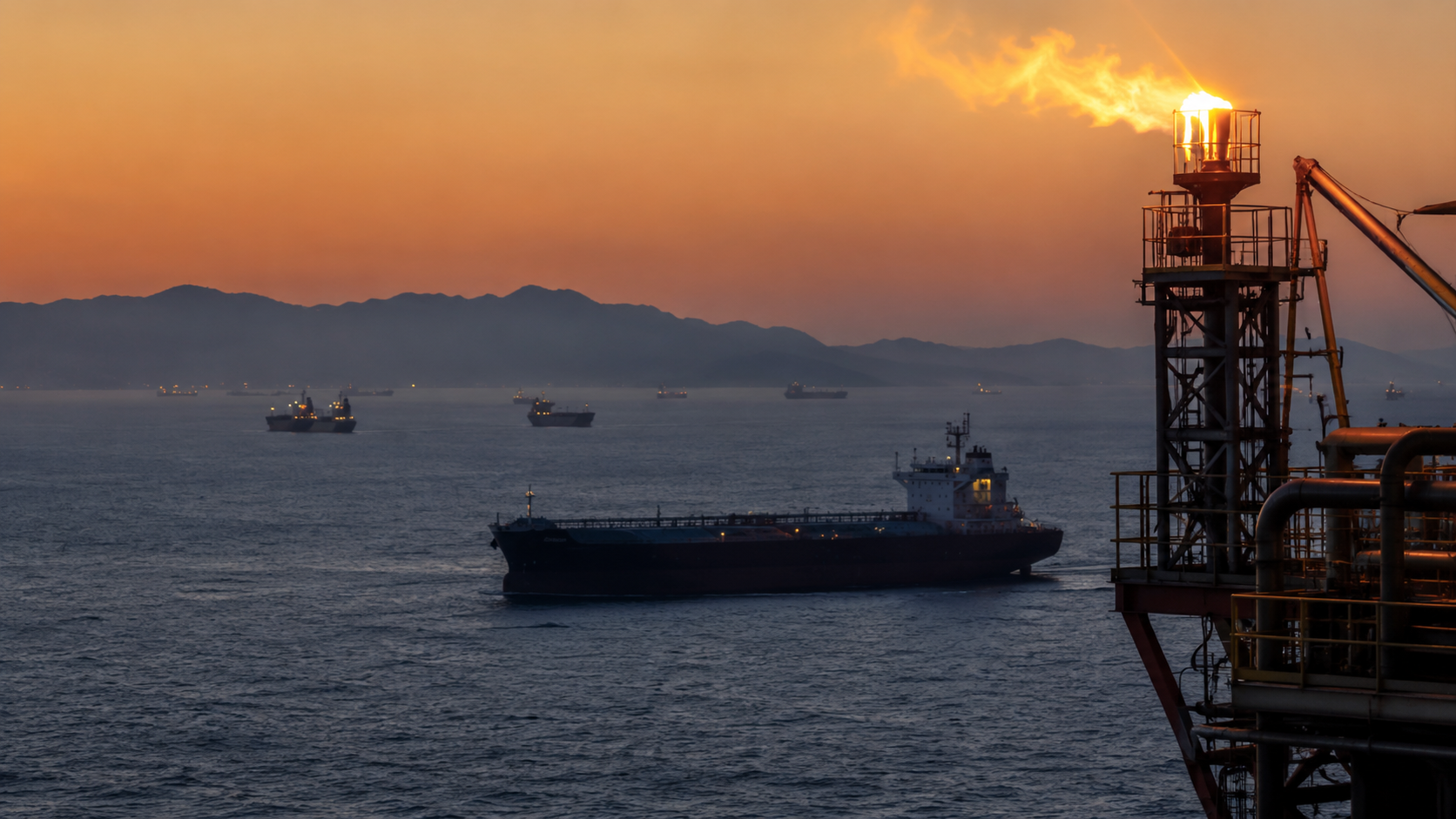
Brent falls 20% despite the Hormuz disruption, while elevated US diesel prices keep mining costs high and create a potential contrarian opportunity.
- Hormuz vessel transits fell to 8-15 daily from roughly 130 before the conflict, sharply reducing the flow of commercial shipping through the oil corridor.
- Brent's October futures contract fell to $84.11 a barrel, roughly 20% below its $105.32 July spot peak, even as Hormuz violence worsened, creating a potential opening for miners if lower crude prices flow through to fuel costs.
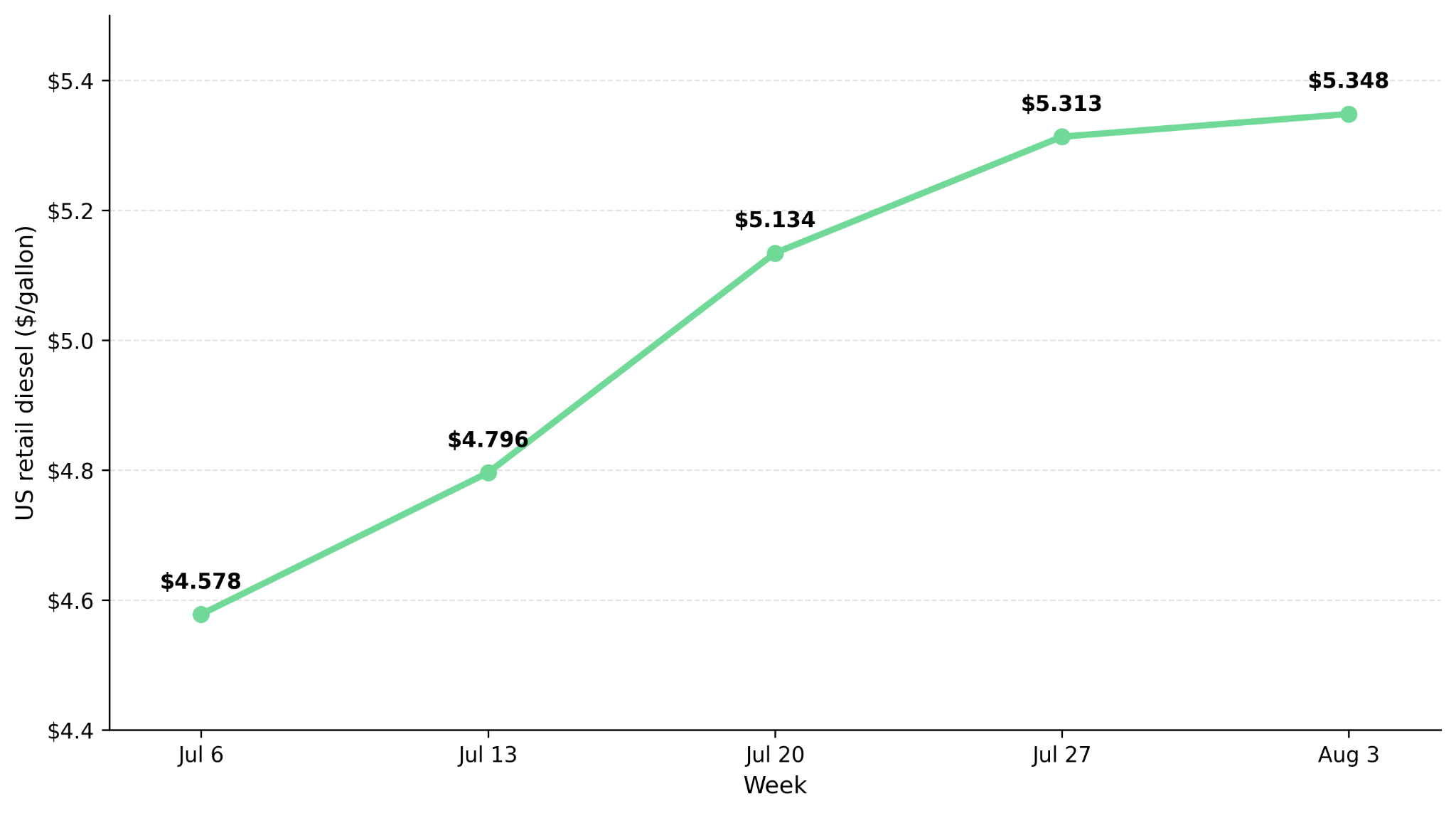
- US retail diesel reached $5.348 a gallon, up $1.548 year over year, raising operating costs for open-pit mines.
- US retail diesel continues to rise even as Brent retreats from its July peak, delaying lower fuel costs for mining operations.
- A Brent close above $100 a barrel or a rebound above 50 daily Hormuz transits would indicate that mining fuel costs remain exposed to renewed oil-price pressure.
Hormuz Uncertainty Keeps Mining Costs High as Brent Falls
Iranian Foreign Minister Abbas Araghchi said Iran and Oman were close to a Hormuz agreement, but reopening the strait would require Washington to waive sanctions and pay war reparations. Brent's October futures contract reached $84.11 a barrel, up 0.7% on the day, with the muted response showing that the potential reopening had not yet translated into a major shift in crude pricing.
Brent has fallen roughly 20% from its $105.32 a barrel spot peak even as Hormuz vessel transits remain near a standstill, while US retail diesel continues to rise, creating a potential margin benefit for mining operations if diesel prices follow crude lower.
Diesel costs matter most for open-pit mines where haul trucks and mobile equipment consume large fuel volumes. Lower diesel prices can therefore expand operating margins and free cash flow, particularly at lower-grade or higher-strip-ratio operations, without requiring higher commodity prices.
Weak Chinese Demand & Reserve Releases Limit Brent's Response
Hormuz carries about one-fifth of global oil supply, but commercial transits have collapsed as security risks disrupt shipping. The International Maritime Organization has logged at least 64 violent incidents and 17 deaths involving commercial vessels since the conflict began, reinforcing the supply risk that has kept Hormuz traffic near a standstill.
Brent has not risen with the physical disruption because weak Chinese demand and emergency reserve releases are offsetting the supply shock, according to Saxo Bank analysts. A missile attack on an Abu Dhabi National Oil Company vessel and a fire at Saudi Arabia's Jazan refinery added further supply risk without pushing Brent higher.
Fragile Hormuz Talks Keep Mining Costs Elevated
A muted Brent response does not confirm that the Hormuz disruption is ending. Tim Waterer, Chief Market Analyst at KCM Trade, said prolonged negotiations are making traders more cautious and warned that even an announced agreement could prove fragile based on previous agreements.
Diesel Prices Lag Brent, Keeping Mining Costs Elevated
US on-highway diesel rose from $4.578 to $5.348 a gallon over four weeks as retail prices adjust to crude with a lag, keeping mining costs elevated despite Brent's retreat from its July peak.
The key test is whether a Hormuz deal pushes Brent lower. Tim Waterer said residual reversal risk could limit the decline in oil prices after a diplomatic breakthrough, delaying any reduction in mining diesel costs.
The Iran-Oman talks may still fail, leaving US retail diesel near $5.348 a gallon for several months. The focus should instead be on whether diesel prices fall as Brent declines, which would reduce mining costs without requiring another drop in commodity prices.
20+ Hormuz Transits Could Mark a Mining Cost Inflection
Brent above roughly $80 a barrel and Hormuz transits below 20 vessels a day are keeping mining fuel costs elevated. At $5.348 a gallon, US retail diesel is unlikely to fall quickly while those conditions persist.
A confirmed Hormuz reopening, with transits approaching the roughly 130-vessel pre-conflict pace, would reduce supply risk and could push Brent lower. With retail diesel prices adjusting to crude with a lag, lower Brent would eventually reduce the current $5.348-a-gallon mining fuel cost.
Monitor the EIA's Weekly Petroleum Status Report and MarineTraffic's daily Hormuz vessel counts for changes in crude inventories and shipping activity. Crude stocks above 407.0 million barrels alongside more than 20 daily Hormuz transits would indicate that the current mining fuel-cost pressure is starting to reverse.
Analyst's Notes





Subscribe to Our Channel





Stay Informed


