




Fed Bets Pull Gold Below $4,300, Official Demand Favors a Selective Miner Case


Fewer price hedges leave miners exposed to gold’s next move; mine costs and Q3 central bank demand will test whether a rebound improves margins.
- Spot gold fell 0.3% to $4,274.79 an ounce on September 24 as traders increased bets on another Fed hike at its October 27-28 meeting.
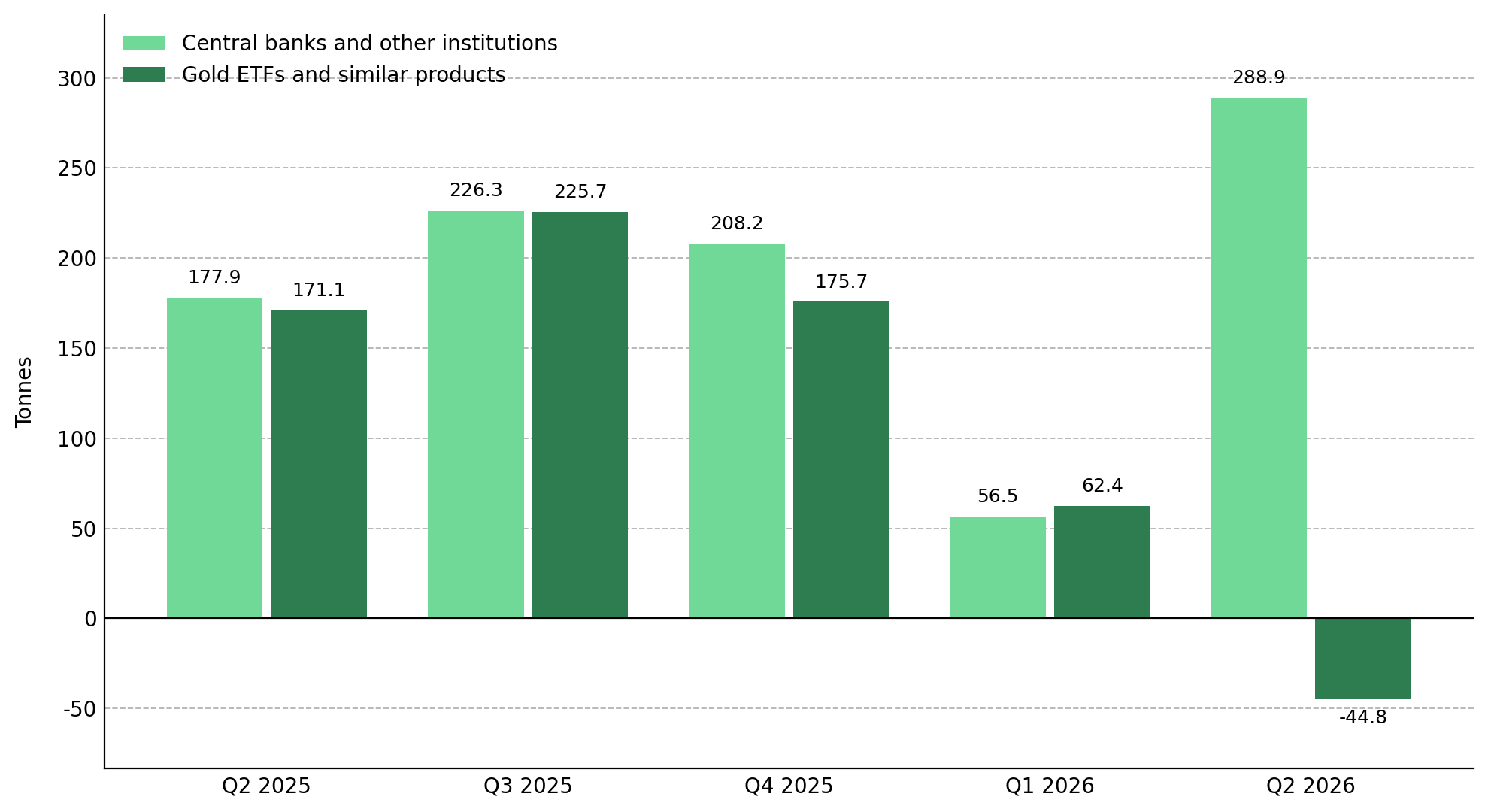
- The World Gold Council recorded 44.8 tonnes of gold exchange-traded fund outflows and 288.9 tonnes of central bank buying, showing demand held up outside funds as rate expectations rose.
- On September 24, Daniela Corsini, economist at Intesa Sanpaolo, said its baseline targets gold averaging about $4,200 an ounce over the next couple of quarters. That average is a forecast, not a price floor.
- A tenth consecutive quarterly decline was obsereved in the producer hedge book, leaving more producer revenue exposed to a gold rebound or another decline.
- The Fed’s October 27-28 decision and the World Gold Council’s next Q3 report will test that opportunity: central bank purchases below Q1’s revised 56.5 tonnes would weaken the case for official demand offsetting rate pressure.
Fed Hike Bets Pull Spot Gold Below $4,300 an Ounce
Spot gold fell 0.3% to $4,274.79 an ounce as US business activity reached a more than five-year high, strengthening bets on another Fed hike in October. The Fed’s 25-basis-point increase to 3.75%-4.00% raised the appeal of interest-bearing assets over gold, which pays no interest.
Gold stood 23.5% below its $5,589.38 January peak. Central banks bought 288.9 tonnes in Q2 while gold funds shed 44.8 tonnes, showing a source of demand that could support a recovery if official buying continues.
Higher US Rates Drive ETF Outflows as Central Banks Absorb 289 Tonnes
Higher Treasury yields increase the cost of holding gold, which pays no interest, and can prompt selling from physically backed exchange-traded funds (ETFs). The World Gold Council’s July 30 Gold Demand Trends Q2 2026 recorded 44.8 tonnes of global ETF outflows, led by roughly 45 tonnes from North American funds. Central banks bought a second-quarter record of 288.9 tonnes as fund holdings fell.
In the World Gold Council’s 2026 Central Bank Gold Reserves Survey, 89% of respondents said global reserves would rise over the next year, while 45% planned to increase their own holdings. Bar and coin purchases totaled 307.1 tonnes in Q2, adding physical demand alongside official buying; the Council puts annual bar and coin purchases near 1,200 tonnes, or about 25% of global demand.
Second Fed Hike Risk Holds Gold Near $4,200 Into Year-End
The Fed’s September 2026 Summary of Economic Projections puts the median year-end policy rate at 4.1%, leaving room for another hike that could weigh on gold. Daniela Corsini, economist at Intesa Sanpaolo told Reuters its baseline targets gold averaging near $4,200 an ounce over the next couple of quarters amid volatility.
Producers that reduced forward sales have more revenue exposed to a gold rebound or another decline. The October 28 Fed decision will test rate pressure, while the next Q3 demand report will test official buying; the revision of Q1 purchases from 244 to 56.5 tonnes leaves any proposed price floor unconfirmed.
Fed Rate Swings Pass Straight Into Unhedged Gold Producer Margins
The World Gold Council put Q1 2026 average all-in sustaining costs (AISC) at $1,785 an ounce. Subtracting that figure from the $4,274.79 spot price gives an illustrative $2,490 price-to-AISC spread per ounce, assuming Q1 costs stay fixed. A $100 gold move would change that spread by about 4%, but actual costs vary by mine, and the spread is not profit.
Royalties drove the largest increase in Q1 costs. Mines with price-linked royalties receive some cost relief when gold falls, while fixed mining costs offer little offset. The World Gold Council’s revision of Q1 central bank purchases from 244 to 56.5 tonnes leaves any claimed gold price floor unconfirmed, so hedge coverage and cost mix remain central to assessing an unhedged producer’s exposure.
Official-Sector Gold Buying Cuts Rate Risk in Producer Valuations
The World Gold Council recorded 288.9 tonnes of central bank purchases alongside 44.8 tonnes of gold ETF outflows. Continued official buying could counter some rate-sensitive selling, but those figures cannot establish a price floor.
The next Q3 report will test whether official purchases remain above Q1’s revised 56.5 tonnes; a return toward that level would weaken the case for demand offsetting another Fed hike. If buying holds up, rate-driven weakness could improve the appeal of unhedged producers with wide price-to-AISC spreads. Producers that closed below-spot forward sales would have greater exposure to a rebound, depending on their remaining hedges and costs.
Analyst's Notes





Subscribe to Our Channel





Stay Informed






















