




Hormuz Deal Would Hit Crude Producers Before it Ends the Diesel Shortage


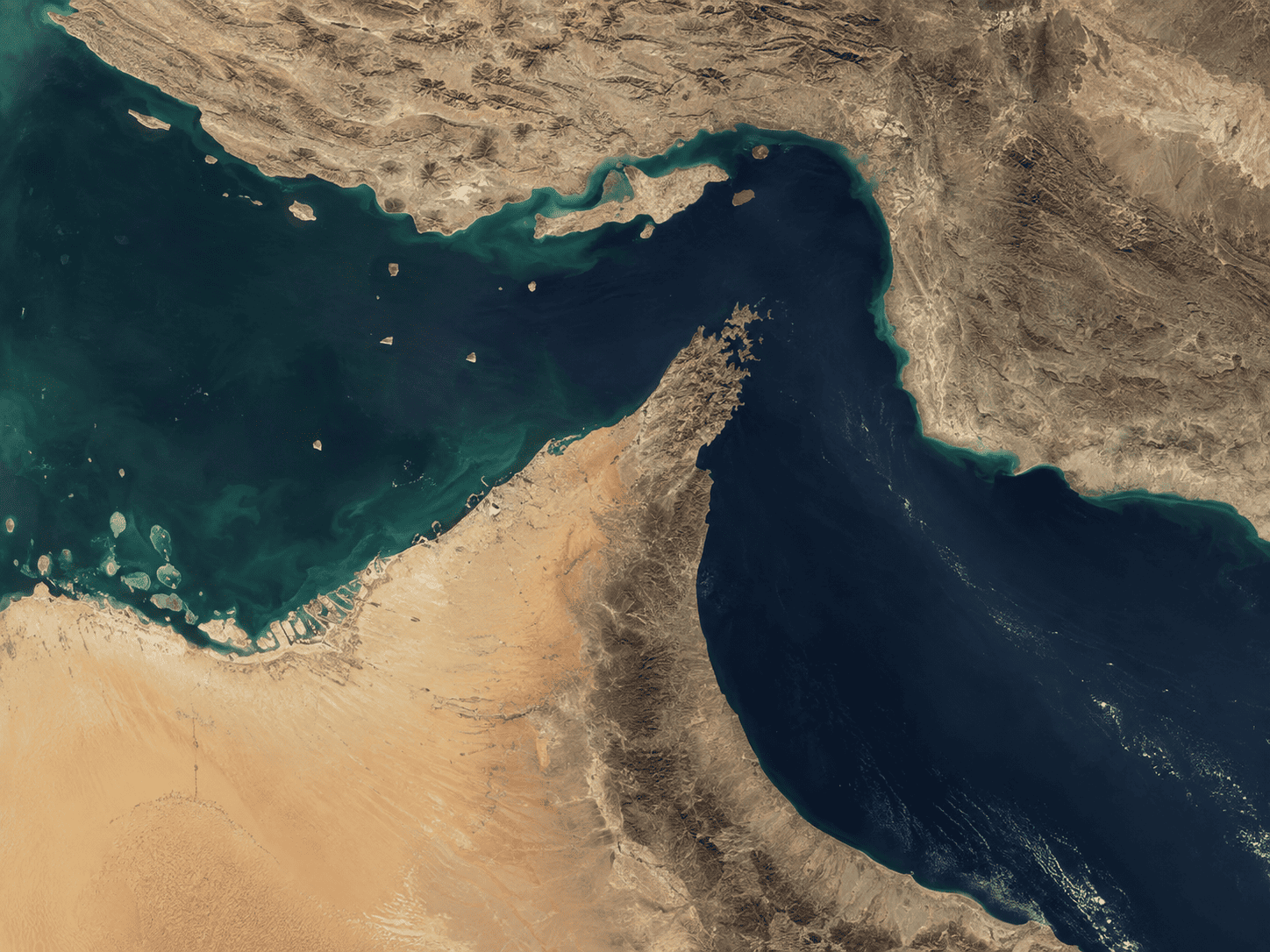
Brent fell to $98 on Hormuz reopening hopes, but a diesel shortage keeps refining margins high, leaving crude-only oil producers most exposed.
- Brent November futures fell $2.01, or 2%, to $98.33 a barrel on 22 September, a two-week low. The drop followed an Iranian official saying the Strait of Hormuz could reopen within seven days and Saudi Arabia restarting its East-West Pipeline.
- The shortage is in refined products. Gulf diesel and gasoil net exports averaged 390 kb/d in August, just over a quarter of pre-war levels.
- The US Energy Information Administration (EIA) forecasts Brent near $90/b in 2H26 even with Gulf export constraints lasting through year-end. Refiners keep diesel cracks the EIA expects to stay above $2 per gallon through November.
- The deal is conditional on the US lifting its port blockade, so position sizing, not deal timing, is the variable a holder controls.
Hormuz Reopening Signal Pulls Brent Below $100, Leaving Diesel at Record Highs
Oil fell to a two-week low on 22 September. Brent November futures dropped $2.01, or 2%, to $98.33 a barrel. A senior Iranian official told Reuters and Kyodo News that Iran can reopen the Strait of Hormuz within seven days if the US scales back military pressure and lifts its blockade on Iranian ports. Iran's semi-official Fars News Agency denied the report. Sources said Saudi Arabia had restarted its East-West Pipeline at a low pumping rate, ahead of resuming exports from the Red Sea port of Yanbu.
The sell-off removes a crude risk premium, not a shortage. The International Energy Agency (IEA) put Gulf output still shut in at more than 10 mb/d in August.
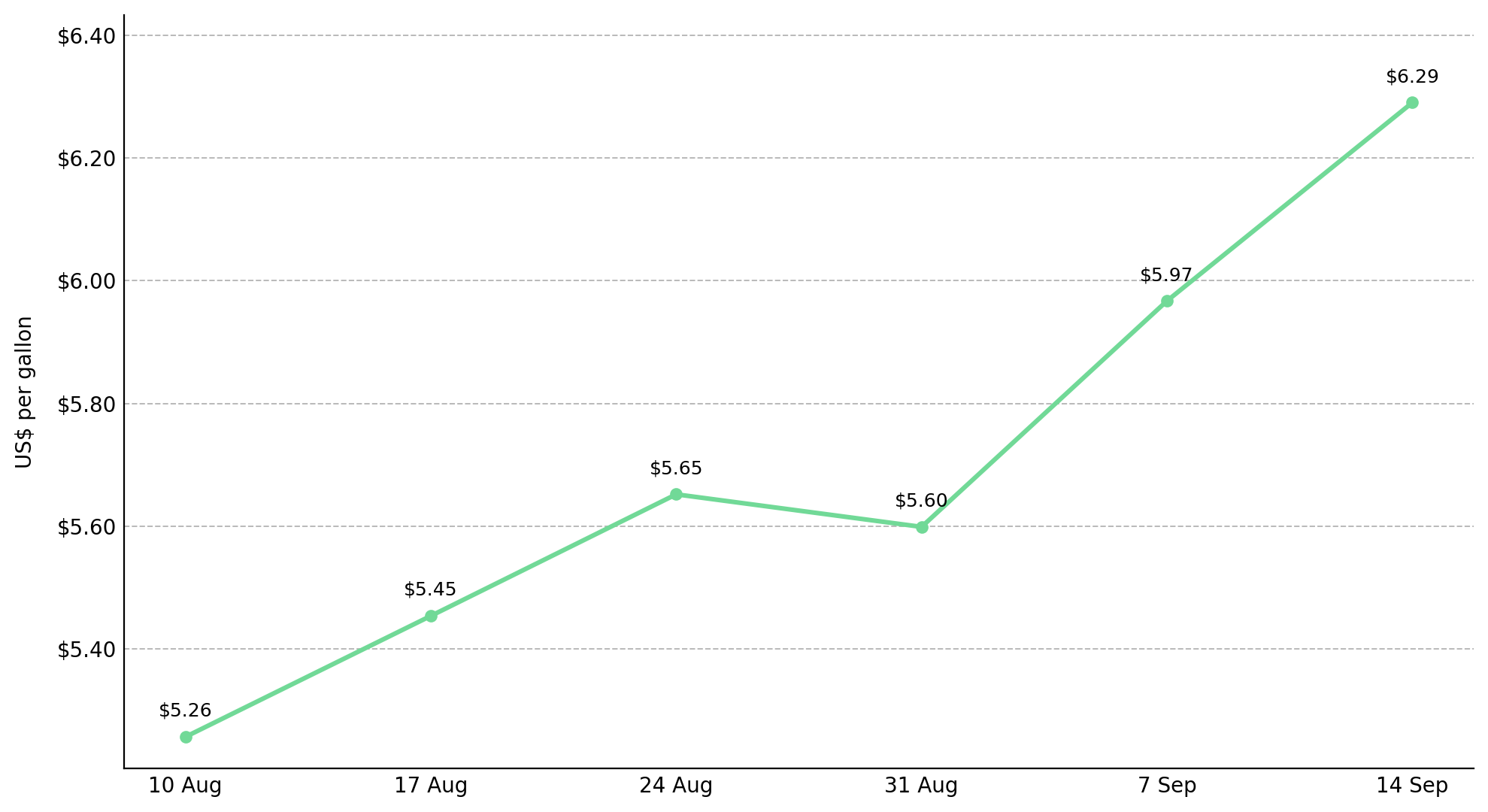
Gulf & Russian Refinery Losses Hold Diesel Exports at a Quarter of Pre-War Levels
Crude and refined products are recovering at different speeds. Gulf crude export losses narrowed to just below 45% in August, helped by bypass routes and US military escorts, while refined product and LPG exports stayed nearly 60% below February (IEA). Gulf net diesel and gasoil exports averaged 390 kb/d, just over a quarter of pre-war levels. A tanker sails once a route is secured; a damaged or idled refinery restores output on a repair schedule, not a diplomatic one.
The second break sits outside the Iran talks. Ukrainian attacks on Russian refineries brought Russia's product exports close to a halt, and combined Gulf and Russian diesel and gasoil net exports in August ran 1.6 mb/d below February, when the two supplied almost 45% of global seaborne trade (IEA). A Hormuz agreement restores none of the Russian volume, and US refineries, at 97% utilization in the week ending 11 September (EIA), have almost no spare capacity to cover it.
Hormuz Talks Set a Seven-Day Test for Crude-Only Producer Revenue
The cohort carrying the cost is non-integrated upstream crude producers: companies selling crude at Brent- or WTI-linked prices with no refining capacity. They absorb the crude decline and capture none of the diesel margin.
The horizon runs through Iran's seven-day window to the EIA's Short-Term Energy Outlook (STEO) on 6 October.
The September STEO forecasts Brent near $90/b in the second half of 2026, about 8% below the 22 September level, and that forecast already assumes Gulf export constraints last through year-end. A reopening removes that assumption, so crude would fall further than the forecast implies. Diesel stays supported: the EIA expects the US diesel crack spread (wholesale diesel minus crude, a refining margin proxy) to exceed $2 per gallon, roughly $84 a barrel, through November. If talks stall, Brent returns toward the $105 it traded at when the IEA published its September report.
Refined Product Shortage Shifts Oil Margins From Crude Producers to Refiners
Non-integrated crude producers face margin compression first: a reopening cuts the benchmark behind their revenue while costs stay fixed. Hedges give limited cover: with the forward curve in steep backwardation (near-month contracts priced above later months), new hedges lock in prices below spot. Open-pit miners see the same split in costs: a crude sell-off does not cheapen haul-fleet diesel.
The test separating exposed from insulated producers is whether realized price tracks crude alone or also product margin, and whether barrels have more than one route to market. Saudi Arabia showed the routing half on Sunday: tanker tracking data showed about 14 million barrels of its crude loaded onto seven supertankers inside the Gulf after Yanbu disruptions.
The deal is conditional on the US easing military pressure and lifting its port blockade; Iran has publicly disputed the offer, and its terms are unknowable outside the negotiation.
Refining Bottleneck Outlasts Hormuz Disruption
When a chokepoint shock hits crude and refined products, shipping recovers before processing. Tankers return on a security guarantee; refineries return on repair schedules. Value migrates from wellhead to refinery gate and stays longer than the crude headline implies, wherever processing sits in disrupted jurisdictions.
An oil producer is not a simple lever on the oil price when diesel is doing the work. Refiners and producers selling into the Atlantic Basin, where demand has shifted, captured the value, so realized price net of differentials belongs in the valuation. Inventories drawn since February must be rebuilt, a crude restocking bid that outlasts the headline.
Analyst's Notes





Subscribe to Our Channel





Stay Informed


