




Iran Talks Push Brent Below $100 While Diesel Shortage Holds



Hormuz flows remain at just 38% of pre-war levels, keeping distillate supply tight and refining margins supported despite weaker crude prices.
- Brent fell 0.79% to $98.47 and West Texas Intermediate (WTI) fell 1.34% to $89.31 on September 23, extending both declines to six sessions as US-Iran talks and a Saudi pipeline restart reduced the supply-risk premium.
- Hormuz transits averaged 6.98 million barrels a day through September 20, just 38% of the 18.3 million barrel pre-war baseline, showing crude prices are discounting an expected reopening before physical flows recover.
- A scheduled second round and suspended blockade could push Brent toward $85.40 within one quarter, while a repeat of July’s failed agreement could send Brent back to $100.
- With no date set for the next round and reopening dependent on a US decision that is not public, position sizing matters more than entry timing.
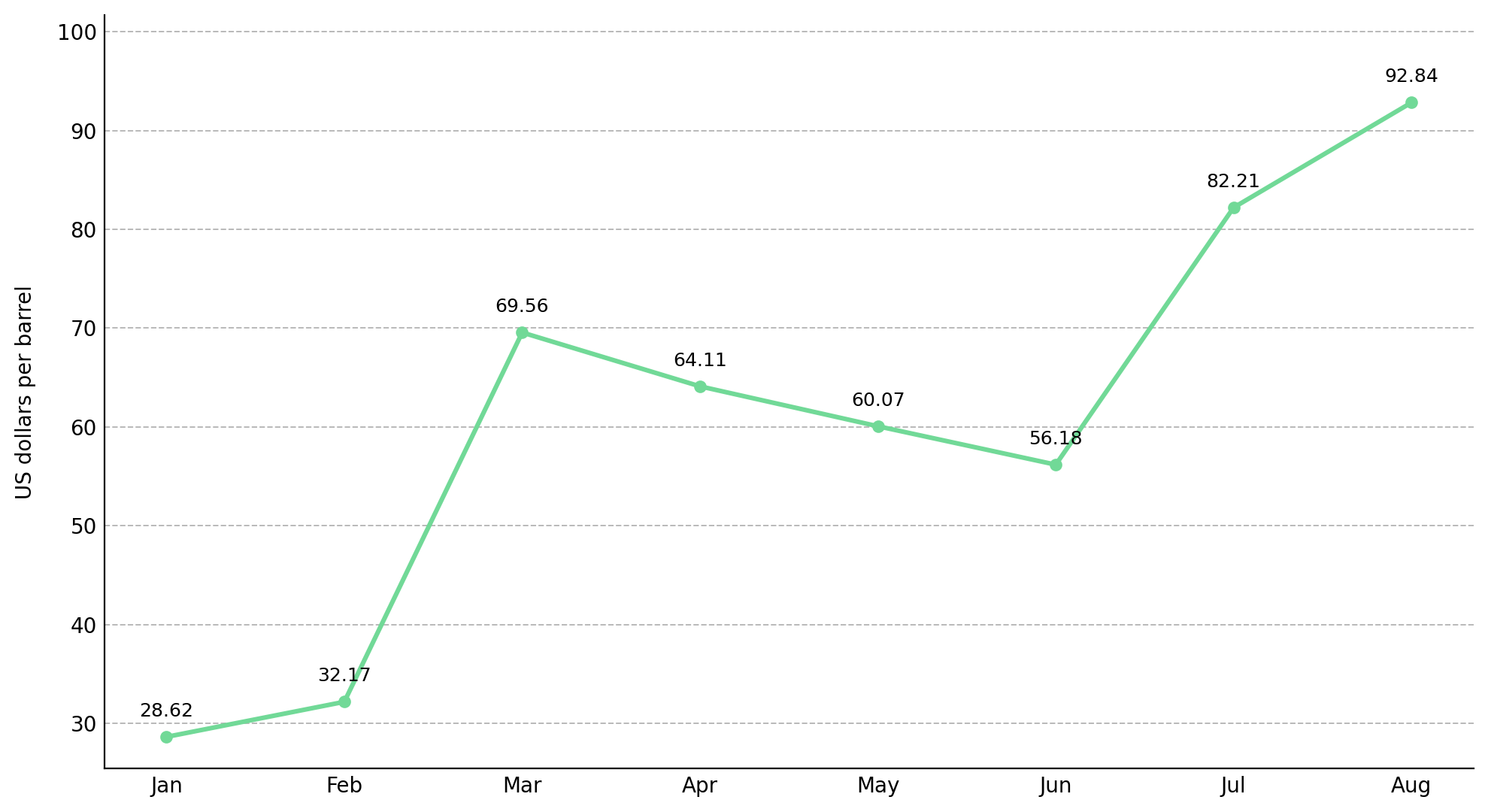
- The Gulf Coast diesel crack averaged $92.84 a barrel in August, up from $28.62 in January, while September 11 distillate stocks were 107.9 million barrels, 13% below the five-year average, supporting refining margins until inventories rebuild.
US-Iran Talks & Pipeline Restart Push Brent to $98.47
Brent fell 0.79% to $98.47 a barrel and WTI fell 1.34% to $89.31, extending both declines to six sessions. Saudi Arabia restarted its East-West Pipeline to the Red Sea while US envoys held talks through mediators involved with Iran, reducing the supply-risk premium in crude prices.
Crude prices are falling faster than physical supply is recovering. Hormuz transits averaged 6.98 million barrels a day over seven days, just 38% of the 18.3 million barrel pre-war baseline. Iranian crude loadings fell to zero in September from 893,000 barrels a day in July. That gap leaves room for a crude rebound if talks stall before cargo flows recover.
Blockade & Outage Keep Hormuz Flows at 38% of Baseline
Saudi Arabia has routed about 4 million barrels a day, nearly 4% of global supply, through the East-West Pipeline to bypass disrupted Hormuz flows. Drone attacks that Saudi Arabia blamed on Iraqi militias shut the pipeline, halting Yanbu loadings and forcing more exports through the Gulf. Pipeline tests could restore the Red Sea bypass within days.
Esmaeil Baghaei, Iran’s foreign ministry spokesman, said Tehran wants an end to US military pressure and the blockade, plus the release of Iranian assets. A senior Iranian official said Hormuz could reopen within a week if those conditions are met, creating a clear path for more crude exports. The July agreement collapsed within weeks, and no next round is scheduled, leaving crude prices exposed to a rebound if talks fail again.
Loading Delays Keep Fuel Tight After Reopening Signals
A political agreement would not immediately restore loadings because tankers must reposition, war-risk insurance must renew, and berths must be scheduled. Tim Waterer, Chief Analyst at KCM Trade, told Reuters:
"The market is currently feeling more constructive about the global oil supply picture than it was a few weeks ago."
Low Distillate Stocks Support Refining Margins as Brent Falls
The US Gulf Coast Ultra-Low Sulfur Diesel (ULSD) Crack Spread averaged $92.84 a barrel in August, up from $28.62 in January. Retail diesel reached $6.285 a gallon, $2.546 above a year earlier, showing how tight distillate supply is supporting refining margins while raising freight costs.
The key distinction is whether energy cash flow tracks crude prices or refining spreads. Crude-price exposure weakens if Brent moves toward $85.40, while refining-margin exposure can remain supported as long as distillate stocks stay tight.
Neither the reopening date nor the next round is public, making position size more controllable than entry timing. Brent averaged $117.29 in April and $83.76 in July, showing how an oversized position can amplify losses when the crude outlook reverses.
Hormuz Reopening Reprices Crude Before Diesel, Keeping Refiners Ahead
A chokepoint closure is repaired in two stages, and the market pays for them at different times. Crude reprices on the political signal because tankers turn within days. Diesel recovers only when refineries running near capacity rebuild stocks. The same order holds wherever a raw input clears a bottleneck faster than the processing step behind it.
Refining margins lose their support if US distillate stocks close their 13% gap to the five-year average before Hormuz flows recover. The EIA Weekly Petroleum Status Report, published each Wednesday, carries that number.
Value in this disruption sits with processing, not the barrel. Brent-priced producers held for the war premium reprice first on a deal, while distillate-heavy refiners reprice last. Crude still carries upside: with Iranian loadings at zero, a deal lowers the entry price for a rebound if talks fail.
Analyst's Notes





Subscribe to Our Channel






Stay Informed


