




Cabral Gold Enters Commissioning at Cuiú Cuiú, Marking Shift From Construction Risk to Production Risk


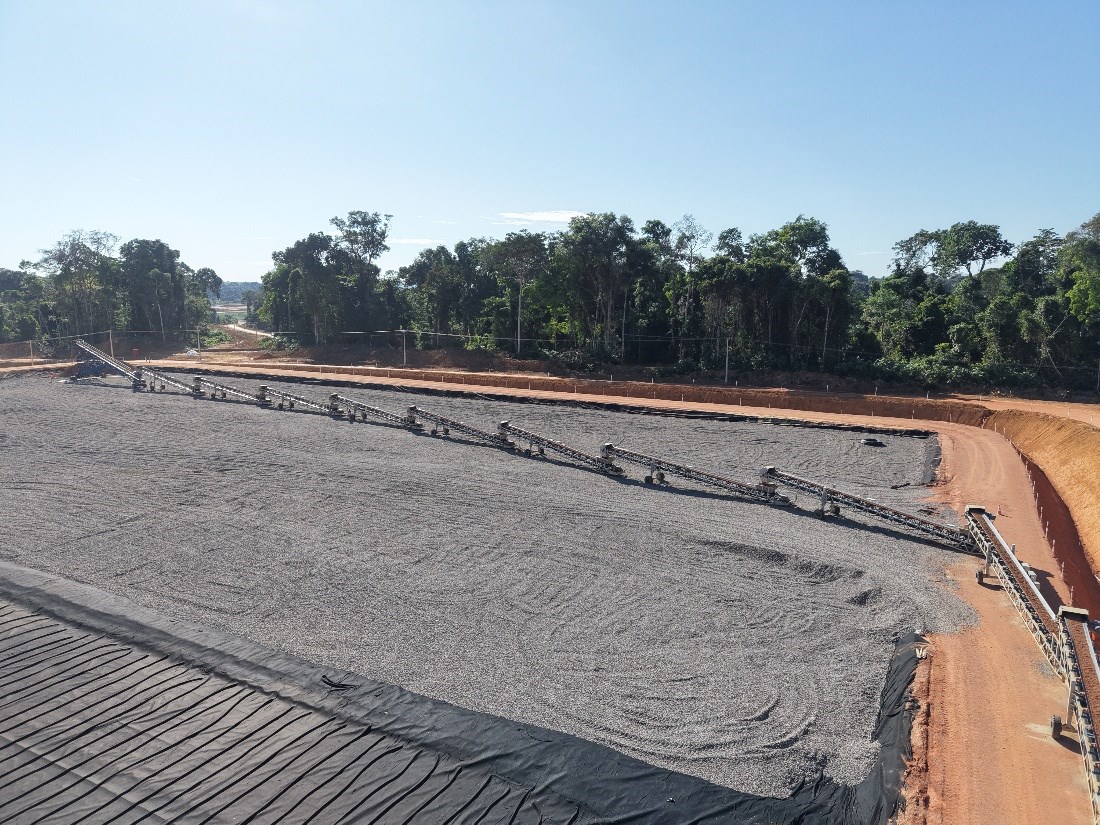
Cabral Gold begins mining and stacking ore at its Cuiú Cuiú heap leach project in Brazil as commissioning reaches 85% completion.
- Cabral Gold has commenced mining and stacking of ore at its Phase 1 gold-in-oxide heap leach project at Cuiú Cuiú, Brazil.
- Construction and commissioning are approximately 85% complete, with more than 90% of project costs committed under contract.
- The project remains on schedule for full commissioning in the third quarter of 2026 and ramp-up to full production in the fourth quarter.
- Cuiú Cuiú holds Indicated and Inferred gold resources across oxide and fresh basement material, with the oxide material being mined first.
- The owners' team and contractors have worked a combined 501,743 hours with a zero lost time incident rate as of July 3, 2026.
Cabral Gold (TSXV: CBR | OTCQX: CBGZF) has commenced mining and stacking of ore at its Phase 1 gold-in-oxide heap leach project in the Cuiú Cuiú Gold District, Brazil, moving the project into its commissioning phase. Construction and commissioning are now approximately 85% complete, with more than 90% of project costs committed under contract.
The update marks the point where mine developers typically see the sharpest re-rating in market value, as the dominant risk facing a project shifts from whether a plant can be built to whether it can run.
Commissioning as the Real Inflexion Point
Construction risk centres on capital overruns, schedule slippage, contractor availability, and permitting delays. Once a plant begins processing ore, the questions become operational: recoveries, throughput, reliability, and ramp-up performance. This transition matters because capital spending winds down as commissioning begins, the probability of first cash flow increases materially, and discounts on development-stage equities tend to narrow. Cabral's disclosure that the dry circuit is complete and ore is moving through the sizer, agglomeration drum, and conveyor systems to the heap leach pads is the clearest evidence yet that this shift is underway.
Commissioning Details
Cabral mentioned the dry circuit, covering ore processing up to the heap leach pads, is largely complete, with commissioning overseen on site by representatives of Strategic Metallurgy Pty Ltd since mid-June. Mining of gold-in-oxide ore from the MG deposit has commenced, and ore has been processed by the sizer, agglomerated, and conveyed to the heap leach pads, forming the first ore pile. President and Chief Executive Officer of Cabral Gold, Alan Carter said:
"Commissioning is in progress and the project remains on schedule."
A second commissioning phase remains ahead, covering processing of pregnant solution, gold extraction through carbon columns, and dore production from the adsorption-desorption-recovery (ADR) plant. That plant was tested and partly commissioned at Como Engineering in Perth, Australia, and has since arrived in Brazil; Cabral expects it on site in late July. The mineral sizer was installed and commissioned in June, mechanical assembly of the dry plant is complete, regulatory approval for cyanide use has been received, and key consumables are available on site.
Construction of water management ponds is complete, and heap leach pad construction is underway, with the second of four pads due for completion in July. Expenditures and schedule track in line with the Pre-Feasibility Study, effective July 29, 2025. The project remains on schedule for full commissioning in the third quarter of 2026, with ramp-up to full production in the fourth quarter.
Project & Regional Context
Cuiú Cuiú sits in the Tapajós Region of Pará state, northern Brazil, site of the largest gold rush in the country's history. Brazil's National Mining Agency estimates the Tapajós Gold Province produced 30 million to 50 million ounces of placer gold between 1978 and 1995, with Cuiú Cuiú the largest area of placer workings, producing an estimated 2 million ounces historically. Cabral holds a 100% interest in the district.
Resource Context
Cuiú Cuiú hosts three main gold deposits. Under the NI 43-101 standard, "Indicated" resources carry enough data for mine planning, while "Inferred" resources carry more uncertainty. Ore is split into two types: "oxide" material is near-surface, easier to process, and mined first; "fresh basement material" is deeper, harder rock for a later phase.
In the oxide material, the project holds Indicated resources of 13.56 million tonnes at 0.50 grams per tonne (g/t) gold (216,182 ounces), plus Inferred resources of 6.4 million tonnes at 0.34 g/t gold (70,569 ounces). In the fresh basement material, Indicated resources total 12.29 million tonnes at 1.14 g/t gold (450,200 ounces), plus Inferred resources of 13.63 million tonnes at 1.04 g/t gold (455,100 ounces).
A detailed infill drilling program, focused on the first 9 months of planned production at the MG deposit, is complete, with assay results in line with expectations. Cabral is using this data to update its reserve estimate and finalise its mine plan for MG.
FAQs (AI-Generated)
Analyst's Notes





Subscribe to Our Channel





Stay Informed






















