




Cabral Gold Expands Jerimum Cima Discovery with High-Grade Drill Results


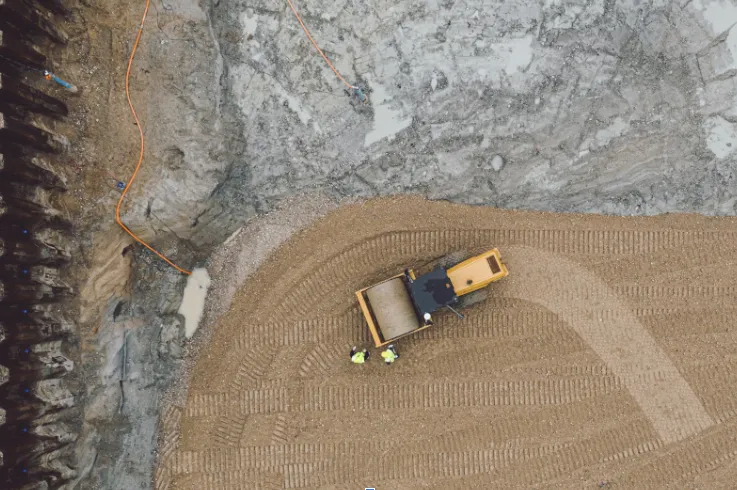
Cabral Gold's Jerimum Cima drilling extends strike to 750m with an 80.51 g/t gold intercept, as Phase 1 heap leach targets Q4 2026 production.
- Drilling at the Jerimum Cima target returned 9.5 metres at 5.74 grams per tonne (g/t) of gold, extending the eastern limit of the mineralised zone by 175 metres to a total strike length of 750 metres.
- A reconnaissance hole, DDH365, returned 3.75 metres at 10.80 g/t gold, including 0.5 metres at 80.51 g/t gold, a previously unrecognised high-grade zone southeast of the main trend.
- Jerimum Cima features a deep weathering profile to 70 metres, the deepest oxide blanket encountered at Cuiú Cuiú to date.
- Multiple previously unrecognised high-grade structures have been identified parallel to and south of the main mineralised zone, with the fault corridor confirmed at least 200 metres wide.
- Phase 1 heap-leach construction is advancing, with 143 personnel on site, targeting plant commissioning in the third quarter of 2026 and commercial gold production in the fourth quarter of 2026.
Company Context
Cabral Gold's Cuiú Cuiú gold district in northern Brazil, within the Tapajós Gold Province, produced an estimated 30 to 50 million ounces of placer gold between 1978 and 1995. Cuiú Cuiú was the largest area of placer workings in the Tapajós, historically producing an estimated 2 million ounces of placer gold. The company currently holds NI 43-101 Indicated resources of 450,200 ounces in fresh basement material and 216,182 ounces in oxide material, with Inferred resources of a further 455,100 ounces in fresh basement material and 70,569 ounces in oxide material, across three main deposits. Since the last resource estimate in 2022, Cabral has made four discoveries, with over 50 peripheral targets identified across the district.
Rather than subjecting shareholders to repeated equity raises to fund this district-scale exploration, Cabral Gold is building toward a self-funding model. Once the Phase 1 oxide operation reaches commercial production in the fourth quarter of 2026, cash flow will be directed toward aggressive exploration of the underlying hard-rock system.
President and Chief Executive Officer of Cabral Gold, Alan Carter, explained this strategic capital allocation:
"We think that the best way to fund all that work that needs to be done is not by continually diluting the capital structure and doing private placement after private placement and ending up with a massive number of shares issued and outstanding. We think there's a better way of doing it that is to start with a relatively modest stage one operation to mine the oxides and use that cash to then fund the drilling of the much larger hard rock resources."
The Two-Stage Development Plan
Cuiú Cuiú's geology is central to understanding Cabral's development strategy. The deposit sits on topographic highs with an unusually deep weathering profile, averaging around 60 metres, meaning a significant portion of the material is free-digging oxide ore near the surface. That geological characteristic is what makes a phased approach not just viable, but logical.
As Carter explained:
"The gold deposits we have so far found at Cuiú Cuiú are very deeply weathered, down to about 60 metres on average. That means there's a lot of material there that's free digging, which is quite unusual for most gold deposits around the world. Our gold deposits happen to be sitting on topographic highs, so there is this deep weathering profile, and that opens up this opportunity to pursue a two-stage strategy to develop the district."
Stage 1 focuses on mining the weathered oxide material at the surface of the deposits. The project is currently advancing under trial mining licenses, which permit processing at 1,500 tonnes per day. The updated Pre-Feasibility Study (PFS) outlines a step-up to 3,000 tonnes per day. This is a transition that will require the full mining license, which Cabral expects to receive in early 2026.
Stage 2 involves directing cash flow from the Phase 1 oxide operation to the extensive deep drilling required to define the much larger, higher-grade primary hard-rock deposits beneath the weathered profile. Cabral is running three diamond drill rigs across the district simultaneously with the Phase 1 build, with approximately 80 personnel dedicated to exploration.
Jerimum Cima: Latest Drill Results
Results from six additional diamond drill holes at the Jerimum Cima target extend the known mineralised zone and reveal previously unrecognised high-grade structures. Jerimum Cima is emerging as the sixth major gold deposit within the Cuiú Cuiú district, located 3 kilometres ENE of the Central gold deposit.
The target features a deep weathering profile extending to 70 metres, the deepest oxide blanket encountered at Cuiú Cuiú to date. Previous surface trenching has confirmed robust grades across the oxide zone, with intercepts including 14 metres at 1.6 g/t gold, 20 metres at 1.2 g/t gold, 10 metres at 1.3 g/t gold, and 18 metres at 1.9 g/t gold.
The standout hole, DDH359, intersected 9.5 metres at 5.74 g/t gold from 41.4 metres depth, including 3.6 metres at 13.92 g/t gold, extending the known strike length of the main mineralised zone by 175 metres to the east. The main corridor has now been traced over 750 metres and remains open in both directions.
A reconnaissance hole, DDH365, drilled 250 metres southeast of DDH359, returned 3.75 metres at 10.80 g/t gold, including 0.5 metres at 80.51 g/t gold, a previously unrecognised high-grade zone. Additional results include 2.0 metres at 15.29 g/t gold from DDH355, and 0.5 metres at 34.87 g/t gold and 0.6 metres at 68.04 g/t gold in DDH356, from the current western limit of the target. VP Exploration Brian Arkell noted that drilling has now traced gold over a strike length of 750 metres "within a major fault zone at least 200 metres wide in places," with further drilling planned to test extensions in both directions.
Construction Progress
Construction of the Phase 1 gold-in-oxide heap leach operation is advancing rapidly and is currently 54% complete, with 71% of project costs committed under contract. To manage the build, Cabral Gold has assembled an experienced owners' team led by Luis Salaro, a mining engineer who has successfully built several mines in Brazil.
While the company initially had 143 construction personnel and an 80-person exploration team on site, the operation has scaled up significantly. The team has also maintained a safety record, logging over 93,000 hours in 2026 with zero Lost Time Incidents (LTI).
Carter discussed the aggressive timeline and the logistical challenges of transitioning into a producer:
"I think the main risk here is keeping to schedule. As I said, this is a complex exercise, there are a lot of inputs, there are a lot of different contracting groups, and a lot of pieces of equipment we need to get on site on time. It is an aggressive schedule. But as I said, currently we're on track. The one thing that we have no control over, obviously, is the weather."
Site development is past the heavy earthmoving phase. Earthworks on the production plateau are now 95% complete, alongside most of the major concrete foundations. The solution storage ponds are nearing completion, and a 9-metre-high retaining wall for the Run of Mine (ROM) ore reception area has been finished. Additionally, a new permanent mine camp capable of housing 136 workers is on track to be completed by the end of March 2026.
Project Economics
The updated pre-feasibility study outlines an initial capital expenditure of US$37.7 million for the Phase 1 operation. At a base case gold price of US$2,500 per ounce, the project returns an after-tax internal rate of return (IRR) of 78% and a net present value (NPV5) of US$73.9 million, with a payback period of 10 months from the start of commercial production within a 6.2-year mine life. Phase 1 is fully funded through a US$45 million gold loan, with no equity raise required.
The financing structure has several implications worth noting. A 10-month payback on a US$37.7 million initial investment means the project is designed to recover its upfront capital relatively quickly, which reduces the period during which investors carry full development risk. Debt funding through the gold loan also means the company did not issue new shares to reach production, leaving the existing capital structure intact at this stage.
The company's Phase 1 cash flows are intended to fund continued drilling on the broader primary gold resource. This would reduce the need to return to equity markets for future exploration capital, though this remains subject to operational performance and metal prices. The oxide mining sequence also has a longer-term operational implication: extracting near-surface material pre-strips the ground above the underlying hard rock mineralization, which reduces future waste mining costs if the project advances to primary ore production.
As Carter noted:
"We borrowed $45 million US in gold, and we'll have to repay that with interest. There was no equity raise as part of that, which I think surprised a lot of people."
The Investment Thesis for Cabral Gold
- Phase 1 is fully funded through a US$45 million gold loan with no equity raise required, leaving the existing capital structure intact and removing near-term dilution risk for shareholders.
- With 143 personnel on site and construction 54% complete, management is targeting plant commissioning in the third quarter of 2026 and commercial production in the fourth quarter of 2026, giving investors a defined timeline to first cash flow.
- At a US$2,500 gold price, the project returns a 78% after-tax internal rate of return with a 10-month payback period, meaning upfront capital is recovered relatively quickly once production begins.
- Management intends to direct Phase 1 cash flow toward drilling the underlying hard-rock system across more than 50 identified peripheral targets, which, if executed, would reduce reliance on equity markets to fund future exploration.
- January 2026 drill results at Jerimum Cima extended the mineralised strike to 750 metres, with the zone open in both directions, adding to the exploration pipeline that Phase 1 cash flow is intended to test.
- The key near-term milestone to monitor is the fourth quarter of 2026 commissioning and early operational performance, as execution against the published timeline and economics will be the most direct test of management's development thesis.
Despite the strong project economics and progress toward construction, the transition from trial mining licenses to a full mining license represents a permitting milestone required to support the planned expansion to 3,000 tonnes per day. Execution risk also remains during the construction and commissioning phase, particularly in scaling heap leach operations and maintaining projected recovery rates. In addition, project economics are sensitive to gold price fluctuations and operating cost assumptions. As with most development-stage mining projects, delays in construction, metallurgical variability, or permitting timelines could affect the projected timeline to commercial production.
TL;DR
Cabral Gold’s January 2026 drilling at the Jerimum Cima target has extended the mineralised zone to 750 metres of strike, including a bonanza-grade intercept of 80.51 g/t gold, while identifying additional parallel structures within a broad fault corridor. At the same time, construction of the Phase 1 oxide heap-leach operation at the Cuiú Cuiú project is advancing toward Q4 2026 commercial production, fully funded through a US$45 million gold loan with no equity dilution. The company intends to use cash flow from this initial oxide operation to fund exploration of the larger underlying hard-rock gold system across the district.
FAQs (AI-Generated)
The results extend the main mineralised zone by 175 metres to the east, bringing the total known strike length to 750 metres. A reconnaissance hole drilled 250 metres southeast of the main trend returned a previously unrecognised high-grade structure, and the fault corridor has been confirmed at least 200 metres wide. The zone remains open in both directions, with further drilling planned.
Phase 1 is fully funded through a US$45 million gold loan with no equity raise required. The company reached the construction stage without issuing new shares, leaving the existing capital structure intact at this stage.
Construction is 54% complete with 71% of project costs committed under contract. Plant commissioning is targeted for Q3 2026 and commercial production for Q4 2026. Management has identified schedule execution and weather as risks to the timeline.
The company has stated that cash flow from Phase 1 is intended to fund drilling of the underlying hard-rock gold system. The oxide mining sequence also pre-strips the ground above the hard-rock mineralisation.
The updated pre-feasibility study outlines a US$37.7 million initial capital expenditure, a 78% after-tax internal rate of return, a net present value of US$73.9 million at a 5% discount rate, and a 10-month payback period at a base case gold price of US$2,500 per ounce, within a 6.2-year mine life.
Analyst's Notes





Subscribe to Our Channel









Stay Informed






















