Cabral Gold Strikes High-Grade at Jerimum Cima



Cabral Gold expands Brazilian discovery with 9.5m at 5.74 g/t gold. Three parallel zones span 750m. Gold at $5,054/oz supports oxide potential.
- Cabral Gold extended the Jerimum Cima mineralized zone by 175 meters eastward, with the main structure now spanning 750 meters and remaining open in both directions.
- Recent drilling returned 9.5m at 5.74 g/t gold, 3.8m at 10.80 g/t gold including 0.5m at 80.51 g/t, demonstrating robust grade consistency.
- Three parallel mineralized zones identified, including previously unrecognized high-grade structures 125 to 250 meters south of the main zone, substantially increasing resource potential.
- Deep weathering to 70 meters depth creates a significant near-surface oxide blanket offering lower-cost processing potential with production starting Q4 2026.
- Gold trades near $5,054 per ounce (February 11, 2026) following a 70 percent rally over 12 months, with China extending purchases for a 15th consecutive month and Federal Reserve rate cuts expected in July and September 2026.
Junior exploration companies with legitimate high-grade discoveries are attracting renewed investor attention as gold trades near $5,054 per ounce, supported by central bank buying. Cabral Gold Inc. (TSXV: CBR, OTCQX: CBGZF) has emerged as a compelling opportunity following latest drilling results at the Jerimum Cima target within Brazil's historic Cuiú Cuiú Gold District. The January 26, 2026 announcement of multiple high-grade intercepts, including 9.5 meters grading 5.74 grams per tonne gold, represents significant progress in establishing a district-scale discovery. As CEO Alan Carter emphasized:
"We've got a significant resource base here at 1.2 million ounces. We've got not one new discovery but four new discoveries since the resource was last updated."
Gold has rallied approximately 70 percent over the past 12 months, reaching record highs above $4,634 per ounce in January 2026. Stronger-than-expected U.S. Non-Farm Payrolls data for January (130,000 jobs versus 70,000 expected) pushed Federal Reserve rate-cut expectations to July 2026, with a potential second cut in September. The People's Bank of China extended gold purchases for a 15th consecutive month in January 2026, with gold now accounting for 8 percent of China's reserves, up from 5.5 percent a year ago. For exploration companies like Cabral with advancing discoveries, this environment creates asymmetric opportunity where resource expansion can drive significant value.
The Company: Proven Track Record in Brazil's Gold Belt
Cabral Gold is a junior exploration company focused on gold properties in Brazil's Tapajós Region. The company holds 100 percent interest in the Cuiú Cuiú gold district within Pará state, a region that produced an estimated 30 to 50 million ounces of placer gold between 1978 and 1995, according to the Agência Nacional de Mineração. Cuiú Cuiú was the epicenter, with historical placer production estimated at 2 million ounces. Carter noted the strategic location:
"We are within the Tapajós gold belt and immediately adjacent to G Mining's Tocantinzinho operation."
The existing resource base includes NI 43-101 compliant Indicated resources totaling 12.29 million tonnes grading 1.14 g/t gold for 450,200 ounces in fresh basement material, plus 13.56 million tonnes at 0.50 g/t gold for 216,182 ounces in oxide material. Inferred resources add 13.63 million tonnes at 1.04 g/t gold for 455,100 ounces in fresh material and 6.4 million tonnes at 0.34 g/t gold for 70,569 ounces in oxide material. Recent exploration delivered exceptional intercepts as Carter stated:
"We've had some really good drilling steps including 11 meters at 33 grams, 12 meters at 27 grams."
Under CEO Alan Carter, who has led the team to five grassroots gold discoveries in Brazil over two decades, management demonstrates strong shareholder alignment, he emphasized that:
"We as a management team have invested a lot of our own money into Cabral. I myself have invested C$1.8 million."
The Discovery: Jerimum Cima Delivers High-Grade Results
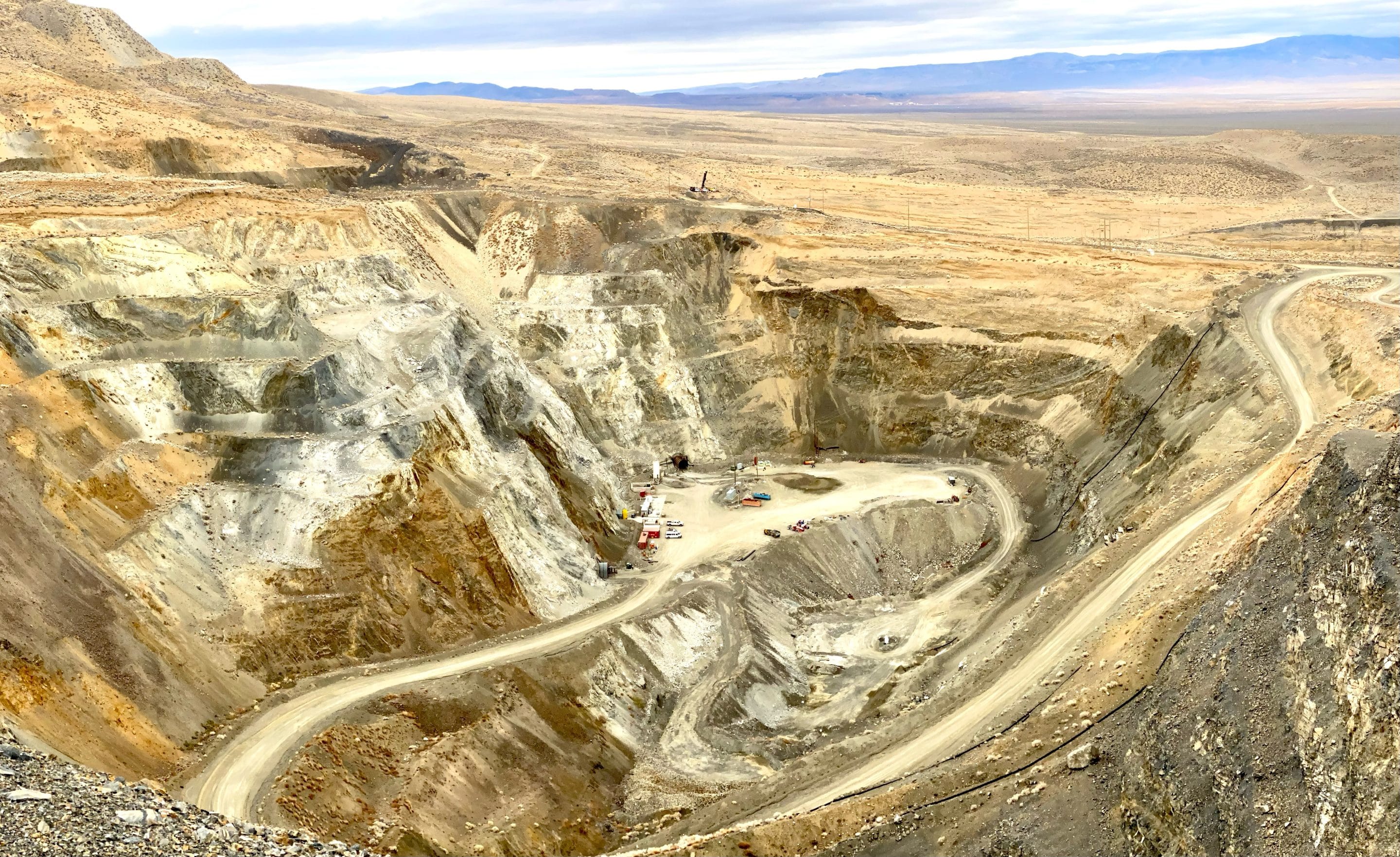
The Jerimum Cima target, located 3 kilometers east-northeast of the Central deposit, has rapidly emerged as a potentially significant addition to Cabral's resource inventory. The target is characterized by a very strong gold-in-soil anomaly exceeding 100 parts per billion gold over a 900-meter by 1,000-meter area, comparable in intensity to the anomalies overlying the company's existing deposits. Recent drilling results demonstrate both the extension of known mineralization and the discovery of entirely new zones. Hole DDH359 returned three significant intercepts: 9.5 meters grading 5.74 g/t gold from 41.4 meters depth (including 3.6 meters at 13.92 g/t), 14.4 meters at 0.62 g/t from 83.5 meters, and 15.1 meters at 1.04 g/t from 108.9 meters. This hole extended the known strike length by 175 meters to the east, with the structure remaining open.
More significant for resource potential is the identification of parallel high-grade structures south of the main zone. Reconnaissance hole DDH365 intersected 3.8 meters grading 10.80 g/t gold, including a spectacular 0.5-meter interval grading 80.51 g/t. Similarly, DDH356 cut 2.4 meters at 7.65 g/t (including 0.5 meters at 34.87 g/t) and 0.6 meters at 68.04 g/t. These high-grade intercepts, drilled 600 meters apart, hint at a major subsidiary zone paralleling the main structure. Gold at Jerimum Cima is hosted along a major east-west trending fault zone similar to the structural controls at the MG deposit and Machichie Main discovery. Alan Carter emphasized the breakthrough:
"The Jerimum target is emerging as an important discovery at Cuiú Cuiú. These latest drill results extend the main mineralized zone by at least 175 meters to the east where it remains open. The presence of several previously unrecognised narrow high-grade structures intersected in two reconnaissance holes drilled 600 meters apart is highly encouraging."
Value Proposition: Multiple Pathways to Production
The identification of three parallel mineralized zones over 750 meters transforms Jerimum Cima into a district-scale target with significantly enhanced resource potential. The deep weathering profile extending to 70 meters depth creates substantial potential for an oxide resource amenable to lower-cost heap leach processing, offering faster permitting, lower capital requirements, and earlier cash flow. The discovery validates Cabral's systematic exploration methodology and fits into a clear development strategy. Carter outlined the near-term plan:
"The strategy is to develop the project into two stages. Initially, we're mining the surface weathered material. That operation should be producing around 20,000 ounces a year at a cash cost of $1,200 an ounce from the fourth quarter of 2026. It is under construction and fully funded."
At $2,500 per ounce gold, the preliminary feasibility study shows a 78 percent IRR with a $74 million NPV and 10-month payback. Carter highlighted the financial upside:
"At a gold price of $3,500 an ounce, it has a 151% IRR and a six-month payback."
With gold currently trading near $5,054 per ounce as of February 11, 2026, these economics appear increasingly attractive. Central banks added an estimated 845 tonnes of gold in 2025, with China's purchases for a 15th consecutive month pushing gold to 8 percent of its reserves from 5.5 percent a year earlier.
What's Next: Accelerating Toward Resource Definition
Cabral is actively advancing multiple work streams at Jerimum Cima. The company is flying detailed magnetic surveys using a recently acquired drone system to better define structural controls and identify additional targets. Diamond drilling continues with one rig operating, with plans to bring a second rig to accelerate testing. Brian Arkell, Vice President of Exploration, expressed enthusiasm:
"It's very exciting to drill out this recent discovery where we've now hit gold in drill holes over a strike length of 750 meters within a major fault zone at least 200 meters wide in places."
The path to resource definition includes continued drilling to test eastern and western extensions, step-out drilling to define parallel high-grade structures, and infill drilling to establish continuity. Quality assurance protocols follow industry best practices, with samples processed at SGS GEOSOL Laboratorios, an independent ISO-accredited laboratory. Given strong grades, apparent continuity, and favorable geological setting, Jerimum Cima has potential to add meaningfully to Cabral's existing 1.2 million-ounce resource base.
Investment Thesis for Cabral Gold
- Consider accumulating shares below CAD$1.00 ahead of resource estimate catalysts expected within 12 months.
- Monitor quarterly drill results for continued grade consistency and zone expansion, particularly high-grade intercepts above 5 g/t gold.
- Evaluate oxide resource potential separately from primary resources given distinct processing economics and development timelines.
- Watch for preliminary economic assessment updates incorporating Jerimum Cima into district-wide development scenarios.
- Diversify into mid-cap gold producers if gold prices rise 20 percent to hedge exploration risk while maintaining junior exposure.
- Track Federal Reserve policy shifts closely as timing of rate cuts will influence gold price trajectory and junior valuations.
Cabral Gold's Jerimum Cima discovery represents significant development in an emerging district-scale gold system in one of Brazil's most prolific regions. The combination of high-grade intercepts, multiple parallel zones, substantial oxide potential, and a 750-meter strike length that remains open establishes this as a legitimate resource expansion opportunity. Carter emphasized the company's momentum:
"We've got a significant resource base here at 1.2 million ounces. We've got not one new discovery but four new discoveries since the resource was last updated."
For investors, the opportunity lies in asymmetry between current valuation and potential resource growth. With an existing 1.2 million-ounce resource base and multiple targets advancing, Cabral offers discovery upside in a relatively low-risk jurisdiction. The company has a fully funded starter operation expected to produce its first gold in Q4 2026, generating cash flow to fund continued exploration.
The broader gold market context strongly supports this investment case. Gold rallied 70 percent over 12 months, hitting record highs above $4,634 per ounce in January 2026 before trading near $5,054 per ounce in mid-February. Global gold demand reached 5,002 tonnes in 2025, with total value surging 45 percent to $555 billion. Central banks remain aggressive buyers, with China's People's Bank extending purchases for a 15th consecutive month, increasing gold's share of reserves to 8 percent from 5.5 percent. State Street Global Advisors projects 2026 central bank demand between 756 and 1,100 tonnes, potentially making it one of the top five years since 1971. While Federal Reserve rate cuts shifted to July and September 2026, Goldman Sachs and Morgan Stanley maintain forecasts bringing rates to 3.0 to 3.25 percent by year-end. With drilling ongoing and additional results expected throughout 2026, multiple catalysts exist to drive appreciation.
TL;DR
Cabral Gold expanded its Jerimum Cima discovery in Brazil with high-grade drill results including 9.5m at 5.74 g/t gold, extending the mineralized zone to 750 meters with three parallel structures. Gold trades near $5,054/oz (February 11, 2026) following a 70 percent rally. Central banks added 845 tonnes in 2025, with China extending purchases for a 15th consecutive month, while Fed rate cuts expected in July and September 2026 support bullish fundamentals.
The discovery features three parallel high-grade zones spanning 750 meters with substantial oxide potential in a region that historically produced 2 million ounces of placer gold.
Gold trades near $5,054 per ounce (February 11, 2026) following a 70 percent rally over 12 months, with central banks adding 845 tonnes in 2025 and Fed rate cuts expected in July and September 2026, creating favorable conditions for gold explorers.
Oxide gold near the surface can be processed more cheaply via heap leaching, while primary gold in fresh rock requires conventional milling, with each offering distinct development economics.
While not officially announced, typical exploration timelines suggest an initial resource estimate could be completed within 12 months given current drilling pace and results quality.
Cabral's 1.2 million-ounce resource base across multiple deposits positions it in the mid-tier of Brazilian junior gold explorers, with Jerimum Cima offering meaningful expansion potential.
Analyst's Notes





Subscribe to Our Channel





Stay Informed