




Can Goldman and Citi’s Copper Forecast Hold Despite AI Data Center Policy Risks?



Copper is up 10% in 2026, but Goldman and Citi's demand assumptions face active legislative risks targeting AI data centers.
- Copper is 10% up year-to-date and $500 below its all-time high and the market is already pricing a supply crisis, not anticipating one.
- Goldman Sachs and Citigroup have raised copper targets to $13,735/ton and $15,000/ton, but both banks are bundling two separate drivers into one price: a confirmed supply deficit and an unconfirmed AI demand assumption.
- Two major copper operations in Indonesia and the DRC are offline until at least 2028 following flooding and seismic disruptions, cutting 350,000 tons from global supply.
- US federal legislation and seven active state bills are directly targeting AI data center construction, which banks like Citi cite as a source of resilient structural demand supporting the copper market. A chip export ban embedded in the federal bill extends that risk globally.
- The supply deficit runs to 2028 regardless of US legislation; copper mining equity tied to the disrupted operations holds that case without needing the AI demand assumption. Spot copper above $13,500/ton carries the AI premium as an additional, unvalidated risk.
The Supply Case Holds to 2028 With or Without AI Demand
Goldman Sachs raised its year-end copper target to $13,735/ton on June 2, more than 10% above its prior $12,465/ton forecast after cutting its global mine supply estimate by 350,000 tons on disruptions at two major tier-one operations in Indonesia and the DRC, per its June 2026 analyst note. Citigroup followed with a $14,500/ton end-June target and $15,000/ton within twelve months, with both banks naming resilient AI infrastructure demand and the energy transition alongside supply shocks as the two price drivers. LME copper stood at $13,980/ton as of June 5, up 10% year-to-date, per London Metal Exchange data.
The supply disruption underpinning both forecasts is independent of anything happening in Washington. The world's second-largest copper mine declared force majeure following underground flooding in September 2025. A major DRC operation cut its 2026 production guidance by 90,000 tons after seismic disruptions slowed its ramp-up through 2025. Goldman estimates the copper deficit outside the US at 640,000 tons for 2026, up tenfold from a prior 60,000-ton forecast, with neither operation returning to full capacity before 2028, per its June 2026 note. No legislative vote changes that timeline.
Congress and State Legislatures Are Actively Contesting the AI Infrastructure Which the Copper Bull Case Depends
The tariff and import mechanics both banks cite describe arbitrage-driven demand, not confirmed AI copper absorption. Goldman's June 2026 note attributes elevated US copper imports in the first half of 2026 to open import arbitrage, a tariff-uncertainty effect, not physical data center construction activity. Citigroup frames potential US tariffs on refined copper as a sentiment support mechanism through the end-of-June trade policy review. Neither constitutes physical validation of the AI demand projection both banks embed in their upside targets.
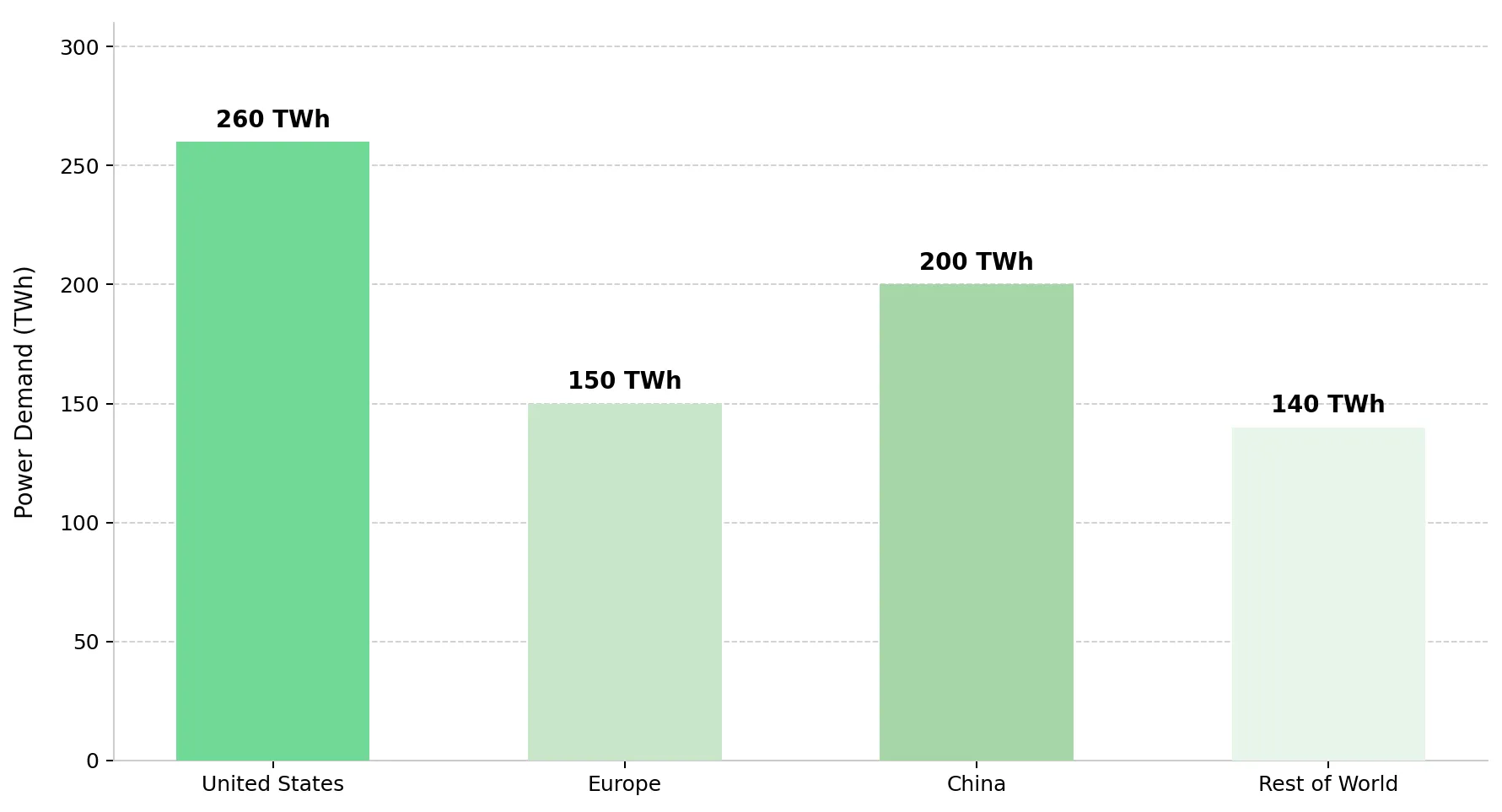
The Moratorium Blocks Final Data Center Approvals in the Largest US Market Until 2028
The more immediate legislative threat is at the state level. Virginia HB 1515, covering the single largest concentration of US data center capacity, blocks final data center approvals until all grid interconnection requests are fulfilled or until July 2028, per the National Conference of State Legislatures. That is an active constraint on an existing, operational market with a named deadline, not a proposed bill awaiting cosponsors. Six additional state moratorium bills remain active across Georgia, Michigan, New York, Pennsylvania, South Carolina, and Vermont
Freezing Construction, which the Exact Facility Class Both Banks Use to Justify AI Copper Demand
S.4214, the Artificial Intelligence Data Center Moratorium Act, targets precisely the infrastructure class driving both banks' AI demand thesis: facilities exceeding 20 megawatts using high-performance server racks or liquid cooling. The construction freeze holds until Congress passes comprehensive AI safety legislation, with no termination date specified.
Export Provision Extends Legislative Risk to Global Data Center Markets Beyond US Permitting
The bill's reach extends beyond US borders: a named provision would ban the export of US-origin AI chips to any country that does not enact equivalent worker, environmental, and human safety regulations. That mechanism gives Washington the ability to suppress global data center construction, not just domestic permitting, meaning the AI copper demand assumption both banks cite is exposed to legislative risk across multiple markets simultaneously.
At the state level, seven active moratorium bills include one covering the largest US data center market, which blocks final approvals until all grid interconnection requests are fulfilled or until July 2028, per the National Conference of State Legislatures.
The Legislative Timeline Does Not Resolve on a Commodity Trading Schedule
The operational lag between legislative action and physical copper demand deferral runs longer than a standard commodity price cycle. The disrupted Indonesian and DRC operations are offline through 2028, regardless of how US data center permitting evolves; those are engineering timelines, not political ones.
The AI demand premium embedded in Citi's $15,000/ton target above Goldman's $13,735/ton supply-floor forecast is the variable carrying legislative risk, and it cannot be validated or invalidated by a Senate committee vote.
The active Virginia moratorium bill creates a multi-year permitting overhang in the single largest US data center market without delivering the binary resolution that would close the scenario range.
Base Case
S.4214 stalls in committee without markup; state moratorium bills fail in most jurisdictions; end-of-June tariff review concludes without new copper duties
LME copper holds $13,500–$14,000/ton on supply fundamentals through Q3 2026; copper mining equity reflects the 350,000-ton production shortfall without AI premium compression (Goldman Sachs, June 2026)
Bear Case
The Virginia state bill advances to passage before July 2028, or S.4214 accumulates five or more Senate cosponsors, triggering a grid-interconnection freeze in the largest US data center market
LME copper tests $12,500/ton within two quarters as AI demand deferral of 18–24 months unwinds the premium above Goldman's 640,000-ton ex-US deficit supply floor
What Confirms the Supply Trade Is Working
LME copper holding above $13,500/ton through the end-of-June tariff review confirms the supply deficit is sustaining price without AI demand validation. Under that condition, copper mining equity on confirmed production shortfall is the active thesis; spot copper above $14,000/ton is the AI premium awaiting physical confirmation in the June 20 ICSG flash estimate. A COMEX-LME spread narrowing below $200/ton signals the import arbitrage Goldman cited is closing, the first physical indication that the ex-US supply deficit is beginning to clear.
What Confirms AI Demand Has Been Deferred
Goldman's 640,000-ton ex-US deficit estimate, set against current spot price, implies a supply-only floor in the range of $12,500/ton, meaning that is approximately what the physical deficit alone supports before any AI demand premium is added, per Goldman's June 2026 note.
Copper falling toward that level within two quarters of Virginia HB 1515 remaining in force through a key vote, or S.4214 accumulating five or more Senate cosponsors, would suggest AI demand deferral is the operative price mechanism.
Analyst's Notes





Subscribe to Our Channel








Stay Informed


