




Selkirk Copper Targets Mid-2028 Production From an Already-Built Minto Mine


Selkirk Copper is rebuilding the Minto mine around a full 12- to 15-year plan and permits-first, reversing the approach that bankrupted the prior owner.
- Selkirk Copper controls the same built copper-gold-silver mine in central Yukon that the previous operator restarted in 2019 and lost to bankruptcy in 2023.
- The company is planning a full 12- to 15-year integrated open-pit and underground operation at 4,100 tonnes per day (tpd), rather than the short, grade-led plans the prior owner ran.
- Every existing licence is being amended against the full mine life before a restart decision, removing the permitting assumptions the previous operator left to be tested in production.
- The bankruptcy erased the Wheaton Precious Metals stream and the Sumitomo concentrate offtake, leaving a 1.5% net smelter return (NSR) royalty as the only remaining claim and opening a largely non-dilutive funding path.
- With geology and metallurgy settled, the binding risks now center on permitting timing and staffing, and an updated mineral resource estimate (MRE) and preliminary economic assessment (PEA) are targeted for the second half of July 2026.
From Bankruptcy to Restart at Minto
The Minto mine is not a discovery that needs proving; it is a copper-gold-silver operation that has already been in production, located in central Yukon, roughly 250 kilometres (km) north of Whitehorse, on the Klondike Highway. Selkirk Copper Mines (TSXV: SCMI | OTCQB: SKRKF | FRA: IO20) now controls it, and its history sets the terms: the last company to run Minto restarted production in the second half of 2019 and was in bankruptcy by May 2023, having overleveraged the asset. The orebody did not fail; the capital structure and the plan around it did.
What changed with the asset is ownership. The Selkirk First Nation acquired 100% of the Minto Project and vended it into Selkirk Copper through a reverse takeover, and it remains the largest shareholder at 18.2% with a controlling equity stake held through a wholly owned subsidiary. That alignment carries a practical consequence: the only royalty on the project is a 1.5% net smelter return (NSR) payable to the Selkirk First Nation, whose Category A settlement lands surround and underlie the mine.
The physical base is already built. Minto carries a 4,100-tonne-per-day (tpd) processing plant, a 400-person full-rotation camp, water treatment facilities, open-pit and underground workings, road and barge access, and grid power, across 26,850 hectares of claims in the Minto-Carmacks copper belt. The question Selkirk is answering is not whether Minto can produce, but whether a different plan can keep it producing.
The Integrated Mine Plan Replaces Grade-Chasing
The prior operating history was built around grade. Earlier plans ran 5 to 7 years on the best material and left the task of extending mine life until after production had started, which tied the operation's survival to a short window of prices and ounces. Selkirk is inverting that sequence by planning the full mine life up front.
President and Chief Executive Officer of Selkirk Copper Mines, M. Colin Joudrie, is precise on the shift in mine planning:
"There are enough resources here that we could get a proper set of mine plans that last 12 to 15 years. That gives us a much better chance of making it through not just the payback period, but through the metal price cycle."
The plan Selkirk is targeting draws about half its volume from the open pit at Ridgetop and half from underground, combining the existing workings with a new Minto North underground, for the first 7 to 8 years before shifting toward more underground feed. At 4,100 tpd, or roughly 1.5 million tonnes a year, the operation targets about 30,000 tonnes of copper equivalent a year in concentrate, averaging 18,000 to 22,000 tonnes of copper, 25,000 ounces of gold, and about 250,000 ounces of silver over the mine life. The resource behind that plan, drawn from a technical report with an April 2025 effective date, holds 12.6 million tonnes indicated at 1.20% copper, 0.46 grams per tonne (g/t) gold and 4.27 g/t silver, plus 23.7 million tonnes inferred at 1.05% copper, for roughly 881 million pounds of contained copper across both categories, on ground where only 3 km of a 7 km mineralised trend has been drilled.
An ore-blending strategy is built into the plan to keep mining consistently ahead of milling at steady grades, so mill throughput holds even as individual zones vary in grade. That steadier feed is what turns a 4,100 tpd nameplate into a rate the operation can sustain over 12 to 15 years, rather than one that depends on consistently having high-grade ore at the face.
Permitting Before Production
The second departure from the prior operator is regulatory in nature. Selkirk is reviewing and amending every existing licence, spanning its quartz mining, exploration, and water authorisations, against the full 12- to 15-year mine life before it commits to a restart, rather than carrying forward permit assumptions into operations. That reflects a direct reading of what went wrong last time.
Joudrie is direct about the permitting approach:
"The last operator had made some assumptions around permits, and I'm not interested in taking any risk on that. That's why we're taking this very intense review of all the existing permits, amending them against that 12 to 15-year mine life."
The company has hired a director of permitting and awarded consultant contracts in early 2026 to run the work, and it is planning alongside its engineers to remove and manage water that the Government of Yukon stored underground during closure. The jurisdiction is supportive: a pro-mining Yukon Party won a majority of 14 of 21 seats in the November 2025 territorial election. Selkirk is targeting the submission of the amended permits, together with a restart direction to the Yukon Government and the Selkirk First Nation, in October 2026, thereby fixing the regulatory milestone rather than leaving it open.
What the Brownfield Base Removes From the Restart
The reason full-life planning is achievable on Selkirk's timeline is that most of the hard engineering questions are already answered. Rock strength, ground conditions, the mining method, and the metallurgy are characterised by a large historical database, so the study work requires far less than a greenfield start would. The engineering that remains is edge work, such as adding a new three-stage crushing circuit for efficiency, rather than designing a mill or a flotation circuit that is already on site.
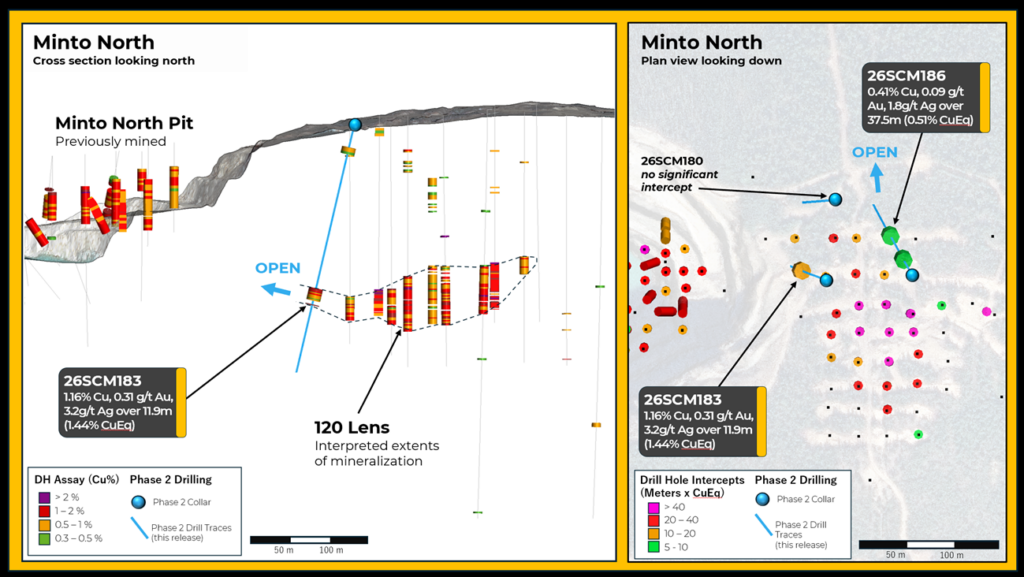
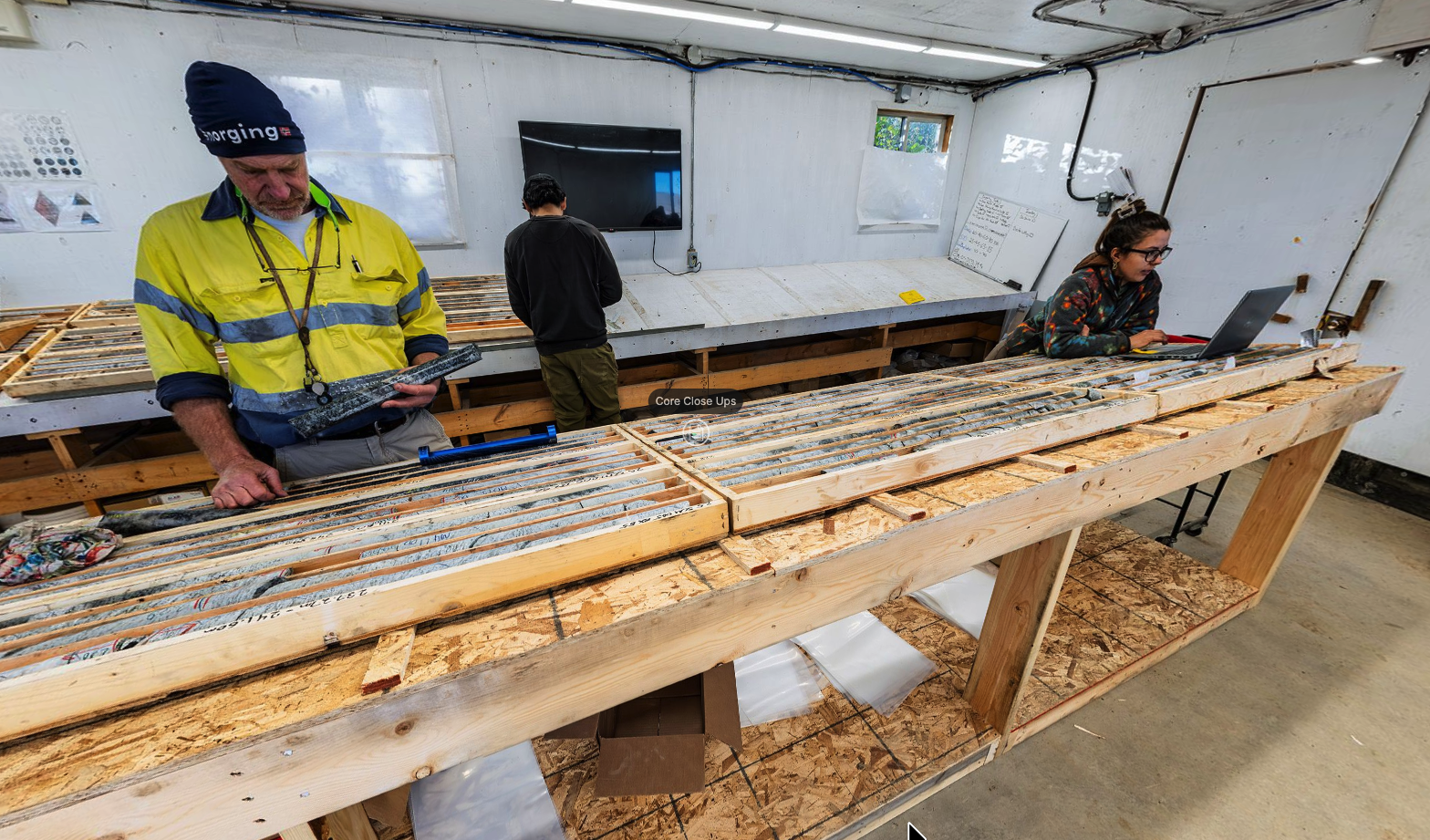
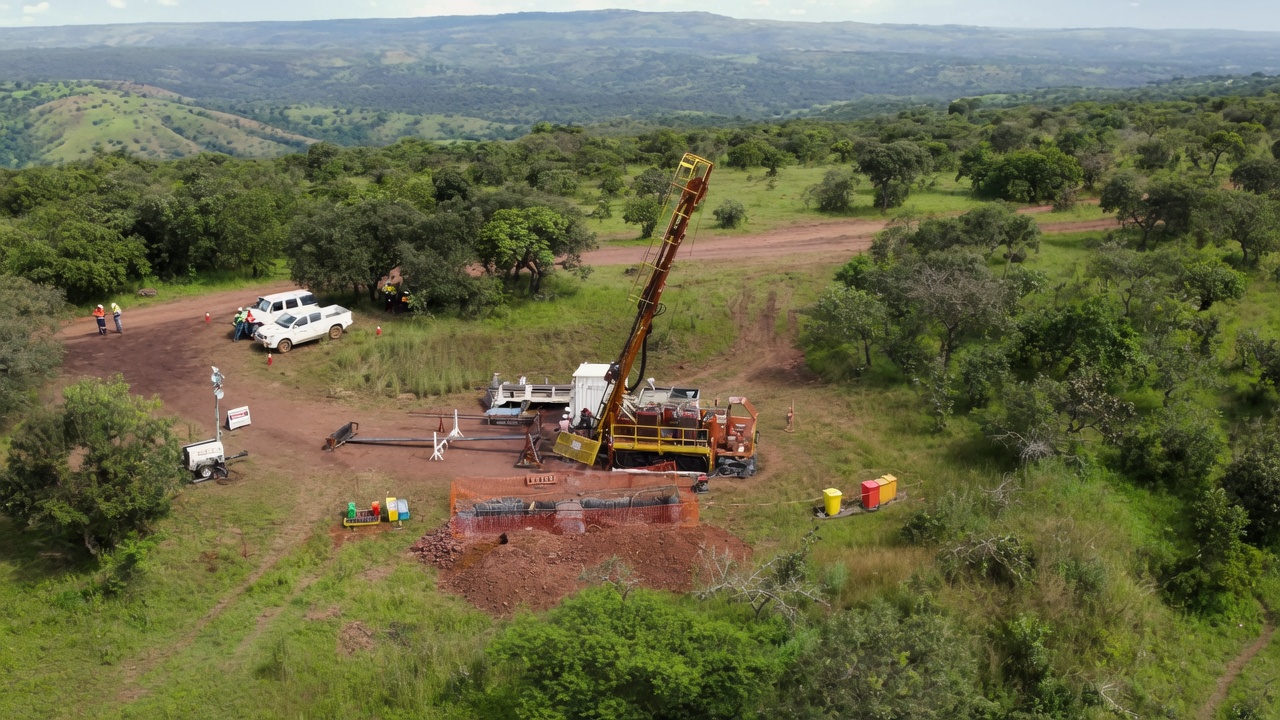
That base affects the quality of the cost estimate that the upcoming study can produce. The work draws on vendor quotes for equipment and fully built-out owner staffing rosters, and the Trade-Off Study and preliminary economic assessment (PEA) engineering are being run by Hatch Ltd. and SRK Consulting, both of which have prior experience at Minto. The drilling makes the same point: the completed Phase 1 programme of 52,288 metres (m) across 175 holes hit economic-grade mineralisation in 87% of holes while averaging about 94 m per day per drill through winter, and the Phase 2 resource drill programme of 50,000 m had reached 27,300 m across 104 holes by the end of June 2026, ahead of schedule on four rigs. Recent infill results confirm grade continuity in priority resource areas near existing infrastructure, with 1.35% copper equivalent over 22.7 m from about 317 m depth at the 117 Lens, immediately adjacent to existing underground infrastructure, and 2.59% copper equivalent over 4.5 m at Minto North, which remains open to the west.
The feasibility-level field data is being collected this summer as well, including geotechnical drilling and test pitting around the planned pits, underground development, and waste and tailings facilities, as well as geometallurgical and structural work. Because those inputs are gathered on a site whose ground conditions are already documented, the study inherits characterised rock rather than open questions, which allows management to treat the upcoming feasibility work as execution-oriented rather than exploratory.
Financing Without the Legacy Burden
The bankruptcy did more than change the owner; it stripped out the two contracts that had claimed Minto's cash flow. A gold and silver stream held by Wheaton Precious Metals, which drew more than US$250 million over the mine's operating life, was removed, which improves net cash flow directly. The concentrate offtake held by Sumitomo was also removed, and that absence converts into a financing lever rather than a liability.
Joudrie frames the funding sequence plainly:
"The cleanest route forward for us first and foremost is the offtake, this is a high-grade quality concentrate. The market really likes this con; it goes anywhere at any point in time."
The concentrate carries a historic copper grade of about 39% with low deleterious elements and has shipped largely to Japan, which is what allows an offtake prepayment to sit first in a largely non-dilutive funding stack, ahead of project finance and a selective silver stream that management would consider only because silver is about 2% of revenue. The through-line is avoiding the over-leverage that sank the prior owner. The backdrop helps: since January 2023, copper has risen 67% to US$6.28 per pound, gold 123% to US$4,114 per ounce, and silver 148% to US$60.17 per ounce, which lifts the value of every tonne the plan schedules.
The company also raised C$35 million in April 2026, which funds the current drilling and study work through to the restart decision without drawing on the offtake or a stream prematurely. Sequencing the offtake prepayment first is deliberate for the same reason the mine plan runs long: it brings in capital that neither dilutes shareholders nor gives away the precious-metal credits that make up much of the concentrate's value, keeping the costlier options in reserve.
Where Execution Risk Now Sits
Because the orebody, the metallurgy, and the infrastructure are settled, the restart's binding risks have moved downstream. What remains is whether the amended permits arrive on the October timeline, whether the operation can be staffed on schedule, and whether management maintains the integrated plan rather than reverting to mining out high-grade, an option it retains only as a defence if prices fall sharply. Alongside the base case lies near-mine exploration potential on ground that the Selkirk First Nation had not previously opened to operators, which is upside to the plan rather than part of it.
The checkpoints that will test all of this are dated. An updated mineral resource estimate (MRE) and PEA, the first economics on the Minto project since 2021, are targeted for the second half of July 2026; a feasibility study (FS) is targeted to start in the third quarter of 2026 and complete in mid-2027; the permit file is targeted for October 2026; a construction decision is targeted for the second half of 2027; and mill commissioning is targeted for the first quarter of 2028 ahead of first production in mid-2028. Management points investors to three of these in particular: the PEA and MRE, the start of the FS, and the October permit submission.
The Investment Thesis for Selkirk Copper
- Selkirk Copper controls a fully built copper-gold-silver mine with a processing plant, camp, grid power, and existing on-the-ground workings, eliminating most of the construction and engineering required for a new mine.
- The company is planning a full 12- to 15-year integrated open-pit and underground operation designed to carry the mine through a complete metal price cycle rather than a single payback period, replacing the short, high-grade plans the prior owner ran.
- Amending every existing licence against the full mine life before a restart decision removes the permitting assumptions the previous operator left to be tested in production.
- The removal of the Wheaton Precious Metals stream and the Sumitomo concentrate offtake through bankruptcy improves net cash flow and opens a largely non-dilutive route to financing the restart, with only a 1.5% net smelter return royalty remaining.
- Geology, metallurgy, and infrastructure are effectively settled, so the binding risks are the timing of permits, the ability to staff the operation, and the discipline to hold the integrated plan.
The Minto restart is less a wager on the orebody, which has produced before and is well characterised, than on management doing the unglamorous work of full-life planning, permitting, and disciplined financing that the previous owner did not. The updated economics due this month and the permit file due in October are the first hard tests of whether that approach holds, and both arrive before any construction capital is committed.
TL;DR
Selkirk Copper is rebuilding the former Minto mine in central Yukon around a full 12- to 15-year integrated mine plan and a permits-first sequence, reversing the grade-chasing, permit-deferring approach that pushed the prior operator into bankruptcy in 2023. The plant, camp, and grid power already exist, and a deep historical database means the coming PEA rests on vendor quotes and known metallurgy rather than estimates. The bankruptcy also erased the Wheaton stream and Sumitomo offtake, leaving a 1.5% NSR as the only royalty and opening a largely non-dilutive funding path. With geology and metallurgy settled, the restart now turns on permit timing and staffing. An updated MRE and PEA are targeted for the second half of July 2026, an FS for mid-2027, and first production for mid-2028.
FAQs (AI-Generated)
Analyst's Notes





Subscribe to Our Channel







Stay Informed


